OEcotextiles

Indulgent yet responsible fabrics

Green backlash?

O Ecotextiles (and Two Sisters Ecotextiles)

I just read an article about “green marketing” and how the manufacturer should downplay the green aspects of a product because “very few Americans have ever bought stuff because they want to
save the planet.”[1]

And I agree that most people just want their stuff, not a sermon.

But when I hear something along the lines of “we love your fabrics, but we’re looking for a particular shade of …” my heart drops – because I realize the speaker does not really believe that his
fabric choices are making a direct impact on him or his clients.   He does not believe that buying a product that pollutes our groundwater, contributes to global warming, contains chemicals which are known to be harmful to humans (and which might well have long term impacts on him), and all too often employs children who should be in school helping us fight the enormous problems we face – well, he doesn’t believe each purchase simply ensures that the same products will continue to be made!

Because what you buy is what gets produced.   It may be a long, circuitous way of making a
personal impact on you, but it happens nevertheless.

Why don’t people recognize this?

Green lifestyle expert Danny Seo says the main reason people choose not to buy green is:  they’re selfish.[2]  If there is not a tangible benefit to wearing organic cotton, or changing to organic bedding, Seo says people literally will not buy into it.  “All you know is that you have done something better for the planet. We are selfish, and want to know what we are getting out of it. That is why something like organic cotton will never work, because there is no direct link to why people should want to do this.”  And unlike a Prius, organic clothing or bedding isn’t something one can point to and use to improve their status – or promote their “greener than thou” lifestyle.

But Danny Seo doesn’t know about textile processing – because that organic cotton, if processed conventionally, contains chemicals – 27% by weight of the fabric to be exact –  which most definitely will allow you to make a direct link to what people are getting out of it – from asthma and allergies to cancers and worse.

To cite just a few examples:

  • The American Contact Dermatitis Society has an interesting web
    site for people suffering from formaldehyde resins in fabrics[3],
  • studies have found dioxin which leached from clothing – a potent
    carcinogen – on the skin of participants [4]
  • and women working in textile factories which produce acrylic
    fibers have seven times the rate of breast cancer as the normal population[5].

Textile processing uses some of the most potent and dangerous chemicals known – and they remain in the fabrics we live with.  This becomes part of the chemical soup we’re all exposed to each day, and which we believe is changing us in many ways, not all for the better.  We don’t just absorb synthetic chemicals one at a time during the day.  We’re exposed to hundreds of chemicals as a result of using a wide array of consumer products, many of which contain the same chemicals as are found in fabrics.  We are exposed to a variety of stressors – and textiles are one of the stressors, among others such as:

  • Automotive exhaust
  • Cleaning products
  • Chemicals in treated water
  • Cosmetics
  • Environmental pollution
  • Food
  • Insect repellents
  •  Prescription drugs
  • solvents
  • Ultraviolet radiation

As we absorb tiny amounts of chemicals repeatedly from  multiple sources, they might add up until they reach a tipping point.  Add to this what Drs. Anita and Paul Clement call the “black hole” of ignorance about a key fact in toxicology:  that toxins make each other worse.  “A small dose of mercury that kills 1 in 100 rats and a dose of aluminum that kills 1 in 100 rats, when combined, have a striking effect: all the rats die.“

So how can you, as an individual, change it – how can one person do anything to change the world? Margaret Meade says that committed people, banding together, is the only thing that really
ever has.

The writer Fritjof Capra says that we need to be governed “by a metaphor that says we are part of a continuously evolving and interrelated system”.  We need to start thinking of the world as a system, a cyclical system of interconnections, a web of connections— literally “the web of life.”

And it must be understood that this is a long-term project, not to be mistaken for a marketing trend like one furnishings manufacturer told us. (“Green?” he said. “Yes, well, we did that last year, but we’re doing something really exciting this year!”) In fact, green is only a part of it, a central part that must deal with environmentally benign materials and processes, restoration, recycling, reclaiming:  all those things we have to do to remedy the damage we’ve done to the natural environment and to ourselves in it.

Hope for the future springs from witnessing small reversals of the damage we have caused,  as Victor Papanek says in The Green Imperative.    These times, he says,  also call for a sense of optimism and a willingness to act without full understanding but with a faith in the effect of small individual actions on the global picture.

Remember that each time you purchase something,  you’re ensuring that the product you bought will keep being produced, in the same  way.  If you support new ideas, find creative ways to use something or insist that what you buy meets certain parameters, then new research will be done to
meet consumer demand and new processes will be developed that don’t leave a legacy of destruction.

Lots of people, individually and together, made a difference in the way our foods are grown and processed.  Organic foods went from gnarly to beautiful, and now we’re becoming healthier and our land is being replenished.  It can be done if the individual believes in his own importance, and believes that each purchasing decision is a vote – for clean air and water and safe products – a vote literally for our future.  Or not.


[1]
Shelton, Suzanne, “Green Marketing and the Death of Curmudgeonly Contrariness”,
GreenBiz, May 19, 2011.

[2]
Kate Rogers, “Why People Opt Against Going Green”, FOXBusiness, November 4,
2011; http://www.foxbusiness.com/personal-finance/2011/11/04/why-people-opt-against-going-green/

[4] “Dioxins and Dioxin-like Persistent Organic Pollutants in Textiles and Chemicals in the
Textile Sector”  Bostjan Krizanec and Alenka Majcen Le Marechal,
Faculty of Mechanical Engineering, Smetanova 17, SI-2000
Maribor, Slovenia; January 24, 2006

[5]  Occupational and Environmental Medicine 2010,
67:263-269 doi: 10.1136/oem.2009.049817
SEE ALSO:  http://www.breastcancer.org/risk/new_research/20100401b.jsp
AND http://www.medpagetoday.com/Oncology/BreastCancer/19321

At the  International Federation of Organic Agriculture Movements (IFOAM ) Congress   in February, 2011, Ann Shankar from Biodye India, a company that produces natural dyes based on wild plants,  made a provocative suggestion –  that the term “organic textile” is not an accurate description of any textile where synthetic dyes and auxiliaries are used.  The Global Organic Textile Standard   allows the use of synthetic dyestuffs ( which are made from unsustainable sources and are not biodegradable).  She suggests that a separate category for such textiles be called “organic fibers with responsible synthetic dyes”.  According to Ann, even if it takes another couple of years for anyone to be able to claim a fully organic supply chain that would warrant the name ‘organic textile’ it should exist as a goal. Until then, natural dyes and auxiliaries (definitions by GOTS) should be given a separate standard such as ‘Organic fibers with natural dyes’ – a term separate but equal with the label for synthetic dyes.

She said that her company has recently overcome the technical difficulties often associated with using natural dyestuffs, especially at an industrial level.   Biodye is not the only company which produces dyestuffs from organic material which can be used for manufacturing; Rubia Natural Colors also has developed dyes in the red range from madder.

One of the major problems with synthetic dyestuffs is the pollution problems they present coupled with our “end of pipe” solutions.  Pointing out the impracticality of this end of pipe scenario, she points to two examples:

  1. The Central Pollution Control Board (CPCB) in India categorizes process waste sludge from synthetic dye production as hazardous, yet has no norms for proper disposal.  The result is that solid waste is stacked in any available space,  on riverbanks and roadsides, where it leaches back into the water or soil.

    National Geographic

  2. Water is a critical concern, since the dye process uses so much water.  In 2006, over 6.9 million acres of agricultural land in 68 villages in India was destroyed (meaning no crops could grow on the land)  by water from the Noyyal River, which had long been the recipient of untreated textile mill effluent.  The water pollution was so bad that the Madras High Court ordered the dyeing and bleaching facilities which used the river to pay fines to both the government as well as to local farmers, who had lost their livelihood.[1]  They also instituted  a “zero discharge” requirement for all dyeing units.  However, in January 2011, the Madras High Court again forced  the closure of all dyeing units in the area when it was found that pollution levels were above allowable limits.  Despite a grant from the government to build treatment facilities, the General Secretary of the Tirapur Dyes & Chemicals Association, said “At present we do not have any technology for zero discharge.”

The use of natural dyes means that there is no pollution to dispose of, and it also increases the green cover for plants and animals.   She uses as an example the differences between synthetic indigo and natural indigo:

Synthetic indigo:

  • Made from petrochemicals.
  • Impurities include toxic aniline and N-methylaniline residues.
  • Not biodegradable – incineration is the only recommended means of disposal.
  • Toxic to daphnids and algae.
  • Small creatures do not live around the rims of fermentation vats containing synthetic indigo, nor can a frog survive a dip in the vat.
  • Called “nature identical” by chemists.

Natural indigo:

  • Dye is made in the leaves of the plant Indigofera.
  • Impurities include plant polymers and soil particles
  • Biodegradable. If natural indigo ceases to be added to a natural fermentation vat, it loses its power to dye within 75 days. A sour vat will consume the indigo within 15 days.
  • Small insects and creepy crawlies live around the rims of natural fermentation vats containing natural indigo, and frogs can hop in and out without harm

Biodye uses no toxic mordants and treats its waste water so sludge is available as fertilizer and water can be used as irrigation.


Asbestos – and fire retardants.

O Ecotextiles (and Two Sisters Ecotextiles)

A half century ago, asbestos – a ” 100% natural” material by the way –  was hailed as the wonder fiber of the 20th century.   It was principally used for its heat resistant properties and to protect property (and incidentally, human lives) from the ravages of fire. Because of this, asbestos was used in virtually all industrial applications as well as the construction of buildings and sea-going vessels. In the United States, asbestos is still legally used in 3,000 different consumer products, predominantly building insulation (and other building materials), automobile parts such as brake pads, roofing materials, floor tiles. Since asbestos became known to be a potent human health risk, many manufacturers found alternatives to asbestos:  for example, since the mid-1990s, a majority of brake pads, new or replacement, have been manufactured instead with linings made of ceramic, carbon, metallic and aramid fiber( Twaron or Kevlar – the same material used in bulletproof vests).

According to the United States Environmental Protection Agency, three of the major health effects associated with asbestos exposure include:

  • Asbestosis —  a serious, progressive, long-term non-cancer disease of the lungs. It is caused by inhaling asbestos fibers that irritate lung tissues and cause the tissues to scar. The scarring makes it hard for oxygen to get into the blood. The latency period (meaning the time it takes for the disease to develop) is often 10–20 years. There is no effective treatment for asbestosis.
  • CancerCancer of the lung, gastrointestinal tract, kidney and larynx have been linked to asbestos. The latency period for cancer is often 15–30 years.
  •  Mesothelioma — Mesothelioma is a rare form of cancer that is found in the thin lining (membrane) of the lung, chest, abdomen, and heart. Unlike lung, cancer, mesothelioma has no association with smoking. The only established causal factor is exposure to asbesto  fibers. The latency period for mesothelioma may be 20–50 years. The prognosis for mesothelioma is grim, with most patients dying within 12 months of diagnosis.  This is why great efforts are being made to prevent school children from being exposed.

Worldwide, 52 countries (including those in the European Union) have banned the use of asbestos, in whole or in part.  In the United States, only six categories of products can NOT contain asbestos:  flooring felt, rollboard, and corrugated, commercial, or specialty paper. In addition, there is a ban on the use of asbestos in products that have not historically contained asbestos, otherwise referred to as “new uses” of asbestos.   

So today, asbestos remains in millions of structures throughout the country, as many people find out (to their dismay) when they are planning to repaint their home or do other remodeling tasks and must deal with the EPA rules for safe disposal or removal of products which may contain asbestos.   Millions of people are exposed at home or in their workplace by the monumental quantities of asbestos that remain in the built environment — the attic insulation in 30 million American homes, for instance — following decades of heavy use.  It also remains heavily used in brake shoes and other products, directly exposing auto mechanics and others who work with the materials, and indirectly exposing consumers and workers’ families.

No safe level of minimum exposure has ever been established for asbestos. Many of the first cases of mesothelioma were persons who never directly handled asbestos as part of their jobs. An early case in South Africa occurred in a young girl whose job it was to empty the pockets of miners before dry cleaning their clothes. The asbestos dust in the miners’ pockets made her fatally ill.[1]   People who have worked in plumbing, steel, insulation and electrical industries have very high chances of suffering from asbestos-related disease. In fact, they could have passed it on to their family members through the dust that could have clung to their shirts, shoes and other personal belongings.

Today, even though global asbestos use is down, there are more than 10,000 deaths per year due to the legacy of asbestos exposure.[2] Asbestos kills thousands more people each year than skin cancer, and kills almost as many people as are slain in assaults with firearms

With the science to back up the claims that asbestos is a serial killer, and with global use on the downward swing, wouldn’t you think that deaths from asbestos exposure would be going down?  Yet, the U.S. EPA reports that asbestos related deaths are increasing  and, according to the studies cited by the Environmental Working Group, many believe that  the U.S. asbestos disease epidemic may not even peak for another ten years or more.

This ongoing increase in asbestos mortality is due largely to the fact that asbestos-caused cancers and other diseases have a 20 to 50 year latency period, meaning that individuals exposed in the 1960s and 1970s are just now dying from their exposure. Better tracking accounts for the dramatic increase in mesothelioma mortality reported in 1999, but lung cancer deaths from asbestos are not reported at all, and asbestosis is still dramatically underreported even in worker populations where asbestos exposure is well established.

The legacy of asbestos, in the United States as in other countries such as the U.K. and Australia, is that the initial use of asbestos as a miracle fiber quickly gave rise to a burgeoning industry and adoption of asbestos in many products.   This happened long before any detrimental health effects were known, so now,  many years later,  asbestos related disease is killing significant numbers of people.  Environmental Health Perspectives last year published “The Case for a Global Ban on Asbestos”[3]

If you google “new asbestos” you can find many materials that people claim could be the “new asbestos” – nanotechnology, fly ash and climate-change litigation for example – because these are all being widely adopted before being well understood, and may well leave a legacy of death and destruction similar to that of asbestos.  Well, okay, litigation has not been known to kill directly, but you understand the point I’m trying to make.

I’d like to nominate flame retardant chemicals used in our furniture, fabrics and baby products – as well as a host of other products – as being in the running for the new asbestos.  These chemicals are called halogenated flame retardants, such as polybrominated diphenyl ethers – commonly known as PBDE’s.  Women in North America have 10 to 40 times the levels of the PBDEs in their breast milk, as do women in Europe or in Asia. And these chemicals pass through the placenta and are found in infants at birth, making a double dose of toxins for young children when they are most vulnerable.  When tested in animals, fire retardant chemicals, even at very low doses, can cause endocrine disruption, thyroid disorders, cancer, and developmental, reproductive, and neurological problems such as learning impairment and attention deficit disorder.   In humans, these chemicals are associated with reduced IQ in children, reduced fertility, thyroid impacts, undescended testicles in infants (leading to a higher cancer risk), and decreases in sperm quality and function.Ongoing studies are beginning to show a connection between these chemicals and autism in children.(4)  Pregnant women have the biggest cause for concern because animal studies show negative impacts on brain development of offspring when mothers are exposed during pregnancy. And bioaccumulating PBDEs can stay in our bodies for more than a decade.

A study published last week in the Environmental Health Perspectives  points to California’s unique furniture flammability standard called Technical Bulletin 117, or TB117, as the major reason for high fire retardant levels in California. The California standard, passed in 1975, requires that polyurethane foam in upholstered furniture be able to withstand an open flame for 12 seconds without catching fire. Because there is no other state or federal standard, many manufacturers comply with the California rule, usually by adding flame retardants with the foam.

The startling and disturbing result of the published study in Environmental Health Perspectives is that Latino children born in California have levels of PBDE in their blood seven times higher  than do children who were born and raised in Mexico.[5]  In general, residents of California have higher rates of PBDE in their blood than do people in other parts of the United States.

A home can contain a pound or more of fire retardants that are similar in structure and action to substances such as PCBs and DDT that are widely banned. They leak out from furniture, settle in dust and are taken in by toddlers when they put their hands into their mouths. A paper published in Environmental Science & Technology [6] also finds high fire retardant levels in pet dogs. Cats, because they lick their fur, have the highest levels of all.

One troubling example is chlorinated Tris, a flame retardant that was removed from children’s pajamas in the 1970s largely based on research done by Dr. Arlene Blum, a biophysical chemist, after it was found to mutate DNA and identified as a probable human carcinogen.  In the journal Environmental Science and Technology, new research published in 2011 shows that chlorinated Tris was found in more than a third of the foam samples tested – products such as nursing pillows, highchairs, car seats and changing pads.[7]

Tris is now being used at high levels in furniture being sold in California to meet the California standard.

The benefits of adding flame retardants have not been proved. Since the 1980s, retardants have been added to California furniture. From 1980 to 2004, fire deaths in states without such a standard declined at a similar rate as they did in California. And when during a fire the retardants burn, they increase the toxicity of the fire, producing dioxins, as well as additional carbon monoxide, soot and smoke, which are the major causes of fire deaths.

So why are we rolling the dice and exposing our children to substances with the potential to cause serious health problems when there is no proven fire safety benefit?

Under current law, it is difficult for the federal Environmental Protection Agency to ban or restrict chemicals – current federal  oversight of chemicals is so weak that manufacturers are not required to label products with flame retardants nor are they required to list what chemicals are used.[8]. Even now, the agency has yet to ban asbestos!

“We can buy things that are BPA free, or phthalate free or lead free. We don’t have the choice to buy things that are flame-retardant free,” says Dr. Heather Stapleton, an assistant professor of environmental chemistry at Duke University. “The laws protect the chemical industry, not the general public.”

The Consumer Product Safety Commission has been working on a federal flammability standard for upholstered furniture for 16 years. The current proposal would allow manufacturers to meet the flammability standard without fire retardants. An agency spokesman said that “additional research looking into consumer exposure and the impact of chemical alternatives is needed.”

This year, California State Sen. Mark Leno sponsored California Senate Bill 147, the Consumer Choice Fire Protection Act. The bill called for an alternative furniture flammability standard that would give consumers the choice to purchase furniture that is fire-safe and nontoxic.

However, aggressive lobbying in the form of multimillion-dollar campaigns from “Citizens for Fire Safety” and other front groups funded by three bromine producers –  Albemarle, Chemtura and Israeli Chemicals Ltd. –  resulted in a defeat of this bill in March, 2011.  Their main argument was that new flame retardants – similar in structure and properties to the old ones and lacking any health information – were safe.  This despite  opposition which included 30 eloquent firefighters, scientists, physicians and health officers representing thousands of Californians.

Although we stopped most uses of asbestos decades ago, workers and others inadvertently exposed continue to die from its long-term effects.  Let’s not add more chemicals to this sad list.


[5]  Eskenazi, B., et al., “A Comparison of PBDE Serum Concentrations in Mexican and Mexican-American
Children Living in California”,  http://ehp03.niehs.nih.gov/article/fetchArticle.action?articleURI=info%3Adoi%2F10.1289%2Fehp.1002874

[6]  Vernier, Marta and Hites, Ronald; “Flame Retardants in the Serum of Pet Dogs and in their Food”, Environmental Science and Technology, 2011, 45 (10),  pp4602-4608.  http://pubs.acs.org/action/doSearch?action=search&searchText=PBDE+levels+in+pets&qsSearchArea=searchText&type=within&publication=40025991

[7]  Martin, Andrew, “Chemical Suspected in Cancer is in Baby products”, The New York Times, May 17, 2011.

[8]  Ibid.

Polyester and our health

O Ecotextiles (and Two Sisters Ecotextiles)

Polyester is a very popular fabric choice – it is, in fact, the most popular of all the synthetics.  Because it can often have a synthetic feel, it is often blended with natural fibers, to get the benefit of natural fibers which breathe and feel good next to the skin, coupled with polyester’s durability, water repellence and wrinkle resistance.  Most sheets sold in the United States, for instance, are cotton/poly blends.

It is also used in the manufacture of all kinds of clothing and sportswear – not to mention diapers, sanitary pads, mattresses, upholstery, curtains  and carpet. If you look at labels, you might be surprised just how many products in your life are made from polyester fibers.

So what is this polyester that we live intimately with each day?

At this point, I think it would be good to have a basic primer on polyester production, and I’ve unabashedly lifted a great discussion from Marc Pehkonen and Lori Taylor, writing in their website diaperpin.com:

Basic polymer chemistry isn’t too complicated, but for most people the manufacture of the plastics that surround us is a mystery, which no doubt suits the chemical producers very well. A working knowledge of the principles involved here will
make us more informed users.

Polyester is only one compound in a class of petroleum-derived substances known as polymers. Thus, polyester (in common with most polymers) begins its life in our time as crude oil. Crude oil is a cocktail of components that can be separated by industrial distillation. Gasoline is one of these components, and the precursors of polymers such as polyethylene are also present.

Polymers are made by chemically reacting a lot of little molecules together to make one long molecule, like a string of beads. The little molecules are called monomers and the long molecules are called polymers.

Like this:

O + O + O + . . . makes OOOOOOOOOOOOOOOO

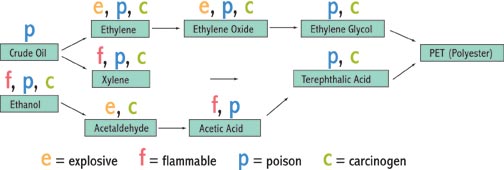
Depending on which polymer is required, different monomers are chosen. Ethylene, the monomer for polyethylene, is obtained directly from the distillation of crude oil; other monomers have to be synthesized from more complex petroleum derivatives, and the path to these monomers can be several steps long. The path for polyester, which is made by reacting ethylene glycol and terephthalic acid, is shown below. Key properties of the intermediate materials are also shown.

The polymers themselves are theoretically quite unreactive and therefore not particularly harmful, but this is most certainly not true of the monomers. Chemical companies usually make a big deal of how stable and unreactive the polymers are, but that’s not what we should be interested in. We need to ask, what about the monomers? How unreactive are they?

We need to ask these questions because a small proportion of the monomer will never be converted into polymer. It just gets trapped in between the polymer chains, like peas in spaghetti. Over time this unreacted monomer can escape, either by off-gassing into the atmosphere if the initial monomers were volatile, or by dissolving into water if the monomers were soluble. Because these monomers are so toxic, it takes very small quantities to be harmful to humans, so it is important to know about the monomers before you put the polymers next to your skin or in your home. Since your skin is usually moist,
any water-borne monomers will find an easy route into your body.

Polyester is the terminal product in a chain of very reactive and toxic precursors. Most are carcinogens; all are poisonous. And even if none of these chemicals remain entrapped in the final polyester structure (which they most likely do), the manufacturing process requires workers and our environment to be exposed to some or all of the chemicals shown in the flowchart above. There is no doubt that the manufacture of polyester is an environmental and public health burden
that we would be better off without.

What does all of that mean in terms of our health?  Just by looking at one type of cancer, we can see how our lives are being changed by plastic use:

  • The connection between plastic and breast cancer was first discovered in 1987 at Tufts Medical School in Boston by
    research scientists Dr. Ana Soto and Dr. Carlos Sonnenschein. In the midst of their experiments on cancer cell growth, endocrine-disrupting chemicals leached from plastic test tubes into the researcher’s laboratory experiment, causing a rampant proliferation of breast cancer cells. Their findings were published in Environmental Health Perspectives (1991)[1].
  • Spanish researchers, Fatima and Nicolas Olea, tested metal food cans that were lined with plastic. The cans were also found to be leaching hormone disrupting chemicals in 50% of the cans tested. The levels of contamination were twenty-seven times more than the amount a Stanford team reported was enough to make breast cancer cells proliferate. Reportedly, 85% of the food cans in the United States are lined with plastic. The Oleas reported their findings in Environmental Health Perspectives (1995).[2]
  • Commentary published in Environmental Health Perspectives in April 2010 suggested that PET might yield endocrine disruptors under conditions of common use and recommended research on this topic. [3]

These studies support claims that plastics are simply not good for us – prior to 1940, breast cancer was relatively rare; today it affects 1 in 11 women.  We’re not saying that plastics alone are responsible for this increase, but to think that they don’t contribute to it is, we think, willful denial.  After all, gravity existed before Newton’s father planted the apple tree and the world was just as round before Columbus was born.

Polyester fabric is soft, smooth, supple – yet still a plastic.  It contributes to our body burden in ways that we are just beginning to understand.  And because polyester is highly flammable, it is often treated with a flame retardant, increasing the toxic load.  So if you think that you’ve lived this long being exposed to these chemicals and haven’t had a problem, remember that the human body can only withstand so much toxic load – and that the endocrine disrupting chemicals which don’t seem to bother you may be affecting generations to come.

Agin, this is a blog which is supposed to cover topics in textiles:   polyester is by far the most popular fabric in the United States.  Even if made of recycled yarns, the toxic monomers are still the building blocks of the fibers.  And no mention is ever made of the processing chemicals used to dye and finish the polyester fabrics, which as we know contain some of the chemicals which are most damaging to human health.

Why does a specifier make the decision to use polyester – or another synthetic –  when all the data points to this fiber as being detrimental to the health and well being of the occupants?  Why is there not a concerted cry for safe processing chemicals at the very least?


[2] http://www.prnewswire.com/news-releases/zwa-reports-are-plastic-products-causing-breast-cancer-epidemic-76957597.html

[3]  Sax, Leonard, “Polyethylene Terephthalate may Yield Endocrine Disruptors”,
Environmental Health Perspectives, April 2010, 118 (4): 445-448

Illnesses — including remarkable combinations of symptoms — are on the rise.

  • Over the past 50 years, there has been a steady increase in the incidence of children developing cancer[1], asthma[2], attention deficit disorders[3], allergies[4], autoimmune disorders[5],  and others.

So too are the numbers of chemicals getting mixed inside us (studies have shown that babies are born pre-polluted)[6].   Chemicals accumulate, interact within the body, cause illness.

  • This is due to industrial chemicals being used in products that weren’t even formulated prior to about 1950.  Our children are subjected to an endless barrage of artificial pathogens that tax their systems to the max.

Is there a connection between the rise in illnesses and products you use in your home?

Yes.

  • But inadequate data exists regarding the chronic (long term, low level) health risks of most chemicals, and proving an absolute link between chemicals and these disorders isn’t easy, because in most cases it’s a slow-brewing condition that can smolder for decades before symptoms appear.  Furthermore, the timing of toxic exposure plays a much more significant role than previously recognized – babies exposed during critical periods of development often have a more severe reaction than those exposed at other times.

The chemicals used in textile processing are among the most toxic known, yet the fabrics themselves are often overlooked as a source of pollution.

Using organic products (like fabrics) is especially important for children, because children tend to be more influenced by their environment than adults.  Children are still developing, and many of these developmental processes are very sensitive to environmental contaminants, which can easily disrupt development.  Also, children take in much more of their environment relative to their body weight.   This amount, called the dose, has a much greater effect on children than on the adults around them, because children’s bodies are much smaller.  And finally, children tend to come in contact with environmental contaminants more often than adults do, simply because of their habits – like the two year olds who put everything in their mouths, or toddlers who spend a lot of time in the dust on the floor, where contaminants collect.

In outfitting your nursery, you see lots of information about baby products – lotions, powders, foods.  But please remember that there are other products that impact your child’s health, such as mattresses and fabrics.  You almost never hear somebody mention fabrics as a source of pollution – are they really so important?  Remembering that new studies are demonstrating that even nano doses of chemicals can contribute to disease over time, there are also many studies which specifically linked diseases to chemicals found in textiles:

  • In 2007, The National Institutes of health and the University of Washington released the findings of a 14 year study that demonstrates those who work with textiles were significantly more likely to die from an autoimmune disease than people who didn’t.[7]
  • A study by The National Institute for Occupational Safety and Health found a link in textile workers between length of exposure to formaldehyde and leukemia deaths.[8]
  • Women who work in textile factories with acrylic fibers have seven times the risk of developing breast cancer than does the normal population.[9]
  • Studies have shown that if children are exposed to lead, either in the womb or in early childhood, their brains are likely to be smaller.[10] Note:  lead is a common component in textile dyestuffs.
  • Many of the chemicals found in fabrics (which are, after all, about 27% synthetic chemicals, by weight) are known to have negative health effects, such as:
    • Disruptions during development (including autism, which now occurs in 1 of every 110 births in the US); attention deficit disorders (ADD) and hyperactivity (ADHD).   Chemicals commonly used in textiles which contribute:
  • Breathing difficulties, including asthma ( in children under 5 asthma has increased 160%  between 1980-1994[11])  and allergies. Chemicals used in textiles which contribute:
    • Formaldehyde, other aldehydes
    • Benzene, toluene
    • phthalates
  • Cancer  –  all childhood cancers have grown at about 1% per year for the past two decades[12]; the environmental attributable fraction of childhood cancer can be between 5% and 90%, depending on the type of cancer[13].  Chemicals linked to cancers, all of which are used in textile processing:
    • Formaldehyde
    • Lead, cadmium
    • Pesticides
    • Benzene
    • Vinyl chloride

So how do you try to limit your child’s exposure to this chemical contamination?

  • Our #1 recommendation is to use only natural fiber fabrics, rather than synthetics (including those ubiquitous cotton/poly blends), which are petroleum based and made entirely of toxic chemicals.   On top of that, synthetics are highly flammable.  So ditch the synthetics.
  • And don’t think that a fabric made of “organic cotton” is safe, because that doesn’t address the question of processing, where all the chemical contamination occurs.  If you use natural fibers, try to find GOTS  or Oeko Tex certified fabrics.
  • Don’t buy clothing or bedding (or anything made of fabric) that has a stain resistant or wrinkle resistant finish on it:  stain resistant finishes contain perfluorochemicals (Teflon, Scotchguard, Stainmaster, Crypton, Nanotex, Gore-Tex) and wrinkle resistant finishes use formaldehyde.
  • Crib mattresses are often made of polyurethane foam enclosed in vinyl covers.  These plastic products are made by combining highly toxic chemicals together to form the final material. When your child is asleep, every breath pulls in air that is literally inches away from the petroleum chemical materials used in the manufacturing of the bed itself.  With each breath, these chemical molecules are pulled across the child’s airways and then transferred to the blood from deep within the lungs. This process is repeated with each breath 365 nights a year.[14]
    Best choice:  Buy a natural latex core covered in organic GOTS or Oeko Tex certified fabric.
  • Sleepwear, bedding, even curtains and upholstery fabric – because they’re  made of fabric!  Why should you use organic fabrics – not just fabrics made with organic fibers –  for your baby?  The skin is the largest organ of the body and the skin allows many chemicals to pass into your baby through absorption.  Also, a baby’s skin is thinner and more permeable than an adult’s skin.  Not to mention the fact that many chemicals evaporate, to be breathed in.   Best choice:  GOTS or Oeko Tex certified fabrics.
  • Diapers – first choice would be organic diapers made of natural fibers (GOTS or Oeko Tex certified) – even though it probably means you’ll have to do the diaper laundering.   Hey, there are worse things.

[1] Reinberg,
“US Cancer Rates Continue to Fall”, Business Week, March 31, 2011; all
childhood cancers have grown at about 1% per year for the past two decades[1]

[5]
Type 1 diabetes has increased fivefold in past 40 years, in children 4 and
under, it’s increasing 6% per year. http://www.washingtonpost.com/wp-dyn/content/article/2008/03/14/AR2008031403386.html

[6]
Goodman, Sarah,  “Tests Find More than
200 Chemicals in Newborn Umbilical Cord Blood”, Scientific American, December,
2009.

[7]
Nakazawa, Donna Jackson, “Diseases Like Mine Are a Growing Hazard”, Washington
Post
, March 16, 2008.

[8]
Pinkerton, LE, Hein, MJ and Stayner, LT, “Mortality among a cohort of garment
workers exposed to formaldehyde: an update”, Occupational Environmental
Medicine, 2004 March, 61(3): 193-200.

[9]
Occupational and Environmental Medicine 2010, 67:263-269 doi:
10.1136/oem.2009.049817  SEE ALSO:  http://www.breastcancer.org/risk/new_research/20100401b.jsp  AND http://www.medpagetoday.com/Oncology/BreastCancer/19321
[10]
Dietrich, KN et al, “Decreased Brain Volume in Adults with Childhood Lead
Exposure”, PLoS Med 2008 5(5): e112.

[13] Gouveia-Vigeant,
Tami and Tickner, Joel,  “Toxic Chemicals
and Childhood Cancer:  a review of the
evidence”, U of Massachusetts, May 2003

[14] http://www.chem-tox.com/beds/frame-beds.htm.  See also “Respiratory Toxicity of mattress
emissions in mice”, Archives of Environmental health, 55 (1): 38-43, 2000.

Back in 2003, the Association for Contract Textiles (ACT), a trade organization for North American manufacturers of contract textiles consisting of many of the big textile companies (click here for members), identified the need for a universal standard to better serve suppliers, distributors and specifiers.  According to Petie Davis of NSF International, a not-for-profit, non-governmental organization, which provides standards development, product certification, education, and risk-management for public health and safety,   “Architects, designers, and specifiers have been demanding a uniform, transparent sustainability standard that would give them the assurance they need to specify sustainable product.”   The manufacturers saw the writing on the wall, and a cynical person might think they wanted to get a jump start on creating their own set of standards before something else was foisted on them.

In early 2004, the ACT Environmental Committee selected GreenBlue[1] to develop a standard suitable for textiles used in commercial interiors.  That fall, ACT and GreenBlue approached NSF International to provide American National Standards Institute (ANSI)[2]-certified credentials needed to build a standard, which became  NSF/ANSI 336.  They saw this new standard as being applicable on a national level and available as a model to other areas of the textile industry.  The standard was developed using a consensus-based process, which included textile mills, suppliers,  architects and designers, academics, trade associations, representatives from the U.S. Environmental Protection Agency as well as state agencies and non-governmental organizations.

As you might imagine, it took a long time to hammer out an agreement:   7 years of wrangling and compromise, suggestions and counter-suggestions, before everybody agreed on a standard that they could all live with.  The new NSF/ANSI Standard  336 was officially finalized in April, 2011, and debuted in June, 2011 at NeoCon.

So now it’s supposed to be a lot easier to specify a sustainable fabric.  But is this new standard the one that provides specifiers with the assurance that what they’re buying is indeed a sustainable product?

Environmental Building News (EBN) said that “this new standard represents significant progress for an industry with significant toxicity concerns due to fabric processing and finishes.”[3]  This time we do not agree with EBN, because we think the standard represents a roadblock to progress.

Let’s just consider how the standard deals with toxicity issues, which were highlighted by EBN.   When you do that, you find that the new NSF standard is anemic when compared to existing standards, such as Oeko Tex and GOTS, which
are both stunningly more strict than the new NSF/ANSI 336.  Even though 336 pertains to contract textiles, which are overwhelmingly made of synthetics,  the processing and finishes of these synthetics could follow the same parameters as are in place now with existing standards such as GOTS.   For example, see the limits for metals in dyes and pigments as listed in section 6.4.1 of NSF/ANSI 336 versus Oeko Tex and GOTS:

Metal

NSF/ANSI 336

OEKO TEX

GOTS

Limit for
dyes (ppm)
Limit for
pigments(ppm)

1: Baby in ppm

IV: interiors fabrics : in ppm

Antimony

50

250

30

30

prohibited

Arsenic

50

50

0.2

1

prohibited

Cadmium

20

50

0.1

0.1

prohibited

Chromium

100

100

1

2

prohibited

Lead

100

100

0.2

1

prohibited

Mercury

4

25

0.02

0.02

prohibited

Zinc

1500

1000

not listed

prohibited

Copper

250

unlimited

25

50

prohibited

Nickel

200

unlimited

1

4

prohibited

Tin

250

 unlimited

not listed

prohibited

Barium

100

100

prohibited

Cobalt

500

unlimited

1

4

prohibited

Iron

2500

unlimited

not listed

prohibited

Manganese

1000

unlimited

prohibited

Selenium

20

100

prohibited

Silver

100

unlimited

prohibited

Consider lead –  under the new Consumer Product Safety Improvement Act of 2008,  products designated for children must meet 100 ppm lead content by August, 2011.  Does this limit value of 100 ppm really represent progress when studies have shown that exposure to lead in any amount can be hazardous?  Sorry, this time we do not agree with Environmental Building News  – we think this new standard represents an obfuscation of the issues and is a roadblock to progress.

Next week we’ll show you how the standard is set up so as to allow the obfuscation of issues.


[1] GreenBlue is a non-profit institute
that stimulates the creative redesign of industry by focusing the expertise of
professional communities to create practical solutions, resources, and
opportunities for implementing sustainability. GreenBlue is recognized for its
ability to convene stakeholders, establish ambitious objectives, and develop
practical design tools and resources. http://www.greenblue.org

[2] The American National Standards Institute
or ANSI is a private non-profit organization that oversees the development of
voluntary consensus standards for products, services, processes, systems, and
personnel in the United States. The organization also coordinates U.S.
standards with international standards so that American products can be used
worldwide.

ANSI accredits
standards that are developed by representatives of standards developing
organizations, government agencies, consumer groups, companies, and others.
These standards ensure that the characteristics and performance of products are
consistent, that people use the same definitions and terms, and that products
are tested the same way. http://www.ansi.org

So for the past two weeks we’ve discussed the differences between synthetic and natural fibers.  But there’s more to consider than just the fiber content of the fabric you buy.  There is the question of whether a natural fiber is organically grown, and what kind of processing is used to create the fabric.

First, by substituting organic fibers for conventionally grown fibers you are supporting organic agriculture, which has myriad environmental, social and health benefits.  Not only does organic farming take far less energy than conventional farming (largely because it does not use oil based fertilizers) [1] , which helps to mitigate climate change, but it also:

  • eliminates the use of synthetic fertilizers, pesticides and genetically modified organisms (GMOs) which is  an improvement in human health  and agrobiodiversity;
  • conserves water (making the soil more friable so rainwater is absorbed better – lessening irrigation requirements and erosion);
  • ensures sustained biodiversity;
  • and compared to forests, agricultural soils may be a more secure sink for atmospheric carbon, since they are not  vulnerable to logging and wildfire.

Organic production has a strong social element and includes many Fair Trade and ethical production principles.  As such it can be seen as more than a set of agricultural practices, but also as a tool for social change.[2]  For example, one of the original goals of the organic movement was to create specialty products for small farmers who could receive a premium for their products and thus be able to compete with large commercial farms.

Organic agriculture is an undervalued and underestimated climate change tool that could be one of the most powerful strategies in the fight against global warming, according to Paul Hepperly, Rodale Institute Research Manager. The Rodale Institute Farming Systems Trial (FST) soil carbon data (which covers 30 years)  shows conclusively that improved global terrestrial stewardship–specifically including regenerative organic agricultural practices–can be the most effective currently available strategy for mitigating CO2 emissions. [3]

But if you start with organic natural fibers (a great choice!)  but process those fibers conventionally, then you end up with a fabric that is far from safe.  Think about making applesauce:  if you start with organic apples, then add Red Dye #2, preservatives, emulsifiers, stablizers and who knows what else – do you end up with organic applesauce?  The US Department of Agriculture would not let you sell that mixture as organic applesauce, but there is no protection for consumers when buying fabric.  And the same issues apply, because over 2000 chemicals are used routinely in textile processing.(4)  Many of the chemicals used in textile processing have unknown toxicity, and many others are known to be harmful to humans (such as formaldehyde, lead, mercury, bisphenol A and other phthalates,  benzenes and others).   In fact, one yard of fabric made with organic cotton fiber  is about 25% by weight synthetic chemicals – many of which are proven toxic to humans. (5)

I know you’re saying that you don’t eat those fabrics, so what’s the danger?  Actually, your body is busy ingesting the chemicals, which are evaporating (so we breathe them in), or through skin absorption (after all, the skin is the largest organ of the body).  Add to that the fact that each time you brush against the fabric, microscopic pieces of the fabric abrade and fly into the air – so we can breathe them in.  Or they fall into the dust in our homes, where pets and crawling babies breathe them in.

Should that be a concern?  Well, there is hardly any evidence of the effects of textiles themselves on individuals, but in the US, OSHA does care about workers, so most of the studies have been done on workers in the textile industry.  Greenpeace also did a study on specific items manufactured by Disney, but I would guess the results pertain all across the spectrum:

  • Autoimmune diseases (such as IBD, diabetes, rheumatoid arthritis,  for example, and linked to many of the chemicals used in textile processing) are reaching epidemic rates,  and a 14 year study published by the University of Washington and the National Institutes of Health found that people who work with textiles (among other industries) are more likely to die of an autoimmune disease than people who don’t (6);
  • We know formaldehyde is bad for us, but in fabric?  A study by The National Institute for Occupational Safety and Health found a link in textile workers between length of exposure to formaldehyde and leukemia deaths.[7]  Note: most cotton/poly sheet sets in the U.S. are treated with a formaldehyde resin.
  • Women who work in textile factories with acrylic fibers have seven times the risk of developing breast cancer than does the normal population.[8]
  • A study in France revealed a correlation between the presence of cancer of the pharynx and occupation in the textile industry.(9)
  • A high degree of colorectal cancer, thyroid cancer, testicular cancer and nasal cancer has been found among textile workers, and a relationship between non-Hodgkin’s lymphoma and working in the textile industry was observed.(10)

And consider this:

  • The Mt. Sinai Children’s Environmental Health Center published a list of the top 10 chemicals they believe are linked to autism – and of the 10, 6 are used in textile processing and 2 are pesticides. (11)
  • Phthalates are so toxic that they have been banned in the European Union since 2005. They have recently been banned in the State of California in children’s toys.   They are ubiquitous –  and are also found  in most  textile inks.[12]  So parents careful not to bring toxic toys into their homes for  can be  nevertheless  unknowingly putting their kids to sleep on cute printed sheets full of phthalates.

Though some argue that we’re less prepared because we’re confronting fewer natural pathogens, it’s also true that we’re  encountering an endless barrage of artificial pathogens that are taxing our systems to the maximum.  And our children are the pawns in this great experiment.

Are these rates of disease and the corresponding rise in the use of industrial chemicals a coincidence? Are our increased rates of disease due to better diagnosis?   Some argue that we’re less prepared because we’re confronting fewer natural pathogens.  All plausible.   But if you think they are the main culprits, your opinion is not shared by a goodly number of scientists, who believe that this endless barrage of artificial pathogens that is taxing our systems to the maximum  has replaced bacteria and viruses as the major cause of human illness.  We don’t have to debate which source is primary; especially because, with the rise of super bugs, it’s a silly debate. The point remains that industrial pollution is a cause of human illness – and it is a cause we can take concrete actions to stem.

Textiles are the elephant in the room – the industry is global, relatively low tech, and decentralized –  certainly not the darling of venture capatalists who look for the next big thing.  So not many research dollars are going into new ways of producing fabrics.    Most of the time people are looking for the lowest price fabric for their projects or products – so the industry is on a race to cut costs in any way possible:   in 2007, the Wall Street Journal’s Jane Spencer detailed the pollution caused by Chinese textile industries who were being pushing by their multinational clients to cut costs, resulting in untreated effluent discharge (13).


[1] Aubert, C. et al.,  (2009) Organic farming and climate change: major conclusions of the Clermont-Ferrand seminar (2008) [Agriculture biologique et changement climatique : principales conclusions du colloque de Clermont-Ferrand (2008)]. Carrefours de l’Innovation Agronomique 4. Online at <http://www.inra.fr/ciag/revue_innovations_agronomiques/volume_4_janvier_2009>

A study done by Dr. David Pimentel of Cornell University found that organic farming systems used just 63% of the energy required by conventional farming systems, largely because of the massive amounts of energy requirements needed to synthesize nitrogen fertilizers.

[2]  Fletcher, Kate, Sustainable Fashion and Textiles, p. 19

[3] http://www.rodaleinstitute.org/files/Rodale_Research_Paper-07_30_08.pdf  Also see:  Muller, Adrian, “Benefits of Organic Agriculture as a Climate change Adaptation and Mitigation Strategy for Developing Countries’, Environement for Development, April 2009

(4)  See the American Association of Textile Chemists and Colorists’ (AATCC) Buyers Guide, http://www.aatcc.org/

(5) Lacasse and Baumann, Textile Chemicals:  Environmental Data and Facts, Springer, New York, 2004, page 609

(6) Nakazawa, Donna Jackson, “Diseases Like Mine are a Growing Hazard”, Washington Post, March 16, 2008

(7) Pinkerton, LE, Hein, MJ and Stayner, LT, “Mortality among a cohort of garment workers exposed to formaldehyde: an update”, Occupational Environmental Medicine, 2004 March, 61(3): 193-200.

(8) Occupational and Environmental Medicine 2010, 67:263-269 doi:
10.1136/oem.2009.049817  SEE ALSO:  http://www.breastcancer.org/risk/new_research/20100401b.jsp  AND http://www.medpagetoday.com/Oncology/BreastCancer/19321
(9) Haguenour, J.M., “Occupational risk factors for upper respiratory tract and upper digestive tract cancers” , Occupational and Environmental Medicine, Vol 47, issue 6 (Br J Ind Med1990;47:380-383 doi:10.1136/oem.47.6.380).

(10)  http://www.fibre2fashion.com/industry-article/3/297/safety-and-health-issues-in-the-textile-industry2.asp

(11) http://www.mountsinai.org/patient-care/service-areas/children/areas-of-care/childrens-environmental-health-center/cehc-in-the-news/news/mount-sinai-childrens-environmental-health-center-publishes-a-list-of-the-top-ten-toxic-chemicals-suspected-to-cause-autism-and-learning-disabilities

(12)  “Textile Inkmaker Tackles Phthalates Ban”, Esther D’Amico, Chemical Week,  September 22, 2008  SEE ALSO:  Toxic Textiles by Disney, http://archive.greenpeace.org/docs/disney.pdf

(13) Spencer, Jane, “China Pays Steep Price as Textile Exports Boom”, Wall Street Journal, August 22, 2007.


Global Recycle Standard

O Ecotextiles (and Two Sisters Ecotextiles)

It looks like the plastic bottle is here to stay, despite publicity about bisphenol A  and other chemicals that may leach into liquids inside the bottle.   Plastic bottles (the kind that had been used for some kind of consumer product) are the feedstock for what is known as “post-consumer recycled polyester”. Even though plastic recycling appears to fall far short of its promise,  recycled polyester, also called rPET, is now accepted as a “sustainable” product in the textile market, because it’s a message that can be easily understood by consumers – and polyester is much cheaper than natural fibers.   So manufacturers, in their own best interest, have promoted “recycled polyester” as the sustainable wonder fabric, which has achieved pride of place as a green textile option in interiors.

We have already posted blogs about plastics (especially recycled plastics) last year ( to read them, click here, here or here ) so you know where we stand on the use of plastics in fabrics.  All in all, plastic recycling is not what it’s touted to be. Even if recycled under the best of conditions, a plastic bottle or margarine tub will probably have only one additional life. Since it can’t be made into another food container, your Snapple bottle will become a “durable good,” such as carpet or fiberfill for a jacket. Your milk bottle will become a plastic toy or the outer casing on a cell phone. Those things, in turn, will eventually be thrown away.  Even though the mantra has been “divert from the landfill”, what do they mean?  Divert to where?

But the reality is that polyester bottles exist,  and recycling some of them  into fiber seems to be a better use for the bottles than land filling them.

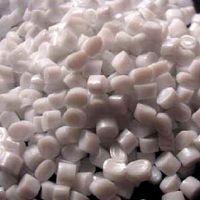
Recycled post consumer polyester is made from bottles – which have been collected, sorted by hand, and then melted down and formed into chips (sometimes called flakes).

PET resin chips


These chips or flakes are then sent to the yarn spinning mills, where they’re melted down, often mixed with virgin polyester,  and  and spun into yarn, which is why you’ll often see a fabric that claims it’s made of 30% post consumer polyester and 70% virgin polyester, for example.

Polyester yarn

But today the supply chains for recycled polyester are not transparent, and if we are told that the resin chips we’re using to spin fibers are made from bottles – or from industrial scrap or old fleece jackets  – we have no way to verify that.  Once the polymers are at the melt stage, it’s impossible to tell where they came from.  So the yarn/fabric could be virgin polyester or  it could be recycled.   Many so called “recycled” polyester yarns may not really be from recycled sources at all because – you guessed it! – the  process of recycling is much more expensive than using virgin polyester.  Unfortunately not all companies are willing to pay the price to offer a real green product, but they sure do want to take advantage of the perception of green.   So when you see a label that says a fabric is made from 50% polyester and 50% recycled polyester – well, (until now) there was absolutely no way to tell if that was true.

Along with the fact that whether what you’re buying is really made from recycled yarns – or not – most people don’t pay any attention to the processing of the fibers.  Let’s just assume, for argument’s sake, that the fabric (which is identified as being made of 100% recycled polyester) is really made from recycled polyester.  But unless they tell you specifically otherwise, it is processed conventionally.

What does that mean?    It can be assumed that the chemicals used in processing – the optical brighteners, texturizers, dyes, softeners, detergents, bleaches and all others – probably contain some of the chemicals which have been found to be harmful to living things.  In fact the chemicals used, if not optimized, may very well contain the same heavy metals, AZO dyestuffs and/or finish chemicals that have been proven to cause much human suffering.

It’s widely thought that water use needed to recycle polyester is low, but who’s looking to see that this is true?  The weaving, however, uses the same amount of water (about 500 gallons to produce 25 yards of upholstery weight fabric) – so the wastewater is probably expelled without treatment, adding to our pollution burden.

And it’s widely touted that recycling polyester uses just 30 – 50% of the energy needed to make virgin polyester – but is that true in every case?

There is no guarantee that the workers who produce the fabric are being paid a fair wage – or even that they are working in safe conditions.

And finally there are issues specific to the textile industry:

  • The base color of the recyled chips varies from white to creamy yellow.  This makes it difficult to get consistent dyelots, especially for pale shades, necessitating more dyestuffs.
  • In order to get a consistently white base, some dyers use chlorine-based bleaches.
  • Dye uptake can be inconsistent, so the dyer would need to re-dye the batch.  There are high levels of redyeing, leading to increased energy use.
  • PVC is often used in PET labels and wrappers and adhesives.  If the wrappers and labels from the bottles used in the post-consumer chips had not been properly removed and washed, PVC may be introduced into the polymer.
  • Some fabrics are forgiving in terms of appearance and lend themselves to variability in yarns,  such as fleece and carpets; fine gauge plain fabrics are much more difficult to achieve.

As the size of the recycled polyester market grows, we think the integrity of the sustainability claims for polyesters will become increasingly important.  There has not been the same level of traceability for polyesters as there is for organically labeled products.  According to Ecotextile News, this is due (at least in part) to lack of import legislation for recycled goods.

One solution, suggested by Ecotextile News, is to create a tracking system that follows the raw material through to the final product.  This would be very labor intensive and would require a lot of monitoring, all of which adds to the cost of production – and don’t forget, recycled polyester now is fashion’s darling because it’s so cheap, so those manufacturer’s wouldn’t be expected to increase costs.

There are also private standards which have begun to pop up, in an effort to differentiate their brands.  One fiber supplier which has gone the private standard route is Unifi.   Repreve™ is the name of Unifi’s recycled polyester – the company produces recycled polyester yarns, and (at least for the filament yarns) they have Scientific Certification Systems certify that Repreve™ yarns are made with 100% recycled content.  Unifi’s  “fiberprint” technology audits orders across the supply chain  to verify that if Repreve is in a product it’s present in the amounts claimed.  But there are still  many unanswered questions (because they’re  considered “proprietary information” by Unifi)  so the process is not transparent.

But now, Ecotextile News’s  suggestion has become a reality.   There is now a new, third party certification which is addressing these issues.  The Global Recycle Standard (GRS), originated by Control Union and now administered by Textile Exchange (formerly Organic Exchange),  is intended to establish independently verified claims as to the amount of recycled content in a yarn, with the important added dimension of prohibiting certain chemicals, requiring water treatment and upholding workers rights, holding the weaver to standards similar to those found in the Global Organic Textile Standard:

  • Companies must keep full records of the use of chemicals, energy, water consumption and waste water treatment including the disposal of sludge;
  • All prohibitied chemicals listed in GOTS are also prohibited in the GRS;
  • All wastewater must be treated for pH, temperature, COD and BOD before disposal;
  •  There is an extensive section related to worker’s rights.

The GRS provides a track and trace certification system that ensures that the claims you make about a product can be officially backed up. It consists of a three-tiered system:

  • Gold standard –  products contain between 95 percent to 100 percent recycled material;
  • Silver standard – products contain between 70 percent to 95 percent recycled product;
  • Bronze standard –  products  have a minimum of 30 percent recycled content.

I have long been concerned about the rampant acceptance of recycled polyester as a green choice  when no mention has been made of processing chemicals, water treatment or workers rights, so we welcome this new GRS certification, which allows us to be more aware of what we’re really buying when we try to “do good”.

Global Organic Textile Standard

O Ecotextiles (and Two Sisters Ecotextiles)

In the 1980’s, producers of eco-friendly textiles generally worked under the umbrella of  organic food associations.  However, they found that the food association was impractical for textile producers because  although the growing and harvesting of food and fiber crops were similar, the processing of fibers in preparation to make fabric varied widely.  The organic food associations were concerned primarily with food related issues.   In addition, organic fabrics and fashion was being shown in specialized stores rather than in organic food markets.

In 2002, at the Intercot Conference in Dusseldorf, Germany, a workshop with representatives of organic cotton producers, the textile industry, consumers, standard organizations and certifiers discussed the need for a harmonized and world-wide recognized organic textile standard.  The many different standards, they felt, was causing confusion and acting as a obstacle to international exchange and recognition of organic fabrics.  As a result of this workshop, the  “International Working Group on Global Organic Textile Standard“ (IWG) was founded, with an aim to work on the codification of various regional approaches and to develop a set of global standards.  Members of this group included Internationale Verband der Naturtextilwirtschaft e. V.“ (IVN),  the  Organic Trade Association (United States), the Soil Association (England)  and Japan Organic Cotton Association  (Japan).

In 2006, their work was published as the Global Organic Textile Standard (GOTS) , which has since evolved into the leading set of criteria in the field of organic textile processing.  A main achievement of this group was the ability to compromise and to find even consensus for points that were considered to be ‘non-negotiable’.   Not all standard organizations that participated the process ended up with signing the agreement of the Working Group.

From the GOTS website:  “Since its introduction in 2006 by the International Working Group on Global Organic Textile Standard, the GOTS has gained universal recognition, led to abolishment of numerous previous similar standards of limited application and has become – with more than 2750 certified textile processing, manufacturing and trading operators in more than 50 countries and an abundance of certified products – the leading standard for the processing of textile goods using organic fibers, including environmentally oriented technical as well as social criteria.”  This is a major accomplishment, especially given the global nature of the textile supply chain.

Beside the technical requirements a certifier has to meet to become approved by the IWG for GOTS certification, it is also a prerequisite that he discontinues use of any other certification. This measure was chosen to support the goal of a harmonized Global Standard and related certification system that allows certified suppliers to export their organic textiles with one certificate recognized in all relevant sales markets in order to strengthen the awareness and market for organic textiles.

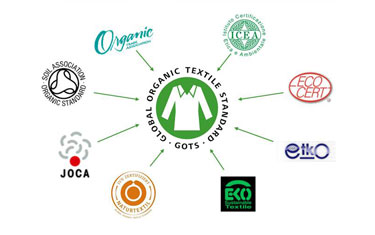
The following standards have become completely harmonized with GOTS:

  • North American Fiber Standard – Organic Trade Association (USA)
  • Guidelines ‘Naturtextil IVN Zertifiziert’ – International Association Natural Textile Industry (Germany)
  • Standards for Processing and Manufacture of Organic Textiles – Soil Association (England)
  • EKO Sustainable Textile Standard – Control Union Certifications (formerly SKAL)
  • Standards for Organic Textiles – Ecocert (France)
  • Organic Textile Standard – ICEA (Italy)
  • Standards for Organic Textiles – ETKO (Turkey)
  • Organic Fiber Standards – Oregon Tilth (USA)
  • Standards for Processing of Organic Textile Products – OIA (Argentina)

One member of the IWG offers beside GOTS as their basic standard one further standard for certification that complies with GOTS but contains some additional requirements:

  • Guidelines ‘Naturtextil IVN Zertifiziert BEST’ – International Association Natural Textile Industry (Germany)

GOTS aims to define a universal standard for organic fabrics—from harvesting the raw materials, through environmentally and socially responsible manufacturing, to labeling—in order to provide credible assurance to consumers. Standards apply to fiber products, yarns, fabrics and clothes and cover the production, processing, manufacturing, packaging, labeling, exportation, importation and distribution of all natural fiber products.   GOTS provides a continuous quality control and certification system from field to shelf.  A GOTS certified fabric is therefore much more than just a textile which is made from organic fibers.

Why is this a big deal?  As we’ve said before, it’s like taking organic apples, and cooking them with Red Dye #2, preservatives, emulsifiers, and stabilizers –  you can’t call the finished product organic applesauce.  Same is true with fabrics, which contain as much as 27% (by weight) synthetic chemicals.

And in today’s world, with the complex supply chain that multinational companies like Wal-Mart, Nordstrom and Levi’s use, this is a very big deal.   As companies attempt to get a handle on their suppliers and maintain quality control, the list of universally understood environmental criteria in GOTS  is coming in handy. While consumers probably won’t see a GOTS tag on conventional cotton jeans, some companies are asking suppliers to use only GOTS-certified dyes and chemicals on conventional cotton clothing.  In fact, the companies mentioned above, along with Banana Republic, H&M and Target are just some of the companies that plan to use GOTS certification for their organic products.

The GOTS standard includes:

  • Harvesting criteria which requires the use of from 70% to 95% organic fiber.
    • As the GOTS website explains, “As it is to date technically nearly impossible to produce any textiles in an industrial way without the use of chemical inputs, the approach is to define criteria for low impact and low residual natural and synthetic chemical inputs.   So in addition to requiring that   all inputs have to meet basic requirements on toxicity and biodegradability GOTS also  prohibits entire classes of chemicals, rather than calling out specific prohibited chemicals.  What that means is that instead of prohibiting, for example lead and cadmium (and therefore allowing other heavy metals by default), GOTS prohibits ALL heavy metals.  Here’s the Version 3.0 list:
SUBSTANCE GROUP CRITERIA
Aromatic solvents Prohibited
Chlorophenols (such as TeCP, PCP) Prohibited
Complexing agents and surfactants Prohibited are: All APEOS, EDTA, DTPA, NTA, LAS, a-MES
Fluorocarbons Prohibited (i.e., PFOS, PFOA)
Formaldehyde and short-chain aldehydes Prohibited
GMO’s Prohibited
Halogenated solvents Prohibited
Heavy Metals Prohibited
Inputs containing functional nanoparticles Prohibited
Inputs with halogen containing compounds Prohibited
Organotin compounds Prohibited
Plasticizers (i.e., Phthalates, Bisphenol A and all others with endocrine disrupting potential) Prohibited
Quaternary ammonium compounds Prohibited: DTDMAC, DSDMAC and DHTDM
  • Environmental manufacturing practices, with a written environmental policy, must be in place.
  • Environmentally safe processing requirements, which includes wastewater treatment internally before discharge to surface waters, must be in place.  This pertains to pH and  temperature as well as to biological and chemical residues in the water.
  • Environmentally sound packaging requirements are in place; PVC in packaging is prohibited, paper must be post-consumer recycled or certified according to FSC or PEFC.
  • Labor practices are interpreted in accordance with the International Labor Organization (ILO – no forced, bonded, or slave labor; workers have the right to join or form trade unions and to bargain collectively; working conditions are safe and hygienic; there must be no new recruitment of child labor (and for those companies where children are found to be working, provisions must be made to enable him to attend and remain in quality education until no longer a child);  wages paid must meet, at a minimum, national legal standards or industry benchmarks, whichever is higher; working hours are not excessive and inhumane treatment is prohibited.
  • GOTS has a dual system of quality assurance consisting of on-side annual inspection (including possible unannounced inspections based on risk assessment of the operations) and residue testing.
  • There are requirements surrounding exportation, importation and distribution of all natural fibers.

In June, 2011, The Global Organic Textile Standard launched an open comment period on it’s first revision draft of the new GOTS version 3.0.  Following this announcement, IFOAM collected comments from its members and related stakeholders in order to shape the position of the movement towards the Global Organic Textile Standard.

A total of 36 persons and/or organizations sent their comments to IFOAM.  Two important issues were raised:  90% of the respondents were against the use of nanotechnologies in organic textiles (5% abstention, 5% in favor),  and 86 % were in principle against the use of synthetic chemicals in textiles labeled as organic (3% abstention, 11% in favor). Based on the feedback provided, IFOAM submitted detailed comments to GOTS and proposed:

  • to further restrict the use of synthetic substances, possibly switching to a positive list of allowed substances, instead of a list of forbidden ones.
  • to add requirements to ban the deliberate use of nano-technologies in the textile processing.

GOTS is a positive ethical choice among both consumers and producers and is the most comprehensive in terms of addressing environmental issues.  Although it is difficult to obtain, it can lead to important strategic business benefits.

However, the GOTS certification applies to only natural fibers, so it cannot be applied to polyester or other synthetic fibers, which are by far the most popular fiber choice in the U.S. today.  In addition, it does not directly address the carbon footprint of an organization or its production practices.  (Please note: the choice of a fabric made of organically raised natural fibers has been shown to have a much lower carbon impact than any fabric made of synthetic fibers.  We touched on that in our some of our blog posts; click here and here to read them.)

Cradle to Cradle

O Ecotextiles (and Two Sisters Ecotextiles)

Cradle to Cradle (often written as C2C) is the certification managed by the Cradle to Cradle Products Innovation Institute (C2CPII) – previously managed byMcDonough Braungart Design Chemistry (MBDC).  William McDonough and Michael Braungart, Time magazine’s anointed “Heroes of the Environment”, are both internationally renowned in their fields.  Known for idealism, vision, and consulting for high-profile corporate clients like Ford Motor Company and Nike, McDonough and Braungart have envisioned “a new industrial revolution,” calling for “remaking the way we make things,” the subtitle of their 2002 book Cradle to Cradle. In that book and elsewhere, McDonough and Braungart disparage “cradle-to-grave” products that aren’t designed to be lasting parts of the manufacturing cycle and that poison the environment through pollution and disposal. MBDC’s Cradle to Cradle™ (often written as C2C) protocol envisions every resource used to make products as a safe nutrient in an endless cycle.[1]  On paper Cradle to Cradle is a dream:   Their goal is to have  “a delightfully diverse, safe, healthy and just world with clean air, water, soil and power- economically,  equitably, ecologically and elegantly enjoyed.”

Credit: MBDC

It is a brilliant concept – how can anybody not love it?   Well, this may be a case of something sorta like the Emperor’s new clothes – two highly esteemed people, with overreaching, altruistic goals, seducing us all with ideas we can fall in love with.   But, as Lloyd Alter explains in a Treehugger article this year ( click here to read the article )  after looking deeper, we find out that it might not be  quite as wonderfully “green” as we  thought.  MBDC says that “Consumers can rely on the C2C certification mark to identify and specify sustainable products” when in fact, at least at the Basic and Silver levels, you cannot.  According to Environmental Building News, one realizes that, at the lower levels of certification (Basic and Silver), Cradle to Cradle Certification isn’t really a product certification at all.[2]  And that creates a problem, because designers – even relatively sophisticated “green” designers – perceive that any level of C2C certification means a truly sustainable product.

So let’s back up a bit to understand why the Basic and Silver “certification” is not, as Environmental Building News claims, a product certification at all.    To be clear, C2C has not claimed to be a third party certification, because MBDC consults with manufacturers to help them gain a thorough understanding of their products (since many manufacturers depend on components from other manufacturers).  They then help the manufacturers make changes necessary to achieve certification –  so some perceive a bias.   In 2010, perhaps to avoid this perception, MBDC transferred the C2C system to the C2CPII, a California-based nonprofit, which will allow the separation of the certification body from the consultation body.

The C2C certification program works to express the C2C design philosophy through five categories.  A product’s final score is the lowest of its five individual scores in each of these five areas:

  1. Material Health  – i.e., chemicals contained in a product.  Materials chemistry is  MBDC’s greatest strength and, according to MBDC’s Jay Bolus, executive vice president for certification, “the heart and soul of the program”. To achieve any C2C certification requires that all ingredients be identified down to the 100 parts per million (ppm) or 0.01% level and assessed according to 19 human and environmental health criteria. MBDC uses these criteria to categorize chemicals as red, yellow, or green. Chemicals with incomplete environmental data are rated gray and are, according to Bolus, treated as if they were red. For a product to achieve any C2C certification other than Basic or Silver, it cannot contain any ingredients classified as red;  if it does the manufacturer must have a plan for eliminating them — unless red ingredients have no existing substitutes and the manufacturer contains those ingredients in a controlled, closed-loop technical cycle.[3]  Published C2C guidelines don’t detail what the certification requires of those strategies to eliminate the toxic elements. ”We will help them develop the strategy and develop some measurable milestones,” Bolus explained. “Let’s say it’s a textile—we might know of some dyes that don’t have hazardous characteristics.” MBDC would share that information and help the manufacturer reformulate its product.
  2. Material Reutilization:  this category concerns recycled or renewable materials.
  3. Renewable Energy Use  in manufacturing.
  4. Water Stewardship (water use in manufacturing) – both energy and water use standards focus on manufacturing and do not address the energy and water consumption that results from use of the product.  In addition, there is no assessment of air emissions or product longevity.
  5. Social Responsibility (corporate)

Based on ratings in each of these categories, a product can be certified by MBDC as C2C Basic, Silver, Gold, or Platinum.

However, according to Environmental Building News (click here to read the full article ) , there are a number of areas where the concept and the reality of certification—at least at the levels that are being achieved today—don’t match.

  1. A C2C Basic or Silver certification, for example, doesn’t guarantee that a product is free of all red ingredients as mentioned above — the only “knockout” chemical at those levels is PVC, for example.  Although C2C identifies red ingredients at the Basic and Silver level, and companies are asked to develop plans to phase them out or optimize them, there is no C2C report card for consumers that details what a certified product does or does not include – because the list used is proprietary.  An example of what this means is exemplified by Owens Corning Propink fiberglass, which is currently certified C2C Silver.  One can wonder how a product  that some consider “the asbestos of the 21st  Century” and is a possible carcinogen can be awarded Cradle to Cradle Silver. But the fact is, they don’t list the ingredients and publish the spreadsheet or the formula for figuring out the nutrient calculations.  It’s considered proprietary.
  2. MBDC  certifies just the product,  without looking at how it is installed or used. For example, Hycrete  is an additive designed to waterproof concrete[4].  However, when used as intended it is not biodegradable and cannot be recycled by any established process. In practice, then, C2C’s certification of Hycrete as a biological nutrient means that “if you accidentally spill a five-gallon bucket into a local stream, it’s going to degrade and isn’t going to do any harm,” said Bolus.
  3. Also a concern to some industry peers is that C2C is not a true third-party certification program. Third-party certifications are respected by consumers in part because the certifier doesn’t have a financial relationship with manufacturers that could influence the program’s standards or the certification results. The standards community is moving toward a separation between the organizations which develop the standard from the ones which do the actual certification.  In contrast to this model,  MBDC developed the C2C standard and certifies products with it, while its primary business is consulting with manufacturers.

For many of the C2C criteria, Basic, Silver and Gold certifications are based on plans and intentions. “Platinum is where the rubber meets the road and they’re actually recovering product,” said Kirsten Ritchie, director of sustainable design for Gensler and an expert on product certification. Tom Lent, policy director of the nonprofit Healthy Building Network, said, “It is pretty important to understand that C2C certification is, at least before Platinum, more about [the manufacturer’s] process with MBDC than actual final accomplishments in the product.” Explaining MBDC’s rationale for the tiered certifications, McDonough said, “People need the opportunity to improve products. We’ve got to give everybody a chance to get into the game, and then we need to test them on their promises.”  As of today, no product of any kind has achieved Platinum.

These distinctions between levels, however, may not be readily apparent to consumers and design professionals, who see the C2C logo stamped on a product as a validation that it is “green”, and who believe they’re supporting the lofty ideals exemplified by the MBDC protocol, without realizing that those ideals are reflected only at the unattained Platinum level.

The editors of Environmental Building News have called for MBDC to fix this by continuing to refer to Gold and Platinum levels as product certifications; while the Basic and Silver levels should be referred to in language which “clearly conveys that such a product is being reviewed by the Cradle to Cradle program and that the company has committed to work with MBDC to make it better. That’s important and a huge step for a manufacturer—so it deserves to be recognized—but to call it “certification” is misleading.”[5]

As Lloyd Alter, in a Treehugger post in February, 2011, says:

” There is so much to love about Cradle to Cradle. As a design philosophy, it is brilliant and a  model for everyone. I admire William McDonough as an architect and as a thinker. As a certification system there are issues, and I hope that the new, truly Third Party assessment system and the next generation protocol will address them.  But again it is a cautionary tale, that one can fall in love with an idea, and after looking deeper, find out that it is not quite as wonderful as one thought. MBDC says that “Consumers can rely on the certification mark to identify and specify sustainable products” when in fact, at least at the basic and silver levels, you cannot.”[6]

According to the Cradle to Cradle Products Innovation Institute website,  as of June, 2011, the new Version 3 of the C2C product certification protocol has been completed and was about to be released to stakeholders for review.


[1] Atlee, Jennifer and Roberts, Tristan, “Cradle to Cradle Certification:  A Peek Inside MBDC’s Black Box”, Environmental Building News,

[3] Ibid.