The SMART Sustainable Product Standards is a group of standards, applicable to building materials, apparel, textiles and flooring. These products constitute 60% of the world’s products, according to the SMART website . The SMART standards for these products are, again according to their website, “based on transparency, using consensus based metrics and life-cycle analysis.” The term “consensus based metrics” means that the standards they use have been pre-established, and are widely available, thereby “eliminating both redundancies and potential inconsistencies”. Some of these include:
SMART contends that, by using these widely accepted standards, SMART standards become transparent, i.e., nothing is hidden in their requirements or in their decision making. They further contend that their rules prevent industry trade association dominance, allowing the SMART standard to move substantially beyond the status quo.
The SMART Standard confers multiple achievement levels – depending on the number of points a product accrues in the rating system, it can be certified either:
Sustainable
Silver
Gold
Platinum
This all sounds lovely, but in sieving through the SMART website, I found it extremely confusing. It also seems to me the web site is designed for large companies with deep pockets – the first question in their INFO/FAQ tab on the website answers the question: “Why are sustainable products more profitable than conventional products?” The answer:
The public prefers sustainable products and will pay somewhat more for them
coupled with the assertion that sustainable products have “cheaper raw materials” (I can certainly dispute that in the field of natural fibers – organic cotton simply costs more to produce, sometimes considerably more, than conventional cotton), “less liability” and “fewer regulatory constraints”.
Also, becoming SMART certified is very expensive: For all levels except Platinum, it costs $7500 for certification; Platinum is $10,000. Maybe that’s why the web site for the SMART Sustainable Textile lists only 10 products from three companies as being SMaRT certified. (see http://mts.sustainableproducts.com/SMaRT_Certified.html )
Finally, the fact that the SMART standards are based on widely available, public standards, such as the Stockholm Toxic Chemicals List, means that the SMART standard is not trying to push any envelopes. For example, the Stockholm Toxic Chemicals List (actually titled the Stockholm Convention on Persistent Organic Pollutants) originally banned or restricted twelve chemicals because they accumulate in the tissues of living things and are all but indestructible once they’re released into the natural world. They can spread across the globe with weather patterns and migrating animals. They have all been linked to a range of health issues, including cancer and reproductive and developmental problems. In 2010, nine more chemicals were added to the list, making a total of 21. But today there are 80,000 chemicals in use by industry, most of which have not ever been tested, so we really don’t even know the extent of our exposure to toxins. So it’s terrific that SMART incorporates the Stockholm Convention list, but aren’t those chemicals banned by the Stockholm Convention already? Also, why stop with just the Stockholm Convention list? Toxic pollution is a problem without national boundaries. Chemicals are an issue for international negotiation and have been so for decades. To date, more than 50 regional and international agreements on chemicals and waste management have been adopted by governments.
GreenGuard was launched in 2000 by Atlanta-based for-profit Air Quality Sciences (AQS), which is now a separate not-for-profit organization. Although GreenGuard was not designed specifically for fabrics, it is often advertised that a fabric is GreenGuard certified, because GreenGuard certified products can automatically meet the requirements of LEED 2009 CI Credit 4.5 and BIFMA X7.1.
GreenGuard has developed proprietary indoor air-quality pollutant guidelines based on standards developed by the government and by industrial bodies. Maximum allowable emission levels in air concentrations, according to their website, are based on those required by the state of Washington‘s indoor air quality program for new construction, the U. S. EPA’s procurements specifications, the recommendations from the World Health Organization, Germany’s Blue Angel Program, LEED for New Construction (LEED-NC) and LEED for Commercial Interiors (LEED-CI).
GreenGuard has introduced a special certification, called GreenGuard Children and Schools, which is intended to be applied to products which are used in schools, daycares, healthcare facilities, and places where sensitive adults may reside or work. This certification is necessary because, as they say on their website, “children are more sensitive to environmental exposures than adults. Their bodies are still developing including their brains. They breathe faster than adults and in return receive a higher dose of indoor pollution per body weight. To account for inhalation exposure to young children, a body burden correction factor has been applied to the current GREENGUARD Indoor Air Quality Certified® allowable levels.”
Those products that pay the testing fee and pass muster earn the right to call themselves GreenGuard certified. The GreenGuard Product Guide has become a purchasing tool for thousands of specifiers as they depend on it to preselect environmentally preferable products.
In order to become certified, all products are tested in dynamic environmental chambers following test methods as posted on the GreenGuard Environmental Institute (GEI) web site. The tests are designed to measure emitting chemicals coming from a product; that means it tests only for evaporating chemicals – chemicals which are a gas at room temperature. Specifically, for the GreenGuard certification, emission criteria are established for total Volatile Organic Compounds (TVOC), formaldehyde, total aldehydes, all individual chemicals with currently published Threshold Limit Values (TLVs), respirable particles and certain odorants and irritants. The requirements for Children and Schools is more stringent and includes limits on emissions for total phthalates, consisting of dibutyl (DBP), diethylhexyl (DEHP), diethyl (DEP), dimethyl (DMP), butylbenzyl (BBP) and dioctyl (DOP) phthalates, because, again according to the GreenGuard website, “Results from recent research indicate that inhalation is an important route of exposure to phthalates and that these chemicals have been associated with endocrine disorders, reproductive and developmental disorders, asthma and allergies.”
GreenGuard, by measuring only emitting chemicals, is significant for what it does not measure:
It does not measure any of the heavy metals (lead, mercury, copper, etc.), such as those used in fabric dyestuffs, because they are not emitted at standard indoor air conditions;
It does not measure PVC, which is a polymer and therefore not volatile (however, some PVC based product types have a special formulation which enables them to meet GreenGuard standards);
It does not measure phthalates except in the Children and Schools certification; phthalates are semi volatile, and don’t begin to evaporate until approximately 7 days after exposure to the air.
It does not evaluate the manufacture of a product, nor any byproducts created during production or disposal
It does not evaluate any social justice issues
It does not evaluate carbon footprint issues
Nobody can debate that we need to rid the indoor environment from irritating contaminants that can have serious effects on people’s health, productivity and quality of life. Since
Americans spend 90 percent of their time indoors, and indoor air can be as much as 100 times more polluted than outdoor air, this issue must be taken seriously by designers. It is incumbent on them to specify products (including fabrics) that are low-emitters of formaldehyde and all the other volatile organic compounds that contribute to poor indoor air. But it is also true that air quality is not the only contributor to poor health, productivity and quality of life of the occupants of indoor spaces – after all, our skin is the largest organ in our bodies, and it’s quite permeable. So designers should not take this certification as assurance that a product is the best environmental choice – not only does it bypass those chemicals that do not evaporate, it does not look at the production of the fabric, any social justice issues, nor does it look at carbon footprint. Indeed, a product containing PVC, one of the most toxic substances known – highly toxic in all its phases: manufacture, use, and disposal – can be GreenGuard certified.
According to GreenGuard itself, as is published on their web site: GreenGuard is a product emissions performance-based standard, and as such, the complete toxicity effects of the chemical emissions from the products tested are beyond its scope.
So what are the take aways? Remember that GreenGuard tests for emitting chemicals only, and they do that very well. But it should not be used as a tool to evaluate a product’s environmental impact and safety.
I have an apology to make: I made a statement last week that turns out to be incorrect, based on experience from years ago. I said
“it’s not unusual to find a GOTS certification logo on a product – because it’s hard to get, and those who have it certainly want to display the logo. But the certification may apply only to the organic fibers – the logo itself is not specific as to what is being certified.”
Laurie Lemmlie-Leung, of Sapphire International, Ltd, which is a GOTS certified terry mill, pointed out that in their experience, “If we do not have an approved “GOTS Product Specification Plan” and transaction certificates showing that all the inputs are also GOTS certified, then we cannot use the GOTS label on the product.” And that is indeed the case: a GOTS logo on any product means that all processing up to the final product is GOTS certified. So if GOTS certified cotton yarn is being sold, it can display the logo. However, if that yarn is used to weave a fabric in a non-certified facility, the final fabric cannot display the logo.
So when you see a GOTS logo on a product, you can rest assured that the entire supply chain has been certified.
Now, back to discussion of certifications: Before giving a summary of the main points of each of the certifications which deal with fiber processing (i.e., weaving), it’s important to remember that most of these certification programs are in business – so it costs money to achieve the certification – sometimes it costs a LOT of money. In addition there is the burden of documentation, which increases administrative costs for the manufacturer.
Cradle to Cradle and GreenGuard can cost quite a bit, so when you look on the web sites to find which products have these certifications, you see mostly large, well established companies which can afford to absorb the certification costs. On the GreenGuard website, for example, it lists 1943 individual products, but all 1943 products are manufactured by only 20 large, well-known companies. Sometimes smaller manufacturers decide not to pay the costs of certification, even though they may be doing everything “by the book”, because they’re operating on a shoestring. Unfortunately, the many unethical claims make third party certification a requirement.
In addition to certifications, there are many new “green guides” on the internet which purport to list green products. Some are valiantly trying to make order out of chaos, while others are simply adding to the confusion. Of these, a basic listing may (or may not) be free, but any additional bells and whistles costs money. So green products may be specially featured or identified (sometimes as “best”) because the manufacturer has paid for the spotlight. The same is true of television shows which purport to cover new green products. We have been approached several times by television programs featuring a well-known personality who would wax eloquently about our fabrics – if only we were to pay the right price.
What does this all mean? Do your own homework! Most of these “experts” have no more knowledge than you do. And again, certifications provide a reliable yardstick to determine quality standards.
The third party certifications which cover textile processing and/or final products which you’ll see most often include:
Oeko Tex
GreenGuard
Cradle 2 Cradle by MBDC
Global Organic Textile Standard
Global Recycle Standard
SMART Sustainable Textile Standard
These are the certifications you’re most likely to run into, and they are very different. So different, in fact, that we’ll take a few weeks to explore what each one tells us.
This week, we’ll start with one of the oldest certifications: Oeko Tex.
Oeko Tex is an independent, third party certifier that offers two certifications for textiles:
Products satisfying the criteria for Oeko-Tex 100 which are produced in an Oeko-Tex 1000 certified facility may use the Oeko-Tex 100Plus mark, which is simply a combination of the two.
Oeko Tex was founded in 1992, by the Austrian Textile Research Intitute (OTI) and the German Research Institute Hohenstein, to provide an objective and reliable product label for consumers. Its aim is to ensure that products posed no risk to health.
The Oeko-Tex Standard 100 standard is concerned primarily with health and safety of textile products – it tests only the end product. The processing is not addressed – for example, wastewater treatment is not included. It is NOT an organic certification and products bearing this mark are not necessarily made from organically grown fibers. (Note: When you see the logo, make sure that the test number is quoted (No. 11-20489 in the image above) and the test institute is named (Shirley is the institute which tested the product).)
Textiles considered for this standard are classified into four categories, and each category has different test values for chemicals allowed in the product:
Product Class I: Products for Babies – all textile products and materials used to manufacture such textile products for children up to the age of 36 months (leather clothing is excepted)
Product Class II: Products with Direct Contact to Skin – worn articles of which a large surface touches the skin (i.e. underwear, shirts, pants)
Product Class III: Products without Direct Contact to Skin – articles of which only a small part of their surface touches the skin (i.e. linings, stuffings)
Product Class IV: Decoration Material – this may also be thought of as housewares, as this category includes table cloths, wall coverings, furnishing fabrics, curtains, upholstery fabrics, floor coverings, and mattresses.
Textile products bearing the Oeko-Tex 100 certification mark:
Do not contain allergenic dye-stuffs and dye stuffs that form carcinogenic arylamines.
Have been tested for pesticides and chlorinated phenoles.
Have been tested for the release of heavy metals under artificial perspiration conditions.
Formaldehyde is banned; other aldehyde limits are significantly lower than the required legal limits.
The certification process includes thorough testing for a lengthy list of chemicals, including lead, antimony, arsenic, phthalates, pesticides, and chlorinated phenols. The official table of limits for tested chemicals may be found on the Oeko-Tex website. Specifically banned are:
AZO dyes
Carcinogenic and allergy-inducing dyes
Pesticides
Chlorinated phenols
Chloro-organic benzenes and toluenes
Extractable heavy metals
Phthalates in baby articles
Organotin compounds(TBT and DBT)
Emissions of volatile components
Certification may be given to a finished product (such as a shirt), or to individual components (such as yarn, or fabric).
Oeko-Tex Standard 1000
The Oeko-Tex 1000 is a certification for environmentally-friendly textile production.
The goal of the Oeko-Tex 1000 Standard is to be “an evaluation of the environmental performance of textile production sites and products and to document independently that certain environmental measures are undertaken and a certain level achieved.”
The evaluation process includes considerations for:
environmental impact: energy consumption, whether materials used are renewable or non-renewable, and the overall impact of the space utilized
global impact: use of fossil fuels, use of ozone-depleting chemicals regional impact: VOC’s, water contamination, acidification of soil and water from fossil fuel use, emissions (often from chlorine bleaching)
local effects: emissions, workplace contamination, noise, use of dangerous chemical products
The mark is not applied directly to products, but may be used by the production site (for example, on its letterhead and official documents). The “local effects” consideration does NOT include an evaluation of labor practices and is not meant to be an indicator of whether a production site is following fair labor practices.
Oeko-Tex 100Plus
This label may be used on products that have met the Oeko-Tex 100 Standard and are also produced in a facility that meets the Oeko-Tex 1000 Standard.
So, these are the important points to keep in mind when you see the Oeko Tex logo:
Oeko Tex 100 is product specific – they don’t look at processing (i.e., water treatment, workers rights, emissions, sludge), it only means that the finished product (fabric, yarn, clothing, etc.) has limit values for chemicals which are below the threshold limits on the Oeko Tex list, with many specifically prohibited.
Oeko Tex 1000 is site specific, and documents that certain environmental standards are met, but these do not include workers rights issues.
Oeko Tex 100+ means that the site meets environmental standards and the product itself is safe to use.
If you agree with me that a third party certification is a way to give us the most unbiased, substantive information about the environmental performance of a fabric, let’s look at third party certifications which are on the market and which test finished textiles. It’s important to know what each certification is telling us, both to keep our frustration levels manageable and to be able to extract useful, trustworthy information. But before we get to individual certifications, there are several issues that are unique to fabrics, which we should mention first.
The first issue has to do with the fact that people often think about what the fabric is made of and totally forget the long and complex process that has to happen to turn the raw material into a soft, smooth finished fabric – I mean, really, do you actually think that the cotton boll which you see in the picture is transformed into your blouse without some kind of serious work? What about oil? Think of crude oil and your new sheets – what do you think has to have happened to that crude to make it acceptable for your bedroom?
The market is absolutely rife with claims about organic cotton – and believe me, I have absolutely nothing against organic cotton. But the focus (by marketers and consumers alike) is that if it’s made of organic cotton, then the product is sustainable. That’s far from the truth. We like to use the analogy of “organic applesauce” – that is, if you take organic apples, then cook them with preservatives, emulsifiers, Red Dye #2, stabilizers and any number of other additives – do you end up with organic applesauce? Just like bread – which is made from wheat which is grown (maybe organically), harvested, ground into flour, mixed with milk, yeast, salt and maybe other things, then baked – fabric undergoes the same type of transformation.
So the certifications which are often found on fabrics may only pertain to the FIBER, and not to the processing. What they mean is the fabric started out with organic fibers – but the processing, like the organic applesauce mentioned above, results in fabric that contains a high proportion, by weight, of synthetic chemicals (such as lead or mercury, formaldehyde, chlorine, or phthalates).
So if only the fiber is certified, you can assume that the chemicals used in processing may contain some of the highly toxic chemicals usually found in solvents, dyestuffs, and finishes. And you can assume that the excess chemicals were released in the effluent and are now circulating in our groundwater. Nor is any mention made of fair wages and safe working conditions. In other words, a fabric made with “organic cotton”, if processed conventionally, is full of chemicals which may be prohibited in a truly organic fabric and which are known to cause all kinds of bad things to human bodies (especially really little bodies), and those harmful chemicals, released in untreated effluent, are now contributing to our own chemical body burden.
Besides the proliferation of certifications, further muddying of the waters happens because the textile supply chain is one of the most complex in all of industry – and some of the certification agencies can certify each step in the process. In other words, each end product can be certified. So if we deconstruct a piece of fabric, it’s possible (indeed necessary to certify the final product) to have certification at each stage: (1) growing and harvesting of organic fibers (2) ginning or other preparation of the fibers to make them suitable for use in spinning; (3) spinning of the fibers into yarns; (4) weaving of the yarns into fabric (5) dyeing and/or finishing and (6) final product (i.e., blouse, tablecloth, etc.). So it’s not unusual to find a GOTS certification logo on a product – because it’s hard to get, and those who have it certainly want to display the logo. But the certification may apply only to the organic fibers – the logo itself is not specific as to what is being certified.
It’s quite common to find “organic cotton” fabrics in the market – in other words, fabrics made of organic fibers. But unless you do some probing, it’s common to find that the “organic” part pertains only to the fiber, while the fabric was made conventionally.
Certification agencies (the companies that verify the fibers/fabric meets the standards set for in the certification) for fibers and textiles include:
USDA organic
United States Department of Agriculture, National Organic Program (NOP): this logo certifies that the fiber is organic – only the fiber. According to a new Department of Agriculture memorandum dated May 20, 2011, textiles and textile products labeled as “organic” must be third-party certified, and all fibers identified as “organic” contained in the textile product must be certified organic to the NOP regulations. The policy memo confirms that textile products that are produced in accordance with the the Global Organic Textile Standard (GOTS) may be sold as ‘organic’ in the U.S. though they may not refer to NOP certification or carry the USDA organic seal.
Soil Association Certification Limited (SA Certification) is the UK’s largest organic certification body. It’s also the only certification body linked to a committed charity, promoting organic food and farming. As a member of the Global Standard GmbH, the managing body of the Global Organic Textile Standard (GOTS), the Soil Association now uses the GOTS certification for all new textile products.
OneCert: OneCert provides organic certification worldwide. Certification and inspection programs include the US National Organic Program (NOP), European Organic Regulations (EU 2092/91), Quebec Organic Standards (CAQ), Japan Agricultural Standards (JAS), IFOAM, and Bio Suisse. Services include organic certification, organic inspection, export certificates, transaction certificates, on-line record keeping, answers to certification questions, and presentations of organic topics.
Peterson Control Union: Control Union is a global one-stop-shop for a range of services in all aspects of the logistics chain of many commodities, including certification programs. It certifies to the standards of The Global Organic Textile Standard (GOTS), and the Organic Exchange.
The Institute for Marketcology (IMO): IMO is one of the first and most renowned international agencies for inspection, certification and quality assurance of eco-friendly products. IMO offers certification for organic production and handling according to the European Regulation (EU) Nr. 2092/91, GOTS, Organic Exchange and for The International Association of Natural Textile Industry, known as IVN. IVN is an alliance of more than 70 businesses involved at some level in the textile production chain, with the goal of countering abuses by having a clearly defined “ecologically oriented and socially accountable business practice.” If a company meets their standards they are awarded a quality seal, which is called Naturtextil IVN certified or certified Best. According to the IVN, GOTS is the minimum standard that distinguishes ecotextiles. Read more here.
The third party certifications which we think every conscious consumer of fabric should be aware includes: Oeko-Tex, GOTS, C2C, GreenGuard, Global Recycle Standard and SMART. Each one has its own set of standards and we’ll take a look at them next week.
It’s been almost two years since we talked about certifications (click here to read our earlier post), so I think it’s time for a refresher, because, as one pundit said, “our product is green” is joining “the check’s in the mail” as one of the most frequent fibs in our modern times. According to TerraChoice, there were 73% more “green” products on the market in 2010 than in 2009 – and over 95% of those claims are false or misleading.[1] Greenwashing – the deceptive use of green PR or green marketing in order to promote a misleading perception that a company’s policies or products (such as goods or services) are environmentally friendly – is the order of the day. One corporation after another has jumped on the “green-your-corporation-for-a-better-public-image” bandwagon, doing things such as starting partnerships with legitimate green groups, which is good, while continuing business as usual, which is bad. Manipulating public perception is the name of the game. This is so ubiquitous that Steven Colbert, for one, can’t resist: he says that they now have a “Green Colbert Report” – they’re reducing their emissions by jumping on the bandwagon.
So why is this necessarily a bad thing? Doesn’t really hurt anybody does it?
Actually, it does hurt us all. As advertising giant Ogilvy & Mather puts it in a new report, greenwash is actually “an extremely serious matter…it is insidious, eroding consumer trust, contaminating the credibility of all sustainability-related marketing and hence inhibiting progress toward a sustainable economy.” In other words, it’s very hard for customers to know what choices make a difference when some marketers are muddying the waters for all. When buyers throw up their hands in confusion, we all lose.[2] And it results in consumer and regulator complacency – if one corporation in a particular industry gets away with greenwashing, then other corporations will follow suit, leading to an industry-wide illusion of sustainability, rather than sustainability itself.
This year, Cone Inc.’s Trend Tracker found that nearly three-quarters of consumers (71%) will stop buying a product if they feel misled by environmental claims – and more than a third will go so far as to boycott a company’s products.[3]
With textiles specifically, we see environmental claims that are just as outrageous as the new “Natural Energy Snack on the Go” from Del Monte – individually wrapped bananas. [4]
Packaged bananas from Del Monte
The problem is that the issues involved in evaluating a claim are often complex, and they vary greatly by product. In addition, there is a raging debate about what constitutes green practices – for example, recycled polyester is considered a “green” choice in textiles, yet what yardstick is being used to make that claim? We have done numerous blog posts on why any kind of synthetic has a much greater environmental impact than any naturally raised fiber (click here to read the first of these posts). If we compare synthetics to organically raised fibers, do we also include the benefits of supporting organic agriculture, or is that a benefit that gets lost in the equation?
Even though the Federal Trade Commission (FTC) has established guidelines for environmental claims, these guidelines are not law, and are only enforceable if a complaint is lodged to the FTC and there is enough evidence to get a court order forcing the company to remove the claim. But what if people simply don’t have enough knowledge to lodge a complaint?
I’ve spent years reading about the issues involved in textile production (one of the most complex supply systems in all manufacturing) but don’t feel capable of evaluating other products. That’s where transparency on the part of manufacturers comes in: Consumers have to understand that there are no green products – every product uses resources and creates waste. And there are tradeoffs. But beyond that understanding, third party certifications give us all certain measurable standards by which we can compare products, and are a useful tool.
But even certifications need some kind of knowledge base on the part of the consumer in order to be valuable. (What’s being measured? Who’s doing the measuring? Which environmental claims are relevant, and what are subterfuge?)
Certifications (not to be confused with labels and standards) fall into three categories: first, second and third party certifications:
In first party certifications, a person or an organization says it meets certain claims; there is not usually an independent test to verify those claims. These are usually a fairly simple claim, such as that the product will last for at least a year. An example of this type of certification is that of Kravet’s “Kravet Green” collection, because Kravet itself is telling us that their fabrics are green. There is no mention of any other certification bodies corroborating their statements.
In second party certification, an association or group provides the assurance that a product meets certain criteria. This type of certification offers little assurance against conflicts of interest. Under new FTC guidelines, companies that are members of the trade organization or group that certifies their product must disclose that relationship to the consumer. An example of second party certification can be considered that of the American Textile Manufacturers Institute’s Encouraging Environmental Excellence (E3) program, which has developed a set of standards and which awards use of their logo if companies comply with these standards.
Third party certifications are issued by independent testing companies based on impartial evaluation of a claim by expert unbiased sources with reference to a publicly available set of standards. Third party certification is considered the highest level of assurance you can achieve. A third party certification is represented by the Global Organic Textile Standard, which has a public set of standards and which is administered by independent testing labs around the world. In other words, you can’t pay these labs to misrepresent their findings, since their business is testing and certification only (such as Peterson Control Union or Oeko Tex).
Like green claims, there is also an abundance of seals and labels that assure environmental worthiness, experts say.
“About once a week, I have a client that will bring up a new certification I’ve never even heard of and I’m in this industry,” said Kevin Wilhelm, chief executive officer of Sustainable Business Consulting, a Washington-based company that helps businesses plan green marketing strategies. “It’s kind of a Wild West, anybody can claim themselves to be green.”
Mr. Wilhelm said the plethora of labels made it difficult for businesses and consumers to know which labels they should pay attention to. “There’s no way for the average consumer or even for a C.E.O. to know which ones to go for or what they should get,” he said. [5]
Okay, which certifications apply to textiles and what do they tell us? Tune in next week.
[4] According to James Harvey, Del Monte’s UK managing director, “Del Monte’s new CRT packaging is designed to provide significant carbon footprint savings by reducing the frequency of deliveries and the amount of waste going to landfill. The packaging is also recyclable.”
[5] Vega, Tanzina, “Agency Seeks to Tighten Rules for ‘Green’ Labeling”, New York Times, October 6, 2010.
For the past few weeks we’ve been talking about the Green Revolution, and the problem of feeding 9 billion people.
With respect to the Green Revolution, opinion is still divided as to how to assess its impact. Vandana Shiva, founder of Navdanya (a movement of 500,000 seed keepers and organic farmers) said that the Green Revolution:
(has) led to reduced genetic diversity, increased vulnerability to pests, soil erosion, water shortages, reduced soil fertility, micronutrient deficiencies, soil contamination, reduced availability of nutritious food crops for the local population, the displacement of vast numbers of small farmers from their land, rural impoverishment and increased tensions and conflicts. The beneficiaries have been the agrochemical industry, large petrochemical companies, manufacturers of agricultural machinery, dam builders and large landowners.
The “miracle” seeds of the Green Revolution have become mechanisms for breeding new pests and creating new diseases.[1]
As Frederick Huyn notes, in his essay “Green Revolution” the only thing the Green Revolution achieved was “low yield from high ideals”.[2] Yet there are those who credit the Green Revolution with helping to avoid mass starvation.
And as Juergen Voegele, director of agriculture and rural development for the World Bank, pointed out: “We already have close to one billion people who go hungry today, not because there is not enough food in the world but because they cannot afford to buy it.”[3] An interesting article in Foreign Policy magazine pointed out that the poor, even if they have the money to buy food, sometimes use their money to buy other things instead, such as cell phones or televisions.[4]
So it’s a complicated formula.
Last week’s post introduced the argument that agriculture simply must reduce its environmental footprint. So the question remains: what is the future of agriculture? How can we feed people on Earth and still have a livable planet?
I like the suggestion that we have to learn from each other. Jonathan Foley, director of the Institute on the Environment at the University of Minnesota, says: “You’re either with Michael Pollan or you’re with Monsanto, but neither paradigm can fully meet our needs.” So some are calling for what is being called a “resilient hybrid strategy” to meet these challenges – a sort of third way between industrialized agriculture and organic. We can all take lessons from each other – the organic camp need not see “technology” as anathema, and conventional agriculture shouldn’t dismiss organic principles out of hand. We should ditch the rhetoric and create new, hybrid solutions that boost production, conserve resources and build a truly sustainable agriculture. These might include precision agriculture, mixed with high-output composting and organic soil remedies; drip irrigation, plus buffer strips to reduce erosion and pollution; and new crop varieties that reduce water and fertilizer demand. On the production end, finding agreement on what the science writer Paul Voosen recently described as “a unified theory of farming” is unlikely. But finding ways to break down either-or thinking and foster traditional agricultural methods or advanced technologies where they fit best is clearly feasible.[5]
It will be much more challenging to own up to what our individual choices mean in terms of food availability – and to change them.
We think there should be four key components in this effort:
1) Make food a human right.
2) Science must play a key role.
3) Agriculture will need to be regionally controlled and locally adapted, and governments should sponsor crop and genetic research.
4) Adopt agroecology – includes frugal use of water, minimizes use of external inputs and sequesters carbon.
Skeptics will say that you simply cannot grow organic crops and have comparable yields to those of conventional crops which have been “protected” by pesticides and boosted by synthetic fertilizers. Yet many studies are showing that, with patience, they indeed can yield comparable – or better – results.[6] But the biggest gains in an effort to triple agricultural production on today’s global farm acreage may come from improvements in crop genetics and wasteful, inefficient farming and food management practices.
One key part of this strategy must be to use genetics to our advantage. According to Paul Collier, professor of economics at Oxford Univerity, “Genetic modification is analogous to nuclear power: nobody loves it, but climate change has made its adoption imperative.”
Humans have been improving production through genetic selection since agriculture began. For 99 percent of history this process was rather hit or miss and based on farmers saving seeds and saving animals. Then Mendel discovered how genetic traits were passed along, and we’ve been able to build on that knowledge to create hybrids which are more productive than their counterparts. These age-old techniques can now be complemented, supplemented, and perhaps supplanted by an assortment of molecular “tools” that allow for the deletion or insertion of a particular gene or genes to produce plants (animals and microorganisms) with novel traits, such as resistance to briny conditions, longer “shelf-life,” or enhanced nutrient content. A change in a plant’s genetic sequence changes the characteristics of the plant. Such manipulation of genes—genetic engineering—results in a genetically modified organism or GMO.
Both “traditional” biotechnology and “modern” biotechnology result in crops with combinations of genes that would not have existed absent human intervention. A drought-resistant crop can be developed through “traditional” methods involving crosses with resistant varieties, selection, and backcrossing. Modern biotechnology can speed up this process by identifying the particular genes associated with drought resistance and inserting them directly. Whether developed through traditional or modern means, the resultant plants will resist drought conditions but only the second, genetically engineered one, is a GMO.
The problem is that today most plant genetics research is conducted by corporations rather than by governments. These companies focus on crops that offer the biggest short-term commercial return – such as “Roundup Ready” soybeans and corn. And in order to protect their intellectual property, the seeds available are sterile, so farmers are required to buy new seeds each year. This has led to the outright prohibition of GMO organisms in most organic standards. There remains widespread public opposition to the technology in many parts of the world.
Yet the promise of genetics research (non tethered to corporate bottom lines) is compelling. According to Jason Clay, a vice president of the World Wildlife Fund, the biggest genetic gains in the future will probably come from working on tropical crops that have been ignored to date, such as cocoa, yams, sorghum, millet, cassava, peanuts, sugarcane and sunflower.[7] This work would focus not only on increased production but also disease and drought resistance or tolerance, dwarf traits so that tree crops could be harvested with less labor and for longer, and more marketable traits.
In looking at the overall factors involved in agricultural production (land, labor and capital) – it’s clear we have an abundance of both labor and capital. But we’re reaching the limit of how much land and water we can use to produce food, as the conversion of natural habitat for food production continues unabated: the FAO estimated an additional 121 million hectares will be converted to crop production in order to meet demand for agricultural commodities by 2030.[8] Future gains must come from increased efficiency rather than expansion.[9]
Governments must take a more active role – by sponsoring research in genetics or crop science, for example, or by stepping in to support farmers so they won’t feel they have to sell their land to investors. In the past two years alone, as many as 50 million acres of land around the world have changed hands from locals to foreign investors [10]. It seems that climate change is pushing viable farmland northward due to higher temperatures. It’s creating new farming opportunities on previously marginal land. As a result, multinational investors and sovereign wealth funds are purchasing significant amounts of land in these marginal locales because local farmers are generally poor, and see it as a good way to make quick cash.[11] Investors from various parts of the world, including rising powers such as China, India, Saudi Arabia, Kuwait, South Korea and Wall Street banks, such as Goldman Sachs and Morgan Stanley, are trying to corner the market on the world’s ever decreasing farmland. All of these investors are betting that population growth and climate change, droughts, desertification and flooding will soon make food as valuable as oil.
Time’s a-wasting – let’s roll up our sleeves and work together. We really don’t have any room for half measures or for blinkered self-interest.
But because I’m an eternal optimist, I have to look on the bright side, so will end with a passage from Indur Goklany, assistant program director on technology and science policy at the Department of Interior:
Until the start of the Industrial Revolution, mankind was poor, hungry, illiterate, constantly at the mercy of disease and the elements, and short-lived; child labor was the norm; and one’s life opportunities were predetermined by sex and parentage. Today, despite an octupling of the world’s population, mankind has never been wealthier, better fed, less hungry, better educated, longer-lived and healthier; less constrained by caste, class, and sex; and 75 percent of global population is no longer mired in absolute poverty. This progress was enabled by economic development and technological change driven by cheap energy — all made possible by institutions underlying individual economic freedom. To extend this progress to a larger share of humanity and those not yet born, even as the world’s population increases, what matters most is to continue to nourish or, if necessary, develop these institutions.[12]
[1] Shiva, Vandana, “The Green Revolution in the Punjab”, The Ecologist, Vol 21, No. 2, March-April 1991
The promise of the Green Revolution was that it would end hunger through the magic of chemicals and genetic engineering. The reasoning goes like this: the miracle seeds of the Green Revolution increase grain yields; higher yields mean more income for poor farmers, helping them to climb out of poverty, and more food means less hunger. Dealing with the root causes of poverty that contribute to hunger takes a very long time – but people are starving now. So we must do what we can now – and that’s usually to increase production. The Green Revolution buys the time Third World countries desperately need to deal with the underlying social causes of poverty and to cut birth rates.
Today, though, growth in food production is flattening, human population continues to increase, demand outstrips production; food prices soar. As Dale Allen Pfeiffer maintains in Eating Fossil Fuels, modern intensive agriculture – as developed through the Green Revolution – is unsustainable and has not been the panacea some hoped it would be. Technologically-enhanced agriculture has augmented soil erosion, polluted and overdrawn groundwater and surface water, and even (largely due to increased pesticide use) caused serious public health and environmental problems. Soil erosion, overtaxed cropland and water resource overdraft in turn lead to even greater use of fossil fuels and hydrocarbon products. More hydrocarbon-based fertilizers must be applied, along with more pesticides; irrigation water requires more energy to pump; and fossil fuels are used to process polluted water. And the data on yields, and fertilizer and pesticide use (not to mention human health problems) supports these allegations. A study by the Union of Concerned Scientists called “Failure to Yield” sums it up nicely. (click here).
Michael Pollan, author of The Omnivore’s Dilemma, says the Achilles heel of current green revolution methods is a dependence on fossil fuels. “The only way you can have one farmer feed 140 Americans is with monocultures. And monocultures need lots of fossil-fuel-based fertilizers and lots of fossil-fuel-based pesticides,” Pollan says. “That only works in an era of cheap fossil fuels, and that era is coming to an end. Moving anyone to a dependence on fossil fuels seems the height of irresponsibility.”
So is a reprise of the green revolution—with the traditional package of synthetic fertilizers, pesticides, and irrigation, supercharged by genetically engineered seeds—really the answer to the world’s food crisis? As Josh Viertel, president of Slow Food USA, describes it: the good news is that feeding the world in 2050 is completely possible; the bad news is that there isn’t a lot of money to be made by doing so.[1]
It has become clear that agriculture has to shrink its environmental footprint – to do more with less. The world’s growing demand for agricultural production must be met not by bringing more land into production, with more gallons of water, or with more intensive use of inputs that impact the environment, but by being better stewards of existing resources through the use of technological innovation combined with policy reforms to ensure proper incentives are in place.[2]
A massive study (published in 2009) called the “International Assessment of Agricultural Knowledge, Science and Technology for Development” concluded that the immense production increases brought about by science and technology in the past 30 years have failed to improve food access for many of the world’s poor. The six-year study, initiated by the World Bank and the UN’s Food and Agriculture Organization and involving some 400 agricultural experts from around the globe, called for a paradigm shift in agriculture toward more sustainable and ecologically friendly practices that would benefit the world’s 900 million small farmers, not just agribusiness. As the report states: “business as usual is no longer an option”.[3]
In the final analysis, if the history of the Green Revolution has taught us one thing, it is that increased food production can-and often does-go hand in hand with greater hunger. If the very basis of staying competitive in farming is buying expensive inputs, then wealthier farmers will inexorably win out over the poor, who are unlikely to find adequate employment to compensate for the loss of farming livelihoods. Hunger is not caused by a shortage of food, and cannot be eliminated by producing more.
This is why we must be skeptical when Monsanto, DuPont, Novartis, and other chemical-cum-biotechnology companies tell us that genetic engineering will boost crop yields and feed the hungry. The technologies they push have dubious benefits and well-documented risks, and the second Green Revolution they promise is no more likely to end hunger than the first.
Far too many people do not have access to the food that is already available because of deep and growing inequality. If agriculture can play any role in alleviating hunger, it will only be to the extent that the bias toward wealthier and larger farmers is reversed through pro-poor alternatives like land reform and sustainable agriculture, which reduce inequality and make small farmers the center of an economically vibrant rural economy.
We began this series a few weeks ago with statements from several people who said that organic agriculture cannot feed the world. Yet increasing numbers of scientists, policy panels and experts are suggesting that agricultural practices pretty close to organic — perhaps best called “sustainable” — can feed more poor people sooner, begin to repair the damage caused by industrial production and, in the long term, become the norm. This new way of looking at agriculture is called agroecology, which is simply the application of ecological principles to the production of food, fuel and pharmaceuticals. The term is not associated with any one type of farming (i.e., organic, conventional or intensive) or management practices, but rather recognizes that there is no one formula for success. Agroecology is concerned with optimizing yields while minimizing negative environmental and socio-economic impacts of modern technologies.
In March, 2011, the United Nations Special Rapporteur on the Right to Food , Olivier de Schutter, presented a new report, “Agro-ecology and the right to food”, which was based on an extensive review of recent scientific literature. The report demonstrates that agroecology, if sufficiently supported, can double food production in entire regions within 10 years while mitigating climate change and alleviating rural poverty. “To feed 9 billion people in 2050, we urgently need to adopt the most efficient farming techniques available,” says De Schutter. “Today’s scientific evidence demonstrates that agroecological methods outperform the use of chemical fertilizers in boosting food production where the hungry live — especially in unfavorable environments. …To date, agroecological projects have shown an average crop yield increase of 80% in 57 developing countries, with an average increase of 116% for all African projects,” De Schutter says. “Recent projects conducted in 20 African countries demonstrated a doubling of crop yields over a period of 3-10 years.”
The report calls for investment in extension services, storage facilities, and rural infrastructure like roads, electricity, and communication technologies, to help provide smallholders with access to markets, agricultural research and development, and education. Additionally, it notes the importance of providing farmers with credit and insurance against weather-related risks.
De Sheutter goes on to say: “We won’t solve hunger and stop climate change with industrial farming on large plantations.” Instead, the report says the solution lies with smallholder farmers. Agro-ecology, according to De Sheutter, immediately helps “small farmers who must be able to farm in ways that are less expensive and more productive. But it benefits all of us, because it decelerates global warming and ecological destruction.”
The majority of the world’s hungry are smallholder farmers, capable of growing food but currently not growing enough food to feed their families each year. A net global increase in food production alone will not guarantee the end of hunger (as the poor cannot access food even when it is available), but an increase in productivity for poor farmers will make a dent in global hunger. Potentially, gains in productivity by smallholder farmers will provide an income to farmers as well, if they grow a surplus of food that they can sell.
As an example of how this process works, the UN report suggests that “rather than treating smallholder farmers as beneficiaries of aid, they should be seen as experts with knowledge that is complementary to formalized expertise”. For example, in Kenya, researchers and farmers developed a successful “push-pull” strategy to control pests in corn, and using town meetings, national radio broadcasts, and farmer field schools, spread the system to over 10,000 households.
The push-pull method involves pushing pests away from corn by interplanting corn with an insect repelling crop called Desmodium (which can be fed to livestock), while pulling the pests toward small nearby plots of Napier grass, “a plant that excretes a sticky gum which both attracts and traps pests.” In addition to controlling pests, this system produces livestock fodder, thus doubling corn yields and milk production at the same time. And it improves the soil to boot![4]
Further, by decentralizing production, floods in Southeast Asia, for example, might not mean huge shortfalls in the world’s rice crop; smaller scale farming makes the system less susceptible to climate shocks. If you read the story by Justin Gillis in the New York Times on May 5, which discusses the effects climate change is having on crop yields, this can only be a good thing.
Significantly, the UN report mentions that past efforts to combat hunger focused mostly on cereals such as wheat and rice which, while important, do not provide a wide enough range of nutrients to prevent malnutrition. Thus, the biodiversity in agroecological farming systems provide much needed nutrients. “For example,” the report says, “it has been estimated that indigenous fruits contribute on average about 42 percent of the natural food-basket that rural households rely on in southern Africa. This is not only an important source of vitamins and other micronutrients, but it also may be critical for sustenance during lean seasons.” Indeed, in agroecological farming systems around the world, plants a conventional American farm might consider weeds are eaten as food or used in traditional herbal medicine.
States and donors have a key role to play here. Private companies will not invest time and money in practices that cannot be rewarded by patents and which don’t open markets for chemical products or improved seeds. The flood-tolerant rice mentioned above was created from an old strain grown in a small area of India, but decades of work were required to improve it. But even after it was shown that this new variety was able to survive floods for twice as long as older varieties, there was no money for distribution of the seeds to the farmers. Indeed, the distribution was made possible only through a grant from the Bill and Melinda Gates Foundation.
American efforts to fight global hunger, to date, have focused more on crop breeding, particularly genetic engineering, and nitrogen fertilizer than agroecology. Whereas the new UN report notes that, “perhaps because [agroecological] practices cannot be rewarded by patents, the private sector has been largely absent from this line of research.” The U.S. aggressively promotes public-private partnerships with corporations[5] such as seed and chemical companies Monsanto, Syngenta, DuPont, and BASF; agribusiness companies Cargill, Bunge; and Archer Daniels Midland; processed food companies PepsiCo, Nestle, General Mills, Coca Cola, Unilever, and Kraft Foods; and the retail giant Wal-Mart.[6]
We need to look closely at all options since there is so much at stake. To meet the challenges listed above, perhaps we need what Jon Foley calls a “resilient hybrid strategy”. Foley, director of the Institute of the Environment at the University of Minnesota, puts it this way:
I think we need a new kind of agriculture – kind of a third agriculture, between the big agribusiness, commercial approach to agriculture, and the lessons from organic and local systems…. Can we take the best of both of these and invent a more sustainable, and scalable agriculture?[7]
The New York Times article pointed out the success of a new variety of rice seeds that survived recent floods in India after being submerged for 10 days. “It’s the best example in agriculture,” said Julia Bailey-Serres, a researcher at the University of California, Riverside. “The submergence-tolerant rice essentially sits and waits out the flood.” (8)
But this path raises many concerns – for example, genetically modified seeds are anathema to much of Europe and many environmentalists. And so far, genetic breakthroughs such as engineering plants that can fix their own nitrogen or are resistant to drought “has proven a lot harder than they thought,” says Michael Pollan, who says the major problem with GMO seeds is that they’re intellectual property. He is calling for an open source code (i.e., divorcing genetic modifications from intellectual property). De Sheutter sees promise in marker-assisted selection and participatory plant breeding, which “uses the strength of modern science, while at the same time putting farmers in the driver’s seat.”
“It is well that thou givest bread to the hungry, better were it that none hungered and that thou haddest none to give.”
– St. Augustine
Last week we posted Josh Viertel’s article about the false premise that Deutsche Bank and Monsanto used in finding ways to feed the world’s burgeoning population and end hunger. They focused on increasing crop yields: Monsanto wants to use genetically modified crops and Deutsche Bank wants to invest in industrial agriculture in the Third World and shift the emphasis to commodity agriculture.
But Mr. Viertel says:
Hunger is not a global production problem. It is a global justice problem. We need to increase global equity, not global yields. There may be profit to be made in exporting our high-tech, input-reliant, greenhouse-gas-emitting agricultural systems to the developing world. But let us not pretend it will solve global hunger or address climate change. After all, high-tech, input-reliant, commodity agricultural is a major cause of global hunger and climate change.
That’s a lot to swallow. Let’s look at how today’s high tech agriculture can be considered a major cause of hunger, and then we’ll look at why hunger can be considered a global justice problem.
With regard to the oft repeated accusations that commodity agriculture has resulted in an increase in global hunger, I think Sharon Astyk’s article in the online Energy Bulletin, (click here to read it) is so important that I’ve reproduced most of it below:
While the Green Revolution increased grain yields, it also cut back on other food sources. For example, among rice eating people, the pesticides required for the cultivation of the miracle rices produced in the 1960s killed fish and frogs that provided much of the protein in the diets of rice eating people, resulting in, as Margaret Visser points out in Much Depends on Dinner, “…the sadly ironic result that ‘more rice’ could mean ‘worse nutrition.’ The same can be said of the loss of vegetables often grown in and at the edges of rice paddies. The famous “golden rice” that was supposed to alleviate blindness due to Vitamin A deficiency, a common problem among poor people who have little but rice to eat, ignored the fact that one of the reasons for the decline in Vitamin A consumption was that nutritious vegetables and weeds traditionally grown or harvested with rice were no longer available.
The same is true of food grown in the US, in our very own breadbasket. As our corn and wheat and soybeans were produced by larger and larger farms, with more and more industrial equipment, we began to stop producing other, smaller crops that were less amenable to industrialization, but that made up a significant portion of people’s diets. For example, virtually every farm family in the US had a garden in the first half of the 20th century, and most of those gardens produced most or all of the family’s vegetables. Since we’re talking about a time when 1/3-1/5 of the US population lived on farms, that is an enormous quantity of produce. The significance of gardens is easy to underestimate, but it would be an error to do so. During World War II, 40% of the nation’s produce was grown in house gardens. The figures were higher in Britain during the same period. In the late 1990s, a study done by the Louisiana Extension service suggested that the average house vegetable garden produced $350 worth of produce. Food produced in gardens was a significant part of our dietary picture not so very long ago, and much of it was lost to industrial agriculture, either directly, in the consolidation of family farms, or indirectly, through agricultural subsidies that made purchased food often nearly as cheap as growing your own, and even social policies that encouraged suburbs to become places of lawns, not vegetable gardens.
House gardens in rural areas, urban centers, and suburbs are another casualty of the Green Revolution – the artificial cheapness of food, created by industrial, subsidized agriculture in the second half of the 20th century drove the house garden out of existence. We went from producing 40% of our produce to less than 3% in home garden over four decades. And it would be a mistake to see “produce” as watery vegetables like lettuce, and thus believe that few of our calories came from our gardens – among the vegetables lost were dense calorie crops like potatoes and sweet potatoes, which can substitute for grains in the diet.
Going back to what the Green Revolution, and its ugly step-child globalization did to the American farm family – the exhortation by Earl Butz (Secretary of Agriculture under Presidents Nixon and Ford) to “get big or get out” in the 1970s, and the systematic farm policies that favored large commodity growers and regional specialization cut back enormously on the quantity of food we produced. Small farmers in the 1940s might have raised corn or wheat as their central crop, but they also grew gardens, had an orchard, raised some pigs for sale and milked a house cow. The loss of all that food value, spread over millions of farm families, was a significant one. A farmer might have tapped his sugar maple trees and sold the syrup, and would probably have sold some eggs. He might also have sold a pig to a neighbor or had a calf butchered and shared the meat. The industrial commodity farmer rarely does these things, and in many cases, the area that permitted them – the woodlot, the barn, the chicken coop have been removed to allow unhindered access to more acres. In a bad crop year, a farmer might have planted a late crop of sunflowers for oil seed, lettuce or something else, which is also not calculated into our total consumption. In many cases a family member might also operate a small truck garden and sell produce locally – even children did this routinely.
All these are foods that were removed from the food stream, and this systematic deprivation over millions of households represents an enormous loss of total calories produced.
The economic pressure of farms to specialize also took its toll. Joan Dye Gussow, in This Organic Life documents that in the 1920s, Montana was self-sufficient for 75% of its produce, including fruit. Now Montana is one of the harshest climates in the US and has very little water, comparatively speaking, and yet this was possible in part because the economic pressure of big business had not yet persuaded small farmers that they couldn’t grow fruit effectively in Montana, but should leave it to Washington and Florida. None of us know how many calories were lost this way, but it is almost certainly an enormous quantity. And this systematic removal in the name of efficiency and specialization happened all over the world to one degree or another.
All this is particularly important because of the urgent distinction between yield and output. Dr. Peter Rosset, former Director of Food First/The Institute for Food and Development Policyand an internationally renowned expert on food security, has documented that industrial agriculture is, in fact, more efficient in terms of yield. ( That is, when five acres of soybeans and five thousand acres of soybeans are compared, you get more soybeans per acre by growing 5000 acres.) But when you compare output – that is the total amount of food, fertility and fiber you get from small scale polyculture farms (that just means farms where you grow a bunch of different things, not a single commodity), the five acre farm comes out not just ahead, but vastly ahead in per acre output. It isn’t just that five acres are more productive in terms of total output, they are often hundreds of times more productive (Rosset, www.mindfully.org/Farm/Small-Farm-Benefits-Rosset.htm). Rosset’s figures are not in dispute, as Rosset points out here:
Surveying the data, we indeed find that small farms almost always produce far more agricultural output per unit area than larger farms. This is now widely recognized by agricultural economists across the political spectrum, as the “inverse relationship between farm size and output”. Even leading development economists at the World Bank have come around to this view, to the point that they now accept that redistribution of land to small farmers would lead to greater overall productivity. (Note: to read why Dr. Rosset sees small-farm agriculture as providing a productive, efficient and ecological vision for the future, click here.)
And the difference in total output rises further when you talk about garden models. A half acre garden is often tens or hundreds of times more productive than the same acreage in industrial agriculture. The displacement of house and farm gardens by industrial agriculture represents a dramatic loss in important food crops due to the Green Revolution. On a given acre of land, the Green Revolution might have increased rice or wheat yields by several times, but since the garden, henhouse and berry bushes that could have been on that acre would have been many times more productive in total than what was granted to us by fertilizers and hybridization, what we are experiencing is a net total loss, not a gain in many cases.
In the US, during most the last 50 years, we have had enormous grain surpluses, mostly of corn, and as Michael Pollan documents in The Omnivore’s Dilemma, industrial food production has been challenged to keep finding new ways to use our spare corn up. Processed foods are all sweetened with our extra corn, made of processed corn, or of meat from corn fed to livestock. And we have seen a rise in obesity, type 2 diabetes and heart disease – all associated with high meat, low vegetables, processed food diets. We kept raising our yields, at the cost of our outputs, and our diets came to reflect that – we ate fewer kinds of vegetables and fruits, and fewer of them. To a large degree, what happened was that we gave up foods that we did need to be healthy and have good, varied, tasty diets, and replaced them with a couple of grain crops that we did not particularly need more of, and we harmed ourselves doing so.
I cannot find a single reliable number about how much food was lost to us, worldwide by the Green Revolution. It may never be possible for us to find out what we lost to industrial agriculture, and I will make no claims that I know precisely. If someone can locate such a number, I’d be fascinated. But there is no question that it was enough food to feed millions, maybe even billions of people. And we must, in our analysis of what the Green Revolution cost us, also recognize that we lost an uncertain, but enormous quantity of future food, mortgaging the future to overfeed the present.
As I said, I don’t know whether in the net the Green Revolution gave us more food or not. But it is absolutely clear that it did not give us the enormous increases in food that were claimed for it. And it may well be that all of us experienced a loss of nutritious food, or food value. It is manifestly the case that not only may we not need industrial agriculture to feed us, we may well be better off without it.
In looking at the second issue, global hunger as a social justice problem, we need to remember that in order for farmers to be successful during the Green Revolution, they required the optimal use of irrigation, intensive use of fertilizers, rich soil and proper pest control with chemical pesticides. These prerequisites, coupled with the increased use of machinery, meant that many peasant farmers were simply too poor to afford the expensive irrigation equipment, the fertilizers and the inordinate amounts of pesticides required. As a result, these peasant farmers and agricultural laborers were less able to afford the food which was being produced in ever-greater quantities.
These high-yielding varieties allowed the wealthy upper-class owners of farms to prosper, as they were the only group actually able to achieve the advertised high-yields. This eventually led to increased polarization and a widening of the social and economic gap between the lower and upper class of developing nations.
“Introducing any new agricultural technology into a social system stacked in favor of the rich and against the poor-without addressing the social questions of access to the technology’s benefits-will over time lead to an even greater concentration of the rewards from agriculture, as is happening in the United States.”[1]
Why can’t poor farmers compete:
Many poor farmers were tenant farmers, with little money to buy the seeds and fertilizers required. They couldn’t even begin to buy fertilizer and other inputs in volume; big growers can get discounts for large purchases.
Poor farmers can’t hold out for the best price for their crops, as can larger farmers whose circumstances are far less desperate.
In much of the world, water is the limiting factor in farming success, and irrigation is often out of the reach of the poor. The new high yielding varieties of seeds required reliable sources of water, which in most of the world meant irrigation. Canal irrigation favors those near the top of the flow. Tubewells, often promoted by development agencies, favor the bigger operators, who can better afford the initial investment and have lower costs per unit. As well as being expensive, in some cases where inappropriate schemes were used salinization became a problem.
In areas where there was an increase in mechanization there was an increase in unemployment as tractors displaced workers. This lead to migration to the cities, causing urban problems. Those farmers who tried to take on the new technologies became heavily in debt, leading to increased stress and in some instances suicide.
Credit is also critical. It is common for small farmers to depend on local moneylenders
and pay interest rates several times as high as wealthier farmers. Government-subsidized credit overwhelmingly benefits the big farmers.
Most of all, the poor lack clout. They can’t command the subsidies and
other government favors accruing to the rich.
When conducting agricultural research, scientists must consider the diverse, complex and risk-prone conditions under which small-scale farmers strive to produce. This inability by scientists to understand the ecology of farms in developing countries was clearly one of the key reasons behind the failure of the Green Revolution[2].
Furthermore, scientists and politicians must empower the small-scale farmers with the ability to influence and direct modern agricultural research, as they are the only people to know how to use and to manipulate their local environment most efficiently. All the textbooks and the laboratory research in the world cannot substitute first-hand knowledge and experience.
The rich got richer, the poor got poorer and most importantly, the hungry got hungrier: The World Bank concluded in a 1986 study of world hunger that a rapid increase in food production does not necessarily result in food security – i.e., less hunger. Current hunger can only be alleviated by “redistributing purchasing power and resources toward those who are undernourished,” the study said. In a nutshell, they stated that if the poor don’t have the money to buy food, having more food available won’t help.
We’ve come to see that without a strategy for change that addresses the powerlessness of the poor, the tragic result will be more food and yet more hunger.
Last week we promised to explore the Green Revolution.
The term “Green Revolution” was coined in the 1960s to highlight a particularly striking breakthrough in yields, which is the traditional way to measure agricultural performance – in tonnes per hectare, bushels per acre or whatever. Farmers have been trying to improve yields by improving seeds through experimentation since the beginning of time – they’d keep seeds from the biggest, highest, most vigorous plants to sow the next spring. These seeds are the product of thousands of years of experimental plant breeding by millions of farmers across the world. The crops that humanity has painstakingly bred (sometimes from wild plants) are the kernels of our civilization.
The Green Revolution is a term used to describe a tremendous boom in agricultural productivity based on high-yielding varieties (HYV’s) of crops (beginning with wheat, but also including rice and corn) which were developed in the 1940’s. With a big boost from the International Agricultural Research Centers created by the Rockefeller and Ford Foundations, the “miracle” seeds of high yielding varieties quickly spread around the world. By the 1970s, the term “revolution” was well deserved, for the new seeds – accompanied by chemical fertilizers, pesticides, and, for the most part, irrigation – had replaced the traditional farming practices of millions of Third World farmers as well as those in the United States. [1]
Much of the reason why these “high yielding varieties” produced more than traditional varieties was that they were more responsive to petrochemical fertilizers. To produce their high yields, the new seeds required far more fertilizer than traditional varieties could absorb. Fertilizer – inducing a demand for it, supplying it, teaching farmers to use it and putting it to work – is one key to the Green Revolution[2]. In fact, some people say the term “high-yielding varieties” is a misnomer, because it implies that the new seeds are high yielding of themselves. The distinguishing feature of the seeds, however, is that they are highly responsive to certain key inputs such as fertilizers and irrigation water. They say the term “high responsive varieties” is more appropriate.
There is yet another aspect of the Green Revolution which tied agriculture to the petrochemical industry: by developing high yield varieties of crops, farmers chose to grow these seeds only – so only a few species of (for example) rice were grown. In India for example there were about 30,000 rice varieties prior to the Green Revolution, today there are around ten – all the most productive types. By having this homogeneity the crops were more prone to disease and pests because there were not enough varieties to fight them off. In addition, because of their narrow genetic base, they’re inherently more susceptible to pests, so monocropping provides a large and often permanent niche for pests, turning minor diseases into epidemics. In order to protect these new varieties, more pesticides and insecticides were used, so pesticide use grew as well. During 1970 – 1990, global pesticide use more than doubled, from 1.3 to 2.9 million tons per year[3].
Thus agriculture became inextricably tied to the petrochemical industry, because these new seeds wouldn’t grow well without petroleum-based fertilizers – and they also required additional labor. These inputs increased farmers costs: the high yields of IR-8 (a new rice seed) was four times as costly to grow as ordinary rice because of the fertilizers, pesticides and additional labor required.
Irrigation also played a large role in the Green Revolution. It changed the areas where various crops can be grown: For instance before the Green Revolution, agriculture was severely limited to areas with a significant amount of rainfall, but by using irrigation, water could be stored and sent to drier areas, putting more land into agricultural production – thus increasing nationwide crop yields.
The basis of the Green Revolution is the belief that technology increases output. But while agricultural output increased dramatically as a result of the Green Revolution, the energy input to produce a crop increased even faster[4]. The Green Revolution has increased energy inputs in agriculture to levels around 50 times those of traditional agriculture[5]. To give you an idea of how energy intensive modern agriculture has become, to produce one kilogram of nitrogen for fertilizer requires the energy equivalent of 1.4 to 1.8 liters of diesel fuel. This equates to the energy content of 15.3 billion liters of diesel fuel, or 96.2 million barrels.(6)
Yet the energy inputs have continued to increase without a corresponding increase in crop yields – so modern agriculture must continue to increase its energy expenditures simply to maintain current crop yields. And what will we do when the oil runs out?
What has the Green Revolution accomplished? Nobody denies it was a screaming success in terms of yields: over a twenty-year period between 1970 and 1990, average yields of corn, rice and wheat more than doubled; as a consequence there was an 11% increase (on average) in food per person because of these increased crop yields.[7]
Today, though, the miracle of the green revolution seems to be over: Disturbingly, for the first time since the Green Revolutionm, crop yields are growing more slowly than population – in other words, growth in population and demand for food have both slowed down, but crop yields have slowed even more. Between 1961 and 1990, wheat yields were growing by about 3% per year. From 1990 to 2007, wheat yields grew by only 0.5%. In Central Luzon, Philippines, rice yields grew steadily during the 1970s, peaked in the early 1980s, and have been dropping gradually ever since. Long-term experiments conducted by the International Rice Research Institute (IRRI) in both Central Luzon and Laguna Province confirm these results. Similar patterns have now been observed for rice-wheat systems in India and Nepal[8]. In West Java, a 23 percent yield increase was virtually canceled by 65 and 69 percent increases in fertilizers and pesticides respectively.[9]
In the Punjab, the crowning success of the Green Revolution, yield growth has essentially flattened since the mid-1990s. Over-irrigation has led to steep drops in the water table, now tapped by 1.3 million tube wells, while thousands of hectares of productive land have been lost to salinization and waterlogged soils. Forty years of intensive irrigation, fertilization, and pesticides have not been kind to the loamy gray fields of Punjab. Nor, in some cases, to the people themselves: so many people now take the train from the Malwa region in India to the cancer hospital in Bikaner that it’s now called the Cancer Express.[10] Daniel Pepper, writing in US News and World Report , reported on the toxic consequences of the Green Revolution among Indian farmers, to read it click here.
One additional aspect of the Green Revolution was brought to life in the blog by Josh Viertel, President of Slow Food USA, in which he states a false premise taken for fact by proponents of a new Green Revolution :
A year ago I sat in a room at the Earth Institute at Columbia surrounded by executives from big food companies. One of them, I believe from Unilever, clicked to a slide that read “The solution to global hunger is to turn malnutrition into a market opportunity.” The audience—global development practitioners and academics and other executives—nodded and dutifully wrote it down in their notebooks; I shuddered. The experience stayed with me and I haven’t gotten over it. Last month, I had a flashback.
On a Tuesday evening I sat in a room on the 44th floor of a building in the financial district of lower Manhattan with representatives from General Mills, Monsanto, Dean Foods, Deutsche Bank, and the Rainforest Alliance. We were there to speak to institutional investors—the hedge fund managers, bankers, and others who invest in big food companies—about sustainability and food. In particular, we were there to talk about how sustainability and hunger issues may give these companies both exposure to risk and access to opportunity.
It was not your average sustainable food panel discussion. Reflecting back on it, three things jump out at me. The first was a false premise that is taken for fact. The false premise:
Both Deutsche Bank and Monsanto made it clear that they are basing their business strategy on answering a simple question: How will we feed the world in 2050, when the population reaches over 9 billion and global warming puts massive strains on our resources?
The answer for Deutsche Bank: increase yields by investing in industrial agriculture in the developing world, with an emphasis on technology; put lots of capital into rural land to shift subsistence and local market agricultures to commodity export agriculture.
The answer for Monsanto: increase yields by decreasing resource dependence using genetically modified crops.
Sounds good on paper, but Josh Viertel says it’s based on a false premise. What is the false premise? Tune in next week.
Last week I talked about the fears associated with feeding a world population of 7 billion – let alone 9 billion – and mentioned that there are those who see organic agriculture as a niche market, unable to provide the calories needed for those 9 billion. The topic is extraordinarily complex, and we can only begin to review various components that figure significantly in the equation. For those interested, I highly recommend the report published by The Government Office for Science (GO-Science), London, entitled “The Future of Food and Farming: Challenges and Choices for Global Sustainability”. The executive summary can be downloaded here.
To begin our exploration, let’s figure out how much food we’re talking about. How much is enough?
The answer may surprise you.
Today, according to the United Nations’ Food and Agriculture Organization (FAO)[1], the world is producing enough food to provide every man, woman and child with 2,700 calories a day, several hundred more than most adults are thought to need (which is around 2,100 a day). Indeed, Josh Viertel, president of Slow Food USA, stated on the Atlantic Food Channel that in 2008, globally, we grew enough food to feed over 11 billion people. We grew 4,000 calories per day per person—roughly twice what people need to eat.[2] Allowing for all the food that could be eaten but is turned into biofuels, and the staggering amounts wasted on the way, farmers are already producing much more than is required (to feed everyone in the world). If there is a food problem, it does not look like a technical or biological one.[3]
Eric Holt Gimenez, of Food First (The Institute for Food and Development Policy) put it eloquently: “In 2008 more food was grown than ever before in history. In 2008 more people were obese than ever before in history. In 2008 more profit was made by food companies than ever before in history. And in 2008 more people went hungry than ever before in history.” But why are people going hungry if we have enough food to feed them?
Amartya Sen, Professor of Economics and Philosophy at Harvard University and winner of the 1998 Nobel Prize in Economics, argued that the 1943 Bengal famine, in which 3 million people died from starvation and malnutrition, was not caused by a shortage of basic food – indeed, India was exporting food during the time that millions of its citizens were dying. It was, rather, caused by a bunch of other factors[i]. The primary reason, though, was that the poor couldn’t pay for their food: India was experiencing an economic boom which raised food prices, thereby raising the cost of food beyond the means of millions of rural workers whose wages didn’t keep up.
And the price of our food keeps going up: In early January, 2011, the U.N. Food and Agriculture Organization (FAO) reported that its Food Price Index had reached an all-time high in December, exceeding the previous record set during the 2007-08 price surge. Even more alarming, The FAO announced later that the December record had been broken in January as prices climbed an additional 3 percent – then in February they reached the highest level ever recorded.[4]
So if we accept Dr. Sen’s conclusion that food prices are the cause of hunger, what can be done to lower them? That answer – surprise! – is also extremely complex, including political conflict, poverty, harmful economic systems, and yes, climate change. To simplify things we’ll just look at one facet of the argument that goes like this: “ if output can be increased then food prices will moderate”.
How do we increase output enough to moderate food prices AND to feed an additional 2 billion people? It’s not an impossible task: according to the FAO’s Kostas Stamoulis, producing enough food to feed the world in the next four decades should be easier than in the previous four.” [5] But it means changing the way food is produced, stored, processed, distributed and accessed – all in a world constrained by Earth’s lands, oceans, and atmosphere. But producing enough food in the world so that everyone can potentially be fed is not the same thing as ensuring food security for all.[ii]
In the past, if more food was needed farmers just cleared more land, or they went fishing. Yet over the past 5 decades, while grain production has more than doubled, the amount of land devoted to arable agriculture globally has increased by only about 9%[6]. In recent decades, agricultural land that was formerly productive has been lost to urbanization and other human uses, as well as to desertification, salinization, soil erosion, and other consequences of unsustainable land management. Further losses, which may be exacerbated by climate change, are likely. Some new land could be brought into cultivation, but the competition for land from other human activities makes this an increasingly unlikely and costly solution, particularly if protecting biodiversity and the public goods provided by natural ecosystems (for example, carbon storage in rainforest) are given higher priority. Recent policy decisions to produce first-generation biofuels on good quality agricultural land have added to the competitive pressures[7].
So we’re going to have to produce more food on the same amount of land – probably less. And fishing doesn’t seem to be an answer: Virtually all capture fisheries are fully exploited, and most are overexploited.
Recent studies suggest that the world will need 70 to 100% more food by 2050 [8]. How to achieve that is hotly debated between those who support conventional agriculture (more and better technology) and those who think organic agriculture is a better way to deal with the long term problems created by this food crisis. You can’t argue the point without knowing a bit about the Green Revolution, since conventional agriculture looks to that model to support its argument. And that’s next week’s blog.
[i] The government at the time was not a democracy, and the rulers had little interest in listening to the poor, even in the midst of famine. Dr. Sen believes that shortfalls in food supplies will not cause famine in a democracy because vote-seeking politicians will undertake relief efforts. So the famine was a combination of a myriad of factors: wages, distribution, even democracy.
[ii] For more on this topic, see “The Future of Food and Farming: Challenges and Choices for Global Sustainability”, The Government Office for Science (GO-Science), London

 The SMART Sustainable Product Standards is a group of standards, applicable to building materials, apparel, textiles and flooring. These products constitute 60% of the world’s products, according to the SMART website . The SMART standards for these products are, again according to their website, “based on transparency, using consensus based metrics and life-cycle analysis.” The term “consensus based metrics” means that the standards they use have been pre-established, and are widely available, thereby “eliminating both redundancies and potential inconsistencies”. Some of these include:

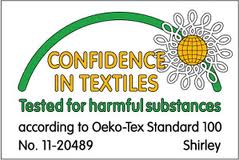



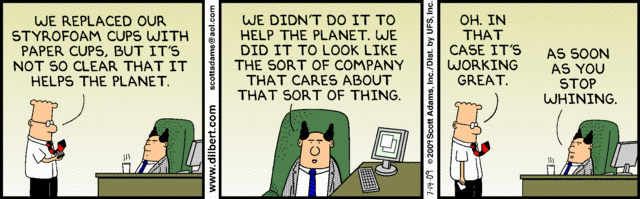
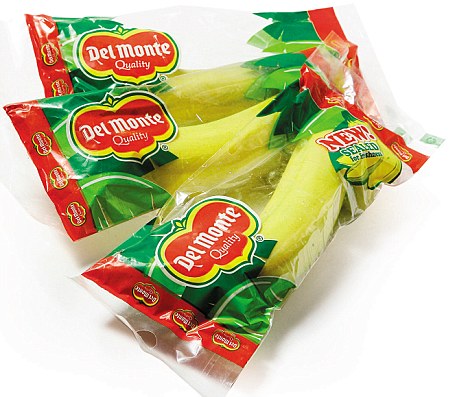
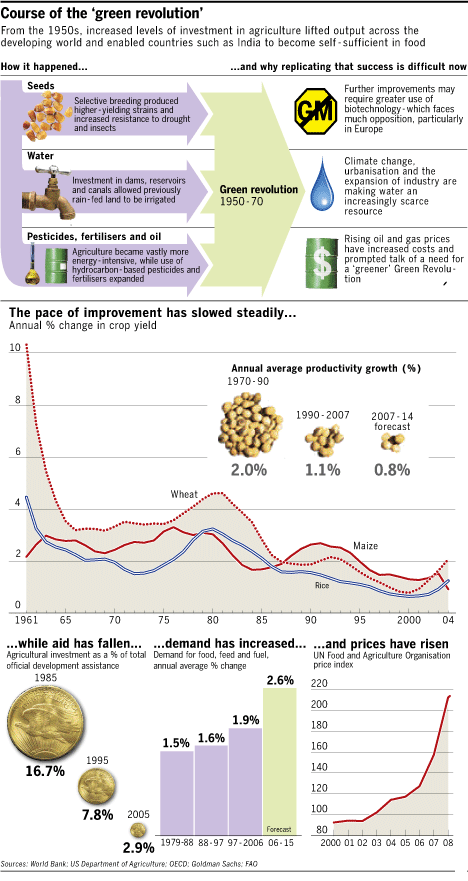

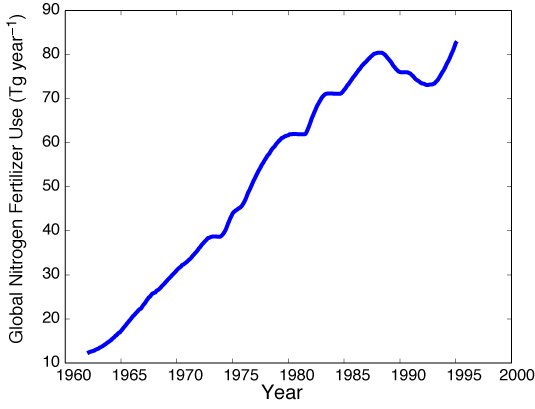

 OEcotextiles
