OEcotextiles

Indulgent yet responsible fabrics

I just read the article by Team Treehugger on Planet Green on what to look for if you’re interested in green furniture. And sure enough, they talked about the wood (certified sustainable – but without any  explanation about why Forest Stewardship Council (FSC) certified wood should be a conscientious consumers only choice), reclaimed materials, design for disassembly, something they call “low toxicity furniture”, buying vintage…the usual suspects.  Not once did they mention your fabric choice.

Of course, all these are important considerations and like most green choices, there are tradeoffs and degrees of green.  But if we look at the carbon footprint of an average upholstered sofa and see what kind of energy requirements are needed to produce that sofa, we can show you how your fabric choice is the most important choice you can make in terms of embodied energy.  Later on (next week’s post) we’ll take a look at what your choices mean in terms of toxicity and environmental degredation.

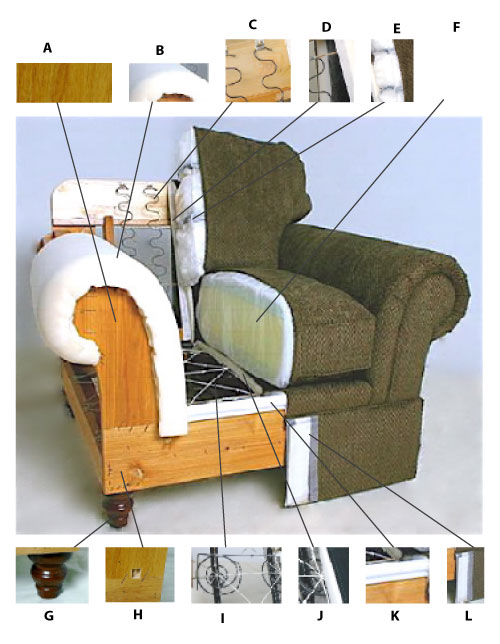
These are the components of a typical sofa:

  • Wood
  • Foam (most commonly) or other cushion filling
  • Fabric
  • Miscellaneous:
    • Glue
    • Varnish/paint
    • Metal springs
    • Thread
    • Jute webbing
    • Twine
  1. WOOD: A 6 foot sofa uses about 32 board feet of lumber (1) .  For kiln dried maple, the embodied energy for 32 board feet is 278 MJ.  But if we’re looking at a less expensive sofa which uses glulam (a laminated lumber product), the embodied energy goes up to 403 MJ.
  2. FOAM:  Assume 12 cubic feet of foam is used, with a density of 4 lbs. per cubic foot (this is considered a good weight for foam);  the total weight of the foam used is 48 lbs. The new buzz word for companies making upholstered furniture is “soy based foam” (an oxymoron which we’ll expose in next week’s post), which is touted to be “green” because (among other things)  it uses less energy to produce.  Based on Cargill Dow’s own web site for the BiOH polyol which is the basis for this new product, soy based foam uses up to 60% less energy than does conventional polyurethane foams.   Companies which advertise foam made with 20% soy based polyols  use 1888 MJ of energy to create 12 cubic feet of foam, versus 2027 MJ if conventional polyurethane was used.  For our purposes of comparison, we’ll use the lower energy amount of 1888 MJ and give the manufacturers the benefit of the doubt.
  3. FABRIC:  Did you know that the decorative fabric you choose to upholster your couch is not the only fabric used in the construction?  Here’s the breakdown for fabric needed for one sofa:
    1. 25 yards of decorative fabric
    2. 20 yards of lining fabric
    3. 15 yards of burlap
    4. 10 yards of muslin

TOTAL amount of fabric needed for one sofa:  70 yards!

Using data from various sources (see footnotes below), the amount of energy needed to produce the fabric varies between 291 MJ (if all components were made of hemp, which has the lowest embodied energy) and 7598 MJ (if all components were made of  nylon, which has the highest embodied energy requirements).  If we choose the most commonly used fibers for each fabric component, the total energy used is 2712 MJ:

fiber Embodied energy in MJ
25 yards decorative fabric/ 22 oz lin. yd = 34.0 lbs polyester 1953
20 yards lining fabric / 15 oz linear yard = 19 lbs cotton 469
15 yards burlap / 10 oz linear yard = 9.4 lbs hemp 41
10 yards muslin / 7 oz linear yard = 4.4 lbs polyester 249
TOTAL: 2712

I could not find any LCA studies which included the various items under “Miscellaneous” so for this example we are discounting that category.  It might very well impact results, so if anyone knows of a study which addresses these items please let us know!

So  we’re looking at three components (wood, foam and fabric), only two of which most people seem to think are important in terms of upholstered furniture manufacture.  But if we put the results in a table, it’s suddenly very clear that fabric is the most important consideration – at least in terms of embodied energy:

Embodied energy in MJ
WOOD: 32 board feet, kiln dried maple 278
FOAM: 12 cubic feet, 20% bio-based polyol 1888
SUBTOTAL wood and foam: 2166
FABRIC: FIBER:
25 yards uphl  fabric/ 22 oz lin. yd = 34.0 lbs polyester 1953
20 yards lining fabric / 15 oz linear yard = 19 lbs cotton 469
15 yards burlap / 10 oz linear yard = 9.4 lbs hemp 41
10 yards muslin / 7 oz linear yard = 4.4 lbs polyester 249
SUBTOTAL, fabric: 2712

If we were to use the most egregious fabric choices (nylon), the subtotal  for the energy used to create just the fabric would be 7598 MJ – more than three times the energy needed to produce the wood and foam!  This is just another instance where  fabric, a forgotten component,  makes a profound impact.

(1)  From: “Life Cycle Analysis of Wood Products: Cradle to Gate LCIof residential wood building material”, Wood and Fiber Science, 37 Corrim Special Issue, 2005, pp. 18 – 29.

(2)  Data for embodied energy in fabrics:

“Ecological Footprint and Water Analysis of Cotton, Hemp and Polyester”, Stockholm Environment Institute, 2005

Composites Design and Manufacture, School of Engineering, University of Plymouth UK, 2008, http://www.tech.plym.ac.uk/sme/mats324/mats324A9%20NFETE.htm

Study: “LCA: New Zealand Merino Wool Total Energy Use”, Barber and Pellow.
Greenwashing and textiles

O Ecotextiles (and Two Sisters Ecotextiles)

I have been saying for years that fabric is the forgotten product.  People just don’t seem to care about what their fabric choices do to them or to the environment.  (Quick, what fiber is your shirt/blouse made of?  What kinds of fibers do you sleep on?)   They are too busy to do research, or they’re gullible – either way they decide to believe claims made by many product manufacturers.  And I can’t really blame them, because the issues are complex.

Green products are proliferating so quickly (the average number of “green” products per store almost doubled between 2007 and 2008, according to TerraChoice’s Greenwashing Report 2009) and adding so many new consumer claims that the term “greenwash” (verb: the act of misleading consumers regarding the environmental practices of a company or the environmental benefits of a product or service) has become part of most people’s vocabulary.    In the area of fabrics, the greenwashing going on has led the FTC to make the publication of its new Green Guide on textiles a priority.

Incidences of greenwashing are going up, and that means increased risk:

  • Consumers may be misled into purchases that do not deliver on their environmental promise.
  • Illigetimate environmental claims will take market share away from products that offer legitimate benefits, thereby slowing the spread of real environmental innovation.
  • Greenwashing will lead to cynicism and doubt about all environmental claims.  Consumers may just give up.
  • And perhaps worst of all – the sustainability movement will lose the power of the market to accelerate real progress towards sustainability.

The first step to cleaning up greenwashing is to identify it, and Kevin Tuerff (co-founder of the marketing consultancy EnviroMedia) and his partners have hit on an innovative way to spotlight particularly egregious examples. They’ve launched the Greenwashing Index,  a website that allows consumers to post ads that might be examples of greenwashing and rate them on a scale of 1 to 5–1 is a little green lie; 5 is an outright falsehood.  This hopefully teaches people to be a bit more cautious about the claims they hear.  Read more about greenwashing here.

TerraChoice published its six sins of greenwashing in 2007 but added a seventh sin in 2009.  Let’s look at these sins:

1)      The Sin of Worshiping False Labels:  a product that (through words or images) gives the impression of third-party endorsement or certification where none really exists; basically fake labels.  Examples:

  1. Using the company’s own in-house environmental program without further explanation.
  2. Using certification-like images with green jargon including “eco-safe”, “eco-preferred”.

I’ve begun to see examples of products which claim to be certified to the GOTS standard  (Global Organic Textile Standard) – but the reality is that the fiber is certified to the GOTS standard while the final fabric is not.  There is a big difference between the two.  And the GOTS-certifying agencies have begun to require retailers to be certified – to keep the supply chain transparent because there have been so many incidences of companies substituting non- GOTS products for those that actually received the certification.

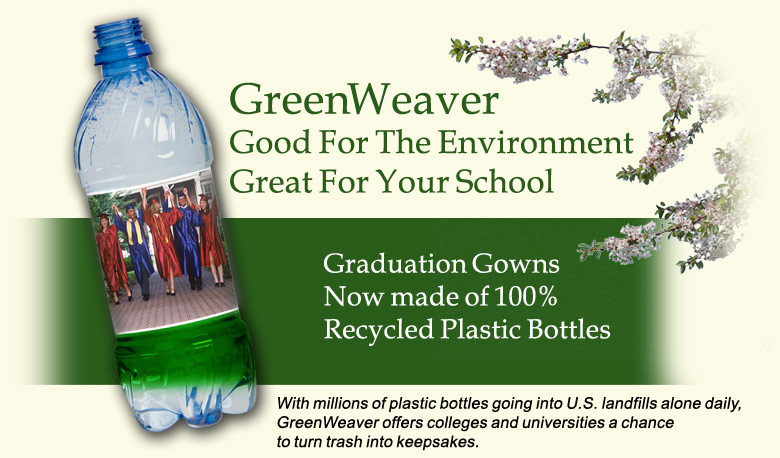
2)      Sin of the Hidden Trade-off:  a claim suggesting that a product is “green” based on a narrow set of attributes without attention to other important environmental issues.  The most overused example of this is with recycled content of fabrics – a textile is advertised as “green” because it is made of x% recycled polyester.  Other important environmental issues such as heavy metal dyes used, whether the polyester is woven with other synthetics or even natural fibers  (thereby contributing to other environmental degredation), the fact that plastic is not biodegradeable and contains antimony or bisphenol A  may be equally important.  Cargill Dow introduced it’s new Ingeo fiber with much fanfare, saying that it is based on a renewable resource (rather than oil).  Missing entirely from Cargill Dow’s press materials is any acknowledgement of the fact that the source material for these products is genetically engineered corn, designed by one of Cargill Dow’s corporate parents, Cargill Inc., a world leader in genetic engineering.  (See our blog postings on genetic engineering dated 9.23 and 9.29.09) That’s a potentially huge problem, since millions of consumers around the world and several governments have rejected the use of genetically engineered (GE) products, because of the unforeseen consequences of unleashing genetically altered organisms into nature.

3)      Sin of No Proof:  An environmental claim that cannot be substantiated by easily accessible supporting information or by a reliable third-party certification.  Google organic fabric and you can find any number of companies offering “organic and natural fabrics” with no supporting documentation.   And the People for the Ethical Treatment of Animals really took exception to this claim:

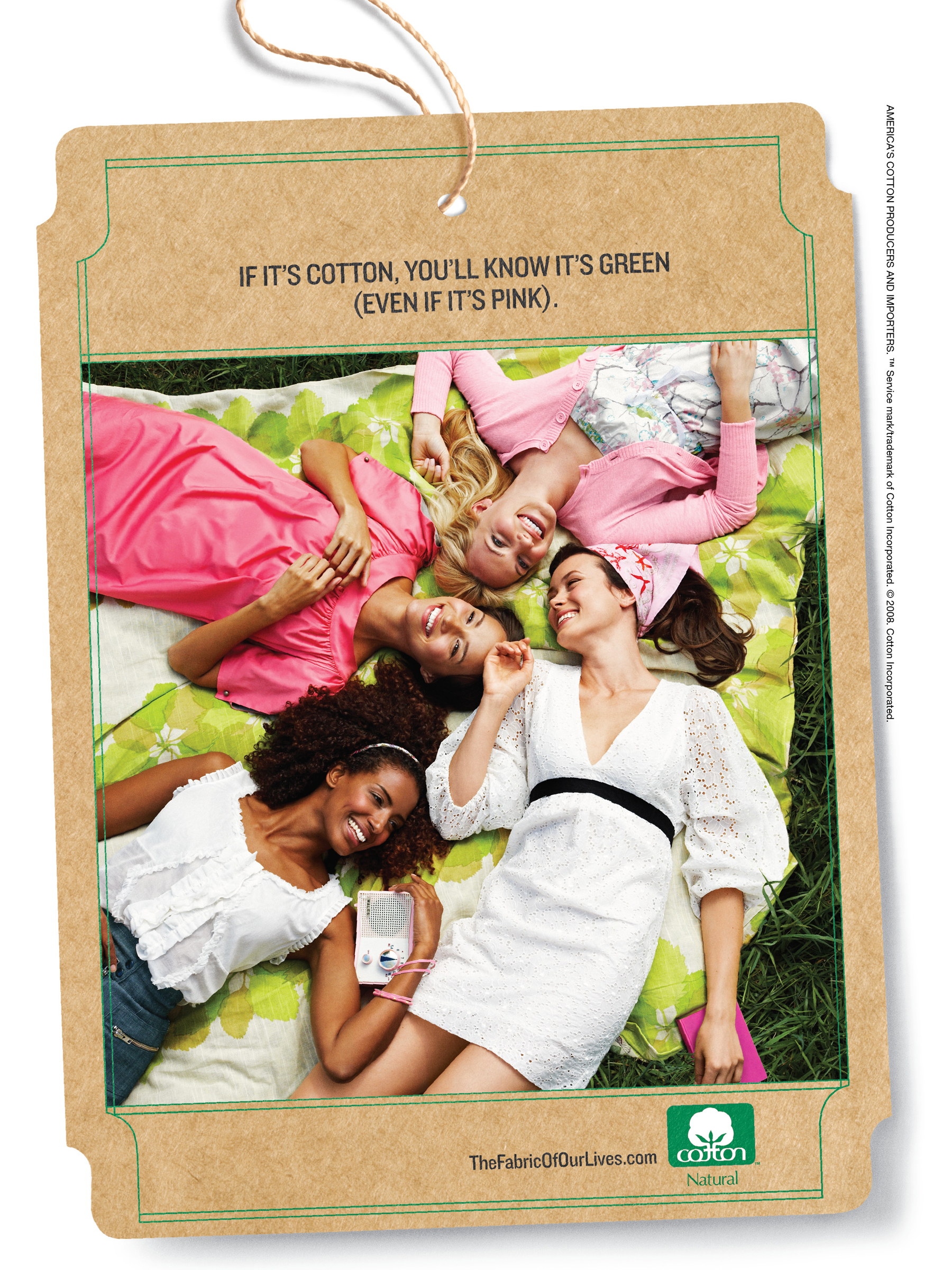
4)      Sin of Vagueness:  a claim so poorly defined or broad that its real meaning is likely to be misunderstood by the consumer. ‘All-natural’ is an example. Arsenic,  mercury, and formaldehyde are all naturally occurring, used widely in textile processing,  and poisonous. ‘All natural’ isn’t necessarily ‘green’. Hemp is a fabric that has been expertly greenwashed, as most people have been led to focus on the fact that it grows in a manner that it is environmentally friendly. Few realize that hemp is naturally made into rope and that it requires a great deal of chemical softening to be suitable for clothing or bed linen.  Or this ad from Cotton Inc.:

5)      Sin of Irrelevance:  An environmental claim that may be truthful but is unimportant or unhelpful for consumers seeking environmentally preferable products.  The term “organic” is the most often used word in textile marketing – and what does it really mean?  Organic, by definition, means carbon-based, so unless the word “organic” is coupled with “certified” the term is meaningless.  But even “certified organic” fiber can cause untold harm during the processing and finishing of the fabric – think of turning organic apples into applesauce (adding Red Dye #2, stabalizers, preservatives, emulsifiers) where the final result cannot be considered organic APPLESAUCE even though the apples started out as organic. It is said that the amount of “organic cotton” supposedly coming out of India far outweighs the amount of organic cotton actually being grown. It is common practice for vendors to call a batch of cotton “organic”, if minimal or no chemicals have been used, even if no certification has been obtained for the fiber. It’s also generally understood that certification can be “acquired”, even if not earned.

6)      Sin of Lesser of Two Evils:  A claim that may be true within the product category, but that risks distracting the consumer from the greater environmental impacts of the category as a whole.  Again, the use of recycled polyester as a green claim distracts from the greater environmental impact that plastics have on the environment,  the much greater carbon footprint that any synthetic has compared to any natural fiber,  the antimony used in polyester production, the fact that polyesters are dependent on non renewable resources for feedstock…the list goes on.

7)      Sin of Fibbing:  just what it says – environmental claims that are simply false.

I’d like to add an additional sin which I think is specific to the textile industry: that of a large fabric company touting it’s green credentials because it has a “green” collection  (sometimes that “green” collection is anything but) – but if you look at the size of the green collection and compare it to conventional offerings, you’ll find that maybe only 10% of the company’s fabrics have any possible claim to “green”.  Is that company seriously trying to make a difference?

Breakthrough Institute

O Ecotextiles (and Two Sisters Ecotextiles)

For this last post for 2009, and because of the disappointment of the Copenhagen Climate Summit, I wanted to end on an up note, and in looking for that optimistic glimmer I remembered the Breakthrough Institute.

According to their website,   they are committed to creating a new progressive politics, one that is large, aspirational, and asset-based. They believe that any effective politics must speak to core needs and values, not issues and interests, and they thus situate themselves at the intersection of politics, policy, philosophy, and the social sciences.  They will try, over the next two years, to grow the capacity to engage in specific national and global campaigns, and trigger new “thought movements” aimed at defining the next progressive politics. These campaigns will aim to do three things:

  1. Achieve a new social contract for the postindustrial economy that increases financial security;
  2. Stimulate an equitable and accelerated transition to the clean energy economy; and
  3. Advance an agenda to overcome global poverty and expand equitable, sustainable prosperity.

I wish you all a wonderful holiday, with the time to sit by the fire and peruse these guys and see what they’re all about.

Buying decisions

O Ecotextiles (and Two Sisters Ecotextiles)


In a previous  post (Prosperity Without Growth, 10.27.09), I discussed a paradigm shift in economics and how that seems to be affected by the fact that bigger isn’t necessarily better  –  and how more stuff doesn’t mean you’re a happier person.  Whether you’re an individual or an interior designer, there are some important considerations beyond budget each time you decide to purchase a product, from flooring to fabric.
Obviously the first decision should be: do I/we really need to purchase this product?  Remember the greenest option is not to decide between a virgin widget and a  recycled widget, but between widget/no widget.    Yvon Chouinard, founder of Patagonia, said “the most responsible way to buy clothes is to shop at Goodwill.  And the most responsible way to build is to recycle an old building.”
One issue that we should consider, always, in making a purchasing decision, is that of “true cost”.  That means you should consider the ecological and psychological consequences of choosing one product over another.  The life cycle analyses done by many companies and government-funded studies are all important in helping us make these assessments.  But I certainly am not claiming that’s an easy thing to do – who has the time to slog through these reports?  As an example of what I’m talking about:    using paper cups that are compostable sounds great  – but what about the fact they’re probably made from corn, a monoculture crop that often displaces valuable forests and wetlands, and uses tons of fertilizers which are responsible for dead zones in oceans?  What about the fact that corn is being used for other things, such as a biofuel, contributing to food shortages in poor countries?  Or consider the world’s first LEED platinum building, the Philip Merrill Environmental Center of the Chesapeak Bay Foundation, which has all the most up to date technology to save energy.  But Environmental Building News pointed out that the new building was constructed 10 miles from the original headquarters in downtown Annapolis – meaning that many of the 100 employees who walked or bicycled to work now must drive.  For new office buildings, energy consumption by commuters is double that of buildings.
But  let’s say you do slog your way through feel-good slogans to make a decision which you feel is based on solid evidence.  You’re ready to buy.
For an individual, remember – your purse gives you a lot of power.  In fact, Diane MacEachern founded Big Green Purse to encourage 1,000,000 women to shift at least $1,000 of money they already spend on everyday items to a comparable item which is a better environmental choice.  That totals  an initial $1 billion Big Green Purse impact.  Companies listen when their bottom lines are affected.  So when you buy an eco fabric, the industry notices and is nudged to begin to change their ways.
DesignersAccord_logo_large1-gallery606
The Designers Accord is a global coalition of designers, educators, and business leaders working together to create positive environmental and social impact.  Adopters of the Designers Accord commit to five guidelines that provide collective and individual ways to integrate sustainability into design, which include:
  • working to increase awareness of the importance of using sustainable practices in all products and processes
  • bringing sustainability to all aspects of undergraduate and graduate design programs so that the next generation of designers is able to practice sustainably;
  • codify best practices to achieve the greatest impact
  • influence policy
As an interior designer, involved each day, perhaps,  in the purchase of a wide variety of products (including fabrics) – you have enormous power.  Susan Szenasy,editor of Metropolis magazine,  in a speech at the American Institute of Graphic Arts National Design Conference, put it this way:  ” Think about this for a moment: an interior designer will buy 1,200 ergonomic chairs for one job, while you and I may buy 12 chairs in a lifetime. If each interior designer demanded that the chairs they specify be designed for disassembly, made of non-toxic materials, and their parts not shipped from thousands of miles away where they might be made by semi-slave labor, the contract furniture industry would have to pay attention.”
Daniel Yang, writing on the ethics of design, said:  “Most discussion of ethical design (if mentioned at all) usually revolves around using environmentally sustainable materials, or doing a communications campaign for a non-profit group. Rarely is the relationship between designer, client, and end user questioned. Yet it’s something that nearly every designer is faced with on a daily basis. It’s easy to refuse a client when much of society denounces it, as in the case of Big Tobacco. It’s a lot harder to advocate against a client’s marketing plans when most of the people that end up consuming the product will probably never come back to complain. We pick and choose our battles, but if we retreat from every fight we’ll eventually have nothing left of a professional soul. Erring on the side of the users over the client might cost you your job, but at least your integrity as a designer will be intact. This isn’t an issue of legal liability, but rather an ethical issue of creating the kind of world we want to live in. After all, we are all end-users of products that someone else is designing.

How can the designer be held responsible if the client is approving everything? It’s true that the client is historically the one deciding what functions something will have, because they assume the financial risk of failures. But a designer isn’t a mindless agent producing a product from a blueprint. There may be specifications, but the designer is the one drawing the blueprint. This is where the designer’s role as an expert advisor comes into play. Hopefully, the client hired the designer because of his expertise in understanding how a particular medium functions. It is assumed that he has a body of knowledge that is deeper than the client’s in a particular area. It wouldn’t make sense for the client to seek the designer’s services otherwise. Thus the ethical burden is placed on the designer because the client does not have the expertise that the designer does. The client can plead ignorance but the designer cannot.”

But lest you are disheartened by the above, Susan Szenasy ended her speech by saying:

“So, is there any good news in all of this? Yes. And it has to do with design. Designers today stand on the brink of being seen by society as essential contributors to its health, safety, and welfare. If you—together with the other design professions—decide to examine the materials and processes endemic to your work, as well as demand that these materials and processes become environmentally safe, you will be the heroes of the 21st Century.”

Why did the manufacturers of children’s bedding and clothing, who urged the Consumer Product Safety Commission to exempt their products from the new Consumer Product Safety Improvement Act,   consider their products safe from lead residues?

In many instances the bedding and clothing designed for children are made from naturally grown fibers, often organically grown fibers.   There is a persistent belief in the market that a fabric made with “organic fibers” is an organic FABRIC.   We have been trying to alert people to the reasons why this is erroneous.

The textile industry uses lots of chemicals to turn coarse fibers  into the soft, lustrous, smooth, colorful fabrics we demand. Think of turning organic  apples into applesauce:  if you added Red Dye #2, preservatives, emulsifiers, stabalizers and other chemicals to the mix, the final product would not be organic applesauce.  The same thing happens in textile manufacturing:  organic fibers are washed, sized, desized,  bleached, dyed, treated with detergents, optical brighteners, biocides, wetting agents, lubricants, sequestering agents,  stabilizers, emulsifiers, complexing agents …and more.

In fact,  a fabric that is advertised as being made from 100%  cotton is actually made of  73% cotton fibers and 27% “other“, for example:

  • 2% polyacryl
  • 8% dyestuff
  • 14% urea formaldehyde
  • 3% softening agents
  • 0.3% optical brighteners (1)

And unless the fabrics used in these products had been certified by GOTS, Oeko Tex or another third party to be free from the chemicals (like lead) which are known to harm humans, there is no guarantee that those organically grown fibers were processed safely, without any of the chemicals known to harm humans.

The reason it’s so hard to find out exactly what is in your fabrics is that the process chemicals used during weaving are not required to be reported anywhere – it’s only if a particular chemical is deemed hazardous by a regulating body that a Materials Safety Data Sheet (MSDS) is required, to theoretically protect the safety of the workers handling these chemicals.  ( Most chemicals have not had toxicological evaluations, so there are no regulating bodies which might deem them hazardous.) Most companies keep these MSDS sheets private and do not give them out,  although they are supposed to be available to anyone.  I have had chemical companies tell me that only their customers can be privy to their MSDS sheets.  Well, if their customers are the mills which buy the chemicals from them, unless the mill releases the MSDS sheet there is no way the ultimate consumer (and user) of the product can see it.

But even if we were to see the MSDS sheets, it’s quite possible that the sheet wouldn’t tell you much unless you were a chemist, because the list of hazardous materials may include just a common name of a chemical, such as “pigment white #6”.  That sounds innocuous, doesn’t it?

I was able to get a copy of a different  MSDS for a water based ink which is used in textile printing.  The list of ingredients include:

ethyl alcohol
isopropyl alcohol
N-propyl alcohol
acrylic acid polymers
pigment white 19
pigment white 6
pigment red 170
water
benzisothiazol

In order to find out anything about “pigment white #6”,  for example, it is necessary to know the CAS number for this chemical.  The CAS registry number is a unique numerical identifier for chemical elements, compounds, polymers, and others.  The intention is to make database searches more convenient, because chemicals often have many different names.  As of September 2009, there were more than 50 million organic and inorganic substances and more than 61 million sequences in the CAS registry. (Another roadblock I’ve found is the company not listing the chemical CAS numbers or the chemical formula because they’re “trade secrets” and the formulas are proprietary.  I found this to be the case in the MSDS sheet published by Mimaki for thier water based ink jet printing ink “Reactive Dye 2 Ink Red”, which they do say is considered a hazardous substance according to OSHA 29 CFR 1910.1200.   Read this MSDS sheet here.)

“Pigment white #6” has a CAS number of 13463-67-7.  In order to find out what the toxicological profile of 13463-67-7 is, one can google the CAS number.  It turns out that Pigment White #6 is Titanium dioxide  – which is shown to cause mild skin irritations in humans, and cancerous tumors of the lungs and thorax in rats; also lymphomas including Hodgkins disease.  Classified as Group 2B (possibly carcinogenic to humans) by International Agency for Research on Cancer (IARC).  The  MSDS sheet also says:

  • May be harmful if inhaled; may cause respiratory tract irritation
  • May be harmful if absorbed through skin; may cause skin irritation
  • May cause eye irritation
  • May be harmful if swallowed

That is the profile of just ONE of the ingredients in this water based ink.  Let’s look at another: benzisothiazol, CAS 2634-33-5.  The MSDS sheet I found on this chemical lists it as having the same harmful effects as Pigment White #6, above:

  • May be harmful if inhaled; may cause respiratory tract irritation
  • May be harmful if absorbed through skin; may cause skin irritation
  • May cause eye irritation
  • May be harmful if swallowed

It is also noted on the MSDS sheet that it’s very toxic to aquatic organisms.  There is also the alarming  caveat: “To the best of our knowledge, the chemical, physical and toxicological properties have not been thoroughly investigated.”  As we have pointed out in the past, that’s true for MOST of the chemicals used in industry today.

So that leaves just 6 other chemicals to investigate to get a complete picture of the water based ink that may have been used in printing your cute sheet set.  And next you can investigate the types of dyestuffs used to dye the fabric, the bleaches uses (chlorine based?), what kinds of optical brighteners were used in processing.   And are those sheets wrinkle resistant?  Most functional finishes have formaldehyde.

If lead is not a problem in textiles, as children’s clothing manufacturers claim, how do you explain the very high concentration of lead in the sludge produced by  textile mills in Rancaekek, West Java?  A study done there found that the textile sludge was disposed of directly into three rivers, all of which are used to irrigate rice paddies.  A greenhouse study using the polluted soil from this area found high concentrations of lead in the rice. [2] That’s one way lead is being introduced directly into our food chain.

A piece of legislation like the CPSIA is one step in the right direction – but to have textile products exempted because they are “inherently safe” completely dismisses the processing of the fabric.  If consumers were buying the fiber only then I would agree that “organic cotton” is inherently safe.  But industrial mills today use many chemicals, many of which are known to harm us and our environment, which renders that organic fiber a decidedly non-organic fabric.

(1) Lacasse and Baumann, Textile Chemicals: Environmental Data and Facts, Springer, New York,  2004, page 609.

[2] “Pollution of Soil by Agricultural and Industrial Waste”, Centre for Soil and Agroclimate Research and Development, Bogor, Indonesia, 2002.   http://www.agnet.org/library/eb/521/

What does it take to change human behavior?

We have known that lead is poisonous ever since the Romans began sprinkling it on their food as a sweetener.   Lead was used so extensively in Rome (for metal pots, wine urns, water pipes and plates)  that some Romans began to suspect a connection between the metal and the general befuddlement that was cropping up among the aristocracy – the very people who could afford these urns and plates.  But the culture’s habits never changed, and some historians believe that many among the Roman aristocracy suffered from lead poisoning. Julius Caesar, for example, managed to father only one child, even though he enjoyed women a much as he enjoyed wine.  His successor, Caesar Augustus, was reported to be completely sterile.  Some scholars go so far as to say that lead poisoning was a contributing factor to the fall of the Roman Empire.

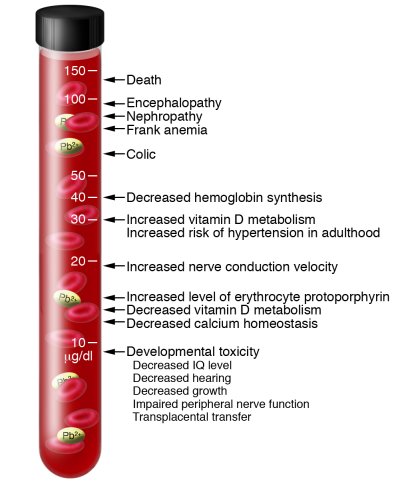
Lead is a neurotoxin – it affects the human brain and cognitive development, as well as the reproductive system. Some of the kinds of neurological damage caused by lead are not reversible.

Specifically, it affects reading and reasoning abilities in children, and is also linked to hearing loss, speech delay, balance difficulties and violent tendencies. (1)   According to Ruth Ann Norton, executive director of the Coalition to End Childhood Lead Poisoning, “There are kids who are disruptive, then there are ‘lead’ kids – very disruptive, very low levels of concentration.”  Children with a lead concentration of less than 10 micrograms ( µ) per deciliter (dl = one tenth of a liter) of blood scored an average of 11.1 points lower than the mean on the Stanford-Binet IQ test. (2)   Consistent and reproducible behavioral effects have been seen with blood levels as low as 7 µ/dl (micrograms of lead per tenth liter of blood), which is below the Federal standard of 10 µ/dl.   Scientists are generally in agreement that there is no “safe” level of blood lead.  Lead is a uniquely cumulative poison:  the daily intake of lead is not as important a determinant of ultimate harm as is the duration of exposure and the total lead ingested over time.

A hundred years ago we were wearing lead right on our skin. I found this article funny and disturbing at the same time:

“Miss P. Belle Kessinger of Pennsylvania State College pulled a rat out of a warm, leaded-silk sack, noted that it had died of lead poisoning, and proceeded to Manhattan. There last week she told the American Home Economics Association that leaded silk garments seem to her potentially poisonous. Her report alarmed silk manufacturers who during the past decade have sold more than 100,000,000 yards of leaded silk without a single report of anyone’s being poisoned by their goods. Miss Kessinger’s report also embarrassed Professor Lawrence Turner Fairhall, Harvard chemist, who only two years ago said: ‘No absorption of lead occurs even under extreme conditions as a result of wearing this material in direct contact with the skin’. ”

This was published in Time magazine,  in 1934.  (Read the full article here. )


But lead has continued to be used in products, from dyestuffs made with lead (leading to lead poisoning in seamstresses at the turn of the century, who were in the habit of biting off their threads) (3), to lead in gasoline, which is widely credited for reduced IQ scores for all children born in industrialized countries between 1960 and 1980 (when lead in gasoline was banned).  Read more about this here.

Lead is used in the textile industry in a variety of ways and under a variety of names:

  • Lead acetate                 dyeing of textiles
  • Lead chloride               preparation of lead salts
  • Lead molybdate            pigments used in dyestuffs
  • Lead nitrate                  mordant in dyeing; oxidizer in dyeing(4)

Fabrics sold in the United States, which are used to make our clothing, bedding and many other products which come into intimate contact with our bodies, are totally unregulated – except in terms of required labeling of percentage of fiber content and country of manufacture.  There are NO laws which pertain to the chemicals used as dyestuffs, in processing, in printing,  or as finishes applied to textiles, except those that come under the Toxic Substances Control Act (TSCA) of 1976, which is woefully inadequate in terms of addressing the chemicals used by industry.  In fact, the Government Accounting Office (GAO) has announced that the 32 year old TSCA needs a complete overhaul (5), and the Environmental Protection Agency (EPA)  was quick to agree! (6).  Lisa Jackson, head of the EPA,  said on September 29, 2009 that the EPA lacks the tools it needs to protect people and the environment from dangerous chemicals.

And  fabrics are treated with a wide range of substances that have been proven not to be good for us.

The United States has new legislation which lowers the amount of lead allowed in children’s products – and only children’s products.   (This ignores the question of  how lead  in products used by pregnant  women may affect their fetus.  Research shows that as the brains of fetuses develop, lead exposure from the mother’s blood can result in significant learning disabilities.)  The new Consumer Product Safety Improvement Act (CPSIA) limits lead content in children’s products (to be phased in over three years) so that by August 14, 2011, lead content must be 100 ppm (parts per million) or less.  However there was an outcry from manufacturers of children’s bedding and clothing, who argued that the testing for lead in their products did not make sense, because:

  • it placed an unproductive burden on them, and
  • it required their already safe products to undergo costly or unnecessary testing.

The Consumer Product Safety Commission voted to exempt textiles from the lead testing and certification requirements of the CPSIA.

So let me repeat here: the daily intake of lead is not as important a determinant of ultimate harm as is the duration of exposure and the total lead ingested over time. Children are uniquely susceptible to lead exposure over time, and  neural damage occurring during the period from 1 to 3 years of age is not likely to be reversible.  It’s also important to be aware that lead available from tested products would not be the only source of exposure in a child’s environment.  Although substantial and very successful efforts have been made in the past twenty years to reduce environmental lead, children are still exposed to lead in products other than toys or fabrics. Even though it was eliminated from most gasoline in the United States starting in the 1970s, lead continues to be used in aviation and other specialty fuels. And from all those years of leaded gasoline, the stuff that came out of cars as fuel exhaust still pollutes soil along our roadways, becoming readily airborne and easily inhaled.   All lead exposure is cumulative – so it’s important to eliminate any source that’s within our power to do so.

Are the manufacturers of children’s bedding and clothing correct?  Are their products inherently safe?  I thought I’d do some exploration to find out what information I could find out about chemicals used in our fabrics – and I’ll have the results next week.

(1) “ ‘Safe’ levels of lead still harm IQ”, Associated Press, 2001

(2) Ibid.

(3) Thompson, William Gilmsn, The Occupational Diseases, 1914, Cornell University Library, p. 215

[4] “Pollution of Soil by Agricultural and Industrial Waste”, Centre for Soil and Agroclimate Research and Development, Bogor, Indonesia, 2002.   http://www.agnet.org/library/eb/521/

(4) http://www.atsdr.cdc.gov/toxprofiles/tp13-c5.pdf

(5) http://www.rsc.org/chemistryworld/News/2009/January/29010901.asp

(6) http://www.bdlaw.com/news-730.html

Thanksgiving blessings

O Ecotextiles (and Two Sisters Ecotextiles)

I have been trying to think of a good subject for this week – one that isn’t too dire and downbeat – while we in the United States are in the midst of our national feast called Thanksgiving.   We’re living in a country where I can get a free range turkey with all the bells and whistles – or soybeans from Texas, the best orange marmelade from Scotland or fresh raspberries from Chile.  This abundance comes at a cost –  it is estimated that if United States’ consumption rates were mimicked by the entire human population,  it would take the resources of 5.3 Earths.(1)  It is this abundance that allows us to ignore what is happening in the rest of the world.  Doesn’t have a direct bearing on textiles, but the long term implications are there.

An inescapable fact in most of the developing world – and largely unnoticed in the United States except in slightly higher food prices –  is that in the past couple of years, food prices have soared.  Between the mid-1970’s and 2005,  grain supplies rose and prices fell by about a half, leading “many experts to believe that there was no limit to humanity’s capacity to feed itself.” (2)  But then in 2006, the situation reversed:  food prices rose slightly that year, then increased by about a quarter in 2007, and finally skyrocketed in 2008.  Between 2006 and 2008, average world prices for rice rose by 217%, wheat by 136% and corn by 125% (3)  These rising prices meant that many people could not afford food – and  this led to riots  in 15 countries around the world in 2008.  Countries that could produce enough food for export worried about feeding their own populations, and placed restrictions on exports.  This became a serious problem for countries which were not fully self sufficient in food production.

Susan Payne, chief executive of Emergent Asset Management, said that by 2020 they think there could be genuine food shortages in the world.   During a talk on Africa’s agricultural potential, she showed a series of slides citing chilling statistics:

  • grain stocks worldwide are at their lowest levels in 60 years
  • global warming is turning arable land into desert
  • freshwater is dwindling and China is draining its reserves
  • and the really big problem:  the world’s population is growing by 80,000,000 hungry people each year.

The United Nations Food and Agriculture Organization estimates that in order to feed the world’s projected population in 2050, we need to increase the amount of cereals in the world’s food supply to an amount equal to the total production of Australia in 2008.

Indeed, the food crisis of 2008 has put the spotlight on a new area of business potential, where the payoff could be immense: the area of agricultural investment and the newly lucrative world of food trade.  Financial firms like Goldman Sachs and BlackRock have already invested hundreds of millions of dollars in overseas agricultural projects.   Africa is the focus of their interest because in Africa land and labor come so cheaply that the risks are assumed to be worthwhile.  As a example, an Ethiopian farmer’s  yields for their wheat crops  are only about a third as much per acre as their counterparts in other parts of the world.  But with the addition of advanced implements, and improved seeds and fertilizer, these yields can be doubled.  Ethiopia, like all of Africa, is full of such opportunities.

Andrew Rice wrote an article in the November 22 New York Times Magazine in which he describes what some of the wealthy nations are doing to ensure a food supply for their people.

The nations of the Persian Gulf already import 60% of their food, and Saudi Arabia plans to phase out wheat production by 2016 in order to maintain its supply of underground freshwater.  Instead of relying on technology to increase their capacity for growing food  (along the lines of the Green Revolution of the 1960s),  these countries feel that they must control the means of production.  They want land.

The Saudi Arabian government and individual Saudi bankers and executives have said they intend to spend billions of dollars to establish plantations to produce rice and other staple crops in Africa, in nations like Mali, Senegal,  Sudan and Ethopia.  A newly formed company, Saudi Star Agricultural Development, announced it’s plans to “obtain the rights” to more than a million acres – that’s about the size of Delaware – in Ethiopia.  And in the Rift Valley of Ethiopia, farms are already growing fruits and vegetables for export to the Persian Gulf.(4)

This raises the question:  what about the people who live in Mali, Senegal, Sudan and Ethopia?  Do they benefit from these investments?  Am I the only one who thinks this spells trouble?

(1) New Economics Foundation, http://www.naturalnews.com/022890.html

(2) Rice, Andrew, “Agro-Imperialism”, New York Times Magazine, November 22, 2009

(3)  “Cyclone fuels rice price increase”, BBC News, May 7, 2008

(4) Rice, op.cit.

Abrasion testing

O Ecotextiles (and Two Sisters Ecotextiles)

One of the questions we get most often is this:   “what fabric is the best for my sofa”?  We know they’re talking about durability, which I’ll address below, but it’s also important to think about “best” in terms of livability and health concerns.  I mean, you can buy a fabric that has a 1,000,000 WZ test result – it should survive anything you can throw at it – but do you want to live with it?

I have 3  (now grown) sons, and we’ve had assorted (big) dogs, so I totally know why people ask this question.  But to answer in terms of durability is a complicated question to answer because durability depends on several things:  construction of the yarns and the construction of the weave (and tests which include seam slippage, pilling, tensile strength and usage)  are  almost as important as the fiber chosen.  In addition, finishes, furniture design, maintenance, cleaning and usage are variables that affect the life of your fabric.

Cotton as a fiber is much softer and of shorter lengths than either hemp or linen, averaging 0.79 -1.30 inches in length.  Hemp’s average length is 8 inches, but can range up to 15 feet in length. In a study done by Tallant et. al. of the Southern Regional Research Laboratory,  “results indicate that increases in shortfibers are detrimental to virtually all yarn and fabric propertiesand require increased roving twist for efficient drafting duringspinning. A 1% increase in fibers shorter than 3/8 in. causesa strength loss in yarns of somewhat more than 1%.” (1)    In fact, the US textile industry has  advocated obtaining the Short Fiber Content (SFC) for cotton classification.  SFC is defined as the percentage of fibers shorter than ½ inch.

Patagonia, the California manufacturer of outdoor apparel, has conducted  tests on both hemp and other natural fibers, with the results showing that hemp has eight times the tensile strength and four times the durability of other natural fibers.   Ecolution had a hemp twill fabric tested for tensile and tear strength, and compared the results with a 12-oz cotton denim.  Hemp beat cotton every time:   Overall, the 100% hemp fabric had 62% greater tear strength and 102% greater tensile strength. (2)   And polyester trumps them both – but that’s a whole other ballgame.

There is a high correlation between fiber strength and yarn strength.  In addition to the fiber used, yarns are given a twist to add strength. This is called Twist Per Inch or Meter (TPI or TPM) – a tighter twist (or more turns per inch) generally gives more strength.  These yarns are generally smooth and dense.

So that brings us to weave structure.  Weave structures get very complicated, and we can refer you to lots of references for those so inclined  to do more research (see references listed below).

But knowing the fibers, yarn and weave construction still didn’t answer people’s questions – they wanted some kind of objective measurement.  In order to objectively compare fabrics,  tests to determine wear were developed (called abrasion tests), and many people today refer to these test results as a way to measure fabric durability.

Abrasion test results purport to forecast how well a fabric will stand up to wear and tear in upholstery applications.  There are two tests:  Martindale and Wyzenbeek.  Martindale is the preferred test in Europe; Wyzenbeek is preferred in the United States.  There is no correlation between the two tests, so it’s not possible to estimate the number of cycles that would be achieved on one test if the other were known:

  • Wyzenbeek (ASTM D4157-02):  a piece of cotton duck fabric or wire mesh is rubbed in a straight back and forth motion on a piece of fabric until “noticeable wear” or thread break is evident.  One back and forth motion is called a “double rub” (dbl rub).
  • Martindale (ASTM D4966-98):  the abradant in this test is worsted wool or wire screen, the fabric specimen is a circle or round shape, and the rubbing is done in a figure 8, and not in a straight line as in Wyzenbeek.  One circle 8 is a cycle.

The Association for Contract Textiles performance guidelines lists the following test results as being suitable for commercial fabrics:

Wyzenbeek Martindale
General contract 15,000 20,000
Heavy duty contract 30,000 40,000

According to the Association for Contract Textiles, end use examples of “heavy duty contract” where 30,000 WZ results should be appropriate are single shift corporate offices, hotel rooms, conference rooms and dining areas.  Areas which would require higher than 30,000 WZ are: 24 hour facilities (like transportation terminals, healthcare emergency rooms, casino gambling areas,  and telemarketing offices) and theatres, stadiums, lecture halls and fast food restaurants.

Sina Pearson, the textile designer, has been quoted in the Philadelphia Inquirer as saying that 6,000 rubs (Wyzenbeek) may be “just fine” for residential use”(3)   The web site for Vivavi furniture gives these ratings for residential use:

Wyzenbeek
from to
Light use 6,000 9,000
Medium use 9,000 15,000
Heavy use 15,000 30,000
Maximum use >30,000

Theoretically, the higher the rating (from either test) the more durable the fabric is purported to be.  It’s not unusual for designers today to ask for 100,000 WZ results.  Is this because we think more is always better?  Does a test of 1,000,000 WZ guarantee that your fabric will survive years longer than one rated only 100,000 WZ?  Maripaul Yates, in her guidebook for interior designers, says that “test results are so unreliable and the margin of error is so great that its competency as a predictor of actual wear is questionable.”(4)  The Association for Contract Textiles website states that “double rubs exceeding 100,000 are not meaningful in providing additional value in use.  Higher abrasion resistance does not necessarily indicate a significant extension of the service life of the fabric.”

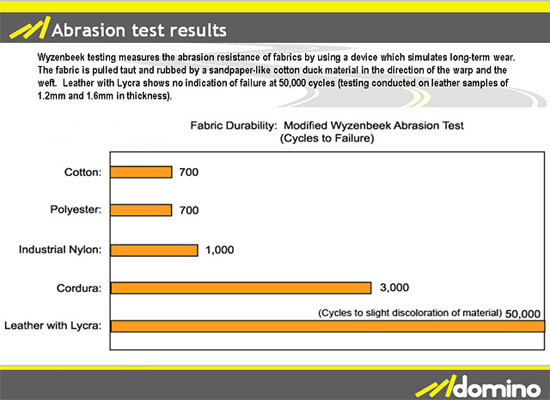
And of course, any company can skew results in their favor.  This is an image I found on Google images, with abrasion test results from a company selling leather motorcycle clothing.  They did say  ” that leather will sometimes score up to 100,000 cycles or so on the Wyzenbeek test, but testing to destruction (over 50k cycles) doesn’t always prove much.”  No comment on these results !

leather-with-lycra-graph

There are, apparently, many ways to tweak test results. We’ve been told if we don’t like the test results from one lab, we can try Lab X, where the results tend to be better.  The reasons that these tests produce inconsistent results are:

  1. Variation in test methods:  Measuring the resistance to abrasion is very complex.  Test results are affected by many factors that include the properties and dimensions of the fibers; the structure of the yarns; the construction of the fabrics; the type, kind and amount of treatments added to the fibers, yarns, or fabric; the time elapsed since the abradant was changed;  the type of abradant used; the tension of the specimen being tested,the pressure between the abradant and the specimen…and other variables.
  2. Subjectivity: The measurement of the relative amount of abrasion can be affected by the method of evaluation and is often influenced by the judgment of the operator.  Cycles to rupture, color change, appearance change and so forth are highly variable parameters and subjective.
  3. Games Playing:  Then there is, frankly, dishonest collusion between the tester and the testee.  There are lots of games that are played. For instance, in Wyzenbeek, the abradant, either cotton duck or a metal screen, must be replaced every million double rubs. If your fabric is tested at the beginning of that abradant’s life versus the end of its life, well.. you can see the games. Also, how much tension the subject fabric is under – the “pull” of the stationary anchor of the subject fabric, affects the rating.

In the final analysis, if you have doubts about the durability of a fabric,  will any number of test results convince you otherwise?  Also, if your heart is set on a silk  jacquard, for example, I bet it would take a lot of data to sway you from your heart’s desire.  Some variables just trump the raw data.

(1) Tallant, John, Fiori, Louis and Lagendre, Dorothy, “The Effect of the Short Fibers in a Cotton on its Processing Efficiency and Product Quality”, Textile Research Journal, Vol 29, No. 9, 687-695 (1959)

(2) http://www.globalhemp.com/Archives/Magazines/historic_fiber_remains.html

(3) ‘How will Performance Fabrics Behave”, Home & Design,  The Philadelphia Inquirer, April 11, 2008.

(4) Yates, Maripaul, “Fabrics: A Guide for Interior Designers and Architects”, WW. Norton and Company.

REFERENCES FOR WEAVE STRUCTURE:

1.  Peirce, F.T., The Geometry of Cloth Structure, “The Journal of the Textile Institute”, 1937: pp. 45 – 196

2. Brierley, S. Cloth Settings Reconsidered The Textile Manufacturer 79 1952: pp. 349 – 351.

3. Milašius, V. An Integrated Structure Factor for Woven Fabrics, Part I: Estimation of the Weave The Journal of the

Textile Institute 91 Part 1 No. 2 2000: pp. 268 – 276.

4. Kumpikaitė, E., Sviderskytė, A. The Influence of Woven Fabric Structure on the Woven Fabric Strength Materials

Science (Medžiagotyra) 12 (2) 2006: pp. 162 – 166.

5. Frydrych, I., Dziworska, G., Matusiak, M. Influence of Yarn Properties on the Strength Properties of Plain Fabric

Fibres and Textile in Eastern Europe 4 2000: pp. 42 – 45.

6. ISO 13934-1, Textiles – Tensile properties of fabrics – Part 1: Determination of Maximum Force and Elongation at

Maximum Force using the Strip Method, 1999, pp. 16.

Is it true, as one of the leading fabric distributors says of its “green” fabrics made of recycled polyester, that after “years of enjoyable use, these fabrics are recyclable?”   Does buying that fabric really help reduce our dependence on a non renewable resource  and lessen the burden that plastic is inflicting on our environment?

I’d like to show you how this is a misleading statement.  It’s a bit complicated, but stick with me because the industry is depending on your confusion.  If you know what they’re really foisting on us, you might want to demand a better, cleaner, altogether different product!

Only recycle

But first I have to back up and point out that “recyclable” is one of those amorphous words that have no accepted definition.  We can “recycle” our fabrics by repurposing them, donating them, use them for quilting or in other ways…but somehow I think they really meant for us to believe that the plastic yarns could be recycled into new and equally beautiful new fabrics:  the ultimate “infinite closed loop”.

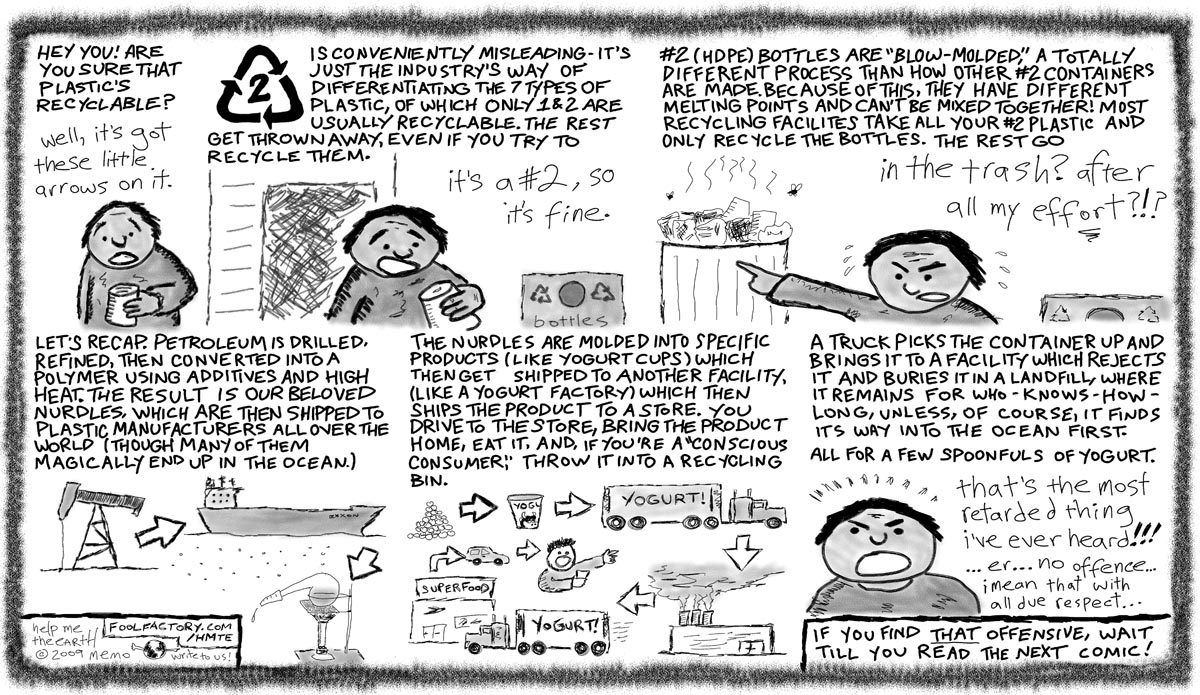
So, the first thing you must understand in order to grasp why this is a disingenuous statement is that there are two ways plastic can be recycled:  Mechanically and chemically.

Mechanical recycling is the kind that almost all recycling facilities use today. The first step in the process is to collect the plastics and then separate all the different types of plastic (“feedstock”) to avoid contamination – different plastics have different melting points and other characteristics; if they were thrown into the pot together the result would be an unuseable mess.  (Remember this fact: the recycling of plastics must always be done with like resins – this will come up later in textiles.)   So after separation, each type is melted down and then  re-formed into small “chips” or “pellets”.  These chips are what a widget manufacturer buys from the recycling facility to make its product – or what a yarn manufacturer buys to make the yarns to weave into cloth.

Common misconception about recycling:  you might think that if you throw your used drink bottle into the recycling container that it will be recycled into another new drink container.  Nope.  The melted resin contains contaminants and would not meet food grade requirements, so it is instead destined to go into a secondary product, such as yarn for the fabric we started talking about at the beginning of this blog.  A better name for the “recycling container” would be “collection container”.

recycl poly From  Help me! – the earth by Memo

A fabric made of “recycled material” has a certain percentage of polyester which comes from these chips that the recycling facility has manufactured.  Using these chips has several issues which are exclusive to the textile industry:

  • The base color of the recycled polyester chips vary from white to creamy yellow, making color consistency difficult to achieve, particularly for the pale shades.  Some dyers find it hard to get a white, so they’re using chlorine-based bleaches to whiten the base.
  • Inconsistency of dye uptake makes it difficult to get good batch-to-batch color consistency and this can lead to high levels of re-dyeing, another very high energy process.  Re-dyeing contributes to high levels of water, energy and chemical use.
  • Unsubstantiated reports claim that some recycled yarns take almost 30% more dye to achieve the same depth of shade as equivalent virgin polyesters.[1]
  • Another consideration is the introduction of PVC into the polymer from bottle labels and wrappers.
  • Many yarns made from recycled polyester are used in forgiving constructions such as polar fleece, where the construction of the fabric hides slight yarn variations.  For fabrics such as satins, there are concerns over streaks and stripes.

Most of the plastics in use today can be recycled but, because mechanical recycling produces a less stable polymer, the products which can be made from this recycled plastic are of “less value” than the original.  The products made from the “chips” must be a bit forgiving, such as carpet, plastic lumber, roadside curbs, truck cargo liners, waste receptacles (you get the idea).  William McDonough calls this “downcycling”.  No matter how many smiling people you see throwing their bottles into a recycling container and “preventing the plastic from entering our waste stream” as the media likes to put it – the reality is that the recycling can only be done mechanically a few times before the polymers break down and the plastic is no longer useful or useable – every time plastic is melted down, its molecular composition changes, its quality degrades, and the range of its usefulness shrinks.   So after going from a virgin PET bottle, to carpet fibers, to plastic lumber, to a speed bump – that’s when it enters our waste stream.  So recycling plastic doesn’t prevent this occurrence – it just postpones it.  Read more about “the seduction of plastic”  here.

To add insult to injury, if you had bought the fabric mentioned above and hoped the fabric would be recyclable as claimed:  probably not gonna happen, because remember how the recycling facility had to separate bottles to make sure each resin was melted with similar types?  Think of the fabric as similar to bottles with different plastic resins:  many fabrics are woven of different types of plastic (60% polyester, 40% nylon for example), or there is a chemical backing of some sort on the fabric.  These different chemicals, with different molecular weights, renders the fabric non-recyclable.  Period.

And even if the fabric we’re talking about is 100% polyester with NO chemical backings or finishes, there is a problem with recycling in the system itself.  Although bottles, tins and newspapers are now routinely collected for recycling, furniture and carpets still usually end up in landfill or incinerators, even if they have been designed to be recycled [2] because the fabric must be separated from other components if it’s part of an upholstered piece of furniture, for example.

Chemical recycling is the alternative technology and it does exist.  During chemical recycling, the materials are chemically dissolved into their precursor chemicals.  Polyester, for example, would be broken down into DMT (dimethyl terephthalate) and EG (ethylene glycol).  These chemicals are then purified and used to make new polyester fiber.  But the reality is that this is difficult and expensive to do.  Patagonia has made using recycled plastics a priority and gives a good overview of the process with interesting comments about the unique problems they’re encountering; read about it here.

Currently, fabrics identified as being “recyclable” really are not  – because the technology to recycle the fibers is either too expensive (chemical) or doesn’t exist (mechanical) and the infrastructure to collect the fabric is not in place.    Few manufacturers, such as Designtex (with their line of EL fabrics designed to be used without backings) and Victor Innovatex (who has pioneered EcoIntelligent™ polyester made without antimony),  have taken the time, effort and money needed to accelerate the adoption of sustainable practices in the industry so we can one day have synthetic fabrics that are not only recycled, but recyclable.

So when you buy a fabric made of recycled polyester, remember it’s at the end of its useful life as a plastic  – and you are contributing to our dependence on non renewable resources and to the overwhelming burden of non-degradeable plastic in our environment.

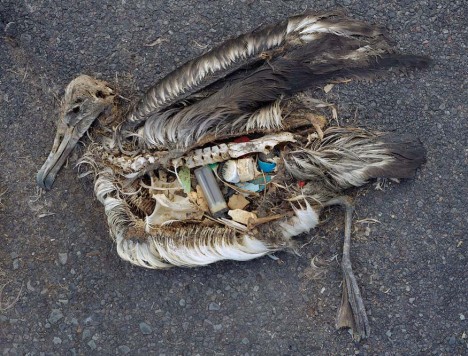
And lest you forget – or choose to ignore –  what that kind of degradation entails, Chris Jordan, a photographer based in Seattle, has documented it for us.   In a series of photographs entitled “Message from the Gyre”, he has documented what pieces of plastic are doing to albatross chicks on Midway Island.  In the interest of a faithful representation of their plight, not a single piece of plastic in any of the pictures was moved, placed or arranged in any way.  The images depict the actual stomach contents of baby birds in one of the world’s most remote marine sanctuaries, more than 2000 miles from the nearest continent.  See all the images and more of Chris Jordan’s work on his web site, www.chrisjordan.com

Chris-Jordan-Message-from-t_thumb


[1]“Reduce, re-use,re-dye?”,  Phil Patterson, Ecotextile News, August/September 2008

[2] “Taking Landfill out of the Loop”, Sarah Scott, Azure, 2006

We’ll be at Greenbuild next week, booth 910, with our good friends from LIVE Textiles.  Please stop by to see us if you’re there.

We are introducing a new organic wool upholstery fabric at Greenbuild  (we’re hoping it will be GOTS certified, though it is touch and go as to whether the certificate will be in place by then – there are so many hoops!).    So for the past six months or so we’ve been learning lots about wool – and wool is a complicated subject!  It’s a gorgeous fiber, but it has, as we say, issues.  Not unsolvable, but like everything you have to know your suppliers and what questions are important to ask.  We talked about wool and animal husbandry in two previous posts (“What does organic wool mean?” 8.11.09 and “Why does wool get such high embodied energy ratings?” 8.4.09);  some of the issues surrounding wool are enumerated in those posts.

I’m always a sucker for soft and luxurious, so naturally when talking about wool I began hinting I’d like a cashmere fabric – or wool/cashmere blend.  But we looked into cashmere, and what we found is startling and unexpected: a story of how your cashmere sweater pollutes the air you breathe.    There is an improbable connection, according to Evan Osnos of the Chicago Tribune, “between cheap sweaters, Asia’s prairies and America’s air, (which) captures how the most ordinary shifts in the global economy are triggering extraordinary change.”  Please read Mr. Osnos’ article, “China’s Great Grab”, from which most of the information in this blog is taken.   He won the Asia Society’s Osborn Elliott Prize for distinguished journalism for this series.

Cashmere has recently become ubiquitous –  cashmere sweaters, for example, once so very high priced that the very word “cashmere” became synonymous with luxury,  are suddenly “affordable”.  Coincidentally, Saks Fifth Avenue ran a full page ad in Sunday’s  New York Times touting their low priced cashmere goods – and telling you to “Shop Smart”.   We’ll help you to shop smart – please read this post!

What happened to bring down the price of cashmere?  Behind this new affordable price tag is something the consumer rarely sees or thinks about: the cascade of consequences around the world when the might of Chinese production and western consumption converge on a scarce natural resource.

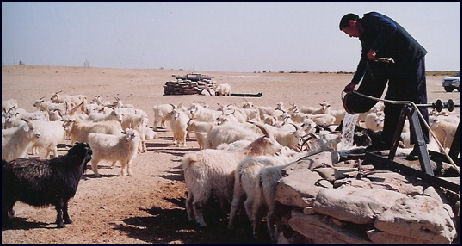
Cashmere comes from the downy underhair of special goats, the majority of which live in the coldest regions of China and Mongolia.  In fact, the world’s best and most expensive cashmere comes from the Alashan Plateau, an area in China’s north straddling the Mongolian border,  boiling hot in summer and way below zero in winter.  This area is part of China’s mythic grasslands, where Genghis Khan and his horde rode the limitless horizon.  The fiber itself, known as “diamond fiber” in China,  sells for 6 times the cost of ordinary wool.

This rare and wonderful fiber is remarkably soft, silky and warm.  Side by side under a microscope a single cashmere strand makes a human hair look like a rope.  And it was also synonymous with high price.  European spinning mills have sourced the best cashmere yarns from this region for years.

The combination of demand and high prices led to China’s rapid increase in production to meet that demand,  and  conditions were in place to create an almost perfect storm – with money to be earned from “diamond fiber”, herders rapidly increased their goat populations and caused severe overgrazing.  In  Inner Mongolia, for example, the livestock population increased from 2 million in 1949 to 28.5 million in 2004.(1)

20080318-desertification Julie Chaol

The goats are eating the grasslands bare:  Goats consume over 10% of their body weight daily in roughage, eating not just the grass but also their roots and stripping bark from seedlings, preventing the regrowth of trees.  The land is so barren that herders buy cut grass and corn by the truckload to keep their animals alive.  Overgrazing is so severe that the health of the goats is at risk: their birthrate is sinking and even the cashmere has begun to suffer from these stressed goats, with shorter, coarser, less valuable fiber.

In addition to stripping the land of all vegetation, the feet of these goats have been compared to stiletto heels, vs. the big soft pads of camel’s feet, which have a far lesser impact on the ground.  These “stiletto heel” hooves  pierce the crust formed on the land, and the fine sand beneath it takes flight.  So the animals remove the vegetation, and the winds finish the job by blowing away the top soil, transforming the grasslands into desert.

In this perfect storm, the rapid increase in the number of goats has occurred at the same time the area is undergoing a severe drought due to climate change.  The goats require water, which also leads to overuse of that resource.  So many cashmere plants and other industries have opened in Alashan that authorities must ration water, forcing each factory to close for days at a time. (2)

And without grass and shrubs to hold the dunes in place, the deserts in Alashan are expanding by nearly 400 square miles each year. The World Bank warned of grave consequences for the environment and for farmers.

Already desertification is causing millions of rural Chinese to migrate from their villages –  a migration on the scale of the Dust Bowl in the United States is taking place in China today. A study by the Asian Development Bank found 4,000 villages at risk of being swallowed by drifting sand (3)

Exhib_001031

But the environmental degredation doesn’t stop in Alashan.  Eroding grasslands means that silt is deposited into the headwaters of rivers that flow all across Asia: to India, Pakistan, Bangladesh and Southeast Asia.  And the dust storms, which have been a fact of life in this area of the world since before Genghis Kahn, are becoming increasingly common:  in the 1950s, China suffered an average of five dust and sand storms per year; in the 1990s storms struck 23 times each year.  (4)  These storms do a lot of damage:  A storm in 2002 forced 1.8 million South Koreans to seek medical help and cost the country $7.8 billion in damage to industries such as airlines and semiconductors, said the state-run Korea Environment Institute. (5)

And added to the damage the storms cause in China, they also act as a high altitude conveyor belt for pollution.  Think of it like this:  the dust and sand generated in Alashan  is sent east by the winds, where China’s coal powered industry adds pollution.  Together the noxious brew reaches the U.S. within five days, where it can combine with local pollution to exceed the limits of healthy air, according to Rudolf Husar, an atmospheric chemist at Washington University in St. Louis.(6)

According to Eric Osnos’ article, “Of most concern are ultra tiny particles that lodge deep in the lungs, contributing to respiratory damage, heart disease and cancer. One storm that began in China and Mongolia in spring 1998 caused a spike in air pollution that prompted health officials in Washington, Idaho, Oregon and British Columbia to issue warnings to the public.”

The situation has become so bad that herders are moving off the land to try their hand at trades in the cities, and the government is putting many new programs into place to help stem the damage which has been done (including banning grazing on some lands).  The price of cashmere has begun to climb.  But with ads such as the one from Saks, promoting yet another cheap product, these problems will continue to persist.

(1)  Osnos, Evan;  “China’s Great Grab: Your cheap sweather’s real cost”, The Chicago Tribune, December 16, 2006.

(2) Ibid.

(3) http://factsanddetails.com/china.php?itemid=389&catid=10&subcatid=66#07)

(4) Osnos, op cit.

(5) Ibid.

(6) Ibid.