OEcotextiles

Indulgent yet responsible fabrics

Fair Trade – what does it mean?

O Ecotextiles (and Two Sisters Ecotextiles)

Trade issues raise a lot of hackles – and they’re complex, global in scope, subject to capricious trade agreements and governmental intervention.  According to Oxfam, trade is robbing poor people of a proper living, and keeps them trapped in poverty because the rules controlling trade heavily favor the rich nations that set the rules.  Rich countries and powerful corporations have captured a disproportionate share of the benefits of trade, leaving developing countries and poor people worse off.  Oxfam is working to ensure that countries change the way they trade.

The fair trade movement is about creating a better world – one where economy works for the people, not against them.  Basically,  what we see as fair trade has concentrated its efforts on the producer:    It recognizes that small producers lack a voice to achieve the best price for their products, and it aims to bring relief to these small producers.

October is Fair Trade month –  the theme is Every Purchase Matters:   “Every purchase matters means taking an extra moment to think about the impact your purchases will have – on your own wellbeing, on the people who produce the products and on the environment. “  As I said in last week’s blog, that’s a great thing to think about for each and every purchase you make  –  for lots of reasons.

Did you know that on average conventional coffee farmers receive $0.02 from the sale of each latte you buy?    If that coffee were Fair Trade coffee, the farmers would receive $0.12.  That small increase saves lives. (1)
I bet you’ve seen the FairTrade Mark on products recently.  Ever wonder what it really meant?   I mean, you can’t change the world unless you understand how it works, right?

Fair Trade hopes to alleviate poverty  and end the exploitation of workers through the three stakeholders:

1.      Producers,  who are generally located in impoverished countries

2.      organizations that trade, support and certify the products and

3.      Customers  who  buy the products.  (Yes, we do have a role to play in this poverty alleviation movement.)  We need to vote with our wallets and shop with our conscience.

Fair trade also may include policies that honor the local natural environment involved in the production, as well as the promotion of people-to-people connections, fairness and sustainability.

How does the fair trade movement work?  Basically it boils down to:

  • Better prices:  paying workers a fair wage for their labor and to paying producers a guaranteed minimum price for their agricultural products or a fair price for their handicrafts or other products
  • Decent working conditions:  The producer group agrees to provide good working conditions, safety procedures and adequate health standards for all workers.  Both the buyer and the producer group agree to promote human rights, especially those of women, children and people with disabilities
  • Sustainable development: Producers also agree to use environmentally sound production methods.  Harmful agrochemicals and GMOs are prohibited in favor of environmentally sustainable farming methods, but fair trade certified goods are not required to be “organic” because sometimes organic certification acts as a barrier to markets so Fair Trade doesn’t require it.

So how do we know if a product is Fair Trade?  Well, one way is for the company to tell us so –  and companies more and more often are making that claim, often with an environmental veneer attached.   Fair Trade provides fertile ground for greenwashing.  What if you don’t happen to believe the company?

Bet you saw this one coming:  there are also Fair Trade certification organizations, and they are of two types:

  • For organizational evaluation:   The World Fair Trade Organization (formerly IFAT) and the Fair Trade Federation (FTF) evaluate organizations for their full commitment to fair trade principles (no matter what kind of product they sell). FTF member organizations will have the Federation’s logo on materials related to their business.
The Fair Trade movement has always had its critics, who have said it is just a mechanism by which consumers in the rich world can feel better about themselves.  “It is a movement based around the consumption patterns of the rich and not the needs of the poor.”  A senior fellow of the Cato Institute,  Brink Lindsey, refers to Fair Trade as a “well intentioned, interventionist scheme…doomed to end in failure.” (2)

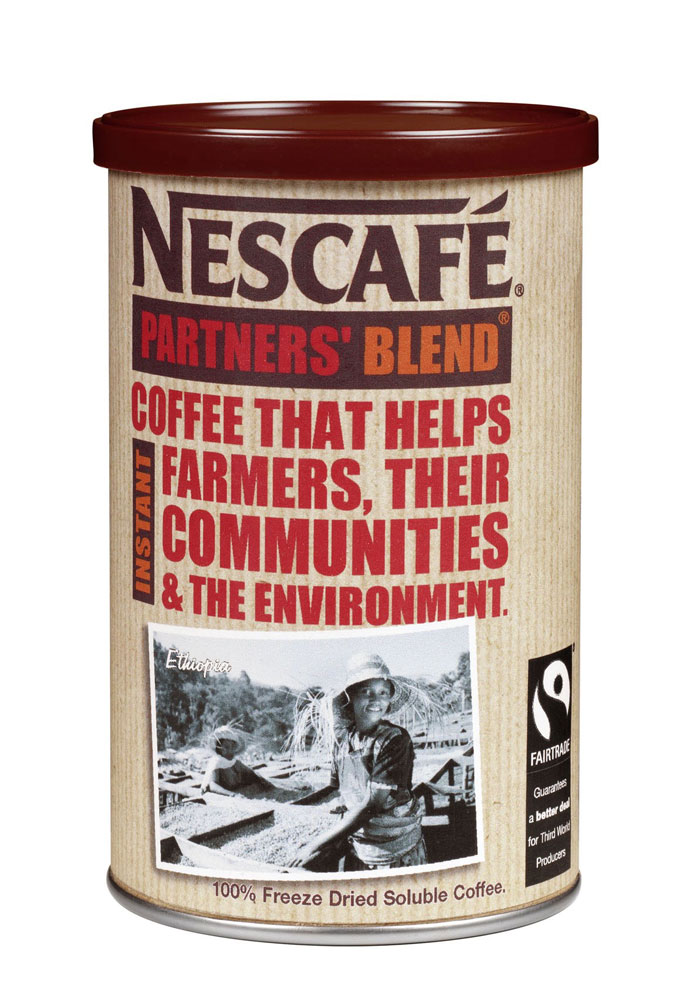
One facet of the problem is exemplified by the large multinational company, Nestle, which introduced its Partners Blend coffee, containing  Fair Trade coffee.   Nestle’s advertising in launching this coffee suggested that all its products are Fair Trade, when only 0.02% of its global purchases comply with Fair Trade criteria. (3)  But some say that doing something should be supported, while others  have noticed that Partners Blend coffee is often twice the price of non-Fair Trade coffee in the market, when it can be found!  This high price discourages purchase.   This has helped Nestle win a global internet poll for the world’s “least responsible company” in January 2005. (4)
Doing justice to the criticism of fair trade would be too long for this post, but if you’re interested you can read about it by clicking here and here – and you can probably find much more on the internet.

At this time, the only products in the United States which can be certified Fair Trade by TransFair USA are coffee and tea, spices and herbs, cocoa and chocolate, fresh and dried fruits and vegetables (including soy), cotton, flowers, sugar, rice, nuts, honey, olives and olive oil, quinoa , vanilla and wine.  The only manufactured product (if you don’t count wine)  is “sportsballs.”
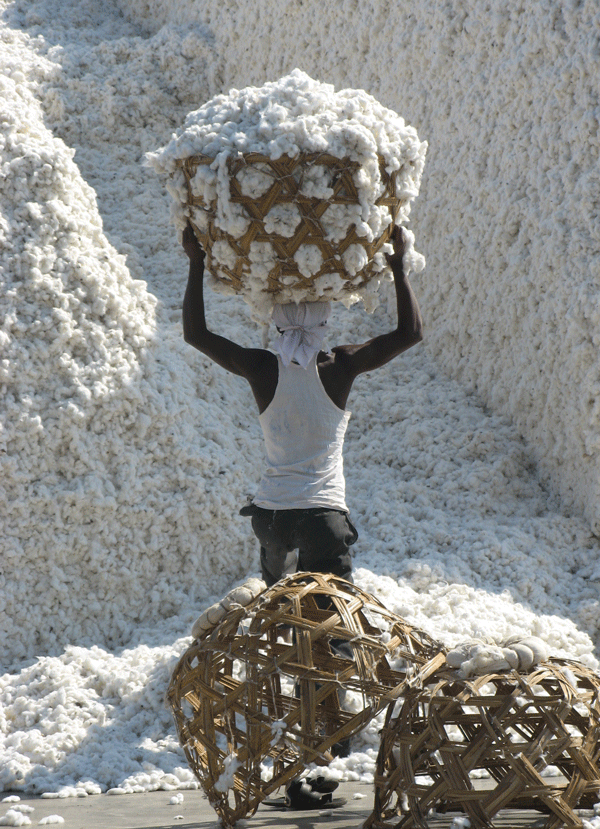
Because I’m interested in fabric and how Fair Trade fits into the fabric industry,  let’s look at Fair Trade cotton, which is no different from conventional cotton, except that the farmer at the bottom of the supply chain receives a guaranteed price for his cotton which covers the cost of production and a premium for community investment.

With regard to cotton, it’s important to recognize that Fair Trade cotton is not, by definition, required to be organic.  This is because Fair Trade aims to support the most marginalized farmers, those who cannot always afford to convert to organic farming or who lack the knowledge about organic agriculture. It can take years to convert a crop to organic, but this transition is something that many Fair Trade cotton farmers work towards as they earn more income through the Fair Trade minimum price. There is added incentive to convert as well since Fair Trade pays a higher price for organic cotton.

From the Fairtrade Foundation website:  “Fairtrade cotton offers a positive alternative to thousands of cotton farmers in West African and in countries as widespread as India, Senegal, Burkina Faso, Egypt and Peru. Fairtrade certification brings farmers the guarantee of a fair and stable price. They also get an extra payment – the Fairtrade premium – which they can spend on community development projects such as schools, health clinics and clean water.

The benefits from sales of Fairtrade certified cotton have allowed farmers in India to develop basic health insurance schemes for themselves and health awareness programes for their children. In Mali, farmers have been able to fund the building of storage units for cotton and grain, enabling them to store food all year round and better control the sales of their cotton over the seasons, bringing them a more consistent income.”

Remember,  you will not see a Fair Trade label on any textile product other than cotton since cotton is a commodity and the only fiber certified under Fair Trade certifications:  there is no such thing as Fair Trade certified  linen, hemp, sisal, jute, wool, cashmere,  or silk.

There is a new apparel and linen Fair Trade mark in the United States.  Fair Trade Certified ™ apparel is supposed to be farm-to-finish. The entire supply chain, including mills for ginning, spinning, weaving and dyeing, is audited for traceability and basic labor compliance under Fairtrade Labelling Organizations (FLO) standards.

During the summer of 2010, blank T-shirts, and men’s  polo shirts became Fair Trade Certified in the United States.   Plans are in place to expand the products available to include tote bags, aprons, women’s sweaters, knit baby clothes, women’s casual wear (e.g., hoodies, wrap tops, dresses, knit pants, camis, and tanks), plus men’s and women’s lingerie.

It is important to note that the Global Organic Textile Standard (GOTS) also guarantees fair working conditions and fair wages for workers in the supply chain.  GOTS also has the environmental component – requiring organic fibers, prohibiting use of toxic chemicals in the weaving and finishing of the fabrics, and requiring water treatment.  And GOTS can be applied to the finished product , such as apparel or bedlinens, and it extends even to packaging of the goods (prohibiting PVC plastics, for example).  And finally,  GOTS does encompass all natural fibers.

Another important note regarding Free Trade cotton:   the United States has a system of subsidizing cotton producers, and this flies in the face of everything Free Trade is trying to accomplish.  If you’re interested in these issues you can click here to read a recent Washington Post editorial about these subsidies, or just Google “US cotton subsidies and free trade”.

If you support the Fair Trade movement, click here for some action steps you can take to make it a reality.

(1) http://www.fairtradefederation.org/ht/d/sp/i/197/pid/197

(2) http://www.globalenvision.org/library/15/
(3) http://www.organicconsumers.org/fair-trade/nestle.cfm

(4) http://www.evb.ch/index.cfm?set_lang=2&page_id=3346

Ever wonder why you buy those organic foods that cost more?  It’s always a bit of sticker shock when you see the organic and conventional side by side.   The organic strawberries may taste better, but this economy means we have to pinch every penny.  As my husband says, an apple is an apple, so why pay more for one when you can get the other cheaper?  It’s not going to do anything to me – at least not today.

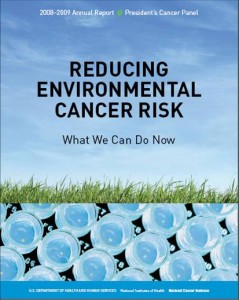
Turns out you might want to re-think those – and lots of other –  choices you make every day.  The President’s Cancer Panel issued a 240-page report in May, 2010, called “Reducing Environmental Cancer Risk: What We Can Do Now” This year’s report is the first time the panel has emphasized the environmental causes of cancer. It warns of “grievous harm” from chemicals and other hazards, and “a growing body of evidence linking environmental exposures to cancer.” Children are especially vulnerable.

The report is based on testimony from a series of meetings held between September 08 and January 09 which  included 45 invited experts from academia, government, industry, the environmental and cancer advocacy communities, and the public. The report urged President Obama to “use the power of your office to remove the carcinogens and other toxins from our food, water, and air that needlessly increase health care costs, cripple our nation’s productivity, and devastate American lives.”  Because industrial chemicals are so ubiquitous and exposure to these potential environmental carcinogens so widespread, “the Panel was particularly concerned to find that the true burden of environmentally induced cancers has been grossly underestimated,”

The report said previous estimates that environmental pollutants and occupational exposures cause 6% of all cancers are low and “woefully out of date.”  In fact, the National Institutes of Health estimates that environmental factors contribute to 75-80% of all cancers: from tobacco smoke, ultraviolet light, radiation, obesity and certain viruses and sexually-transmitted diseases – in addition to environmental carcinogens. One excerpt reads, “With nearly 80,000 chemicals on the market. … many of which are used by millions of Americans in their daily lives and are. … largely unregulated, exposure to potential environmental carcinogens is widespread.”

The President’s Panel report clearly states that much work has to be done to better characterize environmental determinants of cancer—including better research methods, standardized measurements, and more realistic models that can help estimate the cumulative risks associated with multiple environmental toxins.  But scientists have been scrambling for decades for scarce funding  – and the work was given a low priority.  The fundamental problem is that research into environmental causes of cancer has little potential for yielding profits—at least in the short-term. In fact, it is more likely to cost industry through stronger regulation and removal of products from the market, litigation and the added expense of developing new products based on “green chemistry.” So it’s not a stretch to understand why the government and the pharmaceutical industry would rather spend billions of dollars promoting screening and developing profitable new cancer drugs.  Peter Montague, a long-time environmental advocate puts it this way: “To be blunt about it, there’s no money in prevention, and once you’ve got cancer you’ll pay anything to try to stay alive.”

Environmental toxins are rarely considered in health policy initiatives (except for tobacco and sunlight), despite the findings that people who live in polluted areas and work with toxic substances (most often the poor and minorities) have higher rates of cancer incidence.  The Cancer Panel  pointed out  “Cancer Alley“, the stretch along the Mississippi between Baton Rouge and New Orleans, as an example.  Louisiana ranked second in the nation for on-site toxic releases, and many studies exist which demonstrate the cancer rate is above the average for the rest of the United States.  In one small Louisiana town in Cancer Alley, 3 cases of rhabdomyosarcoma were reported in a 14 month period.  Rhabdomyosarcoma is an extremely rare and devastating childhood cancer, with a national average of one child in a million.  Five years ago a group of residents of Mossville, Louisiana, filed a human rights complaint against the US government, alleging it was not protecting their right to live in a healthy environment.  The Inter-American Commission on Human Rights agreed this year to hear their complaint.

In a consensus statement,  the Collaborative on Health and the Environment, an international partnership of some 3,000 individuals and organizations, says that the net result of this inadequate funding is a body of research that is in danger of being irrelevant:

“The methods that have been used to attribute cancer risk to environmental exposures are outdated and flawed, and should no longer be used to determine policy or set research priorities.”

So it’s not just organic foods that we should be concerned about, but the whole phalanx of products which are made using harmful chemistry, and the manufacturers that don’t capture emissions or treat their waste products, thereby polluting our entire ecosystem.  That’s why O Ecotextiles has made a commitment to sell only fabrics which are safe for both you and the Earth.

I found it interesting that there is a new branch of science that is also studying how these environmental factors can influence us.  Called epigenetics, it is the study of changes in gene activity that don’t involve changes to the genetic code but still get passed down to at least one successive generation.   These patterns of gene expression are governed by the cellular material — the epigenome — that sits on top of the genome, just outside it (hence the prefix epi-, which means above). It is these epigenetic “marks” that tell your genes to switch on or off, to speak loudly or whisper. It is through epigenetic marks that environmental factors like diet, stress and prenatal nutrition can make an imprint on genes that is passed from one generation to the next.

One could think of the genome as a book of blueprints,  laying out a number of options in the form of genes. The epigenome is like the contractor who goes through the book, deciding which options to include in a house. Two different contractors can build radically different houses from the same book of blueprints, in the same way that two organisms with identical DNA can look very different.

This field of study, some believe, might hold the key to understanding how environmental toxins cause serious, and often life-threatening diseases, such as obesity, diabetes and cancer.  For quite some time scientists have been trying to determine how exposure to environmental toxins can result in serious disease years or even decades later. Epigenetics may provide the mechanism. An exposure to an environmental toxin at one point in a person’s life (and most critically during gestation) can trigger the epigenome to turn on or turn off a key gene. Years later, because of that epigenetic change, a disease may appear.

“We can no longer argue whether genes or environment has a greater impact on our health and development, because both are inextricably linked,” said Randy Jirtle,  Ph.D., a genetics researcher in Duke’s Department of Radiation Oncology. “Each nutrient, each interaction, each experience can manifest itself through biochemical changes that ultimately dictate gene expression, whether at birth or 40 years down the road.”

Exposures to pesticides, toxins and synthetic compounds can give rise to a host of diseases – such as cancer and asthma — whose prevalence has soared in recent decades, says H. Kim Lyerly, M.D., director of the Duke Comprehensive Cancer Center.  Pesticides encountered in utero might be dormant in the fetus, only to cause cancer ten, 20 or 50 years later, he said.

Even the lowest detectable limits of a chemical can have dire effects on a living organism, added William Schlesinger, Ph.D., Dean of the Nicholas School of the Environment and Earth Sciences at Duke. Atrizine is a prime example. Less than one part per billion of this widely used corn herbicide de-masculinizes developing frogs or causes dual male-female genitalia. Yet often the Environmental Protection Agency’s instrumentation doesn’t record such minute levels of chemical exposure, he said.

What does the Cancer Panel suggest we do in the meantime?  Here is their list, with a few of additions of our own:

  • Remove your shoes before entering your home to avoid tracking in toxic chemicals such as pesticides.
  • Filter tap water.
  • Use stainless steel, glass or BPA-free plastic water bottles.
  • Microwave in ceramic or glass instead of plastic containers.
  • Become aware of what you’re eating:  minimize consumption of food grown with pesticides, and meat raised with antibiotics and growth hormone.
  • Minimize consumption of processed, charred or well-done meats, which contain carcinogenic heterocyclic amines and polyaromatic hydrocarbons.
  • Reduce radiation from X-rays and other medical sources.
  • Be aware of the products you use, especially those that come in contact with your skin, such as:  lotions, cosmetics, wipes, sheets, clothing, hair dyes.  Check ingredient labels, look for third party certifications where appropriate.
  • And finally:  use sunscreen, stop smoking and lose weight if necessary.

What is greenwashing?

O Ecotextiles (and Two Sisters Ecotextiles)

In the past few weeks we’ve been looking at very large corporations which are introducing new products with an environmental spin.  The charge of “greenwashing” could be leveled against these companies, so I thought we’d take a look at how to spot greenwashing.

Wikipedia defines greenwashing as a term describing the deceptive use of green PR or green marketing in order to promote a misleading perception that a company’s policies or products are environmentally friendly. The term green sheen has similarly been used to describe organizations that attempt to show that they are adopting practices beneficial to the environment.

Just the fact that we’re exploring this concept means that there is a recognition that the planet is in trouble, and many of us have some kind of intention to do something about it, even though what we do might be very small.  Companies want to show consumers that their products are “green” so the consumers  can buy their stuff as usual while still feeling like they’re helping the Earth.  “Green cons­umerism” is an oxymoron, like “organic cigarettes”.  Buying stuff is simply bad for the environment –  all this stuff has to be manufactured from other stuff we take from the Earth one way or another.  Manufacturing requires energy.  Shipping the products requires energy.

TreeHugger (and Planet Greener) Lloyd Alter said it best:  “We just use too much of everything – too much space, too much land, too much food, too much fuel, too much money…the key to sustainability is to simply use less.”

So the argument really begins and ends with us.  We – consumers – should really step up to the plate and make some sacrifices rather than shifting the burden entirely onto companies to produce green products so we can feel good about buying them.

On the other hand, it’s not reasonable to think that people will stop buying stuff, or that companies would not continue to make stuff.  So  as Jeff Hollander of Seventh Generation says, “We should absolutely not support green products from companies that use them to distract us from their larger negative environmental and social impacts. We need systemically green companies to address the challenges we face, not business-as-usual companies that hold up one green hand while hiding another toxic, CO2-emitting, waste-producing one behind their backs.”

But how do we know what is greenwash?

Following the Earth Summit in 1992, Greenpeace came up with criteria which it uses to define “greenwash”, defined as the unjustified appropriation of environmental virtue to create a pro-environmental image, sell a product or a policy, or to try and rehabilitate their standing with the public and decision makers after being embroiled in controversy.   The following is from the Greenpeace web site:

While accepting that there will never be a perfect litmus test for “greenwash”, and in the hope of encouraging greater public debate on the issue, Greenpeace offers the following 4 Point “CARE” check list. “CARE” stands for Core business; Advertising record; Research & development funding; and Environmental lobbying. A corporation which fails on any of the four tests below is probably in the “greenwash” business.

1. Core Business

If a company’s core (or main) business is based primarily on an activity which has been identified as significantly contributing to environmental pollution or destruction, there is a strong presumption that any assertions that it supports environmentally sustainable development are greenwash.

For example, oil and coal companies, whose products have been determined by UN scientists to be the largest source of man-made greenhouse gases, are by definition engaged in an environmentally unsustainable business. Scientists tell us that each ton of coal or barrel of oil burned adds to the risk of dangerous climate change, which over 160 countries have pledged to prevent in an international treaty. In short, there is a fundamental contradiction between the environmental (and legal) requirement to reduce carbon dioxide (CO2), and the production and sale of increasing quantities of coal and oil, the main sources of CO2.

Similarly, forestry companies which log in ancient forests, the richest terrestrial reservoirs of biodiversity on the planet, make it almost impossible to implement the commitments made by 165 countries to protect species in 1992 international Convention of Biological Diversity. Currently, it is estimated that 50-100 species become extinct each day, and forest clearing is a major contributor. This is another example of how a core business can be in fundamental contradiction with a sustainable environment.

In some cases, companies with a highly destructive core business have launched or expanded initiatives for cleaner or less destructive processes and products. Oil companies moving into solar energy is an example. This trend is to be strongly encouraged. However, Greenpeace believes that such measures warrant the “greenwashing” tag unless the parent company publicly acknowledges the fundamental unsustainability of the core business, and makes a serious commitment to phasing out of those activities and towards the cleaner business within a near-term timeframe. (See also “Research and Development”, below).

2. Advertising Practice

Corporate advertising budgets can be huge and their effects on shaping consumer behaviour enormous. It is understood that at least ten corporations have annual advertising budgets of over US$ 1 billion each. Collectively, global advertising budgets run into many billions of dollars, significantly more than most governments and corporations spend on environmental improvement. This fact alone justifies continuous and detailed public scrutiny of the advertising practice and claims of industry.

With this power goes a responsibility that cannot be regulated alone by local advertising standards. Corporations must assume the responsibility for informing the public about the environmental impacts of buying and using their products. Many public opinion polls show that consumers would like to be given a wider choice in products, and are even prepared to pay more for “greener” products.

The “greenwash” tag applies to any corporations which use the media to make environmental claims about one or more of their cleaner products, while continuing “business as usual” practices which rely, for example, on large amounts of natural capital, are energy intensive or inefficient, or which involve production and release of toxic chemicals.

Use of the media by corporations for public debate about whether certain practices are more or less sustainable may represent a genuine attempt to inform and educate. However, where large advertising budgets and slick campaigns appear to justify maintenance of “business as usual” practices which have been widely questioned by environmental scientists, the “greenwash” tag might also be applicable. In other words – their green spin outweighs green R&D spending!

3. Research and Development (R&D)

Large corporations frequently have large funds set aside for R&D. These are used to identify and bring into production new products and manufacturing processes. Here, the “greenwash” test is to what extent these budgets are allocated to developing practices which are more sustainable, or are simply reinforcing old, unsustainable practices.

In view of the size and purpose of these funds, which can easily amount to many millions of dollars, and the fact that a high proportion of the world’s scientists now work for industry, there is a special opportunity for use of corporate R&D in the development of cleaner technologies.

For example, a paper manufacturing corporation which spends most or all of its R&D budget on developing a closed cycle production process which eliminates use of chlorine, minimises use of water and energy, and avoids use of old growth forest as feedstock is moving in the right direction.

By contrast, a coal power utility which spends its R&D on reducing pollutants such as sulphur, without addressing the fact that any combustion of coal creates harmful greenhouse gases and other pollutants, is not using its R&D for sustainable ends. In such a case, only a major commitment towards development of clean renewable energy forms would represent a real contribution towards a more sustainable planet.

4. Environmental Lobbying Record

Corporations which say one thing, and do another, do the entire business sector an injustice. For example, a corporation which presents itself as in favour of pollution reduction loses all credibility if, at the same time, it actively lobbies against measures which are designed to reduce pollution.

Politicians, journalists and NGOs have too often encountered examples of businesses claiming green credentials or aims, but which lobby (frequently through coalition or “front” groups) against increases in taxes or controls on polluting activities. Sometimes there have been threats or examples of closing plants and moving to countries with lower environmental standards. Such “double-speak” entitles any corporation caught in the act to the “greenwash” tag.

By contrast, a responsible corporation will use its name and experience to lobby in favour of policies and practices which reduce pollution. Greenpeace has applauded, and even worked with groups of businesses serious about developing better environmental standards, and urging their adoption by government or industry associations.

I just tried to find out more about Project UDesign,   a competition sponsored by the Savannah College of Art and Design (SCAD), Cargill, Toray Industries and Century Furniture.  The goal is to produce a chair that is both “sustainable and sellable.”  It is targeted to be the next “ eco friendly wing chair” on the market, with the goal of educating the industry and consumers on the topic of sustainable furniture design.[1] Century Furniture has pledged to put the winning chair into production.

Since criteria for the chair design is limited to the use of Cargill’s BiOH® polyols soy foam and Toray’s EcoDesign™ Ultrasuede® upholstery fabric we would like to help Project UDesign reach their goal of educating us on sustainable furniture design by explaining why we think these two products cannot be considered a sustainable choice .  In fact, by sponsoring this competition and limiting the student’s choices to Cargill’s BiOH® polyols (“soy”)  foams and Toray’s EcoDesign™ Ultrasuede® fabrics, it sends absolutely the wrong message to the students and the public about what constitutes an “eco friendly” choice.

So, let’s take a look at these two products to find out why I’m in such a dither:

Beginning with soy foam:   the claim that soy foam is a green product is based on two claims:

  1. that it’s made from soybeans, a renewable resource
  2. that it reduces our dependence on fossil fuels  by  both reducing the amount of fossil fuel needed for the feedstock  and  by reducing the energy requirements needed to produce the foam.

Are these viable claims?

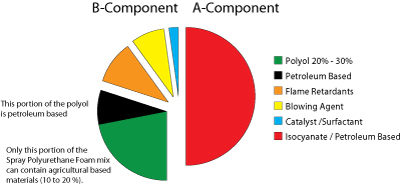
It’s made from soybeans, a renewable resource:  This claim is undeniably true.   But what they don’t tell you is that this product, marketed as soy or bio-based, contains very little soy. In fact, it is more accurate to call it ‘polyurethane based foam with a touch of soy added for marketing purposes’. For example, a product marketed as “20% soy based” may sound impressive, but what this typically means is that soy accounts for  only 10% of the foam’s total volume. Why?  Given that polyurethane foam is made by combining two main ingredients—a polyol and an isocyanate—in 40/60 ratios (40% is the high end for BiOH® polyols used, it can be as low as 5%), “20% soy based” translates to 20% of the polyol portion, or 20% of the 40% of polyols used to make the foam. In this example the product remains 90% polyurethane foam  ‘based’ on fossil fuels, 10% ‘based’ on soy. If you go to Starbucks and buy a 20 oz coffee and add 2-3 soy milk/creamers to it, does it become “soy-based” coffee?

It reduces our dependence on fossil fuels: This means that while suppliers may claim that ‘bio foams’ are based on renewable materials such as soy, in reality a whopping 90 to 95%, and sometimes more of the product consists of the same old petro-chemical based brew of toxic chemicals. This is no ‘leap forward in foam technology’.  In the graphic below, “B-Component” represents the polyol portion of polyurethane, and the “A-Component” represents the isocyanate portion of the polyurethane:

It is true that the energy needed to produce soy-based foam is, according to Cargill, who manufactures the soy polyol,  less that that needed to produce the polyurethane foam.   But because the soy based polyols represent only about 10% of the final foam product, the true energy reduction is only about 4.6% rather than 23%, which is what Cargill leads you to believe in their LCA, which can be read here.   But hey, that’s still a savings and every little bit helps get us closer to a self sustaining economy and is friendlier to the planet, so this couldn’t be what is fueling my outrage.

The real problem with advertising soy based foam as a new, miracle green product is that the foam, whether soy based or not, remains a   ” greenhouse gas-spewing petroleum product and a witches brew of carcinogenic and neurotoxic chemicals”, according to Len Laycock of Upholstery Arts.

My concern with the use of soy is not its carbon footprint but rather the introduction of a whole new universe of concerns such as pesticide use, genetically modifed crops (GMO), appropriation of food stocks and deforestation.  Most soy crops are now GMO:  according to the USDA, over 91% of all soy crops in the US are now GMO; in 2007, 58.6% of all soybeans worldwide were GMO.  If you don’t think that’s a big deal, please read our posts on these issues (9.23.09 and 9.29.09).  The debate still rages today.  Greenpeace did an expose (“Eating Up The Amazon” ) on what they consider to be a driving force behind  Amazon rain forest destruction – Cargill’s race to establish soy plantations in Brazil.  You can read the Greenpeace report here, and Cargill’s rejoinder here.

An interesting aside:  There is an article featured on CNNMoney.com about the rise of what they call Soylandia – the enormous swath of soy producing lands in Brazil (almost unknown to Americans) which dominates the global soy trade.  Sure opened my eyes to some associated soy issues.

In “Killing You Softly” (a white paper by Upholstery Arts),  another sinister side of  soy based foam marketing is brought to light:

“Pretending to offer ‘soy based’ foam allows these corporations to cloak themselves in a green blanket and masquerade as environmentally responsible corporations when in practice they are not. By highlighting small petroleum savings, they conveniently distract the public from the fact that this product’s manufacture and use continues to threaten human health and poses serious disposal problems. Aside from replacing a small portion of petroleum polyols, the production of polyurethane based foams with soy added continues to rely heavily on ‘the workhorse of the polyurethane foam industry’, cancer-causing toluene diisocyanate (TDI). So it remains ‘business as usual’ for polyurethane manufacturers.

Despite what polyurethane foam and furniture companies imply , soy foam is not biodegradable either. Buried in the footnotes on their website, Cargill quietly acknowledges that, “foams made with BiOH® polyols are not more biodegradable than traditional petroleum-based cushioning”.[2] Those ever so carefully phrased words are an admission that all polyurethane foams, with or without soy added, simply cannot biodegrade. And so they will languish in our garbage dumps, leach into our water, and find their way into the soft tissue of young children, contaminating and compromising life long after their intended use.

The current marketing of polyurethane foam and furniture made with ‘soy foam’ is merely a page out the tobacco industry’s current ‘greenwashing’ play book. Like a subliminal message, the polyurethane foam and furniture industries are using the soothing words and images of the environmental movement to distract people from the known negative health and environmental impacts of polyurethane foam manufacture, use and disposal.

Cigarettes that are organic (pesticide-free), completely biodegradable, and manufactured using renewable tobacco, still cause cancer and countless deaths. Polyurethane foam made with small amounts of soy-derived materials still exposes human beings to toxic, carcinogenic materials, still relies on oil production, and still poisons life.

As Len Laycock says, “While bio-based technologies may offer promise for creating greener, cradle-to-cradle materials, tonight the only people sitting pretty or sleeping well on polyurethane foam that contains soy are the senior executives and shareholders of the companies benefiting from its sale.  As for the rest of humankind and all the living things over which we have stewardship, we’ve been soy scammed!”

If you’re still with us, lets turn our attention to Toray’s Ultrasuede, and their green claims.

Toray’s green claim for Ultrasuede is that it is based on new and innovative recycling technology, using their postindustrial polyester scraps, which cuts both energy consumption and CO2 emissions by an average of 80% over the creation of virgin polyesters.

If that is the only advance in terms of environmental stewardship, it falls far short of being considered an enlightened choice, as I’ll list below.

If we  look at the two claims made by the company:

  1. Re: energy reduction:  If we take Toray’s claim that it takes just 25 MJ of energy[3] to produce 1 KG of Ultrasuede – that’s still far more energy than is needed to produce 1 KG of organic hemp or linen (10 MJ), or cotton (12 MJ) – with none of the benefits provided by organic agriculture.
  2. CO2 emissions are just one of the emissions issues – in addition to CO2, polyester production generates particulates, N2O, hydrocarbons, sulphur oxides and carbon monoxide, acetaldehyde and 1,4-dioxane (also potentially carcinogenic).

But in addition to these claims, the manufacture of this product creates many concerns which the company does not address, such as:

  1. Polyurethane, a component of Ultrasuede®, is the most toxic plastic known next to PVC; its manufacture creates numerous hazardous by-products, including phosgene (used as a lethal gas during WWII), isosyanates (known carcinogens), toluene (teratogenic and embryotoxic) and ozone depleting gases methylene chloride and CFC’s.
  2. Most polyester is produced using antimony as a catalyst.  Antimony is a carcinogen, and toxic to the heart, lungs, liver and skin.  Long term inhalation causes chronic bronchitis and emphysema.  So, recycled  – or not –  the antimony is still present.
  3. Ethylene glycol (EG) is a raw material used in the production of polyester.  In the United States alone, an estimated 1 billion lbs. of spent ethylene glycol is generated each year.  The EG distillation process creates 40 million pounds of still bottom sludge. When incinerated, the sludge produces 800,000 lbs of fly ash containing antimony, arsenic and other metals.[4] What does Toray do with its EG sludge?
  4. The major water-borne emissions from polyester production include dissolved solids, acids, iron and ammonia.  Does Toray treat its water before release?
  5. And remember, Ultrasuede®  is still  . . .plastic.  Burgeoning evidence about the disastrous consequences of using plastic in our environment continues to mount.  A new compilation of peer reviewed articles, representing over 60 scientists from around the world, aims to assess the impact of plastics on the environment and human health [5]and they found:
    1. Chemicals added to plastics are absorbed by human bodies.   Some of these compounds have been found to alter hormones or have other potential human health effects.
    2. Synthetics do not decompose:  in landfills they release heavy metals, including antimony, and other additives into soil and groundwater.  If they are burned for energy, the chemicals are released into the air.
  6. Nor does it take into consideration our alternative choices:  that using an organic fiber supports organic agriculture, which may be one of our most underestimated tools in the fight against climate change, because it:
      1. Acts as a carbon sink:   new research has shown that what is IN the soil itself (microbes and other soil organisms in healthy soil) is more important in sequestering carbon that what grows ON the soil.  And compared to forests, agricultural soils may be a more secure sink for atmospheric carbon, since they are not vulnerable to logging and wildfire. The Rodale Institute Farming Systems Trial (FST) soil carbon data (which covers 30 years)  demonstrates that improved global terrestrial stewardship–specifically including regenerative organic agricultural practices–can be the most effective currently available strategy for mitigating CO2 emissions. [6]
      2. eliminates the use of synthetic fertilizers, pesticides and genetically modified organisms (GMOs) which is  an improvement in human health and agrobiodiversity
      3. conserves water (making the soil more friable so rainwater is absorbed better – lessening irrigation requirements and erosion)
      4. ensures sustained biodiversity

Claiming that the reclamation and use of their own internally generated scrap is an action to be applauded may be a bit disingenuous.   It is simply the company doing what most companies should do as efficient operations:  cut costs by re-using their own scrap. They are creating a market for their otherwise unsaleable scrap polyester from other operations such as the production of polyester film.  This is a good step by Toray, but to anoint it as the most sustainable choice or even as a true sustainable choice at all is disingenuous. Indeed we have pointed in prior blog posts that there are many who see giving “recycled polyester” a veneer of environmentalism by calling it a green option is one of the reasons plastic use has soared:  plastic use has increased by a factor of 30 since the 1960s while recycling plastic has only increased by a factor of 2. [7]

We cannot condone the use of this synthetic, made from an inherently non-renewable resource, as a green choice for the many reasons given above.

[1] Cargill press release, July 20, 2010  http://www.cargill.com/news-center/news-releases/2010/NA3031350.jsp

[2] http://www.bioh.com/bioh_faqs.html

[3] If we take the average energy needed to produce 1 KG of virgin polyester, 125 MJ (data from “Ecological Footprint and Water Analysis of Cotton, Hemp and Polyester”, by Cherrett et al, Stockholm Enviornemnt Institute) , and reduce it by 80% (Toray’s claim), that means it takes 25 MJ to produce 1 KG of Ultrasuede®

[4] Sustainable Textile Development at Victor,  http://www.victor-innovatex.com/doc/sustainability.pdf

[5] “Plastics, the environment and human health”, Thompson, et al, Philosophical Transactions of the Royal Society, Biological Sciences, July 27, 2009

[6] http://www.rodaleinstitute.org/files/Rodale_Research_Paper-07_30_08.pdf

[7] http://www.edf.org/documents/1889_SomethingtoHide.pdf and http://discovermagazine.com/2009/oct/21-numbers-plastics-manufacturing-recycling-death-landfill

Breast cancer and acrylic fibers

O Ecotextiles (and Two Sisters Ecotextiles)

Just in case you missed the recent report which was published in Occupational and Environmental Medicine [1], a Canadian study found that women who work with some common synthetic materials could treble their risk of developing breast cancer after menopause.  The data included  women working in textile factories which produce acrylic fabrics   –  those women have seven times the risk of developing breast cancer than the normal population, while those working with nylon fibers had double the risk.

I found it interesting that the researchers justified their findings because “synthetic fibers are typically treated with several chemicals, such as flame retardants from the organophosphate family, delustering agents, and dyes, some of which have estrogenic properties and may be carcinogenic.”

These are the same organophosphate flame retardants and dyes that are used across the textile spectrum, and which are found in most textiles that we surround ourselves with each day.

But also let’s look at the fibers themselves.  The key ingredient of acrylic fiber is acrylonitrile, (also called vinyl cyanide). It is a carcinogen (brain, lung and bowel cancers) and a mutagen, targeting the central nervous system.  According to the Centers for Disease Control and Prevention, acrylonitrile enters our bodies through skin absorption, as well as inhalation and ingestion.  So could the acrylic fibers in our acrylic fabrics be a contributing factor to these results?

Acrylic fibers are just not terrific to live with anyway.  Acrylic manufacturing involves highly toxic substances which require careful storage, handling, and disposal. The polymerization process can result in an explosion if not monitored properly. It also produces toxic fumes. Recent legislation requires that the polymerization process be carried out in a closed environment and that the fumes be cleaned, captured, or otherwise neutralized before discharge to the atmosphere.(2)

Acrylic is not easily recycled nor is it readily biodegradable. Some acrylic plastics are highly flammable and must be protected from sources of combustion.

What about nylon?  Well, in a nutshell, the production of nylon includes the precursors benzene (a known human carcinogen) and hydrogen cyanide gas (extremely poisonous); the manufacturing process releases VOCs, nitrogen oxides and ammonia.  And finally there is the addition of those organophosphate flame retardants and dyes.

Of course, there are the usual caveats about the study, and those commenting on it said further studies were needed since chance or undetected bias could have played a role in the findings. In addition, according to Reuters, “the scientists said more detailed studies focusing on certain chemicals were now needed to try to establish what role chemical exposure plays in the development of breast cancer.”  So this is yet another area in which more research needs to be done.  No surprise there.

But in the meantime, did you know that many popular fabrics are made of acrylic fibers?   One of the most popular is Sunbrella outdoor fabrics.     Sunbrella fabrics have been certified by GreenGuard Children and Schools because the chemicals used in acrylic production are bound in the polymer – in other words, they do not evaporate.   So Sunbrella fabrics do not contribute to poor air quality, (you won’t be breathing them in), but there is no guarantee that you won’t absorb them through your skin.  And you would be supporting the production of more acrylic, the production of which is not a pretty thing.

And what about backings on fabrics?  Many are made of acrylic.  Turn those fabric samples over and see if there is a plastic film on the back – it’s often made of acrylic.  Upholsterers like fabrics to be backed because it makes the process much easier and stabilizes the fibers.

So I don’t know about you, but I think I’ll avoid those synthetics for now – at least until we know where we stand.


[1] Occupational and Environmental Medicine 2010, 67:263-269 doi: 10.1136/oem.2009.049817  (abstract: http://oem.bmj.com/content/67/4/263.abstract)  SEE ALSO:  http://www.breastcancer.org/risk/new_research/20100401b.jsp AND http://www.medpagetoday.com/Oncology/BreastCancer/19321

(2)  http://www.madehow.com/Volume-2/Acrylic-Plastic.html

In 1970, Toray Industries colleagues Dr. Toyohiko Hikota and Dr. Miyoshi Okamoto created the world’s first micro fiber as well as the process to combine those fibers with a polyurethane foam into a non-woven structure – which the company trademarked as Ultrasuede®.

In April 2009,  Toray announced “a new  environmentally responsible line of products which are based on innovative recycling technology”, called EcoDesign™.    An EcoDesign™ product, according to the company press release, “captures industrial materials, such as scrap polyester films, from the Toray manufacturing processes and recycles them for use in building high-quality fibers and textiles.”

One of the first EcoDesign™ products to be introduced by Toray is a variety of their Ultrasuede®  fabrics.

So I thought we’d take a look at Ultrasuede® to see what we thought of their green claims.

The overriding reason Toray’s EcoDesign™ products are supposed to be environmentally “friendly” is because recycling postindustrial polyesters reduces both energy consumption and CO2 emissions by an average of 80% over the creation of virgin polyesters, according to Des McLaughlin, executive director of Toray Ultrasuede (America).   (Conventional recycling of polyesters generally state energy savings of between 33% – 53%.)

If that is the only advance in terms of environmental stewardship, we feel it falls far short of being considered an enlightened choice.  If we just look at the two claims made by the company:

  1. Re: energy reduction:  If we take the average energy needed to produce 1 KG of virgin polyester, 125 MJ[1], and reduce it by 80% (Toray’s claim), that means it takes 25 MJ to produce 1 KG of Ultrasuede® –  still far more energy than is needed to produce 1 KG of organic hemp (2 MJ), linen (10 MJ), or cotton (12 MJ).
  2. CO2 emissions are just one of the emissions issues – in addition to CO2, polyester production generates particulates, N2O, hydrocarbons, sulphur oxides and carbon monoxide,[2] acetaldehyde and 1,4-dioxane (also potentially carcinogenic).[3]

But in addition to these claims, the manufacture of this product creates many concerns which the company does not address, such as:

  1. Polyurethane, a component of Ultrasuede®, is the most toxic plastic known next to PVC; its manufacture creates numerous hazardous by-products, including phosgene (used as a lethal gas during WWII), isosyanates (known carcinogens), toluene (teratogenic and embryotoxic) and ozone depleting gases methylene chloride and CFC’s.
  2. Most polyester is produced using antimony as a catalyst.  Antimony is a carcinogen, and toxic to the heart, lungs, liver and skin.  Long term inhalation causes chronic bronchitis and emphysema.  So, recycled  – or not –  the antimony is still present.
  3. Ethylene glycol (EG) is a raw material used in the production of polyester.  In the United States alone, an estimated 1 billion lbs. of spent ethylene glycol is generated each year.  The EG distillation process creates 40 million pounds of still bottom sludge. When incinerated, the sludge produces 800,000 lbs of fly ash containing antimony, arsenic and other metals.[4] What does Toray do with it’s EG sludge?
  4. The major water-borne emissions from polyester production include dissolved solids, acids, iron and ammonia.  Does Toray treat its water before release?
  5. And remember, Ultrasuede®  is still  . . .plastic.  Burgeoning evidence about the disastrous consequences of using plastic in our environment continues to mount.  A new compilation of peer reviewed articles, representing over 60 scientists from around the world, aims to assess the impact of plastics on the environment and human health [5]and they found:
    1. Chemicals added to plastics are absorbed by human bodies.   Some of these compounds have been found to alter hormones or have other potential human health effects.
    2. Synthetics do not decompose:  in landfills they release heavy metals, including antimony, and other additives into soil and groundwater.  If they are burned for energy, the chemicals are released into the air.
  1. Nor does it take into consideration our alternative choices:  that using an organic fiber supports organic agriculture, which may be one of our most underestimated tools in the fight against climate change, because it:
    1. Acts as a carbon sink:   new research has shown that what is IN the soil itself (microbes and other soil organisms in healthy soil) is more important in sequestering carbon that what grows ON the soil.  And compared to forests, agricultural soils may be a more secure sink for atmospheric carbon, since they are not vulnerable to logging and wildfire. The Rodale Institute Farming Systems Trial (FST) soil carbon data (which covers 30 years)  demonstrates that improved global terrestrial stewardship–specifically including regenerative organic agricultural practices–can be the most effective currently available strategy for mitigating CO2 emissions. [6]
    2. eliminates the use of synthetic fertilizers, pesticides and genetically modified organisms (GMOs) which is  an improvement in human health and agrobiodiversity
    3. conserves water (making the soil more friable so rainwater is absorbed better – lessening irrigation requirements and erosion)
    4. ensures sustained biodiversity

Claiming that the reclamation and use of their own internally generated scrap is an action to be applauded may be a bit disingenuous.   It is simply the company doing what most companies should do as efficient operations:  cut costs by re-using their own scrap. They are creating a market for their otherwise un-useable scrap polyester from other operations such as the production of polyester film.  This is a good step by Toray, but to anoint it as the most sustainable choice or even as a true sustainable choice at all is  premature. Indeed we have pointed in prior blog posts that there are many who see giving “recycled polyester” a veneer of environmentalism by calling it a green option is one of the reasons plastic use has soared:     indeed plastic use has increased by a factor of 30 since the 1960s while recycling plastic has only increased by a factor of 2. [7] We cannot condone the use of this synthetic, made from an inherently non-renewable resource, as a green choice for the many reasons given above.

We’ve said it before and we’ll say it again:  The trend to eco consciousness in textiles represents major progress in reclaiming our stewardship of the earth, and in preventing preventable human misery.  You have the power to stem the toxic stream caused by the production of fabric. If you search for and buy an eco-textile, you are encouraging a shift to production methods that have the currently achievable minimum detrimental effects for either the planet or for your health. You, as a consumer, are very powerful. You have the power to change harmful production practices. Eco textiles do exist and they give you a greener, healthier, fair-trade alternative.

What will an eco-textile do for you? You and the frogs and the world’s flora and fauna could live longer, and be healthier – and in a more just, sufficiently diversified, more beautiful world.


[1]“Ecological Footprint and Water Analysis of Cotton, Hemp and Polyester”, by Cherrett et al, Stockholm Enviornemnt Institute

[2] “Ecological Footprint and Water Analysis of Cotton, Hemp and Polyester”, by Cherrett et al, Stockholm Environment Institute

[3] Gruttner, Henrik, Handbook of Sustainable Textile Purchasing, EcoForum, Denmark, August 2006.

[4] Sustainable Textile Development at Victor,  http://www.victor-innovatex.com/doc/sustainability.pdf

[5] “Plastics, the environment and human health”, Thompson, et al, Philosophical Transactions of the Royal Society, Biological Sciences, July 27, 2009

[6] http://www.rodaleinstitute.org/files/Rodale_Research_Paper-07_30_08.pdf

[7] http://www.edf.org/documents/1889_SomethingtoHide.pdf and http://discovermagazine.com/2009/oct/21-numbers-plastics-manufacturing-recycling-death-landfill

Nanotechnology has been discovered by the textile industry  – in fact, a new area has developed in the area of textile finishing called “Nanofinishing”.   Making fabric with nano-sized particles  creates many desirable properties in the fabrics without a significant increase in weight, thickness or stiffness, as was the case with previously used techniques.    Nanofinishing techniques include: UV blocking, anti-microbial, bacterial and fungal, flame retardant, wrinkle resistant, anti-static, insect and/or water repellant and self-cleaning properties.

One of the most common ways to use nanotechnology in the textile industry is to create stain and water resistance.   To do this, the fabrics are embedded with billions of tiny fibers, called “nanowhiskers” (think of the fuzz on a peach), which are waterproof and increase the density of the fabric.  The Nanowhiskers can repel stains because they form a cushion of air around each cotton fiber. When something is spilled on the surface of the fabric, the miniature whiskers actually cohesively prop up the liquid drops, allowing the liquid drops to roll off.   This treatment lasts, they say, for about 50 home wash cycles before its effectiveness is lost.  A corollary finish is that of using nanoparticles to provide a “lotus plant” effect  which causes dirt to rinse off easily, such as in the rain.

Nanotechnology can also be used in the opposite manner to increase the ability of textiles, particularly synthetics, to absorb dyes. Until now most polypropylenes have resisted dyeing, so they were deemed unsuitable for consumer goods like clothing, table cloths, or floor and window coverings. A new technique being developed is to add nanosized particles of dye friendly clay to raw polypropylene stock before it is extruded into fibres. The resultant composite material can absorb dyes without weakening the fabric.

The other main use of nanoparticles in textiles is that of using silver nanoparticles for antimicrobial, antibacterial effects,  thereby eliminating odors in fabrics.  Nanoparticles of silver are the most widely used form of nanotechnology in use today, says Todd Kuiken, PhD, research associate at the Project on Emerging Nanotechnologies (PEN). “Silver’s antimicrobial property is one that suits a lot of different products, and companies pretty much run the gamut of how many consumer products they put it in.”

PEN’s database of consumer products that contain nanoparticles lists 150 different articles of clothing, including athletic clothes,  jogging outfits, camping clothing, bras, panties, socks, and gloves, that are treated with nano-silver because it kills the bacteria that cause odor.

The future for textile applications using nanotechnology is exploding due to various end uses like protective textiles for soldiers, medical textiles and smart textiles.  Consider the T-shirt.  Research is being done that will use nanotechnology-enhanced fabric so the T-shirt can monitor your heart rate and breathing, analyze your sweat and even cool you off on a hot summer’s day.  What about a pillow that monitors your brain waves, or a solar-powered dress that can charge your ipod or MP4 player?  The laboratory of Juan Hinestroza, assistant professor of Fiber Science and Apparel Design at Cornell University, has developed cotton threads that can conduct electric current as well as a metal wire can, yet remain light and comfortable enough to give a whole new meaning to multi-use garments. This technology works so well that simple knots in such specially treated thread can complete a circuit – and solar-powered dress with this technology literally woven into its fabric.  Dr. Hinestroza designed the fabrics used in a Cornell Univesity fashion show by designer Olivia Ong,  which guards the wearer against bacteria, repels stains, fights off allergies and oxidizes smog.  And costs about $10,000 per yard to make.

And yet, there is mounting evidence that nanotechnology requires special attention.   Here’s an excerpt from an interview with Andrew Maynard,  science advisor to the Project on Emerging Technologies (PEN), from Technology Review:

  • “Individual experiments have indicated that if you develop materials with a nanostructure, they do behave differently in the body and in the environment.
  • We know from animal studies that very, very fine particles, particles with high surface area, lead to a greater inflammatory response than the same amount of larger particles. We also know that they can enter the lining of the lungs and get through to the blood and enter other organs. There is some evidence that nanoparticles can move into the brain along the olfactory nerve, so this is completely circumventing the blood-brain barrier.
  • There really isn’t any consensus on how you go about evaluating the risks associated with carbon nanotubes yet. In cell cultures, you have to have some idea what kind of response you’re looking for. We already know in some studies that the lungs see carbon nanotubes almost as biological materials–they don’t see it as a foreign material. But then because of that, they start building up layers of collagen and cells around these nanotubes. They almost see them as a framework for building tissue on. Now, that actually may be a good thing in parts of the body, but in the lungs you end up using up the air space. But without that information, you wouldn’t necessarily know what were the appropriate cell tests to do in the first place.
  • The thing that concerns me is, there is very much a mind-set that is based on the conventional understanding of chemicals. But nanomaterials are not chemicals. They have a structural component there as well as a chemical component.

At the recent meeting of the Society of Environmental Toxicology and Chemistry (SETAC), more than 20 studies were presented on the fate of nanoparticles once they enter the environment, and nearly all found that these materials were building up in organisms, such as earthworms, insects, and fish, and having subtle effects on their abilities to survive

The Environmental Protection Agency (EPA) is poised to grant it’s first-ever approval to use nanosilver particles in fabrics.  The approval is “conditional”, meaning that the manufacturer must provide test results (within four years) showing how the nanosilver particles interact with the environment.  However, the EPA has a long history of letting such approvals linter, and has already expressed concern about nanosilver particles impacts on health, saying the approval “will likely lead to low levels of human and environmental exposure and risks.”

Last year, the Swiss Federal Laboratories for Materials Testing and Research examined what happens to silver nanoparticles in fabrics during washing – and found that these silver nanoparticles actually wash out of fabrics – so there is a high likelihood that the silver will spread into the environment. Another study found that socks treated with nanosilver lost, on average, half the nanoparticles embedded in the fabric during washing.

Among other well documented studies (see sites listed below) which have shown silver nanoparticles to be highly toxic to bacteria, fungi and other microorganisms is one by Duke University,  in which it was found that silver nanoparticles negatively impacted the growth of plants – and also kills the beneficial soil microbes which sustain the plants.  “Nanoparticles likely enter the environment through wastewater, where they accumulate in biosolids (sewage sludge) at wastewater treatment plants. One of the ways in which the sludge is disposed of is through land application, because it is valuable as a fertilizer. Whereas fertilizers add nutrients to the soil that are essential for plant growth, plants also depend on soil bacteria and fungi to help mine nutrients from the air and soil. Therefore, the antimicrobial effects of silver nanoparticles could have impacts at the ecosystem level—for example, affecting plants whose growth is dependent on soil-dwelling microorganisms.”  Another study (Choi, Yu, Fernandez et al in Water Research 2010)  found that once nanosilver is washed down the drain, it’s highly effective at killing the microorganisms used to treat sewage in wastewater treatment plants, which could lead to bigger problems with drinking-water safety.

The Rodale website  had some suggestions for those of us who are worried about smelly clothes:  Try nature and a little common sense.

  • Pretreat. Before you wash your smelly gym clothes, sprinkle some baking soda on them, leaving it on for about an hour before laundering them to remove perspiration odors as well as stains.
  • Launder with care. Because sweat can be oily, it can build up on clothing, becoming difficult to remove with regular detergents and water. Add a cup of white vinegar to the rinse cycle; vinegar helps break through oils on fabric, and it serves as a deodorizer. Or hand-wash your clothes with shampoo, which is designed to cut through body oils.
  • Line-dry. Nothing cuts through bad odors like oxygen and sunlight. Let your clothes dry outside, rather than in a machine, and you’ll save energy, make your clothes last longer, and prevent offensive odors the next time you hit the gym. Read our Nickel Pincher’s line-drying story for the ultimate in line-drying advice.

Some other studies on toxicity of nanoparticles:

http://www.scientificamerican.com/article.cfm?id=nanotechnology-silver-nanoparticles-fish-malformation

http://www.nanotech-now.com/news.cgi?story_id=34185

http://nanosafety.ihep.ac.cn/2006/2006.15.pdf

http://www.klgates.com/files/Publication/2b1f4c2a-298b-4948-9ce7-69f1396b61ac/Presentation/PublicationAttachment/bbdf8cdc-be42-4fa6-b942-7263b449d0b3/Article_Stimers_Nanotech.pdf

“We see it (nanotechnology) as having virtually unlimited potential to transform the way we produce, deliver, and use energy, not to mention its likely effect on medical technology and national security.”
— U.S. Energy Secretary Spencer Abraham

Recently, I have been noticing various products claiming to have some kind of nanotechnology-based credential.  Turns out that’s because the nanotech tsunami is just gaining steam – one tally says that over 10,000 products using nanotechnology are already on the market.  In the food industry, the FDA says there are no nano-containing foods on the market in the U.S., yet DK Matai, Chairman of the Asymmetric Threats Contingency Alliance, says that the USA is the world leader in nano foods, followed by Japan, Europe and China[1].   The Environmental Working Group has done it’s own count of lotions, creams, sprays, washes, cosmetics and nutritional supplements on the market in the U.S. and has found close to 10,000 that contain nanoparticles.  And there’s an app for that:  The Project on Emerging Nanotechnologies has an iPhone app called findNano, which urges users to photograph and submit information on a possible nanotech product for inclusion in its inventory.

Eric Drexler,  in his 1986 book, Engines of Creation, pictured a world in which nanomachines no bigger than molecules run amok, consuming the planet’s resources and leaving nothing but grey goo. Other than reading about that apocalyptic event, I didn’t give nanotechnology much thought, since it didn’t seem to have much application to my own life.  Wrong again!

Turns out that there are many who think the next Industrial Revolution is right around the corner –  because of nanotechnology.  They think that nanotechnology  will radically transform the world, and the people, of the early 21st century.  It has the capacity to change the nature of almost every human-made object.  Whether that transformation will be peaceful and beneficial or horrendously destructive is unknown.   So naturally it’s become very controversial.   More about that later.

Nanotechnology as we now know it began about twenty years ago, when  research managers in the U.S. and other countries observed that physicists, biologists, chemists, electrical engineers, optical engineers, and materials scientists were working on interlocking issues at the nanoscale.  Realizing that these researchers could benefit from each other’s insights, they set up a coordinated program called the U.S. National Nanotechnology Initiative (NNI).  The National Nanotechnology Initiative  hopes to promote a future in which the ability to understand and control matter at the nanoscale  will lead to a revolution in technology  that benefits society.  The Initiative coordinates the funding for nanotechnology research and development among twenty-five federal departments and agencies.

I’ll try to give some kind of overview of the questions being asked about nanotechnology so we can begin to grasp the concept before I talk about nanotechnology in textiles (next week) where it is widely used in antimicrobial finishes, soil and water repellant finishes – and as a replacement for dyestuffs.

First, it seems the better term is really nanoscience.  Nanoscience is the study of things that are really really small: A nanometer is one billionth of a meter (10-9 m). This is roughly ten times the size of an individual atom. For comparison, 10 NM is 1000 times smaller than the diameter of a human hair.  How small is that?   “If a centimeter is represented by a football field, a nanometer would be the width of a human hair lying on the field,” offers  William Hofmeister of the University of Tennessee Space Institute’s Center for Laser Applications. 

Nanoparticles are bits of a material in which all three dimensions of the particle are within the nanoscale:  nanotubes have a diameter that’s nanosize, but can be several hundred nanometers (nm) long or even longer.  Nanofilms or nanoplates have a thickness that’s nanosize, but their other two dimensions can be quite large.  These nanoparticles can be designed into structures of a specific size, shape, chemical composition and surface design to create whatever is needed to do the job at hand. They can be suspended in liquid, ground into a powder, embedded into a composite or even added to a gas.

When particles are purposefully manufactured with nanoscale dimensions, we call them engineered nanoparticles. There are two other ways nanoparticles are formed:  as a byproduct of combustion, industrial manufacturing, and other human activities (known as incidental nanoparticles) and through natural processes, such as sea spray and erosion.

Many important functions of living organisms take place at the nanoscale. The human body uses natural nanoscale materials, such as proteins and other molecules, to control the body’s many systems and processes. A typical protein such as hemoglobin, which carries oxygen through the bloodstream, is 5 nms in diameter.  Based on the definition of nanotech given above, biotech can be thought of as a subset of nanotech – “nature’s nanotechnology.”

Manipulating something so mind-bogglingly small is where the “technology” part comes in – it’s  about trying to make technologies, such as computers and medical devices, out of these nanoscale structures.  Nanotechnology is different from older technologies because unusual physical, chemical, and biological properties can emerge in materials at the nanoscale. Nano particles have different physical properties from their macro or life-size scale counterparts.  For example, copper is an opaque mineral, but at the nano scale it is transparent.  Some particles, like aluminum, are stable at macro scale but become combustible when reduced to nano-particles;  a gold nanowire is twenty times stronger than a large bar of gold.

Nanotechnology was first brought to public attention by Richard Feynman, in a talk given in 1959 at the meeting of the American Physical Society: “There’s Plenty of Room at the Bottom” .  During that talk, he explained:

“When we get to the very, very small world—say circuits of seven atoms—we have a lot of new things that would happen that represent completely new opportunities for design. Atoms on a small scale behave like nothing on a large scale, for they satisfy the laws of quantum mechanics. So, as we go down and fiddle around with the atoms down there, we are working with different laws, and we can expect to do different things… If we go down far enough, all of our devices can be mass produced so that they are absolutely perfect copies of one another. We cannot build two large machines so that the dimensions are exactly the same. But if your machine is only 100 atoms high, you …have to get it correct.”

I found this explanation of nanotechnology on the Foresight Institute website:

“The quality of all human-made goods depends on the arrangement of their atoms. The cost of our products depends on how difficult it is for us to get the atoms and molecules to connect up the way we want them. The amount of energy used – and pollution created – depends on the methods we use to place and connect the molecules into a given product. The goal of nanotechnology is to improve our control over how we build things, so that our products can be of the highest quality and while causing the lowest environmental impact.  Nanotech is even expected to help us heal the damage our past cruder and dirtier technologies have caused to the biosphere.  Traditional manufacturing builds in a “top down” fashion, taking a chunk of material and removing chunks of it – for example, by grinding, or by dissolving with acids – until the final product part is achieved. The goal of nanotechnology is to instead build in a “bottom-up” fashion, starting with individual molecules and bringing them together to form product parts in which every atom is in a precise, designed location. In comparison with the top-down approach, this method could potentially have much less material left over, greatly reducing pollution.”

Molecular manufacturing is the name given to a specific type of “bottom-up” construction technology. As its name implies, molecular manufacturing will be achieved when we are able to build things from the molecule up, and we will be able to rearrange matter with atomic precision.

As I mentioned earlier, something so little understood is controversial, with many different points of view. These differences start with the very definition of nanotechnology, and moves on to what nanotechnology can achieve.  Then there is the ethical challenge – what is the moral imperative  about making technology that might help increase our lifespans available to all, for example?

Finally, the concern about possible health and environmental implications is perhaps the most controversial.  The problem is that some properties of these tiny particles are unknown, and potentially harmful, and scientists are still trying to determine whether their size affects their toxicity. Scientists worry that the small particles used in nanotechnology could penetrate biological barriers designed to keep out larger particles; also we don’t have guidelines about how much we can safely ingest without harm.  For more on possible harm to human health, click here.

For governments and other authorities that view commercialization of nanotechnology as a way to develop innovative environmental products and create new industries, the concerns present huge challenges.   Is there sufficient understanding or regulation of nanotech based materials to minimize possible harm to us or our environment?  The possible environmental benefits are tantalizing:  for example, water filters with nanometer-scale pores can remove 100% of the bacteria and viruses, another method will remove salt and heavy metals – meaning water from any source can be recycled and made drinkable while also eliminating downstream pollution.  This possibility alone staggers the imagination.

Nanomaterials are perceived as being untested and not well researched.  Environmental groups like Friends of the Earth Europe acknowledge that nanotechnology has the potential to deliver environmental benefits.  Even so, they have called for a moratorium on the release of so-called nanomaterials until new laws are in place to protect the public.

A study done by the Project on Emerging Nanotechnologies found that:  “a lack of information—about nanotechnology-based products, about their possible health and environmental implications, and about the oversight processes designed to manage risks—breeds public mistrust and suspicion….In the absence of balanced information, people are left to speculate about the possible impacts of nanotechnology, and  often draw on analogies to past technologies, many of which may be misleading, such as asbestos, dioxin, Agent Orange, or nuclear power.”

Mike Treder, Executive Director of The Center for Responsible Nanotechnology, said:  “Approached with pessimism, nanotechnology appears far too hazardous to be allowed to progress to anywhere near its full potential. It’s tempting to just say no, to urge that we shut Pandora’s Box and halt further development. It is a challenge of the highest order. The Center for Responsible Nanotechnology (CRN) … has studied these issues in depth for years now, and the clearest thing we can say is that there is no simple solution.  The disruptive and destabilizing implications of advanced nanotechnology must not be underestimated. At the same time, the near miraculous benefits cannot be forfeited. To save our way of life and usher in an even brighter tomorrow, it will be necessary to develop and implement comprehensive, balanced plans for responsible management of this transformative technology.”

Despite all the concerns, the market for nanomaterials has managed to gain an appreciable commercial presence:  actual size is also in dispute because nobody can decide what should be included (i.e., Nano-enabled, nanointermediates, or nanomaterials) but everybody agrees it’s big, with the US as the largest market.


[1] http://www.mi2g.com/cgi/mi2g/frameset.php?pageid=http%3A//www.mi2g.com/cgi/mi2g/press/170110.php

Mercury, fish and fabric

O Ecotextiles (and Two Sisters Ecotextiles)

Once upon a time, mercury was a familiar substance in virtually every home. Often called quicksilver, it was found in thermometers, mirrors and first aid kits (remember Mercurochrome?), but when its many dangers became known, it faded from view and assumed a more hidden role in industrial processes, electronics manufacturing, and fluorescent light bulbs. It is the most toxic non-radioactive element on Earth, and it’s swimming in our oceans. Have you begun to worry about eating fish contaminated with mercury?  Do you avoid some forms of fish, or restrict your portions?  Do you carry around one of those little wallet size crib cards so you know which kinds of fish might be safe and which are not?  Maybe you should, since all fish contain at least trace amounts of methylmercury.

Methylmercury [CH3Hg] is the most toxic form of mercury, and the form which is absorbed by fish.  Methylmercury is created when mercury, in water, is subjected to sulfate-reducing bacteria which metabolize mercury to form methylmercury,  the form that is available to living systems.   In both children and adults, high levels of methylmercury can damage the brain, heart, kidney, lungs and the immune system. More advanced poisoning shows up as mental retardation, cerebral palsy and dementia in adults.  Methylmercury is particularly damaging to developing embryos, which are five to ten times more sensitive than adults. Elemental mercury, Hg(0), the form released from broken thermometers, causes tremors, gingivitis, and excitability when vapors are inhaled over a long period of time. Although it is less toxic than methylmercury, elemental mercury may be found in higher concentrations in environments such as gold mine sites, where it has been used to extract gold.

Mercury is a persistent and bioaccumulative toxin.  “Persistent” toxins are those that, once absorbed by a living system, are not expelled as normal waste, so they build up in the system, or “bioaccumulate”.  Studies have shown that levels of mercury have been building up in various wildlife populations over time:

  • Concentrations of mercury in feathers of fish-eating seabirds from the northeastern Atlantic Ocean have steadily increased for more than a century.
  • In North American sediment cores, sediments deposited since industrialization have mercury concentrations about 3-5 times those found in older sediments.
  • A new report released today by the Ocean Alliance found that sperm whalesfeeding even in the most remote reaches of Earth’s oceans have built up stunningly high levels of toxic and heavy metals.

The findings spell danger not only for marine life but for the millions of humans who depend on seafood.  “You could make a fairly tight argument to say that it is the single greatest health threat that has ever faced the human species,” said biologist Roger Payne, founder and president of Ocean Alliance.

How does the mercury get into the fish?

Although mercury occurs naturally (from volcanoes, forest fires, weathering of rocks and evaporation from soil and water surfaces) the main culprits are considered to be  power plants and other industries that burn coal.  The mercury from smokestacks  not only contaminates nearby water bodies, but also those far from the source.  Once emitted, some mercury can remain circulating in the atmosphere for up to one year.  When the mercury comes into contact with oxidizing chemicals such as ozone, it becomes water soluble.  It is in this form that it is deposited via rain or snow, and finds its way to our waterways.  There microorganisms convert it to methylmercury, the form that is especially toxic to humans and wildlife.  Then it can evaporate and the cycle can continue, distributing mercury wherever rain or snow falls.  This makes mercury pollution a truly global problem.


But since this is a blog about textiles, it’s important to point out that mercury is also used in textile processing.  You may know that mercury was used extensively in felt making operations in the 18th century.  Workers developed trembling (“hatters shakes”), anxiety, and sometimes convulsions and death from breathing in fumes in well insulated workrooms producing felt (inspiration for the phrase, “mad as a hatter”)  In the United States, the use of mercury in the felt industry was banned in 1941.  But did you know that mercury continues to be used  as a component in dyestuffs and as a catalyst in the dyeing process?  Mercury is one of those “heavy metals” that you sometimes see referred to in relation to textile dyes.   So the wastewater from mills which use dyestuffs containing mercury are contributing to mercury in our waters, where it enters fish and shellfish.  Yet another reason to insist that the fabrics you buy are produced at mills where the wastewater is treated before release.

People are exposed to methylmercury almost entirely by eating contaminated fish and wildlife that are at the top of aquatic foodchains.  And as Rachel Carson demonstrated with pesticides, as mercury moves up through the food chain, its toxicity is magnified ten times until, finally, it reaches your dinner plate. 

Prior to 1950, not much was known about mercury poisoning.  But then in Minamata, Japan an extraordinary confluence of events gave us an example of what can happen if a food source is contaminated.

In Minamata, in 1932, the Chisso Corporation began to manufacture acetaldehyde, used to produce plastics.   The plant did not treat its wastewater and dumped it into the bay, where it was converted into methylmercury and entered the food chain.  Minamata residents relied almost exclusively on fish and shellfish for their protein – fish from Minamata Bay.  After WWII, the production of acetaldehyde boomed, and so too did the local economy.  But cats began showing bizarre behavior, sometimes falling into the sea and dying, which residents called “cat suicides”.  Eventually similar behavior began occurring in people too.  People would stumble while walking, or not be able to write or button their buttons, or tremble uncontrollably.  These physiological effects were devastating, and resulted sometimes in partly paralyzed and contorted bodies.   Then children began to be born with this “disease”.  Finally public health services traced the disease to mercury from Chisso.  As Douglas Allchin wrote in The Poisoning of Minamata,

  • The Minamata case is such a vivid example because the town and the bay where the mercury was dumped may be seen as a relatively closed system. The ecological consequences, which are often diffuse and indirect, may be seen as a closed loop: the effects of the effluent led gradually but nevertheless inevitably back to humans. That is, in this exceptional case, one can trace the mercury from its source in Chisso’s production process, through the waste water to the organisms inhabiting the bay, and then to the cats or humans consuming the fish and shellfish. As a microcosm, Minamata illustrates the sometimes fuzzy concept that humans and their environment are inextricably interconnected.”  You can read more about the Minamata disaster here.

Disasters such as the massive release of methyl isocyanate gas from Union Carbide plant’s in Bhopal, India, certainly focus our attention on the adverse human effects and environmental risks of some industry. Yet such “incidents,” like those at Three Mile Island, Chernobyl or the Valdez oil spill can also be dismissed as “accidents” or exceptional single occurences–not as symptomatic of the status of human ecology. One can easily forget the often larger threats posed by low-level but more sustained release of chemicals–the “slow-motion Bhopals.” And one can easily overlook the more difficult, yet far more fundamental issues involving attitudes, lifestyles, and economic and social forces–issues that are so sharply profiled by the history of Minamata.

Today in America, according to PBS, one in six children born every year have been exposed to mercury levels so high that they are potentially at risk for learning disabilities and motor skill impairment and short-term memory loss.

The EPA has published threshold limits for what it considers a safe amount of mercury ingestion – known as a “reference dose”,  which is dependent on body weight.  EPA’s methylmercury reference dose is .1 micrograms per kg of body weight per day.[1]

So exactly how much mercury  does a 45 lb. child  ingest by eating one 6 ounce can of tuna per week, and how does that compare to the EPA’s reference dose? Take a look at the following calculations:

Step 1  – DETERMINE EPA’s RECOMMENDED LEVEL FOR A 45 LB CHILD

  • Multiply child’s body weight by EPA’s reference dose.
  • Convert 45 pounds to kilograms = 20.45 kilograms
  • 20.45 kilograms x .1 micrograms per kilogram per day

EPA RECOMMENDED LEVEL = 2.05 micrograms per day = 14.35 micrograms per week.

Step 2 – HOW MUCH MERCURY IS IN 6 OUNCES OF CHUNK WHITE TUNA?

  • Multiply amount of fish by average mercury level for chunk white albacore.
  • Convert 6 ounces to grams = 170 grams 170 grams X .31 ppm  (or micrograms per gram)[2]

MERCURY INGESTED = 52.7 micrograms per gram

Step 3 – COMPARE MERCURY INGESTED WITH EPA’S RECOMMENDED LEVEL

  • Divide 52.7 micrograms by 14.35 micrograms = 3.7

By eating 6 ounces of chunk white tuna a week, the child is ingesting almost FOUR times the EPA’s recommended dose.

GotMercury.org, which works to protect the public from mercury poisoning, in conjunction with scientists, medical doctors and consumer advocates wrote to the FDA and EPA in June 2010 urging them to strengthen the Federal fish consumption advisory for mercury and also to do a better job of warning consumers.   “Mercury contamination of seafood is a widespread public health problem and eating fish shouldn’t be a toxic gamble.  The government can and should do more to protect consumers,” said Buffy Martin Tarbox of GotMercury.org.  According to “The Cove,” the FDA has failed to do their due-diligence in warning the general public of the dangers of mercury, primarily in women and children.  Yet fish consumption advisories can only be an interim solution.  The long-term solution should be the restoration of the chemical integrity of  our ecosystem so we don’t have to refer to our crib sheets each time we want to eat fish.

But there may be a bright light, literally, at the end of this tunnel:  although they don’t know HOW it works, scientists have found that a combination of iron and sunlight destroys almost 90% of methylmercury that enters Alaskan lakes each year.  Read more about that here.

ADDENDUM: In addition to being toxic for humans, tuna, swordfish, and many other fish are caught in ways that are devastating ocean habitats and fisheries. Longline fishing, the destructive fishing method often used to catch tuna and swordfish, kills thousands of endangered sea turtles per year. Many of the fish species listed in mercury calculators are overfished, endangered, or being caught using unsustainable fishing methods. If you would like more information about sustainable seafood, please check out the Monterey Bay Aquarium and  NRDC websites.


[1] This is taken from NOW, a series sponsored by PBS and found at http://www.pbs.org/now/science/mercuryinfish.html:

[2] Average for Chunk White Canned Tuna. Yess, Norma J. “US Food and Drug Administration Survey of Methyl Mercury in Canned Tuna,” Journal of AOAC International, Vol. 76, No. 1, 1993, pp. 36-38.

Fabric and sex

O Ecotextiles (and Two Sisters Ecotextiles)

Whoa, caught your attention, didn’t I?  I’m actually not talking about the company that contacted us to provide organic fabrics for their sexy lingerie, but rather the ways our fabric choices (or rather the chemicals in them) can effect our reproductive systems.  Because many of the chemicals (i.e. chlorine, phthalates, PBDE’s) used in textile processing are those implicated in some alarming statistics,  it’s becoming important to know what’s in your fabrics.

Certain stats are indeed startling:   sperm counts for men in industrialized countries have been declining at a rate of 1% per year – every year since 1934! [1] Infertility affects between 5 – 10% of all couples.  Just two days ago, August 9, NPR’s All Things Considered reported on a new study published in the journal Pediatrics which found that puberty is coming earlier and earlier to young girls.   How much earlier?  In the United States in the early 1800s, breast buds and menarche arrived around ages 13 and 16 respectively. Those changes now come around ages 9 and a half and 12 and a half – sometimes as early as age 7.  Dr. Frank Biro, lead author of this study, was quoted in Time Magazine as speculating on the primary driver behind this shift:

may be overweight and obesity, because estrogen is sequestered in fat tissue. But environmental exposures to chemicals — including pesticides and endocrine-disrupting chemicals (EDCs) — could also play a role.”
And if current trends for the incidence of breast cancer continue at today’s rate, the granddaughter’s of these young girls could face a one in four chance of developing breast cancer, according to the Environmental Working Group.  Testicular and prostate cancers are also both on the rise – in fact, testicular cancer is the most common cancer in men age 15 to 35, and prostate cancer is the most common cancer among all U.S. men.

Dioxins are found in textile dyestuffs, in PCP treated cotton and are created by burning some textiles (incineration is often quoted as an offset for carbon footprint of synthetics) – among the many ways dioxins are used/created during the textile process.  Dioxins affect human health in many ways, and among them is the alteration of hormone levels.  In men, tiny levels of dioxin alter testosterone levels.  Dioxin at 80 parts per trillion in paternal blood causes a significant change in the sex ratio of children.  At this tiny dose, men father nearly twice as many girls as boys.

All this you might already know.  But I recently saw a study which threw a whole new light on these issues.  It was published in the journal Urological Research, and the lead author is Ahmed Shafik.  Dr. Shafik did a study about the effect of different types of textile fabrics on spermatogenesis.    He found that dogs who wore polyester underpants (and I could get really creative here but will spare you) had both a reduction in the number of sperm as well as an increase in abnormal sperm.

First sweathers, then underpants

You’ll be happy to hear that after removal, the sperm counts returned to normal.   Not sure that these results have been replicated (I wasn’t able to find more recent reports of polyester and sperm counts), but it points to another reason – if you’re still looking – for replacements for synthetics.


[1] Swan et al. 2000 – http://www.ewg.org/reports/bodyburden2/part3.php