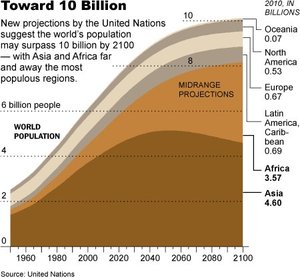
According to the World Population Clock at the Office of Population Research at Princeton University, the population of the world is now 6.92 billion people. We’re supposed to reach 7 billion by the end of October of this year, according to the United Nations. This is much faster than anyone had expected and represents an increase of one billion people in just 12 years[1].
Hania Zlotnik, director of the population division in the UN department of economic and social affairs, says “What is astounding is that the last two billion have been reached in record time… it’s not about how many people there are but where they are: most of these people are being added in the poorest countries of the world.” That means those countries least able to handle these new citizens, and they’re already the most vulnerable to famine.
Whether there is a reasonable chance of slowing the population growth rate is still being hotly debated, but all agree that these new numbers are causing shockwaves in many areas. One area which is attracting lots of attention looks at how we’re going to feed all these people. And because we’re proponents of using organically grown fibers (and organic agriculture in general), we think it’s important to investigate these arguments about the benefits of organic vs. conventional agriculture.
At the start of 2011, according to The Economist in a special report about feeding the world, “The 9 billion – people question“, the “fact that agriculture has experienced two big price spikes in under four years suggests that something serious is rattling the world’s food chain.” World food prices have risen above the peak they reached in early 2008. The food industry is in crisis – and certainly the era of cheap food is over. There are mounting concerns that we cannot feed even the current population, let alone the 9 billion people expected by 2050.
According to The Economist: The world looks to farmers to do more than just produce food. Agriculture is also central to reducing hunger (which is not quite the same thing) and provides many people’s main route out of poverty. Food is probably the biggest single influence on people’s health, though in radically different ways in poor countries than in rich ones, where the big problem now is obesity. Food is also one of the few pleasures available to the poorest.
In The Economist’s view (which is held by many scientists, food companies, plant breeders and international development agencies) traditional and organic agriculture is a luxury of the rich. They say that this type of farming could feed Europeans and Americans well. But it cannot feed the world.
Central panel: The Garden of Earthly Delights" by Hieronymus Bosch
Pedro Sanchez, Director and Senior Research Scholar at the Earth Institute of Columbia University, says “If you ask me point blank whether organic-based farming is better than conventional, my answer is no. There are just too many of us, we just need too many nutrients. And those nutrients come from plants that need nutrients that organic fertilizers can’t always provide.”
And Mark Rosegrant, of the International Food Policy Research Institute, points out that organic production tends to have somewhat lower yields compared to non-organics. He says going all organic would require a whole lot more land. Organic farming is, he says, a niche market. It’s not bad, per se, but it’s not an important part of the overall process to feed 9 billion people.
Needless to say, we’re interested in finding out more about this topic! We’ll start our own series (feeding and clothing 9 billion!) next week – the subject is really complex and we will need several weeks to do it justice.
We’re often asked if there are traces of pesticides in conventionally grown natural fibers – because people make the assumption that if pesticides are used on the plants, then there must be residuals in the fibers. And because the chemicals used on conventional cotton crops are among the most toxic known, such as aldicarb ( which can kill a man by just one drop absorbed thru the skin) and endosulfan (thought to be the most important source of fatal poisoning among cotton farmers in West Africa), as well as a host of confirmed carcinogens[1], that seems a reasonable cause for concern.
But that question misses the whole point, as we’ll explain.
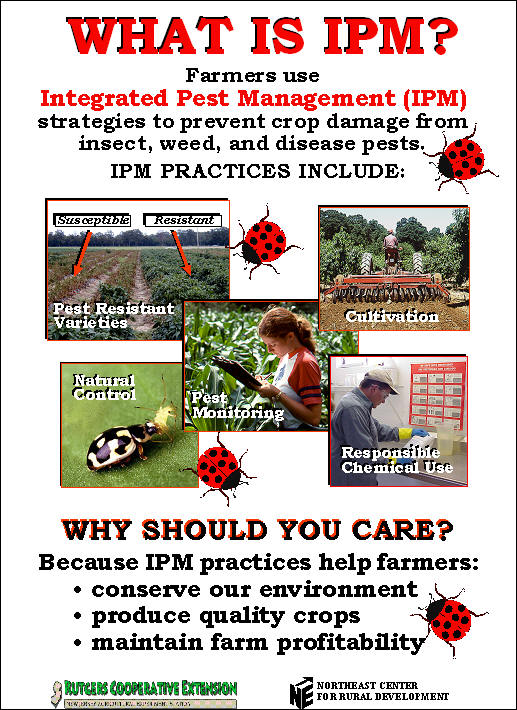
According to the modern agricultural industry, cotton agriculture uses integrated pest management (IPM) systems to promote cotton’s environmental stance (author’s note: reduction of costs doesn’t hurt either).
As the result, the use of chemicals on cotton crops is down: On average “only” 20 lbs. of pesticides are applied to an acre of cotton today – as opposed to about 40 lbs. in the past.
IPM is a great advance on the part of agriculture to use biological controls. But 20 lbs. per acre is still a lot of really bad chemicals being used. So the Bremen Cotton Exchange,[2] on behalf of the industry, has sponsored a series of tests which were carried out by the Hohehnstein Research Institute according to Oeko-Tex 100 Standard (also known as Eco Tex). They tested for 228 possible substances including:
Formaldehyde
PCP
pH Value
Heavy Metals
Defoliants
All the test series confirm that the treatment and use of pesticides in cotton production, according to their report, “does not pose any hazard for the processor of the raw material and none at all for the end consumer.” This is the industry’s position, based on the test results from their studies. On the other hand, there are other studies that do find pesticide residues in cotton textiles – of nine different organochlorine pesticides at levels of 0.5 to 2 mg/kg.[3] So there seems to be a difference of opinion as to whether there are pesticide residues in the cotton fibers or finished cloth.
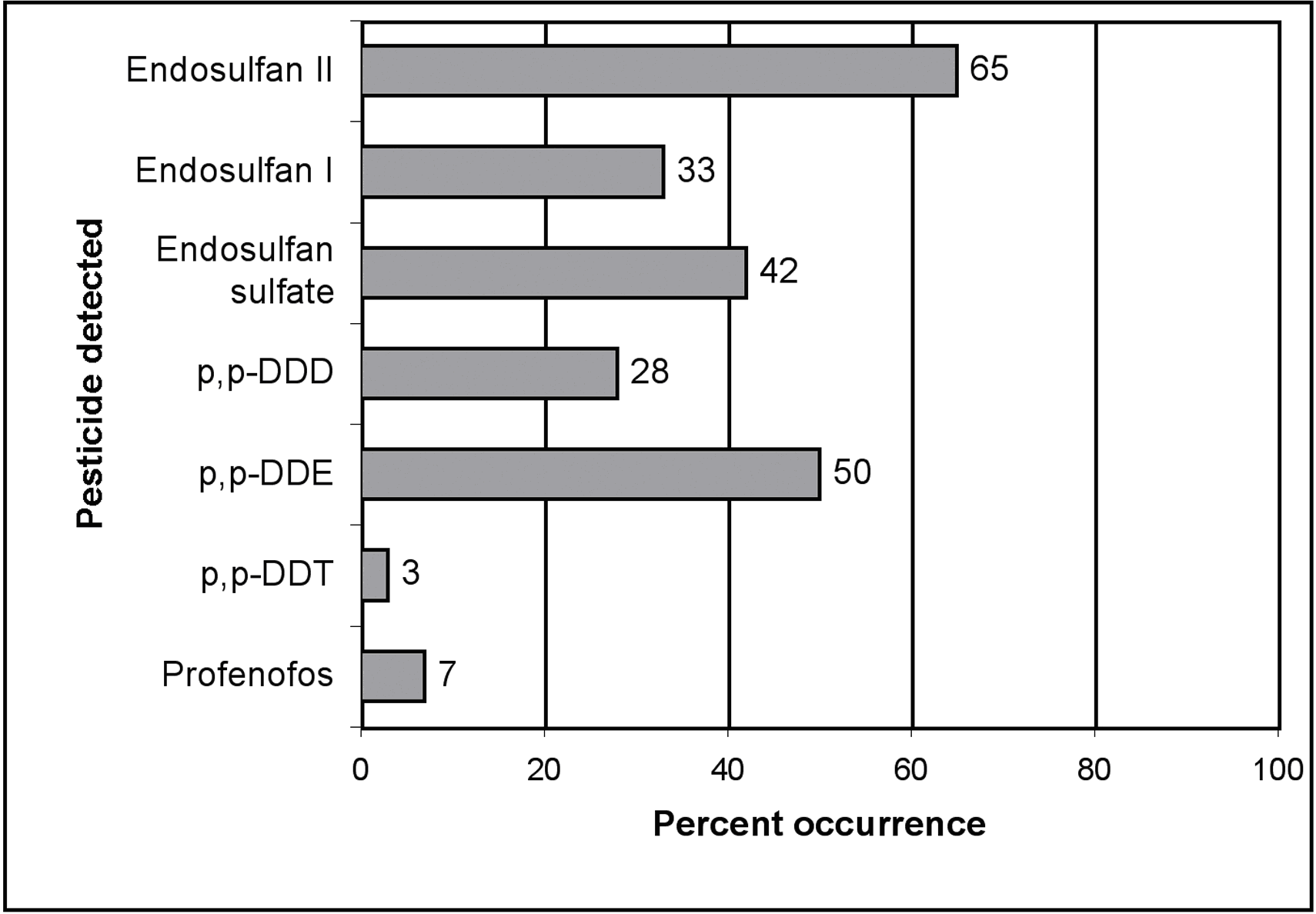
But there is not much difference of opinion in the fact that pesticide residues pollute our soils. Many different studies have found pesticide residues which pollute agriculture soils in various parts of the world. [4]
“Pesticide Residues in Soil & Water from Four Areas of Mali”, From Journal of Agricultural, Food & Environmental Sciences, Vol 1, issue 1, 2007
And just recently, Science News reported that children exposed in the womb to pesticides have lower IQs than do kids with virtually no exposure. According to Science News:
“Three new studies began in the late 1990s and followed children through age 7. Pesticide exposures stem from farm work in more than 300 low-income Mexican-American families in California, researchers from the University of California, Berkeley and their colleagues report. In two comparably sized New York City populations, exposures likely trace to bug spraying of homes or eating treated produce.”
Among the California families, the average IQ for the 20 percent of children with the highest prenatal organophosphate exposure was 7 points lower compared with the least-exposed group.
“There was an amazing degree of consistency in the findings across all three studies,” notes Bruce Lanphear of Simon Fraser University in Vancouver. And that’s concerning, he says, because a drop of seven IQ points “is a big deal. In fact, half of seven IQ points would be a big deal, especially when you see this across a population.”[5]
There is no dispute about the fact that cotton crops are grown using many millions of pounds of chemical pesticides and synthetic fertilizers. And research shows that extensive and intensive use of synthetic fertilizers, soil additives, defoliants and other substances wreak terrible havoc on soil, water, air and many, many living things – such as in the study cited above.
So what is the point that’s being missed? Because conventional agriculture – despite advances in IPM – uses so many chemicals which are bad for us, shouldn’t the crops be grown organically? That cuts to the chase – in organically raised crops, there would be no toxic residues in the fibers, nor would the chemicals be wreaking havoc on our soils, water and air. So the question of whether there are pesticide residues in the fibers becomes moot. And though the United States and other countries might have banned the use of some chemicals, such as DDT, they’re still in use in parts of the world.
We’ve often touted the benefits of organic agriculture, and this seems to be yet another. We think organic farming is so important that we’ll spend some time on the subject in our next few posts – because there are some who say that organic farming is just not the answer. Are we between a rock and a hard place?
[1] Five of the top nine pesticides used on cotton in the U.S. (cyanide, dicofol, naled, propargite, and trifluralin) are known cancer-causing chemicals. All nine are classified by the U.S. EPA as Category I and II (dangerous chemicals).
[2] The purpose of the Bremen Cotton Exchange is “to maintain and promote the interests of all those connected with the cotton trade”.
[3] Zhang, X., Liao, Q and Zhang, Y, “Simultaneous determination of nine organochlorine pesticide residues in textile by high performance liquid chromatography, SEPU, 2007, 25(3), 380-383.
This year construction will start on a new factory in Bangladesh. It will be called the Grameen Otto Textile Company – and it will be the first textile mill of its kind in the world. A really special mill. But first let me give you some background which seems unrelated, but stick with me:
Professor Muhammad Yunus, known as the “Banker to the Poor”, won the Nobel Peace Prize in 2006 for his “efforts to create economic and social development from below.” His work is based on the belief that credit is a fundamental human right. He began by making personal loans of small amounts of money to destitute basketweavers in Bangladesh in the mid-1970s; in 1983 he founded the Grameen Bank in Bangladesh to help poor people escape from poverty by providing loans on terms suitable to them and by teaching them a few sound financial principles so they could help themselves.
To date, Grameen Bank has provided more than $4.7 billion dollars to 4.4 million families in rural Bangladesh. With 1,417 branches, Grameen provides services in 51,000 villages, covering three quarters of all the villages in Bangladesh. Yet its system is largely based on mutual trust and the enterprise and accountability of millions of women villagers.
Today, more than 250 institutions in nearly 100 countries operate micro-credit programs based on the Grameen Bank model, while thousands of other micro-credit programs have emulated, adapted or been inspired by the Grameen Bank. According to one expert in innovative government, the program established by Yunus at the Grameen Bank “is the single most important development in the third world in the last 100 years, and I don’t think any two people will disagree.”[1]
In addition to the Nobel Prize, Professor Yunus has received many national and international honors, including the Mohamed Shabdeen Award for Science (1993), Sri Lanka; Humanitarian Award (1993), CARE, USA; World Food Prize (1994), World Food Prize Foundation, USA; lndependence Day Award (1987), Bangladesh’s highest award; King Hussein Humanitarian Leadership Award (2000), King Hussien Foundation, Jordan; Volvo Environment Prize (2003), Volvo Environment Prize Foundation, Sweden; Nikkei Asia Prize for Regional Growth (2004), Nihon Keizai Shimbun, Japan; Franklin D. Roosevelt Freedom Award (2006), Roosevelt Institute of The Netherlands; and the Seoul Peace Prize (2006), Seoul Peace Prize Cultural Foundation, Seoul, Korea. He is a member of the board of the United Nations Foundation.
Let’s say that he’s one of my favorite heroes.
Anyway, Professor Yunus has proposed a model for a “social business”, which is a business designed to meet a social goal. A social business is a business that pays no dividends. It sells products at prices that make it self-sustaining. The owners of the company can get back the amount they have invested in the company over a period of time, but no profit is paid to investors in the form of dividends. Instead, any profit made stays in the business – to finance expansion, to create new products or services, and to do more good for the world.
Professor Yunus defines social business in the following manner:
“Social business is a cause-driven business. In a social business, the investors/owners can gradually recoup the money invested, but cannot take any dividend beyond that point. The purpose of the investment is purely to achieve one or more social objectives through the operation of the company, no personal gain is desired by the investors. The company must cover all costs and make a profit, at the same time it must achieve the social objective, such as, healthcare for the poor, housing for the poor, financial services for the poor, nutrition for malnourished children, providing safe drinking water, introducing renewable energy, etc. in a business way.”
When we talk about a non-loss, non-dividend business dedicated to a social cause then we are talking about an entity that runs sustainably. Therefore the organization functions just like a regular business in that it must cover its costs. Hence the term non-loss. However, the next term in the definition, namely non-dividend, refers to the fact that investors can only take back the original amount that they have invested. They cannot take any profit beyond that. This is what makes a social business radically different from regular business. The concept of social business is appealing to the self less side of human beings. It must be noted here that the money that an investor gets back cannot be adjusted for inflation. If an investor has invested 1 million baht in the social business then she can get back only 1 million baht not a satang more. Any further profits go back to the company. Finally the business must be dedicated to solving a social problem.
There are two types of social business:
Type I is a non-loss, non-dividend business dedicated to solving a social problem – such as Grameen Danone Foods, which is a joint venture between the Danone Group in France and Grameen Health Care, which seeks to provide yogurt for poor children in Bangladesh.
Type II is a regular profit making business that is dedicated to a social cause and owned by the poor – the best known example of this is Grameen Bank
Just recently, German mail-order giant Otto Group (the largest mail-order group in the world) and Grameen Trust have formed a joint venture to set up the Grameen Otto Textile Company for the production of textiles. They say their venture is the first ‘social business’ worldwide to work on a profit-oriented basis. The profit will be managed by a foundation, the Grameen Otto Trust, which serves exclusively to improve the living conditions of the employees, their families and sponsored communities.
The Grameen Otto Textile Company will operate the ‘Factory of the Future’, which will be set up in Dhaka and will produce clothing for export, under socially and ecologically sustainable conditions. The ecologically optimized, CO2-neutral building will be fitted with the most up-to-date insulation, energy-saving lighting and optimized air-conditioning systems, paying special attention to the use of renewable energies. Initially, between 500 and 700 people will be employed, to produce t-shirts, polo shirts and sweatshirts.
The Otto Group is giving an interest-free loan to cover the investment costs of setting up and running the factory. The loan will be paid back over a period of 10 to 15 years from the profits of the Grameen Otto Textile Company. The profits will not be distributed as dividends to shareholders or investors, but will serve to expand and modernise the company and to pursue social objectives locally. In the first instance, profits shall be used to offer a healthy lunch for the employees, to carry out further education as well as health care and to set up a day-care centre for children offering pre-school classes. In addition, in the communities, assistance will be given in the health sector, for sanitary facilities and for the education and further education of the population. The project will be a beacon for socially and ecologically sustainable economic activity.
Professor Muhammad Yunus adds, “Poor people do not ask for charity, as charity is not a solution for poverty. They want to work in order to earn their livelihood. The Grameen Otto Textile Company creates work for the poor. It will act as an example against poverty in the world.”
Dr. Michael Otto, Co-Initiator of the project and Chairman of the Supervisory Board of the Otto Group is confident: “The Grameen Otto Textile Company will show that it really is possible to reconcile ecological and social criteria with economic goals. It should become a model for textile production in Bangladesh and for similar factories all around the world.”
But there is some criticism of the move. Clothesource, a portal for “global sourcing for the apparel industry” makes the assumption that the Factory of the Future will have to pay higher wages, which will translate into higher cost products. reports: http://clothesource.net/go/news/is-otto-really-building-the-factory-of-the-future It says that “the Grameen microfinance projects have been dwarfed by the colossal job creation success of the (low wage) garment industry.” Though Clothesource welcomes “the Otto experiment”, they worry that if it really is to be “the factory of the future” it must find reasons for the factory’s customers to pay more for what it produces.
I say that may be just what the garment industry needs! The search for ever lower costs has brought much misery (see War on Want). And let’s face it – doing things the “right” (should I say better?) way costs more money.
Plastics are a problem – and becoming more of a problem as time goes on because of our voracious appetite for the stuff: global plastic production grew by more than 500% over the past 30 years. And we have limited fossil fuels available – that fact alone dwarfs the plastics problem because we depend on fossil fuels for so much more than plastic. So, many are looking to biotechnology as a solution. Biotechnology can be defined as a variety of techniques that involve the use and manipulation of living organisms to make commercial products.
According to David Garman, US Under Secretary for Energy, Science and Environment under George W. Bush, “Many think of biomass mainly as a source for liquid fuel products such as ethanol and biodiesel. But biomass can also be converted to a multitude of products we use every day. In fact, there are very few products that are made today from a petroleum base, including paints, inks, adhesives, plastics and other value-added products, that cannot be produced from biomass.” And J. Craig Venter, founder of Synthetic Genomics, Inc. (which, according to their website, was founded to commercialize genomic-driven technologies), said “We have modest goals of replacing the whole petrochemical industry and becoming a major source of energy.”
The ETC Group, which focuses on the social and economic impacts of new bio technologies, has just published a new report, “The New Biomassters – Synthetic Biology and The Next Assault on Biodiversity and Livelihoods” (click here to download the report) in which they critique what the OECD countries are calling the “new bioeconomy”: From generating electricity to producing fuels, fertilizers and chemicals, they say that shifts are already underway to claim biomass as a critical component in the global industrial economy. But contrary to what I expected, it’s not a pretty picture.
“What is being sold as a benign and beneficial switch from black carbon to green carbon is in fact a red hot resource grab (from South to North) to capture a new source of wealth. If the grab succeeds, then plundering the biomass of the South to cheaply run the industrial economies of the North will be an act of 21st century imperialism that deepens injustice and worsens poverty and hunger. Moreover, pillaging fragile ecosystems for their carbon and sugar stocks is a murderous move on an already overstressed planet. Instead of embracing the false promises of a new clean green bioeconomy, civil society should reject the new biomassters and their latest assault on land, livelihoods and our living world.”
In the world of fabrics and furnishings, the new biotech products which are being heavily promoted now are PLA (DuPont’s Ingeo and Sorona fibers) and soy-based foam for upholstery.
A summary of the report is given in the Sustainable Plastics web site which I’ve reproduced here:
Provides an overview of the bio-based economy being envisioned by many OECD countries and Fortune 500 corporations and being sold to the global South as “clean development,” as well as a comprehensive consideration of its wider implications — a first from civil society.
Analyzes the impact of next-generation biofuels, the production of bio-based chemicals and plastics and the industrial burning of biomass for electricity, arguing that civil society needs to critique and confront the combined threats arising from these developments.
Unmasks the industrial players intent on commodifying the 76% of terrestrial living material that is not yet incorporated into the global economy. Sectors with an interest in the new bioeconomy (energy, chemical, plastics, food , textiles, pharmaceuticals, carbon trade and forestry industries) flex a combined economic muscle of over US$17 trillion a year. Visible players in the new bioeconomy include BP, Shell, Total, Exxon, Cargill, ADM, Du Pont, BASF, Weyerhaeuser and Syngenta.
Explores the safety concerns and threats to livelihoods inherent in the high-risk, game-changing field of synthetic biology. Relying on synthetic biology to provide higher yields and transform sugars could open a Pandora’s box of consequences. See pages 36-41.
Surveys the industrial landscape of next generation biofuels, including cellulosic ethanol, algal biofuels, sugar cane, jatropha and synthetic hydrocarbon, and sets out the case for why this next generation may be as ecologically and socially dangerous as the first. See pages 43- 50.
Poses challenging questions about the ‘green’ credentials of bio-based plastics and chemicals and their future impact on food supplies and world hunger. See pages 50-56.
Raises important political questions about land grabbing: 86% of global biomass is located in the tropics and subtropics, a simple fact driving an industrial grab that threatens to accelerate the pace of forest destruction and land acquisition in the South in order to feed the economies of the North. See pages 15-18.
Tallies the investments, subsidies and financial promises being made for the biomass economy. Predictions for the market value of biomass-based goods and services total over five hundred billion dollars by 2020, with the biggest turnover expected in biofuels and biomass electricity. See pages 13-14.
Challenges common myths of industrial biomass use, including the claims that switching to biomass is carbon-neutral, renewable and green. In fact, burning biomass can even produce more CO2 per energy unit than burning coal. See pages 19-20.
Details how a key error in the UN climate convention is driving destructive policies. By considering biomass energy as ‘carbon neutral,’ the UN has enabled destructive national renewables policies, carbon trading, and technology transfer activities. This report also examines the new REDD+ provisions in the context of the biomass economy. See pages 20- 24.
Sets out why we cannot afford any increase in the amount of biomass taken from already overstressed ecosystems. Indeed, industrial civilization may already be taking too much biomass from the systems we depend upon. See pages 24- 26.
Explores the new suite of technological strategies being proposed by biomass advocates to boost global stocks of biomass, including the genetic engineering of crops, trees and algae. Meanwhile, the geoengineering agenda is increasingly converging on biomass. See pages 27-30.
Exposes the switch to algae, purported to be the next ‘clean green’ feedstock and argues the case against industrial algal production. See pages 47-50.
So here I was thinking that bio polymers would be the wave of the future. Now I don’t know what to think! Looks like I’m in for a lot of reading. If any of you have insights into these issues, I’d love to hear them.
Synthetic polymers have experienced almost exponential growth since 1950, and today about 5% of world oil production is used for that purpose. In fact, we will need 25% or more of the current oil production for making polymers by the end of this century.
Some synthetic polymers are used to make fibers, and they have been around for a while: rayon was discovered in 1924 and nylon in 1939. But synthetic use really began to take off only since about 1953, when polyester was discovered. Qualities like durability and water resistance make synthetics highly desirable in many applications. Today synthetics account for about half of all fiber usage.
This, despite the fact that synthetics are made from fossil fuel, and the contaminants from the manufacturing leach into our waterways and pollute the atmosphere, and the fact that they are not biodegradable and therefore don’t break down in landfills. So recently there has been a spotlight on bio-plastics.
Bio plastics, or biopolymers – in other words, synthetic plastics produced from biological sources – are derived from cellulose. Cellulose is abundant – it’s said to make up half of all the organic carbon on the planet. The most often-used biopolymers include:
natural rubber (in use since the mid-1700s),
cellulosics (invented in the late-1800s),
and nylon 11 (polyamide – or PA 11) and 6–10 (polyamide 6/10) (mid-1900s).
A recent addition to the list is polylactic acid (PLA). PLA is made from corn starch (in the United States), tapioca products (roots, chips or starch, mostly in Asia) or sugar cane (the rest of the world).[1] You’ve probably heard about polylactic acid (PLA), because Cargill, one of the largest agricultural firms on Earth, has invested heavily in it. Cargill’s wholly owned subsidiary, NatureWorks, is the primary producer of PLA in the United States. The brand name for NatureWorks PLA is Ingeo, which is made into a whole array of products, including fabrics.
The producers of PLA have touted the eco friendliness of PLA based on:
the fact that it is made from annually renewable resources ,
that it will biodegrade in the environment all the way to carbon dioxide and water – at least in principle, and
they also cite PLA’s lower carbon footprint.
Let’s take a look at these three claims.
Plant based biopolymers do come from renewable resources, but the feedstock used presents some interesting problems. In the United States, corn is used to make the PLA. In the US, corn-based biopolymer producers have to compete with ethanol producers of government mandated gasoline blends, raising the cost and limiting availability for both. This problem will become worse in the future as the law requires a doubling of the percentage of ethanol used in motor fuel. Nearly a third of the US corn crop previously used for food was used to replace 5% of gasoline consumption in 2008.[2]
In a world where many people are starving, many say that it seems almost criminal to grow food crops, such as corn, to turn it into cloth. Agricultural lands are often cleared to make way for the growing of crops for the production of polymers. This leads to a continuous shrinking of the food producing lands of the world. Lester Brown, president of the Earth Policy Institute, says, “already we’re converting 12% of the US grain harvest to ethanol (anticipated to rise to 23% by 2014). How much corn do we want to convert to nonfood uses?”[3]
In addition, most of the corn used by NatureWorks to make PLA is genetically modified, which raises serious ethical issues.
Other critics point to the steep environmental toll of industrially grown corn. The cultivation of corn uses more nitrogen fertilizer, more herbicides and more insecticides than any other U.S. crop; those practices contribute to soil erosion and water pollution when nitrogen runs off fields into streams and rivers.
PLA is said to decompose into carbon dioxide and water in a “controlled composting environment” in 90 days or less. What’s that? Not exactly your backyard compost heap! It’s an industrial facility where microbes work at 140 degrees or more for 10 consecutive days. In reality very few consumers have access to the sort of composting facilities needed to degrade PLA. NatureWorks has identified 113 nationwide – some handle industrial food-processing waste or yard trimmings, others are college or prison operations . Moreover, PLA in quantity can interfere with municipal compost operations because it breaks down into lactic acid, which makes the compost wetter and more acidic.
It looks like most PLA will end up in landfills, where there is no evidence it will break down any faster than PET. Glenn Johnston, manager of global regulatory affairs for NatureWorks, says that a PLA container dumped into a landfill will last as long as a PET bottle.[4]
In fact, manufacturers have changed their stance: PLA is now defined as “compostable” instead of biodegradable, meaning more heat and moisture is needed to degrade PLA than is found in your typical backyard compost bin.
So far, biopolymer producers have had problems demonstrating that their materials have smaller carbon footprints than fossil fuel-derived polymers. The energy inefficiencies of planting, growing, and transporting biological feedstocks mean more total energy is likely consumed to produce a unit of biopolymer than to make a unit of an oil or gas-based polymer.
However, Ramani Narayan of Michigan State University found that “the results for the use of fossil energy resources and GHG emissions are more favorable for most bio based polymers than for oil based. As an exception, landfilling of biodegradable polymers can result in methane emissions (unless landfill gas is captured) which may make the system unattractive in terms of reducing greenhouse gas emissions.”[5]
Dr. Narayan recommended that, relative to their conventional counterparts, green polymers should:
save at least 20 MJ (non-renewable) energy per kg of polymer,
avoid at least 1 kg CO2 per kg polymer and
reduce most other environmental impacts by at least 20%.
From this point of view, he says, green plastics can be defined in a broad and target-oriented manner.
But carbon footprints may be an irrelevant measurement, because it has been established that plants grow more quickly and are more drought and heat resistant in a CO2 enriched atmosphere. Many studies have shown that worldwide food production has risen, possibly by as much as 40%, due to the increase in atmospheric CO2 levels. Therefore, it is both ironic and a significant potential problem for biopolymer production if the increased CO2 emissions from human activity were rolled back, causing worldwide plant growth to decline. This in turn would greatly increase the competition for biological sources of food and fuel – with biopolymers coming in last place.[6]
A further problem with biopolymers (except for future PE/PP made from sugar cane) is that they require additional sorting at commercial recycling centers to avoid contaminating other material streams, and, although segregated collection helps, it is complex and increases costs.
In the final analysis, newer biopolymers don’t yet perform as well as oil based polymers, especially in terms of lower heat and moisture resistance, so the user might feel green but gets results that are less sustainable and more limited in use. PLA remains a boutique polymer, and some see the best value proposition for biopolymers to be where their use is based on their unique properties, such as in medical and dental implants, sutures, timed released chemotherapy, etc. , because PLA will slowly come apart in the body over time, so it can serve as a kind of scaffold for bone or tissue regrowth or for metered drug release. But this is a small and specialized market.
But still, the potential and need for plastic alternatives has become acute: The SPI Bioplastic Council anticipates that the biopolymer market will exceed $1 billion by 2012 – today it is half that. Bioplastic remains “a sector that is not yet mature but will be growing fast in the coming years,” says Frederic Scheer , CEO of Cereplast and the so-called ‘Godfather of Bioplastics.’ It has not matured because of high production costs and the restricted capacity of biomass-based polymers.
But according to The ETC Group, there are already concerted efforts, using biotechnology, to shift global industrial production from a dependence on fossil fuels to biomass – not only for plastics but also for power, chemicals, and more. It sounds good – until you read their report, which I’ll cover next week.
[5] Narayan, Ramani, “Review and Analysis of Bio-based Product LCA’s”, Department of Chemical Engineering & Materials Science, Michigan State University, East Lansing, MI 48824
[6] D. B. Lobell and C. B. Field, Global scale climate-crop yield relationships and the impacts
of recent warming, Env. Res. Letters 2, pp. 1–7, 2007 AND
L. H. Ziska and J. A. Bunce, Predicting the impact of changing CO2 on crop yields:
some thoughts on food, New Phytologist 175, pp. 607–618, 2007.
We’ve pointed out in several blog postings the names of various chemicals that are used in textile processing which are known to cause cancer. These include (but aren’t limited to) antimony, pentachlorophenol, methylene chloride, arsenic, formaldehyde, phthalates, benzenes, PVC, sulfuric acid, acrylonitrile. The fabrics we live with are full of chemicals that are known to cause cancer. But so are lots of other products on the shelves of stores across America. And as Greenpeace reminds us, one American will die from cancer every minute during 2011.
Many Americans assume that their government protects them from exposure to chemicals that might harm them. But according to GreenAnswers.org, it does not:
“Here’s a disturbing fact: The 33 year-old law that is supposed to protect Americans from exposure to toxic chemicals is so outdated that China legally exports toxic materials into the U.S. that are not only banned in Japan and Europe, but can’t even be used domestically in China.
Here’s another: Of the 82,000 chemicals available for use in the U.S., only about 200 have been required to be tested for safety.
Thousands of chemicals that have not been tested for safety are used in common items found in homes across America: in children’s toys and bottles, in food cans and soda can linings, in our mattresses, computers, shampoos, lotions and more.
Due to this unchecked exposure, the U.S. Centers for Disease Control and Prevention have found toxic chemicals in the bodies of virtually all Americans. Some of these are linked to increases in prostate and breast cancers, diabetes, heart disease, lowered sperm counts, early puberty and other diseases and disorders.
Unlike every other major environmental law, the nation’s main chemical safety law, Toxic Substances Control Act (TSCA), has never been significantly amended since it was adopted in 1976. TSCA has serious flaws that prevent it from ensuring chemical safety in the U.S. It needs to be reformed and strengthened for our safety.
About one year ago, the National Cancer Institute (NCI) presented the President’s Cancer Panel report, in which they said that environmentally caused cancers are “grossly underestimated” and “needlessly devastate American lives.”
The report blames weak laws, lax enforcement and fragmented authority, as well as the fact that in the U.S., chemicals are assumed to be safe unless strong evidence proves otherwise.
Also about one year ago, in April, 2010, U.S. Senator Frank Lautenberg (D-NJ) announced legislation to overhaul TSCA. It was called the “Safe Chemicals Act of 2010”.
But one year, six congressional hearings and 10 “stakeholder sessions” later, the bill was killed, a testament to the combined clout of the $674 billion chemical industry, the companies that use those chemicals in their products, and the stores that sell them.(1)
But Greenpeace thinks the issue is too important to let die. It is joining up with 200 coalition groups to deliver a petition to President Obama in early May, asking him to make it a top priority to stop the use of cancer-causing chemicals in American products. (PLEASE join us, and sign the petition! Click here).
Here’s the letter from Greenpeace:
One American will die from cancer every minute this year.
We all know someone impacted by cancer. Yet despite the devastation it causes to our friends and families, it’s perfectly legal for companies to add known cancer-causing chemicals to products we use every day in our homes, schools and workplaces. That can change.
President Obama has the ability to reverse decades of failed policies and set the course for a national cancer prevention strategy that includes eliminating the use of cancer-causing chemicals in everyday products. But he’s not going to do it if people everywhere don’t speak out.
The NCI report’s final recommendation was for the President to “most strongly use the power” of his office to eliminate human exposure to cancer-causing chemical. We couldn’t agree more. Show him that you agree as well by signing the petition.
Cancer is a horrible disease but it can be prevented. It’s high time we made cancer prevention one of our highest national priorities.
Many chemicals used in textile processing – and elsewhere in consumer products – have been identified as “endocrine disruptors”. I never paid too much attention to “endocrine disruptors” because it didn’t sound too dire to me – I preferred to stick to something like “carcinogens” because I knew those caused cancer. I knew that endocrine disruptors had something to do with hormones, but I didn’t think that interfering with acne or my teenager’s surliness was much of a concern. Boy was I wrong.
What is an “endocrine disruptor”?
The Environmental Protection Agency defines an endocrine disruptor as an external agent that interferes in some way with the role of natural hormones in the body. (Hmm. Still doesn’t sound too bad.)
The endocrine system includes the glands (e.g., thyroid, pituitary gland, pancreas, ovaries, or testes) and their secretions (i.e., hormones), that are released directly into the body’s circulatory system. The endocrine system controls blood sugar levels, blood pressure, metabolic rates, growth, development, aging, and reproduction. “Endocrine disruptor” is a much broader concept than the terms reproductive toxin, carcinogen, neurotoxin, or teratogen. Scientists use one or more of these terms to describe the types of effects these chemicals have on us.
Humans and wildlife must regulate how their bodies function to remain healthy in an ever-changing environment. They do this through a complicated exchange between their nervous and endocrine systems. The endocrine systems in humans and wildlife are similar in that they are made up of internal glands that manufacture and secrete hormones. Hormones are chemical messengers that move internally, start or stop various functions, and are important in determining sleep/wake cycles, stimulating or stopping growth, or regulating blood pressure. Some of the most familiar hormones in humans or wildlife are those that help determine male and female gender, as well as control the onset of puberty, maturation, and reproduction. An endocrine disruptor interferes with, or has adverse effects on, the production, distribution, or function of these same hormones. Clearly, interference with or damage of hormones could have major impacts on the health and reproductive system of humans and wildlife, although not all of the changes would necessarily be detrimental.
But why the fuss over endocrine disruptors and why now? After all, scientists had known for over fifty years that DDT can affect the testes and secondary sex characteristics of young roosters[1].
And for almost as long, it has been well known that daughters born to women who took the drug diethylstilbestrol (DES), a synthetic estrogen, early in their pregnancies had a greatly increased risk of vaginal cancer. [2]
And it has been known for over 25 years that occupational exposures to pesticides could “diminish or destroy the fertility of workers.”[3]
It wasn’t until Theo Colborn, a rancher and mother of four who went back to school at age 51 to get her PhD in zoology, got a job at the Conservation Foundation and began to put the pieces together that the big picture emerged. Theo’s job was to review other scientists’ data, and she noticed that biologists investigating the effects of presumably carcinogenic chemicals on predators in and around the Great Lakes were reporting odd phenomena:
Whole communities of minks were failing to reproduce;
startling numbers of herring gulls were being born dead, their eyes missing, their bills misshapen;
and the testicles of young male gulls were exhibiting female characteristics.
Colborn correlated this data with the presence in the water of organochlorine compounds such as PCBs, DDT, and dieldrin, some of which have hormone-mimicking effects and build up in fatty tissue. Often, the offspring of creatures exposed to chemicals were worse off than the animals themselves. Colborn concluded that nearly all the symptoms could be traced to things going awry in the endocrine system.
In 1991, Colborn called together a conference, whose participants included biologists, endocrinologists and toxicologists as well as psychiatrists and lawyers, at the Wingspread Conference Center in Racine, Wisconsin. They produced what become known as the “Wingspread Statement,” the core document of the endocrine-disruption hypothesis, in which these researchers concluded that observed increases in deformities, evidence of declining human fertility and alleged increases in rates of breast, testicular and prostate cancers, as well as endometriosis are the result of “a large number of man-made chemicals that have been released into the environment”.[4]
Endocrine disruption—the mimicking or blocking or suppression of hormones by industrial or natural chemicals— appeared to be affecting adult reproductive systems and child development in ways that far surpassed cancer, the outcome most commonly looked for by researchers at the time. Potential problems included infertility, genital abnormalities, asthma, autoimmune dysfunction, even neurological disorders involving attention or cognition. In one early study that Colborn reviewed, for instance, an Environmental Protection Agency (EPA) commissioned psychologists to study children whose mothers ate fish out of the Great Lakes. The researchers found that the children “were born sooner, weighed less, and had smaller heads” than those whose mothers hadn’t eaten the fish. Moreover, the more PCBs that were found in the mother’s cord blood, the worse the child did on tests for things such as short-term memory. By age eleven, the most highly exposed kids had an average IQ deficit of 6.2.[5]
The endocrine disruptor hypothesis first came to widespread congressional attention in 1996, with the publication of the book Our Stolen Future – by Theo Colborn, Dianne Dumanoski and John Peterson Myers.[6]
In the years since the Wingspread conference, many of its fears and predictions have been fleshed out by new technologies that give a far more precise picture of the exquisite damage that toxins can wreak on the human body – and especially on developing fetuses, which are exquisitely sensitive to both the natural hormone signals used to guide its development, and the unexpected chemical signals that reach it from the environment”[7]
Thanks to a computer-assisted technique called microarray profiling, scientists can examine the effects of toxins on thousands of genes at once (before they could study 100 at a time at most). They can also search for signs of chemical subversion at the molecular level, in genes and proteins. This capability means that we are beginning to understand how even tiny doses of certain chemicals may switch genes on and off in harmful ways during the most sensitive period of development.
The endocrine disruption hypothesis has also unleashed a revolution in toxicity theory. The traditional belief that “the dose makes the poison” (the belief that as the dose increases, so does the effect; as the dose decreases, so does its impact) has proven inadequate in explaining the complex workings of the endocrine system, which involves a myriad of chemical messengers and feedback loops.
Experimental data now shows conclusively that some endocrine-disrupting contaminants can cause adverse effects at low levels that are different from those caused by high level exposures. For example, when rats are exposed in the womb to 100 parts per billion of DES, they become scrawny as adults. Yet exposure of just 1 part per billion causes grotesque obesity.[8] Old school toxicology has always assumed that high dose experiments can be used to predict low-dose results. With ‘dose makes the poison’ thinking, traditional toxicologists didn’t pursue the possibility that there might be effects at levels far beneath those used in standard experiments. No health standards incorporated the possibility.
Jerry Heindel, who heads a branch of the National Institute of Environmental Health Science (NIEHS) that funds studies of endocrine disruptors, said that a fetus might respond to a chemical at “one hundred-fold less concentration or more, yet when you take that chemical away, the body is nonetheless altered for life”. Infants may seem fine at birth, but might carry within them a trigger only revealed later in life, often in puberty, when endocrine systems go into hyperdrive. This increases the adolescent’s or adult’s chances of falling ill, getting fat, or becoming infertile – as is the case with DES, where exposure during fetal development doesn’t show up until maturity.
And not just the child’s life, but her children’s lives too. “Inside the fetus are germ cells that are developing that are going to be the sperm and oocytes for the next generation, so you’re actually exposing the mother, the baby, and the baby’s kids, possibly,” says Heindel.[9]
So it’s also the timing that contributes to the poison.
According to Our Stolen Future, “the weight of the evidence says we have a problem. Human impacts beyond isolated cases are already demonstrable. They involve impairments to reproduction, alterations in behavior, diminishment of intellectual capacity, and erosion in the ability to resist disease. The simple truth is that the way we allow chemicals to be used in society today means we are performing a vast experiment, not in the lab, but in the real world, not just on wildlife but on people.”
Now that I know what “endocrine disruptor” means, I’m not dismissing them any more as mere irritants.
[1] Burlington, F. & V.F. Lindeman, 1950. “Effect of DDT on testes and secondary sex
characteristics of white leghorn cockerels”. Proc. Society for Experimental Biology
and Medicine 74: 48–51.
[2] Herbst, A., H. Ulfelder, and D. Poskanzer. “Adenocarcinoma of the vagina: Association of maternal stilbestrol therapy with tumor appearance in young women,” New England Journal of Medicine, v. 284, (1971) p. 878-881.
[3] Moline, J.M., A.L. Golden, N. Bar-Chama, et al.2000. “Exposure to hazardous substances
and male reproductive health: a research framework”. Environ. Health Perspect.
108: 1–20.
[4] Shulevitz,Judith, “The Toxicity Panic”, The New Republic, April 7, 2011.
[6] Colborn, Theo, Dianne Dumanoski, and John Peterson Myers. Our Stolen Future: Are We Threatening Our Fertility, Intelligence, and Survival? A Scientific Detective Story. New York: Penguin. (1996) 316 p.
Green-wash (green’wash’, -wôsh’) – verb: the act of misleading consumers regarding the environmental practices of a company or the environmental benefits of a product or service.
Wikipedia defines greenwashing as a term describing the deceptive use of green PR or green marketing in order to promote a misleading perception that a company’s policies or products are environmentally friendly. The term green sheen has similarly been used to describe organizations that attempt to show that they are adopting practices beneficial to the environment.
Just the fact that we’re exploring this concept means that there is a recognition that the planet is in trouble, and many of us have some kind of intention to do something about it, even though what we do might be very small. Companies want to show consumers that their products are “green” so the consumers can buy their stuff as usual while still feeling like they’re helping the Earth. According to TerraChoice, there are 73% more products claiming green credentials on the market today than in 2009. But “green consumerism” is an oxymoron, like “organic cigarettes”. Buying stuff is simply bad for the environment – all this stuff has to be manufactured from other stuff we take from the Earth one way or another. Manufacturing requires energy. Shipping the products requires energy.
TreeHugger (and Planet Greener) Lloyd Alter said it best: “We just use too much of everything – too much space, too much land, too much food, too much fuel, too much money…the key to sustainability is to simply use less.”
So the argument really begins and ends with us. We – consumers – should really step up to the plate and make some sacrifices rather than shifting the burden entirely onto companies to produce green products so we can feel good about buying them.
On the other hand, it’s not reasonable to think that people will stop buying stuff, or that companies would not continue to make stuff. So as Jeff Hollander of Seventh Generation says, “We should absolutely not support green products from companies that use them to distract us from their larger negative environmental and social impacts. We need systemically green companies to address the challenges we face, not business-as-usual companies that hold up one green hand while hiding another toxic, CO2-emitting, waste-producing one behind their backs.”
But how do we know what is greenwash?
Following the Earth Summit in 1992, Greenpeace came up with criteria which it uses to define “greenwash”, defined as the unjustified appropriation of environmental virtue to create a pro-environmental image, sell a product or a policy, or to try and rehabilitate their standing with the public and decision makers after being embroiled in controversy. The following is from the Greenpeace web site:
While accepting that there will never be a perfect litmus test for “greenwash”, and in the hope of encouraging greater public debate on the issue, Greenpeace offers the following 4 Point “CARE” check list. “CARE” stands for Core business; Advertising record; Research & development funding; and Environmental lobbying. A corporation which fails on any of the four tests below is probably in the “greenwash” business.
1. Core Business
If a company’s core (or main) business is based primarily on an activity which has been identified as significantly contributing to environmental pollution or destruction, there is a strong presumption that any assertions that it supports environmentally sustainable development are greenwash.
For example, oil and coal companies, whose products have been determined by UN scientists to be the largest source of man-made greenhouse gases, are by definition engaged in an environmentally unsustainable business. Scientists tell us that each ton of coal or barrel of oil burned adds to the risk of dangerous climate change, which over 160 countries have pledged to prevent in an international treaty. In short, there is a fundamental contradiction between the environmental (and legal) requirement to reduce carbon dioxide (CO2), and the production and sale of increasing quantities of coal and oil, the main sources of CO2.
Similarly, forestry companies which log in ancient forests, the richest terrestrial reservoirs of biodiversity on the planet, make it almost impossible to implement the commitments made by 165 countries to protect species in 1992 international Convention of Biological Diversity. Currently, it is estimated that 50-100 species become extinct each day, and forest clearing is a major contributor. This is another example of how a core business can be in fundamental contradiction with a sustainable environment.
In some cases, companies with a highly destructive core business have launched or expanded initiatives for cleaner or less destructive processes and products. Oil companies moving into solar energy is an example. This trend is to be strongly encouraged. However, Greenpeace believes that such measures warrant the “greenwashing” tag unless the parent company publicly acknowledges the fundamental unsustainability of the core business, and makes a serious commitment to phasing out of those activities and towards the cleaner business within a near-term timeframe. (See also “Research and Development”, below).
2. Advertising Practice
Corporate advertising budgets can be huge and their effects on shaping consumer behaviour enormous. It is understood that at least ten corporations have annual advertising budgets of over US$ 1 billion each. Collectively, global advertising budgets run into many billions of dollars, significantly more than most governments and corporations spend on environmental improvement. This fact alone justifies continuous and detailed public scrutiny of the advertising practice and claims of industry.
With this power goes a responsibility that cannot be regulated alone by local advertising standards. Corporations must assume the responsibility for informing the public about the environmental impacts of buying and using their products. Many public opinion polls show that consumers would like to be given a wider choice in products, and are even prepared to pay more for “greener” products.
The “greenwash” tag applies to any corporations which use the media to make environmental claims about one or more of their cleaner products, while continuing “business as usual” practices which rely, for example, on large amounts of natural capital, are energy intensive or inefficient, or which involve production and release of toxic chemicals.
Use of the media by corporations for public debate about whether certain practices are more or less sustainable may represent a genuine attempt to inform and educate. However, where large advertising budgets and slick campaigns appear to justify maintenance of “business as usual” practices which have been widely questioned by environmental scientists, the “greenwash” tag might also be applicable. In other words – their green spin outweighs green R&D spending!
3. Research and Development (R&D)
Large corporations frequently have large funds set aside for R&D. These are used to identify and bring into production new products and manufacturing processes. Here, the “greenwash” test is to what extent these budgets are allocated to developing practices which are more sustainable, or are simply reinforcing old, unsustainable practices.
In view of the size and purpose of these funds, which can easily amount to many millions of dollars, and the fact that a high proportion of the world’s scientists now work for industry, there is a special opportunity for use of corporate R&D in the development of cleaner technologies.
For example, a paper manufacturing corporation which spends most or all of its R&D budget on developing a closed cycle production process which eliminates use of chlorine, minimises use of water and energy, and avoids use of old growth forest as feedstock is moving in the right direction.
By contrast, a coal power utility which spends its R&D on reducing pollutants such as sulphur, without addressing the fact that any combustion of coal creates harmful greenhouse gases and other pollutants, is not using its R&D for sustainable ends. In such a case, only a major commitment towards development of clean renewable energy forms would represent a real contribution towards a more sustainable planet.
4. Environmental Lobbying Record
Corporations which say one thing, and do another, do the entire business sector an injustice. For example, a corporation which presents itself as in favour of pollution reduction loses all credibility if, at the same time, it actively lobbies against measures which are designed to reduce pollution.
Politicians, journalists and NGOs have too often encountered examples of businesses claiming green credentials or aims, but which lobby (frequently through coalition or “front” groups) against increases in taxes or controls on polluting activities. Sometimes there have been threats or examples of closing plants and moving to countries with lower environmental standards. Such “double-speak” entitles any corporation caught in the act to the “greenwash” tag.
By contrast, a responsible corporation will use its name and experience to lobby in favour of policies and practices which reduce pollution. Greenpeace has applauded, and even worked with groups of businesses serious about developing better environmental standards, and urging their adoption by government or industry associations.
Most of the time, we try to share information with you (which tends to be impersonal), but blogs are supposed to be personal. Last week, I had a personal experience I have to talk about. It was an experience that was entirely daunting, and defined for me the kind of mountain we’re trying to climb.
I had taken a very small hand knotted rug into a local business which specializes in cleaning rugs of all kinds. The clerk was a personable young man who was writing up the order. After “Name”, “Address” and “Telephone number” he asked whether I wanted their stain repellent applied to the rug.
Reader, I couldn’t help myself: not only did I decline, but I mentioned that these stain repellents are (and yes, I used the word) : toxic. I mean, fibers ARE something I know a bit about and I had done some research into stain repellents. Here’s a synopsis of those blogs on finishes in case you missed our blog post about them (click here and here to read those posts):
All stain repellent finishes used in textiles (such as Scotchguard, GoreTex, NanoTex, Crypton, Teflon) are based on fluorotelomer chemistry – which means it pertains to chemicals which become perfluorocarbons (PFCs) when they are released into the environment. PFC’s break down in the body and in the environment to Perfluorooctanoic acid (PFOA) , Perfluorooctanyl sulfate (PFOS) and similar chemicals. These are among the most persistent synthetic chemicals known to man. Scientists noticed that PFOS was showing up everywhere: in polar bears, dolphins, baby eagles, tap water and human blood. So did its cousin PFOA. These two man-made perfluorochemicals (PFOS and PFOA) don’t decompose in nature. They kill laboratory rats at higher doses, and are toxic to humans, with health effects ranging from birth or developmental effects, to the brain and nervous system, immune system (including sensitization and allergies) and some forms of cancer. Once they are in the body, it takes decades to get them out – assuming you are exposed to no more. According to Our Stolen Future, the “ PFOS story is likely to emerge as one of the apocryphal examples of 20th century experimentation with widespread chemical exposures: prolific use and almost no testing for safety, until unexpectedly and almost serendipitously, it is discovered as a contaminant virtually everywhere. And as is often the case in these stories, the company producing PFOS products possessed information hinting at its risks but chose not to share their data with regulators or the public for years.”[1]
Alarmed by the findings from toxicity studies, the EPA announced on December 30, 2009, that PFC’s would be on a “chemicals of concern” list and action plans could prompt restrictions on PFC’s and the other three chemicals on the list. ( The other three chemicals on the list are polyprominated diphenyl ethers (PBDEs), phthalates and short-chain chlorinated paraffins (SCCPs) Three of these four chemicals are used in textile processing.)
Although little PFOA can be found in the finished product, the breakdown of the fluorotelomers used in fabric treatments might explain how more than 90% of all Americans have these hyper-persistent, toxic chemicals in their blood. A growing number of researchers believe that fabric-based, stain-resistant coatings, which are ubiquitous, may be the largest environmental source of this controversial chemical family of PFCs.
In January 2006, the U.S. Environmental Protection Agency (EPA) approached the eight largest fluorocarbon producers and requested their participation in the 2010/15 PFOA Stewardship Program, and their commitment to reduce PFOA and related chemicals globally in both facility emissions and product content 95 percent by 2010, and 100 percent by 2015.
The fluoropolymer manufacturers are improving their processes and reducing their waste in order to reduce the amount of PFOA materials used. The amount of PFOA in finishing formulations is greatly diminished and continues to go down, but even parts per trillion are detectable. Finishing formulators continue to evaluate new materials which can eliminate PFOA while maintaining performance but a solution is still over the horizon. One critical piece in this puzzle is that PFOA is also produced indirectly through the gradual breakdown of fluorotelomers – so a stain resistant finish may be formulated with no detectable amounts of PFOA yet STILL produce PFOA when the chemicals begin to decompose.
Now back to me, standing in the office and trying to convey to this nice guy that the finish he’s proposing is not only toxic, but ubiquitous and on the EPA’s “chemicals of concern” list.
Well, the guy insisted that no, indeed, the finish they use is entirely safe and it can even be used around babies.
I was taken aback and thought that maybe they had discovered a new and safe stain repellent that I didn’t yet know about. So giving him the benefit of the doubt, I asked what it is that they use. He handed me their brochure: it was Teflon!
That means that the finish they’re pushing is just the same old story, based on perfluorocarbons (PFCs) chemistry, which is persistent and bio-accumulative. This means that once it’s in your blood, your body can not get rid of it. And it’s found in the blood of 90% of all Americans.
In animal studies it causes cancer, physical developmental delays, endocrine disruption and neonatal mortality.[2] Do you think that’s safe?
So I tried to let the guy know that his “safe” finish really isn’t, but he clearly thought I was a fringe lunatic. He even said that they couldn’t advertise something as being safe if it really wasn’t. That was just like throwing fuel on my fire, because if you’ve been reading our blog – or indeed almost anything having to do with the EPA these days – you’ll know that the government has received much criticism for the absence of consumer protection from chemicals used in products. There have been some celebrated products (such as sunscreen) which receive a lot of attention, but fabric is especially complex.
But there was clearly no way I was going to gain any ground with this guy, who was as anxious to get rid of me as I was to leave! And because he can, because nobody is preventing this product from being used in our homes, he’s still telling young mothers that his finish is entirely safe for their babies.
Fabric might be the only product I can think of which is known by its component parts, like cotton, silk, wool. These words usually refer to the fabric rather than the fiber used to make the fabric. We’ve all done it: talked about silk draperies, cotton sheets. There seems to be a disassociation between the fibers used and the final product, and people don’t think about the process of turning cotton bolls or silkworm cocoons or flax plants into luxurious fabrics.
There is a very long, involved and complex process needed to turn raw fibers into finished fabrics. Universities award degrees in textile engineering, color chemistry or any of a number of textile related fields. One can get a PhD in fiber and polymer science, or study the design, synthesis and analysis of organic dyes and pigments. Then there is the American Association of Textile Chemists and Colorists (AATCC) which has thousands of members in 60 different countries. My point is that we need to start focusing on the process of turning raw textile fiber into a finished fabric – because therein lies all the difference!
And that brings me to recycled polyester, which has achieved pride of place as a green textile option in interiors. We have already posted blogs about plastics (especially recycled plastics) last year (on 4.28.10, 5.05.10 and 5.12.10) so you know where we stand on the use of plastics in fabrics. But the reality is that polyester bottles exist, and recycling some of them into fiber seems to be a better use for the bottles than landfilling them.
But today the supply chains for recycled polyester are not transparent, and if we are told that the resin chips we’re using to spin fibers are made from bottles – or from any kind of polyester – we have no way to verify that. Once the polymers are at the melt stage, it’s impossible to tell where they came from, because the molecules are the same. So the yarn/fabric could be virgin polyester or it could be recycled. Many so called “recycled” polyester yarns may not really be from recycled sources at all because – you guessed it! – the process of recycling is much more expensive than using virgin polyester. And unfortunately not all companies are willing to pay the price to offer a real green product, but they sure do want to take advantage of the perception of green. So when you see a label that says a fabric is made from 50% polyester and 50% recycled polyester – well, there is absolutely no way to tell if that’s true.
Some companies are trying to differentiate their brands by confirming that what they say is recycled REALLY is from recycled sources. Unifi, which supplies lots of recycled resins and yarns, has an agreement with Scientific Certification Systems to certify that their Repreve yarns are made from 100% recycled content. Then Unifi’s “fiberprint” technology audits orders across the supply chain to verify that if Repreve is in a product , that it’s present in the right amounts. But with this proprietary information there are still many questions Unifi doesn’t answer – the process is not transparent. And it applies only to Unifi’s branded yarns.
Along with the fact that whether what you’re buying is really made from recycled yarns – or not – most people don’t pay any attention to the processing of the fibers. Let’s just assume, for argument’s sake, that the fabric (which is identified as being made of 100% recycled polyester) is really made from recycled polyester. But unless they tell you specifically otherwise, it is processed conventionally. That means that the chemicals used during processing – the optical brighteners, texturizers, dyes, softeners, detergents, bleaches and all others – probably contain some of the chemicals which have been found to be harmful to living things. The processing uses the same amount of water (about 500 gallons to produce 25 yards of upholstery weight fabric) – so the wastewater is probably expelled without treatment, adding to our pollution burden. And there is no guarantee that the workers who produce the fabric are being paid a fair wage – or even that they are working in safe conditions.
One solution, suggested by Ecotextile News, is to create a tracking system that follows the raw material through to the final product. They assumed that this would be very labor intensive and would require a lot of monitoring (all of which adds to the cost of production – and don’t forget, recycled polyester now is fashion’s darling because it’s so cheap!).
But now, Ecotextile News‘ suggestion has become a reality. There is a new, third party certification which is addressing these issues. The Global Recycle Standard (GRS), issued by Control Union, is intended to establish independently verified claims as to the amount of recycled content in a yarn. The GRS provides a track and trace certification system that ensures that the claims you make about a product can be officially backed up. It consists of a three-tiered system with the Gold standard requiring products to contain between 95 percent to 100 percent recycled material; the Silver standard requires products to be made of between 70 percent to 95 percent recycled product; and the Bronze standard requires products to have a minimum of 30 percent recycled content.
And – we think this is even more important – in addition to the certification of the recycled content, the GRS looks at the critical issues of processing and workers rights. This new standard holds the weaver to similar standards as found in the Global Organic Textile Standard:
companies must keep full records of the use of chemicals, energy, water consumption and waste water treatment including the disposal of sludge;
all prohibitied chemicals listed in GOTS are also prohibited in the GRS;
all wastewater must be treated for pH, temperature, COD and BOD before disposal;
there is an extensive section related to worker’s health and safety.









 OEcotextiles