OEcotextiles

Indulgent yet responsible fabrics

Formaldehyde in your fabrics

O Ecotextiles (and Two Sisters Ecotextiles)

In January 2009, new blue uniforms were issued to Transportation Security Administration officers at hundreds of airports nationwide. [1] The new uniforms – besides giving officers a snazzy new look – also gave them  skin rashes, bloody noses, lightheadedness, red eyes, and swollen and cracked lips, according to the American Federation of Government Employees, the union representing the officers.  “We’re hearing from hundreds of TSOs that this is an issue,” said Emily Ryan, a spokeswoman for the union.

The American Federation of Government Employees blames formaldehyde. 
In  2008, an Ohio woman filed suit against Victoria’s Secret, alleging she became “utterly sick” after wearing her new bra.  In her lawsuit, the plaintiff said the rash she suffered was “red hot to the touch, burning and itching.”   As more people came forth (600 to be exact)  claiming horrific skin reactions (and permanent scarring to some) as a result of wearing Victoria Secret’s bras, lawsuits were filed in Florida and New York – after the lawyers found formaldehyde in the bras.

For years the textile industry has been using finishes on fabric that prevents wrinkling – usually a formaldehyde resin.   Fabrics are treated with urea-formaldehyde resins to give them all sorts of easy care properties such as:

  • Permanent press / durable press
  • Anti-cling, anti-static, anti-wrinkle, and anti-shrink (especially shrink proof wool)
  • Waterproofing and stain resistance (especially for suede and chamois)
  • Perspiration proof
  • Moth proof
  • Mildew resistant
  • Color-fast

That’s why you can find retailers like Nordstrom selling “wrinkle-free finish” dress shirts and L.L. Bean selling chinos that are “great right out of the dryer.”  And we’ve been snapping them up, because who doesn’t want to ditch the ironing?

According to the American Contact Dermatitis Society, rayon, blended cotton, corduroy, wrinkle-resistant 100% cotton, and any synthetic blended polymer are likely to have been treated with formaldehyde resins. The types of resins used include urea-formaldehyde, melamine-formaldehyde and phenol-formaldehyde.[2] Manufacturers often “hide” the word “formaldehyde” under daunting chemical names.  These include:

  • Formalin
  • Methanal
  • Methyl aldehyde
  • Methylene oxide
  • Morbicid acid
  • Oxymethylene

Not only is formaldehyde itself used,  but also formaldehyde-releasing preservatives. Some of these are known by the following names:

  • Quaternium-15
  • 2-bromo-2nitropropane-1,3-diol
  • imidazolidinyl urea
  • diazolidinyl urea

Formaldehyde is another one of those chemicals that just isn’t good for humans.  Long known as the Embalmer’s Friend for its uses in funeral homes and high school biology labs, formaldehyde effects depend upon the intensity and length of the exposure and the sensitivity of the individual to the chemical. The most common means of exposure is by breathing air containing off-gassed formaldehyde fumes, but it is also easily absorbed through the skin.  Increases in temperature (hot days, ironing coated textiles) and increased humidity both increase the release of formaldehyde from coated textiles.

Besides being associated with watery eyes, burning sensations in the eyes and throat, nausea, difficulty in breathing, coughing, some pulmonary edema (fluid in the lungs),  asthma attacks, chest tightness, headaches, and general fatigue,  as well as the rashes and other illnesses such as reported by the TSA officers, formaldehyde is associated with more severe health issues.  For example, it could cause nervous system damage by its known ability to react with and form cross-linking with proteins, DNA and unsaturated fatty acids.13 These same mechanisms could cause damage to virtually any cell in the body, since all cells contain these substances.  Formaldehyde can react with the nerve protein (neuroamines) and nerve transmitters (e.g., catecholamines), which could impair normal nervous system function and cause endocrine disruption. [3]

Medical studies have linked formaldehyde exposure with nasal cancer, nasopharyngeal cancer and leukemia. The International Agency for Research on Cancer (IARC) classified formaldehyde as a human carcinogen.  Studies by the U.S. Environmental Protection Agency (EPA) and the National Cancer Institute (NCI) have found formaldehyde to be a probable human carcinogen and workers with high or prolonged exposure to formaldehyde to be at an increased risk for leukemia (particularly myeloid leukemia)  and brain cancer. Read the National Cancer Institute’s factsheet here.

Formaldehyde is one of about two dozen chemical toxins commonly found in homes and wardrobes that are believed by doctors to contribute to Multiple Chemical Sensitivities (MCS). Chemical sensitivities are becoming a growing health problem in the U.S. as the persistent exposure to harsh and toxic chemicals grows. One of the signs of increasing chemical sensitivities is the rise of contact dermatitis caused by formaldehyde resins and other chemicals used in textile finishes. Repeated exposure to even low levels of formaldehyde can create a condition called “sensitization” where the individual becomes very sensitive to the effects of formaldehyde and then even low levels of formaldehyde can cause an “allergic” reaction, such as those suffered by the TSA workers.

Countries such as Austria, Finland, Germany, Norway, Netherlands and Japan have national legislation restricting the presence of formaldehyde in textile products.  But in the United States, formaldehyde levels in fabric is not regulated.   Nor does any government agency require manufacturers to disclose the use of the chemical on labels.  Because it’s used on the fabric, it can show up on any product made from fabric, such as clothing.  And it can show up in any room of the house – in the sheets and pillows on the bed.  In drapery hanging in the living room.  The upholstery on the sofa.  Even in the baseball cap hanging by the door.

“From a consumer perspective, you are very much in the dark in terms of what (fabric or) clothing is treated with,” said David Andrews, a senior scientist at the Environmental Working Group, a research and advocacy organization. “In many ways, you’re in the hands of the industry and those who are manufacturing our fabrics. And we are trusting them to ensure they are using the safest materials and additives.” [4]

“The textile industry for years has been telling dermatologists that they aren’t using the formaldehyde resins anymore, or the ones they use have low levels,” said Dr. Joseph F. Fowler, clinical professor of dermatology at the University of Louisville. “Yet despite that, we have been continually seeing patients who are allergic to formaldehyde and have a pattern of dermatitis on their body that tells us this is certainly related to clothing.”

Often it’s suggested that washing the fabric will get rid of the formaldehyde.  But think about it:  why would a manufacturer put in a wrinkle resistant finish that washes out?  If that were the case, your permanent press shirts and sheets would suddenly (after a washing or two) need to be ironed.  Do you find that to be the case?  Manufacturers work long and hard to make sure these finishes do NOT wash out.  At least one study has found that there is  no significant reduction in the amount of formaldehyde after two washings. (5)

So we can add formaldehyde to the list of chemicals which surround us, exposing us at perhaps very low levels for many years.  What this low level exposure is doing to us has yet to be determined.


[1] “New TSA Unifroms Trigger a Rash of Complaints (Formaldehyde)”, The Washington Post, January 5, 2009, Steve Vogel.

[2] Berrens, L. etal., “Free formaldehyde in textiles in relation to formalin contact sensitivity”

[3] Thrasher JD etal., “Immune activation and autoantibodies in humans with long-term inhalation exposure to formaldehyde,” Archive Env. Health, 45: 217-223, 1990.

[4] “When Wrinkle-Free Clothing Also Means Formaldehyde Fumes”, New York Times, Tara Siegel Bernard, December 10, 2010

(5)  Rao S, Shenoy SD, Davis S, Nayak S.,  “Detection of formaldehyde in textiles by chromotropic acid method”. Indian J Dermatol Venereol Leprol 2004;70:342-4.

Holiday wishes

O Ecotextiles (and Two Sisters Ecotextiles)

We’ll be taking a few days off over the holidays (no blog next week)  and we’d like to wish you all a wonderful holiday season with family and friends.

A few weeks ago we wrote about the holiday rush, and all the gift giving that happens this time of year.  Here are some  gift suggestions:

To your enemy, forgiveness.
To an opponent, tolerance.
To a friend,  your heart.
To a customer, service.
To all, charity.
To every child,  a good example.
To yourself, respect.  

Oren Arnold

Copper and fabric

O Ecotextiles (and Two Sisters Ecotextiles)

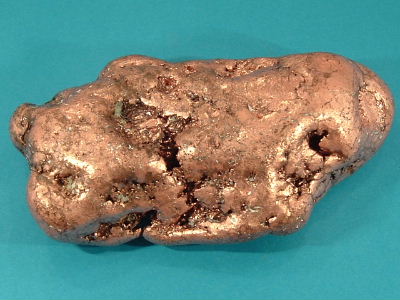
Copper is an essential  trace element that is vital to life. The human body normally contains copper at a level of about 1.4 to 2.1 mg for each kg of body weight; and since the body can’t synthesize copper, the human diet must supply regular amounts for absorption.   The World Health Organization (WHO) suggests that 10-12 mg/day may be the upper safe limit consumption.

The  fact that copper is essential to life  is well known, but it’s also a toxic metal, and that toxicity, except for the genetic overload diseases, Wilson’s disease and hemochromatosis, is not so well known.    Humans can become copper-toxic or copper-deficient, often because of “copper imbalance” (which can include arthritis, fatigue,  insomnia, migraine headaches, depression, panic attacks, and attention deficit disorder) .

Copper has been used for centuries for disinfection, and has been important around the world in technology, medicine and culture.

Is copper in the environment a health risk?

The answer to this question is complex. Copper is a necessary nutrient and is naturally occurring in the environment in rocks, soil, air, and water. We come into contact with copper from these sources every day but the quantity is usually tiny. Some of that copper, particularly in water, may be absorbed and used by the body. But much of the copper we come into contact with is tightly bound to other compounds rendering it neither useful nor toxic. It is important to remember that the toxicity of a substance is based on how much an organism is exposed to and the duration and route of exposure. Copper is bioaccumulative – there are many studies of copper biosorption by soils, plants and animals.  But copper in the environment, (such as that in agricultural runoff, in air and soil near copper processing facilities such as smelters and at hazardous waste sites) binds easily to compounds in soil and water, reducing its bioavailability to humans.  On the other hand,  many children are born with excessive tissue copper (reason unknown), and one of the ways we are told to balance a copper imbalance is to reduce your exposure to sources of copper!  (see  http://www.healingedge.net/store/article_copper_toxicity.html)

There are no studies on what this increased copper is doing to the environment.    Copper is listed as an EPA Priority pollutant, a CA Air Toxic contaminant, and an EPA Hazardous air pollutant (see http://wsppn.org/PBT/nolan.cfm#What%20are%20PBTs?);   it is also a Type II Moderate Hazard by the WHO Acute Hazard Ranking .  There is NO DATA on its carcinogenity,   whether it is a developmental or reproductive toxin or endocrine disruptor or whether it contaminates groundwater.

Today, because of its long use as a disinfectant and because it’s required for good health, many claims are being made about using copper in various products – including fabric.  Copper-impregnated fibers have been introduced, which enables the production of anti-bacterial and self-sterilizing fabrics.  These copper infused fabrics are marketed to be used in hospital settings to reduce infections, as an aid to help those suffering from asthma and allergies provoked by dust mites, and in socks to prevent athlete’s foot.

These copper  impregnated fabrics are said to be safe, pointing to the low sensitivity of human tissue to copper, and because the copper is in a non-soluble form.   Yet, that copper is safe because it is in a non soluble form was disproven by at least one study which tried to determine whether total copper or soluble copper was associated with gastrointestinal symptoms.  It was found that both copper sulfate (a soluable compound) and copper oxide (insoluable) had comparable effects on these symptoms. (http://www.ncbi.nlm.nih.gov/pmc/articles/PMC1240446/)

And then there’s this:   “…(copper)  toxicity is so general in the population that it is a looming public health problem in diseases of aging and in the aging process itself.  Diseases of aging such as Alzheimer’s disease, other neurodegenerative diseases, arteriosclerosis, diabetes mellitus, and others may all be contributed to by excess copper (and iron). A very disturbing study has found that in the general population those in the highest fifth of copper intake, if they are also eating a relatively high fat diet, lose cognition at over three times the normal rate”.[1]

Sometimes safety is cited because of the widespread use by women of copper intrauterine devices (IUDs).  But the copper IUD was developed only in 1970;  that timeline would put those first users only in their 60s today.  How can we know that the copper has not influenced any health problems these 60 somethings may now have?  In addition, about 12% of women have the copper IUD removed because of increased menstrual bleeding or cramping.[2] There are also cases of increased menstrual cramping, acne, depression and other symptoms attributed to the copper IUD.[3] The fact that we keep ignoring is that the body, like our ecosystem, is a highly complex, interconnected system.  It is extremely hard to single out any one element as contributing to a series of cause and effect.

Although copper does have documented antimicrobial properties, it is a broad spectrum antimicrobial – meaning that it kills the good guys as well as the bad.  Many studies show that this is not necessarily the best approach to infection control.   Kaiser Permanente issued a December 2006 memo with this bottom line: “Review of current scientific literature reveals no evidence that environmental surface finishes or fabrics containing antimicrobials assist in preventing infections.”  In fact, their policy now is to prohibit any fabrics with antimicrobial finishes in their hospitals.

Copper impregnated fabrics are legally sold in the USA, because the EPA has not issued any regulations regarding use.  The reality is they don’t have any data on which to base an exclusion of use.  In the US we must prove toxicity before the EPA even begins to regulate chemicals – look at the case of lead.  Other organizations have evaluated copper (including the EPA, see above).

So really the question is: what possible benefit do you hope to achieve by using a product with this antimicrobial finish?   Although copper isn’t one of the most alarming chemicals used in textile processing,  it seems to me the benefits just aren’t that compelling.    I wouldn’t risk altering my DNA or subjecting myself to copper imbalance symptoms just to eliminate stains or odors.


[1] Brewer, George J., “Risks of Copper and Iron Toxicity during Aging in Humans”, Chemical Research in Toxicology, 2010, 23 (2), pp. 319 – 326.

[2] Zieman M, et al. (2007). Managing Contraception for Your Pocket. Tiger, GA: Bridging the Gap Foundation.

The High Cost of Low Prices

O Ecotextiles (and Two Sisters Ecotextiles)

It’s the holiday season – and that usually means gifts.  I have begun the annual frenzy  and I’m watching my budget – yet I wince each time I hear an ad for an even cheaper price.  I’m especially worried by the Old Navy ads for really cheap cashmere sweater.  (Click here to read our blog post on cashmere and how it’s affecting our environment.)  My gifts are often jeans or clothing for my three boys, and so the Greenpeace report which was just published on November 30 really hit home.

Greenpeace  investigations found widespread pollution, including high concentrations of heavy metals, in Xintang and Gurao, two textile factory towns in Guangdong province that make blue jeans and bras, respectively.

As the Greenpeace web site   http://www.greenpeace.org/eastasia/press/release/textile-industrial-pollution tells it:

“Xintang is better known as the “Blue Jeans Capital of the World” – over 40% of its jeans are exported to the US, the EU, Russia and many other countries. It produces 260 million pairs of jeans annually, or more than 60% of China’s total jeans production and equivalent to 40% of all the jeans sold in the US each year.

Sewing Jeans These workers are sewing jeans in a makeshift shed that serves as a workshop in Xintang 2010 08/12/2010 © Qiu Bo / Greenpeace

Students on Street These students on their way to school try to block out the fumes from trash incineration Gurao, 06/08/2010 © Qiu Bo / Greenpeace

Meanwhile, 80% of Gurao’s economy is related to the underwear and lingerie industry. Each year, the “Capital of Sexy” produces 200 million bras, enough for one for every third woman in China.

“Xintang and Gurao are symbols of success in China’s export-model economy, yet we were horrified by the environmental degradation we saw during our fieldwork visits from April to September,” said Greenpeace Toxics campaigner Mariah Zhao. “Though we cannot pinpoint the pollution sources definitively at this stage, it’s worth noting that textile is the dominant industry in both towns by a long run.”

Testing by an independent laboratory revealed heavy metals such as copper, cadmium, and lead in 17 out of 21 samples of water and sediment from Xintang and Gurao. One sediment sample from Xintang contained cadmium at concentrations 128 times in excess of national environmental standards. “Dyeing, washing, bleaching, and printing are some of the dirtiest processes in the textile industry, requiring high volumes of water as well as heavy metals and other chemicals,” explained Zhao. “And Xintang is home to the complete blue jean manufacturing process, including dyeing, bleaching, and washing.”

Workers in the industry also testified to Greenpeace. “The water is discharged from the dyeing factories upstream. Sometimes it smells really awful. And every time the color of the water is different,” said Ren Shan (pseudonym), a migrant worker who moved to Gurao for a job in a textile factory.

Worker in GuangDong Every morning, workers at a denim washing factory must search through wastewater to scoop out stones that are washed with the fabric in industrial washing machines to make stonewash denim. Xintang, 08/14/2010 © Qiu Bo / Greenpeace


“With China nicknamed ‘the Factory of the World,’ it’s important to remember that Xintang and Gurao are emblematic of the larger problem of dirty textile manufacturing – they are just two of 133 textile industrial clusters in the country,” Zhao pointed out. “The responsibility of wastewater regulation and phasing out hazardous chemicals in textile manufacturing must be faced by not only Xintang and Gurao’s industries and government, but also throughout China.”

“Jeans and bras are synonymous with a modern, sexy lifestyle, yet we need to think about what these fashion icons mean for our environment. With many people demanding new jeans and clothing every year, it is imperative that the textile industry implements clean production methods, starting by phasing out the use and release of hazardous chemicals. At the same time, the government must adopt and enforce strict hazardous chemical management policies,” said Zhao. “We also hope that consumers will join us in pushing for change from the government and their favorite clothing companies. It would be tragic if fashion and economics comes at the cost of China’s clean water resources.” “

While you all ohh and ahhh about the terrible conditions in these Chinese cities– and of the chemicals being dumped into our groundwater – remember what motivates this behavior.  As we (you and I) push for ever lower prices, the factories have no recourse but to cut costs – by paying lower wages, (if wages are paid at all) and ignoring pollution control measures (which are expensive and force the cost up).

It is a simple equation that, if retailers want cheap prices and fast delivery times, they cannot expect high wages and comfortable working hours for the people on the production line, nor can they put in place expensive pollution control measures such as water treatment.

Somewhere there has to be a compromise.  In fact,  Ellen Ruppel Shell, in her book, “Cheap, The High Cost of Discount Culture”, asks: “What are we really buying when we insist on getting stuff as cheaply as possible?”  Her answer:  a low-quality food supply, a ruined economy, a polluted environment, low wages, a shoddy educational system, deserted town centers, ballooning personal debt, and the loss of craftsmanship.

Contact information for Greenpeace:

Shelley Jiang, Greenpeace Media Officer,   +86 1352 089 3941, +86 (10) 6554 6931 ext 149

Mariah Zhao, Greenpeace Toxics Campaigner
+86 1391 009 8563, +86 (10) 6554 6931 ext 107

Biodegradeable or compostable?

O Ecotextiles (and Two Sisters Ecotextiles)

There is no legal definition of “biodegradable,” so the term has been used loosely by some manufacturers.  The American Society for Testing and Materials defines the term as “a degradation caused by biological activity, especially by enzymatic action, leading to a significant change in the chemical structure of the material.”

The Biodegradable Products Institute (BPI) cites a 2006 American Chemistry Council study showing that most consumers believe a product labeled “biodegradable” will go away completely and on its own in a year or less. The BPI says many consumers also believe that these products will “biodegrade” in landfills.

Because it seems a desirable product attribute, the term “biodegradable” has been applied to a wide range of products—even those that might take centuries to decompose, or those that break down into harmful environmental toxins.   Biodegradability is definitely perceived as  a positive trait, yet it could be applied to virtually anything because anything is biodegradable, given enough time.  The Federal Trade Commission (FTC) in the U.S., however, has issued some general guidelines on what types of products qualify as legitimately biodegradable, and has even sued companies for unsubstantiated, misleading and/or deceptive use of the term on product labels.

According to the FTC, only products that contain materials that “break down and decompose into elements found in nature within a reasonably short amount of time after customary disposal” should be marketed as “biodegradable.”

But the FTC acknowledges that even products appropriately labeled as biodegradable may not break down easily if they are buried under a landfill or are otherwise not exposed to sunlight, air and moisture, the key agents of biodegradation. In fact, in landfills materials degrade very, very slowly – if at all!  This is because modern landfills are designed, according to law, to keep out sunlight, air and moisture – the very ingredients needed for materials to biodegrade. This helps prevent pollutants from the garbage from getting into the air and drinking water, and slows the decomposition of the trash. In Dr. William Rathje’s book entitled “Rubbish,” he sites that “The truth is, however, that the dynamics of a modern landfill are very nearly the opposite of what most people think…Well designed and managed landfills seem to be far more apt to preserve their contents for posterity than transform them into humus or mulch. They are not vast composters: rather they are vast mummifiers.” In his book, Dr. Rathje talks about doing excavations on 15 landfills throughout North America. From those digs, they found 40 year old newspapers that were still legible, 5 year old lettuce and a 15 year old hot dog. From these studies it seems fairly clear that even organic materials take a very long time to break down in landfills let alone plastic or other items.  The reality is if any product ends up in a landfill, it will not degrade.

But the fact that a product breaks down – if it does indeed break down – may not be as important as what the product breaks down into. In a perfect would all products would break down to CO2 and H2O. But it gets more complicated as we increase the number and kinds of chemicals. The banned pesticide DDT is hazardous and toxic in its own right. And it does biodegrade, though rather slowly. The problem is that its breakdown products of DDD and DDE are even more toxic and dangerous than the original DDT.
So just because a product or ingredient is biodegradable does not mean it is healthy or safe for people or the environment – especially if it leaches harmful chemicals into the ecosystem. Under this definition, even regular oil based plastic can be advertised as “biodegradable” because at some point, sooner or later, it is going to break down into small pieces.

“Compostable”, on the other hand, has a definition that is rigorously governed by the standards ASTM D-6400, ASTM D6868, and EN13432.   The term “compostable” covers four areas:

1.      Biodegradable – i.e.,  60 – 90% of the product will break down into CO2 within 180 days in a commercial composting facility.

2.      Disintegration – this requires that 90% of the product will break down into pieces that are 2mm or smaller

3.      Eco-toxicity – the product will not deposit heavy metals that are toxic to the soil beyond that found in typical compost.

4.      Compostable products have the added implication that when they break down they turn into humus, which provides valuable nutrients to the soil.

So, while some products are considered biodegradable, they may not be considered compostable because they either don’t meet the heavy metal requirements,  don’t break down in a timely fashion or don’t contribute valuable nutrients which improves the soil.

Composting of organic waste makes sense, but compostable plastic for shopping bags, food packaging, fabric, etc. does not, because:

1.      It is up to 400% more expensive than ordinary plastic;

2.      it is thicker and heavier and requires more trucks to transport it;

3.      recycling with oil-based plastics is impossible;

4.      it uses scarce land and water resources to produce the raw material, and substantial amounts of non-renewable hydro-carbons are burned and CO2 emitted, by the tractors and other machines employed.

5.      If buried in landfill, compostable plastic can emit methane (a greenhouse gas 23 times more powerful than CO2) in anaerobic conditions.

Many industrial composters of organic waste around the world do not want plastic of any kind in their feedstock, because it is difficult to separate biodegradable plastic from ordinary plastic. Home composting of plastic is not encouraged, as it will often be contaminated with food residues, and temperatures may not rise high enough to kill the pathogens. Compostable plastic is useless in compost because 90% of it has to convert to CO2 gas in order to comply with ASTM D6400 and the other composting Standards. It therefore contributes to greenhouse gases but not to the improvement of the soil.

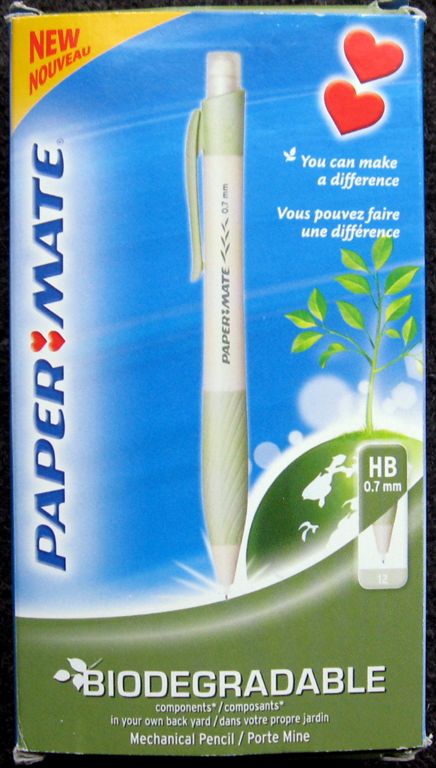
Meanwhile, you can follow Dave, who  buried an advertised Paper Mate  biodegradable pencil in his backyard last summer and says he will report on it’s degradation over time.  Click here to read more and follow the story!

So how does this apply to fabrics?  Well, for starters the companies that make PLA (polylactic acid) based polymers – those corn based bio plastics – advertise that their products are biodegradable.   PLA is said by the manufacturer  to decompose into carbon dioxide and water in a “controlled composting environment” in fewer than 90 days. What’s a controlled composting environment? It’s not exactly your average backyard bin, pit or tumbling barrel. It’s a large facility where compost—essentially, plant scraps being digested by microbes into fertilizer—reaches 140 degrees for ten consecutive days. So, yes, as PLA advocates say, corn plastic is “biodegradable.” But in reality very few consumers have access to the sort of composting facilities that can make that happen. NatureWorks (the largest manufacturer of PLA, owned by Cargill Dow)  has identified only  113 such facilities nationwide.

Moreover, PLA by the truckload may potentially pose a problem for some large-scale composters.  And there is no evidence that  PLA breaks down any faster than PET or other plastics in a normal landfill environment.  (Read more about PLA and biodegradability here.)

And unless the chemicals used during processing of your fabric are such that there are no chemicals which would combine with other chemicals to form molecules of anything other than water, carbon dioxide and safe organic material – then it cannot be called compostable.  If the chemicals used during processing contain, for example, heavy metals in the dyestuffs – then those metals become available to your plants in the garden – and that again knocks it out of the “compostable” set of products.  That might be o.k. if you’re growing roses rather than radishes, but if you plan to eat those plants I’d look elsewhere as a way to dispose of your fabric.  Certified fabrics  made of natural fibers which look at the chemical inputs of processing (such as GOTS and Oeko Tex) would be o.k. for use in a vegetable garden – because they have been tested to be free of toxic inputs – and they could be called “compostable”.

Resources:

The Biodegradable Products Institute, www.bpiworld.org

US Composting Council  http://www.compostingcouncil.org

Renewable?

O Ecotextiles (and Two Sisters Ecotextiles)

We keep seeing the term “renewable”  in the media   –   a lot  –  and especially with reference to products made from “renewable resources”.  And we understand why this term can be so appealing in this time of diminishing natural resources and increasing population growth.  But what do they really mean?  Stick with us and you’ll find that this is yet another area in which a little bit of knowledge can be a dangerous thing.

A “renewable resource” is a resource that can be replenished naturally  in the same amount of time (or less) than it takes to draw the supply down.  These constantly replenishing natural resources  include forest resources,  and the fertility of agricultural land.  Some renewable resources have essentially an endless supply, such as solar energy, wind energy and geothermal pressure.   Some resources are considered renewable, even though some effort must go into procuring them, such as fisheries or food crops.

To help us make better choices, there is now a differentiation between non-renewable resources, such as petroleum or old-growth timber  (which takes centuries to renew)  and what is known as “rapidly renewable resources”.  These items, as defined by the LEED system of building certification from the U.S. Green Building Council (USGBC) offers points for rapidly renewable materials that regenerate in 10 years or less, such as bamboo, wool, and straw. To qualify for the credit in a new construction project, the value of these materials must represent at least 2.5 % of the total cost of the products used in the building.

Renewable resources have become a focal point of the environmental movement, both politically and economically. Energy obtained from renewable resources puts much less strain on our limited supply of fossil fuels (non-renewable resources). The problem with using renewable resources on a large scale, however, is that it  may create some new and unforeseen problems.

What can some of these new and unforeseen problems be?  Like all green claims, it’s terribly important to understand the wider implications of each of our choices.  Take bamboo, for example.  Bamboo is a fast growing grass which is hard enough to be used as a replacement for wood in applications such as flooring and furniture. However, most bamboo is grown and processed in China, so while ocean shipping consumes less fuel per mile than overland trucking, the type of fuel used in shipping can be more polluting. In addition, there are concerns about forestry practices, the toxicity of binders, and worker safety.  A few bamboo plantations have earned certification from the Forest Stewardship Council (FSC), which accredits forests managed “to meet the social, economic, ecological, cultural, and spiritual needs of present and future generations.” However, certified bamboo products are still not widely available in the U.S. And even though bamboo plantations sequester as much carbon as native forests, they do not support the same wildlife.  Clearly, the environmental balance is more difficult to calculate than by simply examining the length of a harvest cycle.

Another product worth examining is cork, which comes from the bark of cork oaks. Unlike nearly every other tree species, cork trees are  not harmed by removal of their bark. A mature tree is stripped about once every 10 years and lives for an average of 16 strippings. After stripping, the large slabs of bark are boiled, and bottle stoppers are punched from them. The leftover material is then ground up, pressed into sheets, and cut into tiles for flooring. This dual-purpose production is critical to the cork industry.   According to the World Wildlife Fund International, cork production provides a vital source of income for thousands of people and supports one of the world’s highest levels of biodiversity among forest habitats, with plant diversity reaching as high as 135 species per square meter. In an ironic twist, the increased market share for alternative wine stoppers could reduce the value of cork oak, leading the areas in which cork is grown to be converted or abandoned. It also may contribute to the end of the cork ecosystem.

The World Wildlife Fund International and the Forest Stewardship Council have established programs to promote and encourage responsible cork use to save this natural resource. For more information, visit www.panda.org and www.fsc.org.

Another not so easy call, is it?

In my opinion, another area worth investigating is the very visible promotion of biobased products using corn and soybeans  (soy based foam in upholstery and biobased polymers are two products that come immediately to mind) as being environmentally preferable because they’re based on a renewable resource.  Dow Cargill, manufacturer of BiOH polyols, the soybean derived biopolymer, says that it creates products with from 5 to 20% renewable content (meaning the soybeans). But soybeans are one of the three crops globally which have the highest percentage of GMO (corn and cotton being the other two).   The GMO percentage of global soybean production was 77%  in 2009, and for cotton it was 49%.  (In India, 87% of all cotton was GMO in 2009.)

Monsanto, the largest seed producer in the world, with a massive 20% share of the world market, has been  interested in a technology which was named “Terminator” – and began applying it to their seeds.

The Terminator idea was to genetically modify seeds so that the plants they produced when they grew were sterile. In biotechnology jargon, this is known as a “genetic use restriction technology”, or GURT.  Companies such as Monsanto were keen on such “suicide seeds” because they would enable the company to control any proprietary genetic traits they had engineered into the seeds. So resistance to a particular herbicide, for example, or an ability to grow faster, would not be passed on from one generation of plants to the next.

So most GMO seeds have a genetic modification that prevents the crops from setting fertile seed.  So seeds for next year’s crop must be purchased – effectively ending the centuries old practice of collecting seeds at each harvest  so they could be replanted next year.

The main problem with this is that over 1.4 billion people around the world depend on saved seeds from season to season to grow crops. Terminator seeds force dependence on the Monsantos of the world, destroying local and indigenous seed exchange practices, as well as the breeding and selection done by farmers.

There was a great outcry against this technology.

“While seeds with the ability to reproduce contain the essence of life, Terminator represents only ‘exploitation and death,’” according to Terry Boehm, vice-president of the National Farmer’s Union in Saskatchewan, Canada. Boehm further uses nuclear weapons as a parallel to Terminator technology: “Extensive testing of nuclear weapons did not change the fact that this was such a dangerous technology that it should not be used.”

At the  United Nations’ Convention on Biodiversity in Nagoya, Japan (18-29 October 2010) the Action Group on Erosion, Technology and Concentration (ETC) warned that there are a  handful of multinational corporations which are pressuring governments to allow what could become the broadest and most dangerous patent claims in history.

“The Gene Giants are stockpiling patents that threaten to put a choke-hold on the world’s biomass and our future food supply,” warns Silvia Ribeiro of ETC Group. “The breadth of many patent claims on climate ready crop genes is staggering. In many cases, a single patent or patent application claims ownership of engineered gene sequences that could be deployed in virtually all major crops – as well as the processed food and feed products derived from them,” explains Ribeiro.

Hope Shand, research director of ETC,  links the argument over Terminator technologies with wider criticisms of the ways in which agribusiness is exercising its increasingly powerful influence. “The top 10 seed companies control 57% of the commercial seed market worldwide. That’s a staggering level of corporate control over the first link in the food chain,” she says.

“Whoever controls our seeds, controls the food supply. These companies are trying to reduce competition and maximize profits by promoting laws and technologies that eliminate the practice of farmer-saved seeds. Whether it’s promoting genetic seed sterilization and patent laws, or dictating trade regimes, these trends threaten traditional farming communities and erode crop diversity.”

The ETC web site goes on to say that “the natural genetic diversity of crops is a vital insurance against future farming catastrophes. The world needs to retain as many different varieties of potato, tomato, rice and wheat as possible in case the commercial varieties grown in bulk get diseased, or are rendered useless by the accelerating impacts of global warming. That’s why there are some 1,400 “seed banks” around the world, storing some six million different species.”  For more information on this issue, see the ETC Group’s report, Gene Giants Stockpile Patents on “Climate-Ready” Crops in Bid to Become Biomassters”

I think the use of GMO crops to produce soy based foam and biobased polymers cannot be marketed as being made from a renewable resource because of the presence of these patented GMO crops – which are largely sterile. They cannot be renewed without human input – in other words, new crops cannot be grown unless the farmer purchases new seed from the corporation.  And the danger is that these genetic mutations will spread to non GMO crops.

This goes entirely against the intent  in defining a renewable resource.  These crops cannot be “created again”.  So to say that soy based polyols (or soy based foam) is made from a “renewable resource” is false.

Another objection I have to GMOs as they are being implemented is that the basic motivation for almost every introduction thus far is profit-driven rather than need-driven – but that’s nit picking.

For more information on Terminator Technology visit:

www.banterminator.org – the Ban Terminator Campaign

www.etcgroup.org – Action Group on Erosion, Technology, and Concentration

• Also see www.seedsofchangefilm.org for information on the film, “Seeds of Change,” which looks at genetically modified crops and how they are changing the face of agriculture in western Canada. This film was made back in 2002 but hidden from the public by the administration at the University of Manitoba until 2005. Click here for a review of this documentary.

Can you wash or otherwise clean conventional fabrics to remove all the toxic residues so that you’d end up with  a fabric that’s as safe as  an organic fabric?  It seems a reasonable question, and sure would be an easy fix if the answer was yes, wouldn’t it?  But let’s explore this question, because it’s really interesting.

Let’s start by looking at one common type of fabric: a lightweight, 4 ounce cotton printed quilting fabric.  In this case the answer is no (and as you’ll find out, our answers will always be no, but read on to see why).

The toxic chemicals in conventionally produced (versus “organically” produced)  cotton fabric that cannot be washed out come from both:

1.      the pesticides and herbicides applied to the crops when growing the cotton and

2.      from the dyes and printing inks and other chemicals used to turn the fibers into fabric.

Let’s first look at the pesticides used during growing of the fiber.

Conventional cotton cultivation uses copious amounts of chemical inputs.  These pesticides are absorbed by the leaves and the roots of the plants. Most pesticides applied to plants have a half life of less than 4 days before degredation.(1)   So pesticides can be found in the plants, but over time the chemicals are degraded so the amount to be found in any bale of cotton fiber is highly depending on time of harvest and how recently the crop had been sprayed.  

Gas chromatography easily shows that  common pesticides used on cotton crops are found in the fibers, such as:  Hexachlorobenzene,  Aldrin, Dieldrin, DDT and DDT. (2)   Look up the toxicity profiles  of those chemicals if you want encouragement to keep even tiny amounts of them out of your house.   With time, as the cotton fibers degrade, these residual chemicals are released.

We could find no studies which looked at the fibers themselves to see if pesticides could be removed by washing, but we did find a study of laundering pesticide-soiled clothing to see if the pesticide could be removed.  Remember, this study (and others like it) was done only on protective clothing worn by workers who are applying the pesticides – so the pesticides are on the outside of the fibers  –   NOT on the fibers themselves during growth.  The study found that, after six washings in a home washing machine, the percent of pesticide remaining in a textile substrate (cotton)  ranged from 1% to 42%.  (3)

If you’re trying to avoid pesticides which are applied to cotton crops, you’d do better to avoid cottonseed oil than the fiber (if processed conventionally) because we eat more of the cotton crop than we wear.  Most of the damage done by the use of pesticides is to our environment – our groundwater and soils.

Before we go further,  let’s do away with the notion that organic cotton, woven conventionally, is safe to use.  Not so.  There are so many chemicals used during the processing phase of fabric production, including detergents, brighteners, bleaches, softeners, and many others that the final fabric is a chemical smorgasbord, and is by weight at least 10% synthetic chemicals (4), many of which have been proven to cause harm to humans.

The chemicals used in conventionally processed organic cotton fabrics make the concerns about  pesticides used in growing the crop pale in comparison:  If we use the new lower chemical inputs that GMO cotton has introduced, it’s now possible to produce 1 lb. of conventionally grown cotton, using just  2.85 oz of chemical pesticides – that’s down from over 4.5 oz used during the 1990’s – a 58% decrease.   So to produce enough cotton fiber to make 25 lbs of cloth,  it would require  just 4.45 lbs of chemical pesticides, fertilizers and insecticides.  Processing that fiber into cloth, however, requires between 2.5 – 25 lbs. of chemicals.  If we take the midpoint, that’s 12.5 lbs of processing chemicals – almost three times what it took to produce the fiber!

There are over 2,000 different kinds of chemicals regularly used in textile production, many of them so toxic that they’re outlawed in other products.  And this toxic bath is used on both organic fibers as well as non-organic fibers – the fibers are just the first step in the weaving and finishing of a fabric. (Make sure you buy organic fibers that are also organically processed  or you do not have an organic fabric.   An organic fabric is one that is  third party certified  to the Global Organic Textile Standard. )      Fabrics – even those made with  organic fibers like organic cotton IF they are conventionally produced and not produced according to GOTS –  contain chemicals such as formaldehyde, azo dyes, dioxin, and heavy metals.  Some of the chemicals  are there as residues from the production, others are added to give certain characteristics to the fabrics such as color, softness, crispness, wrinkle resistance, etc.    And these chemicals are designed to do a job, and do it well. They are designed to NOT wash out.  The dyes, for instance, are called “fiber reactive” dyes because they chemically bind with the fiber molecules in order to remain color fast.   The chemical components of your fabric dye is there as long as the color is there. Many dyes contain a whole host of toxic chemicals.  The heavy metals are common components of fabric dyes.  They are part of the dye and part of the fabric fiber as long as the color remains.

And these chemicals are found in the fabrics we live with.  Studies have shown that the chemicals are available to our bodies:  dioxins (such as the 75 polychlorinated dibenzo-p-dioxins (PCDDs) and 135 polychlorinated dibenzofurans (PCDFs)) were found in new clothing in concentrations ranging from low pg/g to high 300 ng/g in several studies. (5)


How do these chemicals get into our bodies from the textiles?  Your skin is the largest organ of your body, and it’s highly permeable.  So skin absorption is one route; another is through inhalation of the chemicals (if they are the type that evaporate – and if they do evaporate, each chemical has a different rate of evaporation, from minutes or hours to weeks or years) and a third route:  Think of microscopic particles of fabric that abrade each time we use a towel, sit on a sofa, put on our clothes.  These microscopic particles fly into the air and then we breathe them in or ingest them.  Or they  fall into the dust of our homes, where people and pets, especially crawling children and pets, continue to breathe or ingest them.

In the United States, often the standards for exposure to these toxins is limited to  workplace standards (based on limits in water or air) or they’re product specific: the FDA sets a maximum limit of cadmium in bottled water to be 0.005 mg/L for example.  So that leaves lots of avenues for continued contamination!

The bad news is that existing legislation on chemicals fails to prohibit the use of hazardous chemicals in consumer products -–and the textile industry, in particular, has no organized voice to advocate for change.  It’s a complex, highly fragmented industry, and it’s up to consumers to demand companies change their policies.  In the United States we’re waking up to the dangers of industrial chemicals, but rather than banning a certain chemical in ALL products, the United States is taking a piece meal approach:  for example,  certain azo dyes (like Red 2G) are prohibited in foods – but only in foods, not fabrics.  But just because the product is not meant to be eaten doesn’t mean we’re not absorbing that Red 2G.  Phthalates are outlawed in California and Washington state in children’s toys – but not in their clothing or bedding.  A Greenpeace study of a Walt Disney PVC Winne the Pooh raincoat found that it contained an astounding 320,000 mg/kg of total phthalates in the coat – or 32% of the weight of the raincoat! (6)

Concerns continue to mount about the safety of textiles and apparel products used by U.S. consumers.  As reports of potential health threats continue to come to light, “we are quite concerned about potentially toxic materials that U.S. consumers are exposed to everyday in textiles and apparel available in this country,” said David Brookstein, Sc.D., dean of the School of Engineering and Textile and director of Philadelphia University’s Institute for Textile and Apparel Product Safety (ITAPS).

The good news is that there are fabrics that have been produced without resorting to these hazardous chemicals.  Look for GOTS!  Demand safe fabrics!

(1)  “Degradation of Pesiticides on Plant Surfaces amd It’s prediction – a case study of tea leaves”, Zongmao, C and Haibin, W., Tea Research Institute, Chinese Academy of Agricultural Sciences, Zhejiang, China.   http://www.springerlink.com/content/vg5w5467743r5p41/

(2) “Extraction of Residual Chlorinated Pesticides from Cotton Matrix, El-Nagar, Schantz et.al, Journal of Textile and Apparel, Technology and management,  Vol 4, Issue 2, Fall 2004

(3)  Archives of Environmental Contamination and Toxicology 1992  (23, 85-90)

(4) Laucasse and Baumann,  Textile Chemicals: Environmental Data and Facts, Springer, New York, 2004, page 609.

(5) “Dioxins and Dioxin-Like Persistent Organic Pollutants in Textiles” Krizanec, B and Le marechal, Al, Faculty of Mechanical Engineering, Smetanova 17, SI-2000, Maribor, Slovenia, 2006; hrcak.srce.hr/file/6721

(6)   http://www.greenpeace.org/raw/content/greece/137368/toxic-childrensware-by-disney.pdf

I just came from showing our fabrics to a well-known interior design firm here in Seattle.   We were told that the only criteria they use to pick fabrics is that it must be beautiful – and of the right color.    Environmental and safety issues are just NOT part of the equation.

The visit was not completely a disaster because they did show interest in some of our fabrics – based solely on the beauty and coloration.  But I’ve been thinking since then about the responsibility  designers have to provide interiors for their clients which are not only beautiful, but which will not cause harm.  I know people don’t really want to think that the cute baby blanket they’re eyeing will cause a genetic malformation in their little one – or that a chemical in that blanket  will spark a cancer that only shows up 20 years from now.  So it’s easy to ignore the problem.

On top of the goal of making their client’s interior spaces safe, there is the additional problem of what THEIR choices do me and MY family – because by choosing certain fabrics they’re  ensuring that those fabrics will continue to be produced:  those choices ensure that the textile effluent is still being poured into my groundwater, and the sludge is still sent to the landfill, where it leaches the chemicals into the soils and groundwater.

Designers can continue to ignore the misery their choices may cause – at least for now.  But I think we should know what they’re doing, so I did a quick study to see what kind of effect fabric may have on us and the planet.

Let’s assume a designer orders fabric to cover one sofa, two chairs and enough fabric for drapery in a living room.  We’ll assume the amount of fabric needed would be:

  • 20 yards of upholstery fabric for the sofa, and 7 yards for each of the chairs:  34 yards of  fabric which weighs18 oz per square yard and is 54” wide (total weight: 57.4 lbs);
  • 40 yards of drapery weight fabric at 10 oz per square yard, 54” wide (total weight: 37.5 lbs).

It takes between 13 – 14 gallons of water to produce one pound of natural fiber fabric, and it takes between 6 – 8 gallons of water to produce 1 pound of polyester fabric.

If we use the 8 gallon figure which is at the top of the polyester range but low for natural fibers, the total amount of water used to produce this fabric would have been at least 759 gallons.  To put that in perspective, there are about 300 gallons in a large hot tub.

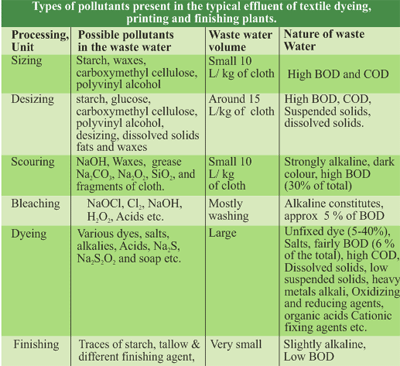
Consider that it takes between 10% and 100% of the weight of the fabric  IN CHEMICALS to produce that fabric – for detergents, bleaches, dyes, finishes, scours, optical brighteners, wetting agents, biocides – the list is at least 2,000 chemicals long.   But to be a tad conservative,  let’s say it takes just 50% of the weight of the fabric in chemicals to produce the fabrics for our room.   If the process water (from sizing, desizing, scouring, dyeing, printing and finishing)  was returned to our ecosystem without treatment – that means that 47 pounds of chemicals will have been introduced into our ecosystem.  Most of the process chemicals are not toxic to us, but remember the concept of reactive chemistry:  many of the chemicals used, though benign themselves, will react with other chemicals to create a third substance which is toxic.  This reaction can occur during the production of the fibers (in the case of synthetics), during the manufacturing process, or at end of life (i.e., burning at the landfill, decomposing or biodegrading).

But there are chemicals used in processing which are toxic – just as they are.  Some of the chemicals expelled in the wastewater DO pose a threat to my health – and that list includes (but is not limited to):

  • Polybrominated diphenyl ethers (PBDE’s) , known to cause damage to the brains of newborns (among many other things); they’re persistent and bioaccumulative;
  • Benzenes and benzidines:  highly carcinogenic
  • Phthalates:          known to cause breast  cancer and asthma
  • Arsenic:                carcinogen
  • Lead:                     attacks the nervous system
  • Mercury:             attacks the immune system, alters genetic data and damages nervous system
  • Chlorine (sodium hypochlorite):                  hormonal disruption, infertility and immune system suppression.

These chemicals are all dumped into our environment every day.   Remember, as David Suzuki reminds us, we ARE the environment.  What is “out there” inevitably is found inside us.  That’s why PBDE’s (which are persistent in the environment – meaning they don’t break down into benign, less toxic components)  are found in animals worldwide, from penguins in the Arctic to hummingbirds in the tropics – and levels have been doubling every 3 to 5 years for the past three decades.   (you can read more about PBDE’s and the furniture in your homes here ).  We are silently and progressively changing the chemistry of our bodies.

And lest you think you can ignore what unscrupulous mill practices are doing to our environment by discharging untreated effluent – remember that the fabric you bring into your home and live with intimately  is also suffused with these chemicals.  Everybody is concerned about “outgassing” – the media is full of information about Volatile Organic Compounds (VOCs).  But air quality is just one component of a healthy environment.  Not all chemicals volatilize, so they do not “outgass” – but are certainly toxic nevertheless.  Take lead, for example – a component of many dyestuffs, lead is not a gas at room temperature so it does not “outgass”.  But microscopic particles of your fabric do abrade when you rub against them, and these particles settle into the dust in our homes, to be breathed in by crawling kids and pets.

And designers are hired, presumably, for their expertise.   The designer should not be a mindless  agent following a vision without regard to function or use.  Theoretically, the designer has a body of knowledge that is deeper than the client’s, so an ethical burden is placed on the designer.  The client can plead ignorance of the issues but the designer cannot.  According to Daniel Yang,  good design seeks to foster the client’s trust, then fulfills or exceeds her expectations.  Designers should advocate for a better design while striving to make the best product they can for their clients.  But how can a product be considered “good” if it compromises that clients health and well being?  Daniel Yang points out that it’s hard to advocate for a product when the people that end up consuming the product will probably never come back to complain – as is the case with fabrics.

So I wish I could go back to those designers who look only at color and aesthetics and point out that their thoughtless choice are harming not only their clients, but me and my family – all of us.  And that they should consider these questions if they want to save their professional souls –  or to save their professional license,  as many are suggesting that the law might  soon mandate that designers consider the public welfare when specifying products.

Lead and fabrics

O Ecotextiles (and Two Sisters Ecotextiles)

We published a post about lead in fabrics about a year ago, but I thought it was important enough to remind you of the dangers of lead in fabrics, because we’re starting to see claims of “heavy metal free” dyestuffs used in fabrics.  What does that mean?

Lead is considered one of those “heavy metals’ , along with mercury, cadmium, copper and others – all highly toxic to humans.  “Heavy metal” is defined as any metallic element that has a relatively high density and is toxic or poisonous at low concentrations.

Heavy metals are natural components of the Earth’s crust. They cannot be degraded or destroyed.  Interestingly, small amounts of these elements are common in our environment and diet and are actually necessary for good health. Lead can even be found in natural fibers, such as cotton, flax and hemp, which can absorb it from the environment.
It’s when our bodies have to deal with large amounts of these heavy metals that we get into trouble.   Heavy metal poisoning could result, for instance, from drinking-water contamination (e.g. lead pipes), high ambient air concentrations near emission sources,  intake via the food chain or through skin absorption – and in the case of  crawling children, from inhaling carpet particles or other abraded textiles in dust.  For some heavy metals, toxic levels can be just above the background concentrations naturally found in nature. Therefore, it is important for us to inform ourselves about the heavy metals and to take protective measures against excessive exposure.  Lead accounts for most of the cases of pediatric heavy metal poisoning, according to the Agency for Toxic Substances and Disease Registry (ATSDR).

Lead is a neurotoxin – it affects the human brain and cognitive development, as well as the reproductive system. Some of the kinds of neurological damage caused by lead are not reversible.  Specifically, it affects reading and reasoning abilities in children, and is also linked to hearing loss, speech delay, balance difficulties and violent tendencies. (1)

A hundred years ago we were wearing lead right on our skin. I found this article funny and disturbing at the same time:

“Miss P. Belle Kessinger of Pennsylvania State College pulled a rat out of a warm, leaded-silk sack, noted that it had died of lead poisoning, and proceeded to Manhattan. There last week she told the American Home Economics Association that leaded silk garments seem to her potentially poisonous. Her report alarmed silk manufacturers who during the past decade have sold more than 100,000,000 yards of leaded silk without a single report of anyone’s being poisoned by their goods. Miss Kessinger’s report also embarrassed Professor Lawrence Turner Fairhall, Harvard chemist, who only two years ago said: ‘No absorption of lead occurs even under extreme conditions as a result of wearing this material in direct contact with the skin’. ”

This was published in Time magazine,  in 1934.  (Read the full article here. )

According to Ruth Ann Norton, executive director of the Coalition to End Childhood Lead Poisoning, “There are kids who are disruptive, then there are ‘lead’ kids – very disruptive, very low levels of concentration.” 
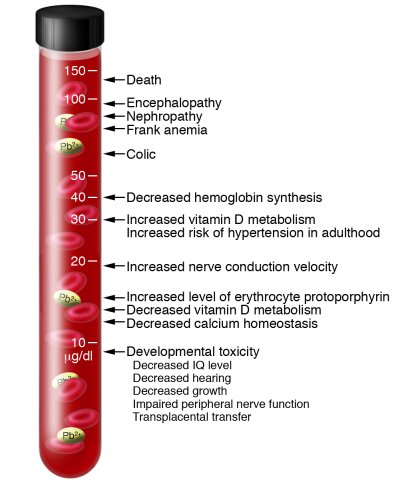
Children with a lead concentration of less than 10 micrograms ( µ) per deciliter (dl = one tenth of a liter) of blood scored an average of 11.1 points lower than the mean on the Stanford-Binet IQ test. (2)   Consistent and reproducible behavioral effects have been seen with blood levels as low as 7 µ/dl (micrograms of lead per tenth liter of blood), which is below the Federal standard of 10 µ/dl.   The image depicts what happens to human beings at the various levels of lead in blood.  Scientists are generally in agreement that there is no “safe” level of blood lead.  Lead is a uniquely cumulative poison:  the daily intake of lead is not as important a determinant of ultimate harm as is the duration of exposure and the total lead ingested over time.

Lead is widely  used in consumer products, from dyestuffs made with lead (leading to lead poisoning in seamstresses at the turn of the century, who were in the habit of biting off their threads) (3), to lead in gasoline, which is widely credited for reduced IQ scores for all children born in industrialized countries between 1960 and 1980 (when lead in gasoline was banned).  Read more about this here.

Lead is used in the textile industry in a variety of ways and under a variety of names:

  • Lead acetate                     dyeing of textiles
  • Lead chloride                   preparation of lead salts
  • Lead molybdate             pigments used in dyestuffs
  • Lead nitrate                     mordant in dyeing; oxidizer in dyeing(4)

Fabrics sold in the United States, which are used to make our clothing, bedding and many other products which come into intimate contact with our bodies, are totally unregulated – except in terms of required labeling of percentage of fiber content and country of manufacture.  There are NO laws which pertain to the chemicals used as dyestuffs, in processing, in printing,  or as finishes applied to textiles, except those that come under the Toxic Substances Control Act (TSCA) of 1976, which is woefully inadequate in terms of addressing the chemicals used by industry.   With regard to lead, products cannot contain more than 100 ppm – despite many studies that show there is no safe level for lead. In fact, the Government Accounting Office (GAO) has announced that the 32 year old TSCA needs a complete overhaul (5), and the Environmental Protection Agency (EPA)  was quick to agree! (6).  Lisa Jackson, head of the EPA,  said on September 29, 2009 that the EPA lacks the tools it needs to protect people and the environment from dangerous chemicals.

Fabrics are treated with a wide range of substances that have been proven not to be good for us.  That’s why we feel it’s important to buy third party certified FABRICS, not just certified organic fibers (which do nothing to guarantee the dyestuffs or finish chemicals used in the fabric) such as GOTS (Global Organic Textile Standard) or Oeko Tex, both of which prohibit the use of lead in textile processing.

The United States has new legislation which lowers the amount of lead allowed in children’s products – and only children’s products.   (This ignores the question of  how lead  in products used by pregnant  women may affect their fetus.  Research shows that as the brains of fetuses develop, lead exposure from the mother’s blood can result in significant learning disabilities.)  The new Consumer Product Safety Improvement Act (CPSIA) had requirements to limit lead content in children’s products (to be phased in over three years) so that by August 14, 2011, lead content must be 100 ppm (parts per million) or less.

However there was an outcry from manufacturers of children’s bedding and clothing, who argued that the testing for lead in their products did not make sense, because:

  • it placed an unproductive burden on them, and
  • it required their already safe products to undergo costly or unnecessary testing.

The Consumer Product Safety Commission voted to exempt textiles from the lead testing and certification requirements of the CPSIA, despite the fact that lead accounts for most of the cases of pediatric heavy metal poisoning, according to the Agency for Toxic Substances and Disease Registry (ATSDR).

So let me repeat here: the daily intake of lead is not as important a determinant of ultimate harm as is the duration of exposure and the total lead ingested over time.

Children are uniquely susceptible to lead exposure over time, and  neural damage occurring during the period from 1 to 3 years of age is not likely to be reversible.  It’s also important to be aware that lead available from tested products would not be the only source of exposure in a child’s environment.  Although substantial and very successful efforts have been made in the past twenty years to reduce environmental lead, children are still exposed to lead in products other than toys or fabrics. Even though it was eliminated from most gasoline in the United States starting in the 1970s, lead continues to be used in aviation and other specialty fuels. And from all those years of leaded gasoline, the stuff that came out of cars as fuel exhaust still pollutes soil along our roadways, becoming readily airborne and easily inhaled.   All lead exposure is cumulative – so it’s important to eliminate any source that’s within our power to do so.

(1) “ ‘Safe’ levels of lead still harm IQ”, Associated Press, 2001

(2) Ibid.

(3) Thompson, William Gilmsn, The Occupational Diseases, 1914, Cornell University Library, p. 215

[4] “Pollution of Soil by Agricultural and Industrial Waste”, Centre for Soil and Agroclimate Research and Development, Bogor, Indonesia, 2002.   http://www.agnet.org/library/eb/521/

(4) http://www.atsdr.cdc.gov/toxprofiles/tp13-c5.pdf

(5) http://www.rsc.org/chemistryworld/News/2009/January/29010901.asp

(6) http://www.bdlaw.com/news-730.html

John Wargo wears at least three hats:  he is a professor of environmental policy, risk analysis, and political science at the Yale School of Forestry & Environmental Studies, he chairs the Environmental Studies Major at Yale College, and is an advisor to the U.S. Centers for Disease Control and Prevention.  He published this opinion on plastics in the United States last year – and I couldn’t have said it better myself:

Since 1950, plastics have quickly and quietly entered the lives and bodies of most people and ecosystems on the planet. In the United States alone, more than 100 billion pounds of resins are formed each year into food and beverage packaging, electronics, building products, furnishings, vehicles, toys, and medical devices. In 2007, the average American purchased more than 220 pounds of plastic, creating nearly $400 billion in sales.

It is now impossible to avoid exposure to plastics. They surround and pervade our homes, bodies, foods, and water supplies, from the plastic diapers and polyester pajamas worn by our children as well as our own sheets, clothing and upholstery,  to the cars we drive and the frying pans in which we cook our food.

The ubiquitous nature of plastics is a significant factor in an unexpected side effect of 20th century prosperity — a change in the chemistry of the human body. Today, most individuals carry in their bodies a mixture of metals, pesticides, solvents, fire retardants, waterproofing agents, and by-products of fuel combustion, according to studies of human tissues conducted across the U.S. by the Centers for Disease Control and Prevention. Children often carry higher concentrations than adults, with the amounts also varying according to gender and ethnicity. Many of these substances are recognized by the governments of the United States and the European Union to be carcinogens, neurotoxins, reproductive and developmental toxins, or endocrine disruptors that mimic or block human hormones.

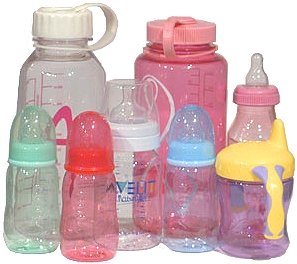
Significantly, these chemicals were once thought to be safe at doses now known to be hazardous; as with other substances, the perception of danger grew as governments tested chemicals more thoroughly. Such is the case with Bisphenol-A (BPA), the primary component of hard and clear polycarbonate plastics, which people are exposed to daily through water bottles, baby bottles, and the linings of canned foods.

Given the proven health threat posed by some plastics, the scatter shot and weak regulation of the plastics industry, and the enormous environmental costs of plastics — the plastics industry accounts for 5 percent of the nation’s consumption of petroleum and natural gas, and more than 1 trillion pounds of plastic wastes now sit in U.S. garbage dumps — the time has come to pass a comprehensive national plastics control law.

One might assume the United States already has such a law. Indeed, Congress adopted the Toxic Substances Control Act (TSCA) in 1976 intending to manage chemicals such as those polymers used to form plastics. Yet TSCA was and is fundamentally flawed for several reasons that have long been obvious. Nearly 80,000 chemicals are now traded in global markets, and Congress exempted nearly 60,000 of them from TSCA testing requirements. Among 20,000 new compounds introduced since the law’s passage, the U.S. Environmental Protection Agency (EPA) has issued permits for all except five, but has required intensive reviews for only 200. This means that nearly all chemicals in commerce have been poorly tested to determine their environmental behavior or effects on human health. The statute’s ineffectiveness has been recognized for decades, yet Congress, the EPA, and manufacturers all share blame for the failure to do anything about it.

In contrast, the European Union in 2007 adopted a new directive known as “REACH” that requires the testing of both older and newly introduced chemicals. Importantly the new regulations create a burden on manufacturers to prove safety; under TSCA the burden rests on EPA to prove danger, and the agency has never taken up the challenge. Unless the U.S. chooses to adopt similar restrictions, U.S. chemical manufacturers will face barriers to their untested exports intended for European markets. Thus the chemical industry itself recognizes the need to harmonize U.S. and EU chemical safety law.

The most promising proposal for reform in the U.S. is the “Kid-Safe Chemical Act,” a bill first introduced in 2008 that would require industry to show that chemicals are safe for children before they are added to consumer products. Such a law is needed because there is little doubt that the growing burden of synthetic chemicals has been accompanied by an increase in the prevalence of many illnesses during the past half-century. These include respiratory diseases (such as childhood asthma), neurological impairments, declining sperm counts, fertility failure, immune dysfunction, breast and prostate cancers, and developmental disorders among the young. Some of these illnesses are now known to be caused or exacerbated by exposure to commercial chemicals and pollutants.

Few people realize how pervasive plastics have become. Most homes constructed since 1985 are wrapped in plastic film such as Tyvek, and many exterior shells are made from polyvinyl chloride (PVC) siding. Some modern buildings receive water and transport wastes via PVC pipes. Wooden floors are coated with polyurethane finishes and polyvinyl chloride tiles.

Foods and beverages are normally packaged in plastic, including milk bottles made from high-density polyethylene. Most families have at least one “non-stick” pan, often made from Teflon, a soft polymer that can scratch and hitchhike on foods to the dinner table. Between 1997 and 2005, annual sales of small bottles of water — those holding less than one liter — increased from 4 billion to nearly 30 billion bottles.

The billions of video games, computers, MP3 players, cameras, and cell phones purchased each year in the United States use a wide variety of plastic resins. And the almost 7.5 million new vehicles sold in the United States each year contain 2.5 billion pounds of plastic components, which have little hope of being recycled, especially if made from polyvinyl chloride or polycarbonate.  The American Plastics Council now estimates that only about 5 percent of all plastics manufactured are recycled; 95 billion pounds are discarded on average yearly.

The chemical contents of plastics have always been a mystery to consumers. Under federal law, ingredients need not be labeled, and most manufacturers are unwilling or unable to disclose these contents or their sources. Indeed, often the only clue consumers have to the chemical identity of the plastics they use is the voluntary resin code designed to identify products that should and should not be recycled — but it offers little usable information.

The true costs of plastics — including the energy required to manufacture them, the environmental contamination caused by their disposal, their health impacts, and the recycling and eventual disposal costs — are not reflected in product prices.  Adding to the environmental toll, most plastic is produced from natural gas and petroleum products, exacerbating global warming.

Plastics and Human Health

The controversy over BPA — the primary component of hard and clear plastics — and its potential role in human hormone disruption provides the most recent example of the need for a national plastics control law.

Normal growth and development among fetuses, infants, children, and adolescents is regulated in the body by a diverse set of hormones that promote or inhibit cell division. More than a thousand chemicals are now suspected of affecting normal human hormonal activity. These include many pharmaceuticals, pesticides, plasticizers, solvents, metals, and flame retardants.

Scientists’ growing interest in hormone disruption coincided with a consensus within the National Academy of Sciences that children are often at greater risk of health effects than adults because of their rapidly growing but immature organ systems, hormone pathways, and metabolic systems. And many forms of human illness associated with abnormal hormonal activity have become more commonplace during the past several decades, including infertility, breast and prostate cancer, and various neurological problems.

BPA illustrates well the endocrine disruption problem. Each year several billion pounds of BPA are produced in the United States. The Centers for Disease Control and Prevention has found, in results consistent with those found in other countries, that 95 percent of human urine samples tested have measurable BPA levels. BPA has also been detected in human serum, breast milk, and maternal and fetal plasma. BPA travels easily across the placenta, and levels in many pregnant women and their fetuses were similar to those found in animal studies to be toxic to the reproductive organs of the animals’ male and female offspring.

Government scientists believe that the primary source of human BPA exposure is foods, especially those that are canned, as BPA-based epoxy resins can migrate from the resins into the foods. In 1997, the FDA found that BPA migrated from polycarbonate water containers — such as the five-gallon water jugs found in offices — into water at room temperature and that concentrations increased over time. Another study reported that boiling water in polycarbonate bottles increased the rate of migration by up to 55-fold, suggesting that it would be wise to avoid filling polycarbonate baby bottles with boiling water to make infant formula from powders.

Scientists have reported BPA detected in nonstick-coated cookware, PVC stretch film used for food packaging, recycled paperboard food boxes, and clothing treated with fire retardants.

Since 1995 numerous scientists have reported that BPA caused health effects in animals that were similar to diseases becoming more prevalent in humans, abnormal penile or urethra development in males, obesity and type 2 diabetes, and immune system disorders. BPA can bind with estrogen receptors in cell membranes following part-per-trillion doses — exposures nearly 1,000 times lower than the EPA’s recommended acceptable limit.

In 2007, the National Institutes of Health convened a panel of 38 scientists to review the state of research on BPA-induced health effects. The panel, selected for its independence from the plastics industry, issued a strong warning about the chemical’s hazards:

“There is chronic, low level exposure of virtually everyone in developed countries to BPA… The wide range of adverse effects of low doses of BPA in laboratory animals exposed both during development and in adulthood is a great cause for concern with regard to the potential for similar adverse effects in humans.”

The American Chemistry Council, which advocates for the plastics industry, has criticized most scientific research that has reported an association between BPA and adverse health effects. The council’s complaints have included claims that sample sizes are too small, that animals are poor models for understanding hazards to humans, that doses administered in animal studies are normally far higher than those experienced by humans, that the mechanism of chemical action is poorly understood, and that health effects among those exposed are not necessarily “adverse.”

Research on plastics, however, now comprises a large and robust literature reporting adverse health effects in laboratory animals and wildlife at even low doses. Claims of associations between BPA and hormonal activity in humans are strengthened by consensus that everyone is routinely exposed and by the rising incidence of many human diseases similar to those induced in animals dosed with the chemical. Two competing narratives — one forwarded by independent scientists and the other promoted by industry representatives — have delayed government action to protect the health of citizens through bans or restrictions.

Action Needed

How has the plastics industry escaped serious regulation by the federal government, especially since other federally regulated sectors that create environmental or health risks such as pharmaceuticals, pesticides, motor vehicles, and tobacco have their own statutes? In the case of plastics, Congress instead has been content with limited federal regulatory responsibility, now fractured among at least four agencies: the EPA, the Food and Drug Administration, the Consumer Product Safety Commission, and the Occupational Safety and Health Administration. None of these agencies has demanded pre-market testing of plastic ingredients, none has required ingredient labeling or warnings on plastic products, and none has limited production, environmental release, or human exposure. As a result, the entire U.S. population continues to be exposed to hormonally active chemicals from plastics without their knowledge or consent.

What should be done? The Kids Safe Chemical Act represents a comprehensive solution that would apply to all commercial chemicals including plastic ingredients. Yet the nation’s chemical companies, with their enormous political power, are not likely to agree to assume the testing costs, nor are they likely to accept a health protective standard. Rather than pass another weak statute, Congress should consider a stronger alternative.

The nation needs a comprehensive plastics control law, just as we have national laws to control firms that produce other risky products, such as pesticides. Key elements of a national plastics policy should include:

  • tough  government regulations that demand pre-market testing and prohibit chemicals that do not quickly degrade into harmless compounds. Exempting previously permitted ingredients from this evaluation makes little sense, as older chemicals have often been proven more dangerous than newer ones.
  • The chemical industry itself needs to replace persistent and hazardous chemicals with those that are proven to be safe.  Plastics ingredients found to pose a significant threat to the environment or human health should be quickly phased out of production. Congress chose this approach to manage pesticide hazards, and it has proven to be reasonably effective since the passage of the Food Quality Protection Act in 1996.
  • Federal redemption fees for products containing plastics should be set at levels tied to chemical persistence, toxicity, and production volume. These fees should be high enough that consumers have a strong incentive to recycle.
  • We need mandatory labeling of plastic ingredients, in order to allow consumers to make responsible choices in the marketplace.
  • Finally, manufacturers should take responsibility for cleaning up environmental contamination from the more than one trillion pounds of plastic wastes they have produced over the past 50 years.