The first plastic garbage bag was invented by Harry Waslyk in 1950.
1950! Mr. Waslyk could not have predicted how much havoc his plastic child would wreck in a mere 62 years.[1]
We’ve all seen the pictures of birds stomachs filled with plastic detritus and read about the Great Pacific Gyre, but I just read a new twist to that story: the Emirates News Agency reported that decomposed remains of camels in the desert region of the United Arab Emirates revealed that 50% of the camels died from swallowing and choking on plastic bags. “Rocks of calcified plastic weighing up to 60 kilograms are found in camel stomachs every day,” said Dr. Ulrich Wernery, Scientific Director, Central Veterinary Research Laboratory in Dubai, whose clinic conducts hundreds of post-mortems on camels, gazelles, sheep and cows in the UAE. He adds that one in two camels die from plastic.[2]
Plastic has become so ubiquitous, in fact, that plastics are among the debris orbiting our planet. Unfortunately, our wildlife and domestic animals are paying the price now; I think we ourselves will see changes in future generations.
It’s no wonder we’re scrambling to find alternatives to plastic, and one hot topic in the research area is that of bioplastics.
Bioplastics are made (usually) from plant materials. Enzymes are used to break starch in the plant into glucose, which is fermented and made into lactic acid. This lactic acid is polymerized and converted into a plastic called polylactic acid (PLA), which can be used in the manufacture of products ( PLA is about 20% more expensive than petroleum-based plastic) or into a plastic called polyhydroxyalkanoate, or PHA (PHA biodegrades more easily but is more than double the price of regular plastic).
The bioplastic market is expanding rapidly and by 2030, according to some estimates, could account for 10% of the total plastics market. In the world of fabrics and furnishings, the new biotech products which are being heavily promoted are Ingeo and Sorona, both PLA based fibers with a growing share of the fabric market; and soy-based foam for upholstery. Toray Industries has announced that they will have the first functional performance nylon and polyester textiles based on biomass ready for the 2013/14 season. They are 100% bio-based fabrics [3] based on the castor plant, which is very robust, growing in dry farming areas and requiring significantly fewer pesticides and herbicides than other crops.
So it’s no wonder that there has been much discussion about bioplastics, and about whether there are ecological advantages to using biomass instead of oil.
The arguments in favor of bioplastics are:
They are good for the environment because there is no harm done to the earth when recovering fossil fuels. Also, in this process there are very few greenhouse gas and harmful carbon emissions. Regular plastics need oil for their manufacturing, which pollutes the environment.
They require less energy to produce than petroleum-based plastics.
They are recyclable.
They are non toxic.
They reduce dependence on foreign oil.
They are made from renewable resources.
These arguments sound pretty good – until you begin to dig and find out that once again, nothing is ever as simple as it seems.
Regarding the first two arguments (they are good for the environment because they produce significantly fewer CO2 emissions and less energy) – there have not been many studies which support this argument until recently. Recently, several studies have been published which seems to support that this is indeed the case:
Ramani Narayan of Michigan State University found that “the results for the use of fossil energy resources and GHG emissions are more favorable for most bio based polymers than for oil based. As an exception, landfilling of biodegradable polymers can result in methane emissions (unless landfill gas is captured) which may make the system unattractive in terms of reducing greenhouse gas emissions.”[4]
University of Pittsburgh researchers did an LCA on the environmental impacts of both petroleum and bio derived plastics, assessing them using metrics which included economy, mass from renewable sources, biodegradability, percent recycled, distance of furthest feedstock, price, life cycle health hazards and life cycle energy use. They found that biopolymers are the more eco-friendly material in terms of energy use and emissions created. However, they also concluded that traditional plastics can actually be less environmentally taxing to produce when taking into account such things as acidification, carcinogens, ecotoxicity, eutrophication, global warming, smog, fossil fuel depletion, and ozone depletion.[5]
A study done by the nova-Institut GmbH on behalf of Proganic GmbH & Co.[6]showed unambiguously positive eco advantages (in terms of energy use and CO2 emissions) for bio based polymers PLA and PHA/PHB over petrochemical based plastics. According to the report, “the emission of greenhouse gases and also the use of fossil raw materials are definitely diminished. Therefore the substitution of petrochemical plastics with bio-based plastics yields positive impacts in the categories of climate change and depletion of fossil resources.” The results include:
Greenhouse gas emissions of bio-based plastics amount to less than 3 KG of CO2 equivalents per KG of plastic, less than that of petrochemical based plastics which produce an average of 6 KG of CO2 equivalents per KG of plastic..
the production of bio-based polymers, in comparison to all petrochemical plastics examined, leads to savings in fossil resources. The biggest savings potential can be found in comparison with polycarbonate (PC). The average savings potential in the production of PLA amounts to 56 ± 13 megajoules per kilogram of plastics here.
The production of bio-based polymers in comparison with the production of petrochemical plastics in most cases also leads to greenhouse gas emission savings. The biggest greenhouse gas emission savings can be found again when comparing bio-based polymers to polycarbonate (PC). For PLA, the average savings potential in this case amounts to 4.7 ± 1.5 kilograms of CO2 equivalents per kilogram of plastics. For PHA, the average savings potential in this case amounts to 5.8 ± 2.7 kilograms of CO2 equivalents per kilogram of plastics. In comparison with PET and Polystyrene (PS), considerable savings potentials ranging between 2.5 and 4.2 kilograms of CO2 equivalents per kilogram of plastics are to be found in the production of bio-based polymers. The lowest savings potential are to be found when comparing bio-based polymers with polypropylene (PP).
So I will accept the arguments that biobased plastics produce fewer greenhouse gases and harmful carbon emissions and require less energy to produce than petroleum-based plastics . They also certainly reduce our dependence on foreign oil.
But are they better for the environment? Are they recyclable or biodegradeable? Are they safe? Are plastics producers aware of the impact of promoting bioplastics as a replacement for plastics? We think that bioplastics are useful for certain purposes, such as medical sutures or strewing foil for mulching in agriculture – but as a replacement for all plastics?
Next week we’ll take a look at the arguments against bioplastics.
[1] Laylin, Tafline, “Half of UAE’s Falaj Mualla Camels Choked on Plastic Bags”, Green Prophet blog, June 11, 2010.
[4] Narayan, Ramani, “Review and Analysis of Bio-based Product LCA’s”, Department of Chemical Engineering & Materials Science, Michigan State University, East Lansing, MI 48824
[5] Tabone, Michaelangelo D., et al; “Sustainability Metrics: Life Cycle Assessment and Green Design in Polymers”, Enviornmental Science and Technology, September 2, 2010.
The solvents used in dry cleaning establishments have long been known to effect human health.
Perchloroethylene – also called perchlorethylene, tetrachloroethylene, tetrachlorethylene, PCE, or PERC – is used for dry cleaning clothing and fabrics. Perc removes stains and dirt without causing clothing to shrink or otherwise get damaged. You know that sweetish smell from a newly dry cleaned sweater? That’s it. PERC may also be an ingredient in spot removers, rug and upholstery cleaners, water repellents, aerosols, adhesives, sealants, wood cleaners and polishes, lubricants, typewriter correction fluid and shoe polish.
From "Greening the Apple" blogspot.
The U.S. Environmental Protection Agency lists PERC as a “likely carcinogen” and by the World Health Organization as a “probable carcinogen” because long-term exposure to perchloroethylene can cause leukemia and cancer of the skin, colon, lung, larynx, bladder, and urogenital tract; recent studies have been published linking PERC to breast cancer.[1] The US Environmental Protection Agency says that it causes liver and kidney damage in humans; workers exposed to large amounts of PERC experience memory loss and confusion; if you are pregnant, long-term exposure to perchloroethylene may damage a developing fetus. Just not something you want to live with.
It has been found that homes with freshly dry cleaned clothing have perchloroethylene levels that are 2 to 30 times higher than average background levels.[2] The U.S. Department of Labor, in its Occupational Safety & Health guidelines (OSHA), attempts to protect workers by limiting their exposure to PERC to 100 parts per million.[3]
Last year a high school student, Alexa Dantzler, looking for a memorable science-fair project, decided to look at what chemicals might remain in dry cleaned clothing. But since she didn’t have access to the proper equipment, she emailed several chemistry professors with her idea and hit gold with Paul Roepe, then-chairman of Georgetown University’s chemistry department. He took on the project “for fun.
According to The Washington Post (read article here):
… what started out as something to “sponsor the kid’s curiosity” prompted a chain reaction in the university lab: an email exchange, an invitation to collaborate and, last week, a paper published online in a peer-reviewed environmental journal. The paper gives new details about the amount of a toxic chemical that lingers in wool, cotton and polyester clothing after it is dry-cleaned.
“At the end of the day, nobody, I mean nobody, has previously done this simple thing — gone out there to several different dry cleaners and tested different types of cloth” to see how much of the chemical persists, said Roepe, who supervised the study.
Dantzler, with help from her mother, sewed squares of wool, cotton, polyester and silk into the lining of seven identical men’s jackets, then took them to be cleaned from one to six times at seven Northern Virginia dry cleaners. The cleaners, who were not identified, had no prior knowledge of the experiment.
She kept the patches in plastic bags in the freezer — to preserve the samples — and went to Georgetown once or twice a week to do the chemical analysis with two graduate students, Katy Sherlach and Alexander Gorka. The research team found that perchloroethylene, a dry cleaning solvent that has been linked to cancer and neurological damage, stayed in the fabrics and that levels increased with repeat cleanings, particularly in wool. The study was published online in Environmental Toxicology and Chemistry.[4]
What they found is consistent with most regulations concerning fabrics: that although there are voluntary guidelines for atmospheric concentrations of PERC in the workplace, there are no standards which exist for levels in dry-cleaned fabric.
According to the team, it is difficult to say how much risk consumers accept from wearing dry cleaned clothing for a year – or from breathing air from a closet full of dry cleaned clothes. It’s most likely that the risk depends on how much and how long – sort of like UV exposure and cigarette smoke.
How much PERC did they find in the clothing? The study found that cotton and polyester absorption of PERC leveled off after two or three cleaning cycles, but that levels in wool increased with each of six cycles. Researchers calculated what they thought would happen if four people in a car each had on a freshly dry cleaned item of wool clothing. After one hour of driving, with windows closed, the PERC circulating in the air would produce a level as high as 126 parts per million – which both exceeds the OSHA guidelines for workplace safety, as well as the limits widely recommended by industry and government scientists.
It’s possible that the dry cleaning delivery man might be exposed to more PERCE than the workers at the plant, who are covered by OSHA regulations.
And yes, Alexa Dantzler won first place in chemistry at last year’s Arlington county science fair. Way to go Alexa!
How to minimize exposure to perchloroethylene:
One of the easiest ways to avoid PERC is by choosing alternatives to dry-cleaning your clothes. Be aware, however, that some non-PERC dry-cleaners use alternatives, sometimes called “hydrocarbon” treatments, that are also toxic. Wetcleaning, a professional alternative to perchloroethylene that uses biodegradable soaps instead, is also available. Look for a cleaner near you at the Professional Wetcleaning Network’s website . There is ongoing research into different ways to dry clean without perc, so check local professionals to see what they might be looking into to move away from perc.
If dry-cleaned goods have a strong chemical odor when you pick them up, ask your cleaner to dry them further. If it keeps happening, switch to a different cleaner.
Air out dry-cleaned garments by taking them out of the plastic sheath and hanging them briefly outdoors before bringing them indoors.
Some clothing labeled “Dry Clean Only” may be safely handwashed, according to Consumer Reports. “Dry Clean Only” labels are overused because manufacturers prefer to err on the side of caution.
Handwash plain-weave rayon and solid-colored silks separately in cool water, squeeze rather than wring, and lay flat to dry.
Wash sweaters in cold water by hand or machine; cashmere and cotton do best in the washing machine inside out; dry sweaters flat, except cotton sweaters, which can be machine-dried.
Angora sweaters and structured or lined garments should be sent to a professional cleaner, however.
[1] Aschengrau, A., et al., “Perchloroethylene-Contaminated Drinking Water and the Risk of Breast Cancer: Additional Results from Cape Cod, Massachusetts, USA”, Environmental Health Perspectives, February 2003
[4] Sherlach, K; Gorka, A., Dantzler, A and Roepe, P., “Quantification of perchloroethylene residues in dry cleaned fabrics”, Environmental Toxicology and Chemistry; 20 September 2011
We love being outdoors. I’ve been told that the most popular outdoor activity in the U.S.A is picnicking. I would think barbeque must be a close second. So we love fabrics that we can use outdoors – you know the ones that resist fading, are stain resistant and can be cleaned with mild soap and water? They don’t fade or degrade. Perfect!
Let’s look at America’s most popular outdoor fabric, Sunbrella, which their website claims is recognized as “a fabric with a conscience”, because, as they claim:
all Sunbrella fabrics are fully recyclable;
they require no dyeing that produces wastewater;
and they have received the GREENGUARD and Skin Cancer Foundation certifications.
Before we show why we think these are all claims which exemplify different facets of what Terra Choice calls the “Six Sins of Greenwashing”, let’s first look at the stuff Sunbrella is made of.
Sunbrella is, as their website says, a 100% solution dyed acrylic fabric. Solution dyeing is simply mixing the dyestuff into the melted polymer. So unlike dyeing that penetrates a fiber, this method means that the color is inherent in the fiber, and there is no dye or water waste. This is a good method of dyeing – but that’s not the issue – the real issue is what the fabrics are made of.
The key ingredient of acrylic fiber is acrylonitrile, (also called vinyl cyanide). Acrylic manufacturing involves highly toxic substances which require careful storage, handling, and disposal. The polymerization process can result in an explosion if not monitored properly. It also produces toxic fumes. Recent legislation requires that the polymerization process be carried out in a closed environment and that the fumes be cleaned, captured, or otherwise neutralized before discharge to the atmosphere – because the burning of acrylic releases fumes of hydrogen cyanide and oxides of nitrogen.
The International Agency for Research on Cancer (IARC) concluded that there is inadequate evidence in humans for the carcinogenicity of acrylonitrile, but classified it as a Class 2B carcinogen (possibly carcinogenic). Acrylonitrile increases cancer in high dose tests in male and female rats and mice. (1) A recent report which was published in Occupational and Environmental Medicine found that women who work in textile factories which produce acrylic fabrics have seven times the risk of developing breast cancer than the normal population.(2)
Acrylic is not easily recycled nor is it readily biodegradable. It is considered a group 7 plastic among recycled plastics and is not collected for recycling in most communities. Large pieces can be reformed into other useful objects if they have not suffered too much stress, crazing, or cracking, but this accounts for only a very small portion of the acrylic plastic waste. In a landfill, acrylic plastics, like many other plastics, are not readily biodegradable. Some acrylic plastics are highly flammable and must be protected from sources of combustion.
Now that you know what Sunbrella’s made of, let’s look at their claims:
All Sunbrella fabrics are fully recyclable – If you check the website, Sunbrella has a proprietary recycling program, which means they will pick up your old Sunbrella. Why do they do this? Because the local municipalities do not accept acrylic fabric nor do most plastic recycling companies. It’s admirable that Sunbrella has put this program into place, but we don’t really know that they actually re-purpose the old fabric rather than simply cart it to the landfill, do we?
Sunbrella fabrics require no dyeing that produces wastewater – because it’s solution dyed, so therefore this is, well if not exactly a red herring, certainly irrelevant to the fact that the fabric is made from acrylic.
Sunbrella fabrics have received the GREENGUARD and Skin Cancer Foundation certifications.
Sunbrella fabrics have been certified by GreenGuard Children and Schools because the chemicals used in acrylic production are bound in the polymer – in other words, they do not evaporate. So Sunbrella fabrics do not contribute to poor air quality, (you won’t be breathing them in), but there is no guarantee that you won’t absorb them through your skin. And you would be supporting the production of more acrylic, the production of which is not a pretty thing.
With regard to the Skin Cancer Foundation – the certification seems to be based on the fact that Sunbrella fabrics block the sun, which prevents skin cancer, rather than anything inherently beneficial in the fabric itself – because the certification is not valid for any Sunbrella fabric which is sheer or transparent. So another red herring.
Now that you know what Sunbrella is made of, do you really want convenience at such a great cost?
(1) Hagman, L, “How confident can we be that acrylonitrile is not a human carcinogen?”, Scandanavian Journal of Work, Environment and Health, 2001;27(1):1-4 .
Does living or working in a LEED certified space mean that you are safe from building contaminants – or does it promote a false sense of security?
A study published by the nonprofit, Environment and Human Health, Inc. (EHHI), in May 2010, emphatically claims that you are not safe. The lead author of the study, Dr. John Wargo, is professor of environmental policy, risk analysis and political science at the Yale School of Forestry & Environmental Studies. He is also an advisor to the U.S. Centers for Disease Control and Prevention. This study outlined why LEED, which has emerged as the green standard of approval for new buildings in the United States, largely ignores factors relating to human health, particularly the use of potentially toxic building materials.As Nancy Alderman, the president of EHHI, told BuildingGreen.com, “it is possible to build a LEED building and have it not be healthy inside, and we’re saying this needs to be fixed.”[1]
Many of the chemical ingredients in building materials are well known to be hazardous to human health. Some are respiratory stressors, neurotoxins, hormone mimics, carcinogens, reproductive hazards, or developmental toxins. Thousands of synthetic and natural chemicals make up modern buildings, and many materials and products “off-gas” and can be inhaled by occupants. Dr. Wargo points out in a blog posting on Environment 360, that one of LEED’s major accomplishments — saving energy by making buildings more airtight — has had the paradoxical effect of more effectively trapping the gases emitted by these often toxic chemicals used in today’s building materials and furnishings.
He makes the case that LEED puts almost no weight on human health factors in deciding whether a building meets its environmental and social goals. And he calls for a comprehensive Federal law to control the chemical content of the built environment.
Many sectors of the economy, including pharmaceuticals and pesticides, are highly regulated by the federal government to protect public health. But the building sector — which now produces $1.25 trillion in annual revenues, roughly 9 percent of U.S. gross domestic product in 2009 — has escaped such federal control. The lack of government regulation is explained, in part, by the building industry’s enormous financial power, but also by its recent success in creating green building and development standards that give the impression of environmental responsibility and protection of human health.
John Wargo called for a new national healthy building policy, which would include:
New chemicals tested to understand their threat to human health before they are allowed to be sold. We should adopt the precautionary principle, as in the EU. Existing chemicals should also be tested, rather than be exempted, as they are currently under the Toxic Substances Control Act.
The burden of proof of safety should rest with chemical and building product manufacturers. The testing itself should be conducted by an independent, government-supervised institute, but paid for by the manufacturers.
A clear environmental safety standard should also be adopted to prevent further development and sale of persistent and bio-accumulating compounds.
The chemical contents of building materials and their country of origin should be identified.
EPA should maintain a national registry of the chemical content of building products, furnishings, and cleaning products.
The government should categorize building products to identify those that contain hazardous compounds; those that have been tested and found to be safe; and those that have been insufficiently tested making a determination of hazard or safety impossible. This database should be freely available on the Internet.
Distinctive “high performance” environmental health standards should be adopted to guide the construction and renovation of schools and surrounding lands.
The federal government should create incentives for companies to research and create new chemicals that meet the health, safety, and environmental standards described above. Funding for “green chemistry” initiatives should be significantly increased and focused on benign substitutes for the most widely used and well-recognized toxic substances.
The federal government should take responsibility for codifying these requirements to protect human health in buildings and communities.
The U.S. Green Building Council (USGBC) developed LEED parameters through a “consensus based” process led by LEED committees, and introduced the LEED rating system in 2000. The USGBC does extraordinary and essential work – and as Howard Williams suggests in a comment on Environment 360, “wanting to add healthy building products onto that effective and successful machine is natural; we always ask more of the high achievers”. He goes on to suggest that “a clear and supportive endorsement from the USGBC of the need to protect people from the effect of hazardous chemicals in building materials would set in motion the free market forces for accelerating change. Although this is implicitly evident by the very nature of the USGBC work, some things just need to be explicit.”[2]
However, at the time of the publication of the study in 2010, the U.S. Green Building Council (USGBC) took exception with the conclusions that were drawn. Brendan Owens, P.E., vice president for LEED technical development at USGBC, criticized the report for “singling out the Indoor Environmental Quality section as the only place that LEED deals with public health.” Arguing that all LEED credits are built and evaluated for multiple environmental and health benefits, Owens said, “the report’s authors would have benefited from a better understanding of the philosophy that underpins the rating system.”
There is an ongoing and emotional debate about LEED, in which it has been criticized by other environmental groups such as the Healthy Building Network, for lacking leadership in addressing chemical hazards. Indeed, the Living Building Challenge may have been introduced as a result of LEED moving too slowly in many areas.
On the one side, the argument is that LEED is an action plan for environmental work through buildings and neighborhoods. It is not a report or even a statement of a perfect world. It is a way to define what green means. LEED, according to these proponents, is constantly updating and moving the market, pushing it and incentivizing it to be better. And they say that LEED’s explicit purpose has never been human health. It has always been about minimizing resource use and carbon footprint. To announce that it “fails” to account for human health is like making the exposé that ballet is not satisfying the tastes of hip hop dancers.
On the other hand, there are those who say that though LEED should be applauded for the things it does well (new energy efficiency standards, building siting standards, water conservation for example), it should also define a “green” building, and this definition should include minimizing the use of known carcinogens, suspected endocrine disruptors, and other harmful chemicals. It should do this because it is not just the health of the building’s inhabitants that is at stake. Throughout their life from cradle to grave, chemicals of concern in building products effect people, plants and animals–the whole environment.
Bill Walsh, executive director of the Healthy Building Network, told BuildingGreen.com that in his experience, the tone of the report represents a typical response to LEED from people in the human health community. For example, the Green Guide for Healthcare asks that we “Imagine: Cancer treatment centers built without materials linked to cancer; Pediatric clinics free of chemicals that trigger asthma.” [3] “Their first encounter with LEED is usually highly negative—they react just like this,” he said. “People just can’t believe that you get credit for using all manner of vile material in a green building. So no, they’re not really stepping back to assess the whole thing.” Walsh added that he hoped USGBC would use the report as an opportunity to build a broader constituency for developing its materials credits.
A pivotal issue is that there needs to be regulatory standards for the toxicity of building materials, because there cannot be a truly “green” building which compromises people’s health. A comment posted on the Environment 360 web site suggests a new twist: Perhaps LEED could have DEMERITS as well as credits. This is based on the commentor’s knowledge of a LEED project in which the project removed toxic soil from a site and sent it to a landfill in someone else’s backyard. He asks the question: “Can a LEED gold project actually send toxic soil that could be stored onsite to a location in another state? That doesn’t seem like a fully credible environmental leadership to me.” [4]
Equal Exchange was founded in 1986 to support authentic fair trade by challenging the existing trade model, which favored large plantations, agri-business, and multi-national corporations; to support small farmers; and to connect consumers and producers through information, education, and the exchange of products in the marketplace.
With the founding, they joined a growing movement of small farmers, alternative traders (ATOs), religious organizations, and non-profits throughout the world with like-minded principles and objectives. The U.S. consumer co-operative movement has been an integral part of this movement. Underlying Equal Exchange’s work is the belief that only through organization can small farmers survive and thrive. The cooperative model has been essential for building this model of change. From their website: the founders envisioned a food system that empowers farmers and consumers, supports small farmer co-ops, and uses sustainable farming methods. They started with fairly traded coffee from Nicaragua and didn’t look back.
During the 1990’s, Equal Exchange joined with a number of other organizations to create the certifying agency, TransFair USA (now Fair Trade USA). The goal was to create a mechanism, in a complex marketplace, to ensure that a company’s products were providing social, economic and environmental impact for the small farmer organizations that grew them. With a third party certifier, it was hoped that consumers would have more confidence in their purchases without needing to background check every brand and product. This turned out to be good business and Fair Trade USA grew as a result.
Deep controversies in the Fair Trade movement have been simmering for over a decade. As time passed, Fair Trade USA began to take on a life of its own. Rather than confine itself to its purpose as a certifying agency, collecting fees from industries that used its seal and monitoring them to ensure that Fair Trade practices were being met, Fair Trade USA soon developed its own vision. “Quantity over Quality”, “Breadth over Depth”, and other qualifiers came to be used to describe Fair Trade USA’s vision of a world in which vast numbers of products throughout the grocery store could be certified Fair Trade, in as fast a manner as possible.
Their problem was supply. Working with small farmer organizations can be challenging and time-consuming. These organizations don’t have the same access to market, credit, infrastructure, and technology that large plantations generally do. Over the opposition of the ATOs, farmer organizations, and a host of other Fair Trade advocates, Fair Trade USA and its umbrella organization FairTrade Labelling Organization (FLO) began certifying plantation tea, bananas, cut flowers, and other products with a set of different, less rigorous standards than those elaborated for small farmer organizations.
Soon, large corporations began to see value in certification as well. They discovered that consumers would respect all of their products, even if only one or two were certified as Fair Trade (this happens in fabric collections too). Fair Trade USA rapidly began courting big businesses into the Fair Trade “family”, such as Chiquita, Dole, and Nestle. The Fair Trade advocates protested, but to no avail. Big business profits grew and, as more volume got certified, Fair Trade USA continued to grow as well.
Equal Exchange feels that all their advances are now in jeopardy, because Fair Trade USA has left the international Fair Trade System (FLO International/FairTrade International), lowered standards, eliminated farmers from their governance model, and invited large-scale plantations into coffee and all other commodities.
Equal Exchange has recently launched the Stand with Small Farmers campaign for authentic Fair Trade in response to these actions by Fair Trade USA. They believe that small farmer cooperatives are the heart of Fair Trade and the engine of real grassroots development.
The following is from a press release we just received:
This is not Fair Trade and we are asking you to join with us in differentiating Fair Trade USA’s model from the authentic small farmer Fair Trade that we are collectively building.
Current happenings
These actions, and many others throughout the years, have created large-scale opposition against the certifiers and bad feelings have mounted about the lack of transparency, accountability, openness, and representation on the boards and within the committees of FLO International and Fair Trade USA. Little has changed. Until this year, when the growing rift finally reached a head:
In October, 2010, the original organization, TransFair, unilaterally changed its name to Fair Trade USA. Ten thousand people signed an Organic Consumers Association petition asking them not to appropriate the name of an entire movement. No response.
During that same time, TransFair announced their Fair Trade Apparel standards. Fair Traders complained that the standards are too low and don’t require unionized factories. http://ethixmerch.com/blog/race-fair-trade. No response.
In September 2011, TransFair – now Fair Trade USA – announced their new initiative, Fair Trade for All, certifying plantations in all remaining categories (coffee, cocoa, sugar, and cotton). This strategy means that small farmers will now be forced to compete with large plantations for market access – the very reason Fair Trade was created in the first place. The Fair Trade community opposes this action. Read the Latin American and Caribbean Network of Small Fair Trade Producers’ (CLAC) statement: http://smallfarmersbigchange.coop/2011/10/05/4153/ and Fair World Project’s statement: http://fairworldproject.org/news/single/477.
The day afterFair Trade USA announced their strategy, knowing that they would be opposed by FLO International, and the movement in general, they left the FLO system and now plan to go it alone. This was the breaking point.
It is time to withdraw support from TransFair USA/FairTrade USA products. They do not represent Fair Trade.
We remain engaged with small farmers and with the international Fair Trade system. We will keep you posted on events as they unfold. As always, thanks for your loyal support, your commitment, and for putting your values into action.
If you have any questions, please call Phyllis Robinson, Education & Campaigns Manager at Equal Exchange, at 774-776-7390.
The difference between “manufactured” and “synthetic” fibers is that the manufactured fibers are derived from naturally-occurring cellulose or protein, while synthetic fibers are not. And manufactured fibers are unlike natural fibers because they require extensive processing (or at least more than is required by natural fibers) to become the finished product. The category of “manufactured” fibers is often called “regenerated cellulose” fibers. Cellulose is a carbohydrate and the chief component in the walls of plants.
Rayon is the oldest manufactured fiber, having been in production since the 1880s in France, where it was originally developed as a cheap alternative to silk. Most rayon production begins with wood pulp, though any plant material with long molecular chains is suitable.
There are several chemical and manufacturing techniques to make rayon, but the most common method is known as the viscose process. In the viscose process, cellulose is treated with caustic soda (aka: sodium hydroxide) and carbon disulfide, converting it into a gold, highly viscous liquid about the color and consistency of honey. This substance gives its name to the manufacturing process, called the viscose process.
The viscous fluid is allowed to age, breaking down the cellulose structures further to produce an even slurry, and is then filtered to remove impurities. Then the mixture is forced through fine holes, called a spinerette, directly into a chemical bath where it hardens into fine strands. When washed and bleached these strands become rayon yarn.
Although the viscose process of making rayon from wood or cotton has been around for a long time, it wasn’t until 2003 that a method was devised for using bamboo for this process.(3) Suddenly, bamboo was the darling of marketers, and the FTC had to step in to remind manufacturers to label their products as “bamboo viscose” rather than simply bamboo.
Now we hear about fabrics made from eucalyptus, or soy. But it’s the same story – the fibers are created using the viscose process. Because the FTC did not specifically name these two substances in their proclamation regarding bamboo, marketers can claim fabrics are “made from eucalyptus”. The reality is that the viscose process can produce fibers from any cellulose or protein source – chicken feathers, milk and even bacteria have been used (rayon comes specifically from wood or cotton). But those inputs are not nearly as exciting to the marketers as eucalyptus or soy, so nobody has been advertising fibers made from bacteria.
After the brouhaha about bamboo viscose hit the press, many people did a quick scan of viscose and declared it “unsafe” for the environment. The reason the viscose process is thought to be detrimental to the environment is based on the process chemicals used. Though sodium hydroxide is routinely used in the processing of organic cotton, and is approved by the Global Organic Textile Standard (GOTS), carbon disulfide can cause nervous system damage with chronic exposure. And that “chemical bath” to harden the threads? Sulfuric acid. But these chemicals do not remain as a residue on the fibers – the proof of this is that almost all of the viscose produced can be (and often is) Oeko Tex certified (which certifies that the finished fiber has been tested for any chemicals which may be harmful to a person’s health and contains no trace of these chemicals.)
The environmental burden comes in disposing of these process chemicals: the sodium hydroxide (though not harmful to humans) is nevertheless harmful to the environment if dumped into our rivers as untreated effluent. Same with carbon disulfide and, certainly, sulfuric acid. And there are emissions of these chemicals as well, which contribute to greenhouse gasses. And the reason that these fibers can be Oeko Tex certified: Oeko Tex certifies only the final product, i.e.,the fibers or the fabric. They do not look at the production process, which is where the majority of the environmental burden is found. And then of course there is the weaving of these viscose fibers into fabric – if done conventionally, the environmental burden is devastating (in terms of chemical and water use) and the fabric itself probably contains many chemicals known to be harmful to our health.
Certainly the standard viscose production process is definitely NOT environmentally friendly, but then there is Tencel ® and Modal ®. These fibers are manufactured by the Austrian company Lenzing, which advertises its environmentally friendly production processes, based on closed loop systems. Lyocell is the generic name for the fibers produced by Lenzing, which are not produced by the traditional viscose process but rather by solvent spinning.
According to Lenzing:
There is an almost complete recovery of the solvent, which both minimizes emissions and conserves resources. Lenzing uses a new non-toxic solvent (amine oxide) and the cellulose is dissolved in N-Methylmorpholine N-oxide rather than sulfuric acid. Water is also evaporated, and the resulting solution filtered and extruded as filaments through spinnerets into an aqueous bath. Over 99% of the solvent can washed from the fiber and purified for re-use. The water is also recycled.
The by products of production, such as acetic acid, xylose and sodium sulphate are key ingredients in the food and glass industry. Remaining materials are used as energy for the Lenzing process.
Tencel ® is made from eucalyptus, which is grown on marginal land unsuitable for food crops; these trees are grown with a minimum of water and are grown using sustainable forestry initiatives.
The final fibers are biodegradable and can decompose in soil burial or in waste water treatment plants.
So Lenzing fibers can be considered a good choice if you’re looking for a sustainable fiber – in fact there is a movement to have Lenzing Tencel® eligible for GOTS certification, which we support, because the production of these fibers conforms with the spirit of GOTS. They already have the EU Flower certification.
But Lenzing does not make fabrics – it sells yarns to mills and others which use the yarns to make fabric and other goods.
So we’re back to the beginning again, because people totally forget about the environmental impact in the weaving of fibers into fabric, where the water and chemical use is very high – if done conventionally, the environmental burden is devastating and the finished fabric itself probably contains many chemicals which are outlawed in other products.
It’s critically important to look at both the fiber as well as the weaving in order to make a good choice.
Design decisions influence our health. Our children start life with umbilical cords infused with chemicals that affect the essence of human life itself – the ability to learn, reason and reproduce. Google’s project coordinator for real estate, Anthony Ravitz, said that Google is trying to use safe building materials because:
By focusing on the “health and vitality” of their employees, they can avoid illness
– because healthcare is costly.
One of the presenters at last year’s Living Building Challenge, inspired by writer Michael Pollan’s Food Rules, shared a list of ways to choose products that remove the worst of the chemical contamination that plagues many products.
These rules apply to all products, including fabrics, so I’ve just edited them a bit to be fabric specific:
If it is cheap, it probably has hidden costs.
If it starts as a toxic input (like ethylene glycol in the manufacture of polyester), you probably don’t want it in your house or office.
Use materials made from substances you can imagine in their raw or natural state.
Use carbohydrate-based materials (i.e., natural fibers) when you can.
Just because almost anything can kill you doesn’t mean fabrics should.
Pay more, use less.
Consult your nose – if it stinks, don’t use it.
If they can’t tell you what’s in it, you probably don’t want to live with it. (note: this is not just the fibers used to weave the fabric – did the processing use specific chemicals, like heavy metals in the dyestuff, or formaldehyde in the finish?)
Avoid materials that are pretending to be something they are not.
First we heard about the world’s biggest garbage dump – made up of the detritus of our time: plastic bottles, plastic bags, DVD cases – floating in our ocean. About 44 percent of all seabirds eat plastic, apparently by mistake, sometimes with fatal effects. And many marine species are affected by plastic garbage—animals are known to swallow plastic bags, which resemble jellyfish in mid-ocean, for example—according to a 2008 study in the journal Environmental Research by oceanographer and chemist Charles Moore, of the Algalita Marine Research Foundation.[1]
Just as soon as we’ve had time to digest this news, we discover that the more improbable impact to the oceans from plastic comes from microscopic particles of plastic: In fact, the mass of plastic the size of Texas often said to exist in the North Pacific is a myth, according to filmmaker Craig Leeson, who is producing a documentary (backed by David Attenborough and the UK-based Plastic Oceans Foundation) on the spread of plastics in our oceans. Instead, particles of plastic lurk in our oceans invisibly, in seemingly clear water.
“If you trawl for it with these special nets that they’ve developed, you come back with this glutinous mass — it’s microplastics that are in the water along with the plankton,” he said. “The problem is that it’s being mistaken for food and being eaten by plankton eaters, who are then eaten by bigger fish, and so it goes on, and it ends up on our dinner tables.”[2]
Charles Moore has found that in some areas, plastic outweighs zooplankton – the ocean’s food base.[3]
It’s not just in the water: Dr. Mark Browne, University College Dublin, and several colleagues gathered sand samples from 18 beaches on six continents for analysis. It turns out that every beach tested contained microplastics (particles about the size of a piece of long grain of rice or smaller). Charles Moore carries a bag of sand from a beach in Hawaii which he had analyzed – and found that it was 90% plastic.
Studies show that this contamination is getting worse – and link it with health conditions in humans including cancer, diabetes and immune disruption.
So how does this tie into our blog topic of textile issues?
It turns out that 80% of the microplastic found in the samples which the scientists collected on the beaches was fibrous: polyester, acrylic and polyamides (nylon) fibers. And the scientists are pretty sure the fibers come from fabric.
According to Science: “Not a single beach was free of the colorful synthetic lint. Each cup of sand contained at least two fibers and as many as 31. The most contaminated samples came from areas with the highest population density, suggesting cities were an important source of the lint.”[4]
In order to test their idea that sewer discharges were the source of these the plastic discharges, the team worked with a local authority in New South Wales, Australia, and found that their suspicions were correct. Sewage treatment does not remove the fibers. But where do the fibers enter the waste stream?
Dr Browne and his colleagueProfessor Richard Thompson from the University of Plymouth carried out a number of experiments to see what fibers were contained in the water discharge from washing machines.
According to a study published in September’s Environmental Science and Technology [5], nearly 2,000 polyester fibers can shake loose from a single piece of clothing in the wash.
“It may not sound like an awful lot, but if that is from a single item from a single wash, it shows how things can build up.” [6]
“It suggests to us that a large proportion of the fibres we were finding in the environment, in the strongest evidence yet, was derived from sewerage as a consequence from washing clothes.”
On Cyber Monday last year, outdoor retailer Patagonia took out a full-page ad in The New York Times asking readers to “buy less and to reflect before you spend a dime.” Beside a photo of their iconic R2® fleece jacket, the headline read: “Don’t Buy This Jacket.”
We fully support Patagonia’s message that we should all pause before consuming anything – our consumption patterns are, after all, what got us into this mess. “But there might be another reason to take a pass on that jacket besides Patagonia’s confession that the process of creating the R2® Jacket leaves behind “two-thirds of its weight in waste” on its way to their Reno warehouse — it turns out that tossing the jacket in the washer causes it to leave behind something else entirely — thousands of tiny plastic threads.” [7]
[5] Browne, Mark et al; “Accumulation of Microplstic on Shorelines Worldwide: Sources and Sinks”, Environmental Science and Technology, 2011, 45(21), pp 9175-9179.
We’ve been told that using greener, healthier products of all kinds is a key way to avoid sickness and even serious diseases. Small children, being particularly vulnerable, undoubtedly need their parent’s help in this respect, so parents are urged to protect their children from exposure to the huge amount of additives, colors, toxins and chemicals which find their way into our food, products and houses.
But come on, seriously? We’re all busy people and who has the time – let alone the money – to make sure every product is safe.
That’s a good argument and one I work hard to dispute. Which is why I like to find real life examples of what our textile choices (since this is a blog about fabrics) are really doing to us in the real world.
The first example you may have read about: According to a study just published in the Journal of the American Medical Association, the more exposure children have to chemicals called perfluorinated compounds, the less likely they are to have a good immune response to vaccinations (click here to read the study). “Routine childhood immunizations are a mainstay of modern disease prevention. The negative impact on childhood vaccinations from PFCs should be viewed as a potential threat to public health,” said Dr. Philippe Grandjean, adjunct professor of environmental health at the Harvard School of Public Health and the report’s lead author.
Perfluorinated compounds (PFC’s) have been used for decades in many products, including stain resistant fabrics. In our blog post two years ago about PFC’s, we said: The multi-billion dollar “perfluorocarbon” (PFC) industry has emerged as a regulatory priority for scientists and officials at the U.S. Environmental Protection Agency (EPA) because of a flood of disturbing scientific findings which have been published since the late 1990s. These findings have elevated PFCs to the rogues gallery of highly toxic, extraordinarily persistent chemicals that pervasively contaminate human blood and wildlife the world over. Government scientists are especially concerned because unlike any other toxic chemicals, the most pervasive and toxic members of the PFC family never degrade in the environment. (Click here to read that blog post about these chemicals in fabrics.)
According to the U.S. Environmental Protection Agency, PFC’s:
Are very persistent in the environment.
Are found at very low levels both in the environment and in the blood of the U.S. population.
Remain in people for a very long time.
Cause developmental and other adverse effects in laboratory animals.
Studies in animals have shown that PFCs can weaken their immune systems, but the effects in people have been poorly documented. Dr. Grandjean wanted to know if the same weakened immune system response seen in animals was happening in children. So he led a team that studied nearly 600 kids in the remote Faroe Islands, which lie about halfway between Scotland and Iceland.
The Faroese have levels of PFCs similar to those of U.S. residents. Grandjean figured if the chemicals were having an effect, it would show up in the way kids’ bodies responded to vaccinations.
Normally, a vaccine causes the production of lots of antibodies to a specific germ. But Grandjean says the response to tetanus and diphtheria vaccines was much weaker in 5-year-olds whose blood contained relatively high levels of PFCs. “We were surprised by the steep negative associations, which suggest that PFCs may be more toxic to the immune system than current dioxin exposures,” said Grandjean. (1)
And how do fabrics contribue to exposure to PFC’s? There are many finishes on the market that claim to provide soil and stain repellants for fabrics – all of which contain some form of PFC’s. The only difference among them are they way they use the chemistry to achieve their results. Among the more well known are:
Scotchguard
GoreTex
Teflon
Zepel
NanoTex
GreenShield
Crypton Green
So think about this the next time you’re about to buy children’s clothing that is stain resistant – or really any fabric in your house that claims stain resistance, since the fabric will expose you and your children to PFC’s.
This is not a frivolous concern, because the levels of PFC’s globally are not going down – and in fact there are places (such as China) where the PFC level is going up. And as there is not a “no peeing” part of the pool, the exposure problem deserves international attention.
The second example involves yet another chemical which is used in textile processing which I had not known about. But because the textile industry has one of the longest and most complicated industrial chains in the manufacturing industry that shouldn’t surprise me.
It seems that Alaska Airlines flight attendants were given new uniforms early last year. Shortly after the attendants put on these new uniforms, many reported “dermal symptoms” (e.g., hives, rash, blisters, skin irritation), while some also referenced respiratory symptoms and eye irritation; some have more recently been diagnosed with abnormal thyroid function. The symptoms apparently occurred only while wearing the new uniforms. (To read the report filed with the Consumer Product Safety Commission by the Association of Flight Attendants, click here. )
And now there is a lot of name calling between the uniform manufacturers and the union representing the flight attendants, but a few things are certain:
Some unknown percent of the fabric used to make the uniforms was “contaminated” with TBP, tributylphosphate, as reported by the manufacturer – but since not all the fabric was tested, it is unknown the final percentage of contaminated fabric. Later testing of individual uniforms also indicated the presence of TBP, according to the report filed by the Association of Flight Attendants.
Alaska Airlines and the manufacturer tells the flight attendants that these chemicals can be removed by washing or dry cleaning.
So. But first, what is this substance?
Tributylphosphate – or TBP – is used in the production of synthetic resins and as a flame-retarding plasticizer. It is also used as a primary plasticizer in the manufacture of plastics and as a pasting agent for pigment pastes used in printing. Because it is a strong wetting agent, it is used often in the textile industry.
Many fabrics have resins applied as a functional finish – from crease and stain resistance to antibacterial resistance. Often these resins have that other notorious skin sensitizer as a component – formaldehyde. These finishes are designed to bind with the fabric and not wash or wear out – after all, how happy would you be with your new crease resistant pants if they wrinkled after one or two washes? Or even 20?
In addition to being a known skin irritant (click here to see the MSDS with a warning that it causes eye and skin irritation), TBP also causes bladder cancer in rats. (2)
So we have a chemical which is often used in the textile industry in a number of different ways, which is known to cause skin and eye irritation in humans – and flight attendants are complaining of skin irritation after wearing uniforms that have been tested and are found to contain TBP (3).
If it walks like a duck and quacks like a duck: seems a pretty good hypothesis that something in the fabric is causing the distress – and since tests found both TBP as well as formaldehyde in the fabrics, it seems logical to conclude that one or both might be the culprit. I would also argue that wearing this fabric puts these flight attendants at risk of cancer – not something that they will get tomorrow, like the skin irritation – more like 20 years from now.
The flight attendants are between a rock and a hard place, because they must wear these uniforms in order to perform their jobs. But what about the rest of us? Why are we still supporting the production of fabrics which contain these chemicals which are doing us harm? Why are we not acting to protect our children, these children who are suffering from what is being called an epidemic of chronic illness?(4) . Asthma, autism, ADHD, allergies, juvenile diabetes, celiac disease, obesity and many other illness are growing at astounding rates – and even “healthy” children are showing signs of chronic immunological impairment and unhealthy physiological imbalances. And we do not know why – though every scholar explaining the problem refers at some point to the chemical toxicity surrounding us.
I’m just mystified by the reasoning behind our choices. I know a woman who is very well off (thereby negating the argument that cost might be a factor) who just had a baby – and though the products that are both easily found and discussed in the media (like a cute, safe crib) were vetted for safety, harder-to-find products were just ignored. “Cute” triumphed. So the child wears darling dresses and sleeps on sheets and with blankets that are made of conventionally produced fabric. Her skin is slowly absorbing the many processing chemicals used to make the fabric. But she doesn’t have skin sensitivity to any of the processing chemicals, so there is no immediate effect and no effort to change buying habits. But even though they can’t be seen, the changes are going on slowly, at the cellular level. And some of the changes won’t be apparent right away – mom may not even be alive when the effect of this exposure becomes known – while others might, such as those in the long sad list of neurological problems. But because there is no outcry in the media, and we’re not paying attention, who would link behavior problems with the fabric choices being made by mom every day?
The idea of digital printing on textiles has been around for some time. Carpet inkjet printing machines have beenused since the early 1970s. Digital ink jet printing of continuous rolls of textile fabrics was shown at ITMA in 1995. Again at ITMA in 2003, several industrial inkjet printers were introduced to the marketplace which made digital printing on textiles the new industry standard. These new generation machines had much higher outputs, higher resolution printing heads, and more sophisticated textile material handling systems allowing a wide varieof fabrics to be printed.
One reason for the comparatively slow growth of digital printing on textiles may be related to the extreme demands of the textile applications. Although ink-jet printing onto fabric works in fundamentally the same way as any office type ink-jet prints onto paper, fabric has always been inherently more difficult to print due to its flexible nature. The level of flexibility varies from warp to weft and with each degree around the bias, so guiding the fabric under digital printer heads has proven to be very challenging. Other challenges:
There are many types of synthetic and natural fibers, each with its own ink compatibility characteristics;
in addition to dealing with a fabric that is stretchable and flexible, it is often a highly porous and textured surface;
use requirements include light fastness, water fastness (sweat, too) through finishing operations and often outdoor use, heavy wear, abrasion, and cleaning;
the fabric not only has to look good but to feel good too;
fabric has much greater absorbency, requiring many times the ink volume compared with printing on papers.
Before any printing is carried out, the designs need to be developed in a digital format that can be read by the printers. Thus, all development has to be based on co-operation between the design software companies, the ink manufacturers and the printing machine developers.
In the face of such odds, digital textile printing is happening. And how! Digital inkjet printing has become one of the most important textile production printing technologies and is, in fact, transforming the industry. It has been influencing new workflows, business plans and creative processes. The opportunities for high-value digital printer applications are so large that many hardware and chemistry vendors are investing heavily in textile and textile-related products and systems. Between 2000 and 2005 digitally printed textile output rose by 300% to 70m square metres.[1] This is still less than 1% of the global market for printed textiles, but Gherzi Research, in a 2008 report, suggests the growth of digital printing on fabrics to be more than 20% per year. This growth is largely driven by the display/signage sector of the market;[2] it is only recently that interior designers, seeking unique solutions for their clients, have been turning to digital printing.
Digital processes have become so advanced that it is becoming very hard to tell digitally printed fabric apart from fabric printed the traditional way – although for my money, they’ll never replicate the artisanal hand crafted quality of hand screened or hand blocked prints, where the human touch is so delightfully evident. The lower energy, water and materials consumption means that more printers are switching to digital as it becomes competitive for shorter runs. Although there are many advantages already to digital printing, the few downsides, such as lower production speeds compared to rotary screen printing and high ink costs are both changing rapidly.
As with traditional screen printing technologies, the variables in digital technologies are as varied as in screen printing, with additional complexity of computer aided technologies requiring changes from the design stage onward. Digital textile printing output is a reflection of the design and color management software (such as Raster Image Processing or RIP) that provides the interface between the design software and the printer, the printer itself, the printing environment, the ink, the fabric, the pre-treatment, the post-treatment and last, but not least, the operator.
This print method is being heavily touted as the “greenest” option. Let’s find out why they make these claims.
In theory, inkjet technology is simple – a printhead ejects a pattern of tiny drops of ink onto a substrate without actually touching it. Dots using different colored inks are combined together to create photo-quality images. There are no screens, no cleanup of print paste, little or no wastage.
In practice, however, it’s a different story. Successful implementation of the technology is very complex. The dots that are ejected are typically sub-micron size, which is much smaller than the diameter of a human hair (70 microns); one square meter of print contains over 20 billion droplets! [3] They need to be positioned very precisely to achieve resolutions as fine as 1440 x 1440 dots per inch (dpi). Since the inks used must be very fluid so as to not clog the printheads, nanotechnology is a huge part of the ink development. In fact, according to Xennia, a world leader in digital printing inks, “microfluidic deposition systems are a key enabler for nanotechnology”. This precision requires multi-disciplinary skills – a combination of careful design, implementation and operation across physics, fluid mechanics, chemistry and engineering.
There are two general designs of ink jet printers: continuous inkjet (CIJ) and drop-on-demand (DOD). As the names imply, these designs differ in the frequency of generation of droplets.
In continuous ink jet printers, droplets are generated continually with an electric charge imparted to them. As shown schematically in Figure 1, the charged droplets are ejected from a nozzle. Depending upon the nature of the imposed electric field, the charged droplets are either directed to the media for printing, or they are diverted to a recirculation system. Thus, while the droplets are generated continuously, they are directed to the media only when/where a dot is desired. Historically, continuous ink jet printing has enjoyed an advantage over other inkjet technologies in its ability to use inks based on volatile solvents, allowing for rapid drying and aiding adhesion on many substrates. The disadvantages of the technology include relatively low print resolution, very high maintenance requirements and a perception that CIJ is a dirty and environmentally unfriendly technology due to the use of large volumes of volatile solvent-based fluids. Additionally, the requirement that the printed fluid be electrically chargeable limits the applicability of the technique.
FIGURE 1.Continuous ink jet (schematic). Charged droplets leaving the nozzle are directed either toward a substrate or toward an ink recirculation system, depending upon the imposed electric field.
In DOD ink jet printers, droplets are generated only when they are needed. There are two subcategories in DOD jet printers:
The droplets can be generated by heating the ink to boil off a droplet, called thermal ink jet. Thermal inkjet technology (TIJ) is most used in consumer desktop printers but is also making some inroads into industrial inkjet applications. In this technology, drops are formed by rapidly heating a resistive element in a small chamber containing the ink. The temperature of the resistive element rises to 350-400ºC, causing a thin film of ink above the heater to vaporise into a rapidly expanding bubble, causing a pressure pulse that forces a drop of ink through the nozzle. Ejection of the drop leaves a void in the chamber, which is then filled by replacement fluid in preparation for creation of the next drop. The advantages of thermal inkjet technology include the potential for very small drop sizes and high nozzle density. High nozzle density leads to compact devices, lower printhead costs and the potential for high native print resolution. The disadvantages of the technology are primarily related to limitations of the fluids which can be used. Not only does the fluid have to contain a material that can be vaporised (usually meaning an aqueous or part-aqueous solution) but must withstand the effects of ultra high temperatures. With a poorly designed fluid, these high temperatures can cause a hard coating to form on the resistive element (kogation) which then reduces its efficiency and ultimately the life of the printhead. Also, the high temperature can damage the functionality of the fluid due to the high temperatures reached (as is the case with certain biological fluids and polymers).
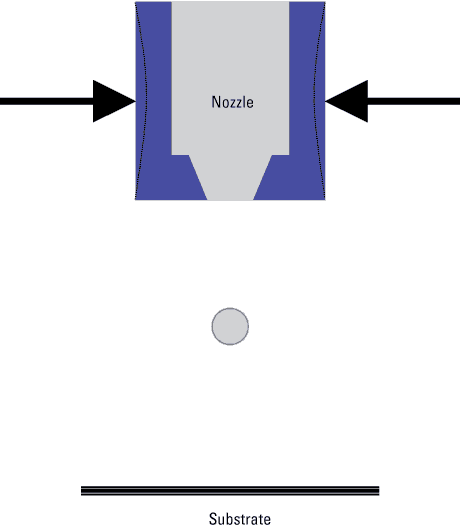
Alternatively, the droplets can be ejected mechanically through the application of an electric stimulation of a piezoelectric crystal (usually lead zirconium titanate) to elicit a deformation. This distortion is used to create a pressure pulse in the ink chamber, which causes a drop to be ejected from the nozzle. This method is shown in Figure 2. Piezo drop-on-demand inkjet technology is currently used for most existing and emerging industrial inkjet applications. In this technology, a piezoelectric crystal (usually lead zirconium titanate) undergoes distortion when an electric field is applied. This distortion is used to create a pressure pulse in the ink chamber, which causes a drop to be ejected from the nozzle. There are many variations of piezo inkjet architectures including tube, edge, face, moving wall and piston, which use different configurations of the piezo crystal and the nozzle. The advantages of piezo inkjet technology include the ability to jet a very wide variety of fluids in a highly controllable manner and the good reliability and long life of the printheads. The main disadvantage is the relatively high cost for the printheads, which limits the applicability of this technology in low cost applications.
FIGURE 2.Piezoelectric drop on demand ink jet (schematic). In a DOD ink jet printer, upon application of a mechanical pulse, the ink chamber is deformed. This results in the ejection of a droplet toward the substrate.
As with screen printing, there are steps other than printing which are often overlooked: the first step in digital printing is the pretreatment of the fabric. Because many chemicals and/or auxiliaries cannot be incorporated into the printing ink, they must be applied to the fabric during the pretreatment. The entire process has to be designed to control bleeding, but also to achieve the hand, color, and fastness required in the finished textile. For basic fabric pretreatment, the elements of this solution can include:
Antimigrants – To prevent migration of ink and prevent “bleeding.”
Acids/Alkalis – To support reactions of acid and reactive inks, respectively.
Urea/Glycols – To increase moisture content of the fabric, giving high, even fixation of the inks.
“Effects” Chemicals – Vary widely in purpose. Although there are too many effects to mention here, they can include chemicals to improve the brightness of the prints, water and stain repellants, UV absorbers to improve the fabric’s resistance to sunlight, fabric softeners/stiffeners, even antimicrobials to provide resistance to mildew and germs.
Many patented and proprietary formulations for pre treatment exist, ranging from simple formulations of soda ash, alginate and urea to more sophisticated combinations of cationic agents, softeners, polymers and inorganic particulates such as fumed silica. Many of these have been aimed at fashion fabrics such as cotton, silk, nylon and wool. The processing of the fabric during pretreatment is also an important factor in producing a superior finished printed fabric. Fabrics must be crease-free and even in width. Some producers provide fabrics that are backed with removable paper to allow companies with graphic printers that have been retrofitted with textile inks to print fabrics. This paper, and the adhesive that holds it to the fabric, must be properly applied so that the paper can be removed easily from the fabric.
Inks used in digital printing are thinner than those used for traditional printing, so the fabric also needs to be prepared by soaking it in a thickening agent. This agent reacts to moisture by swelling. As soon as a drop of dye touches the pre treated fabric, the thickener will swell up, keeping the dye in its place. Without this agent, the dye would run and bleed on the fabric.
Inkjet inks must be formulated with precise viscosities, consistent surface tension, specific electrical conductivity and temperature response characteristics, and long shelf life without settling or mould-growth. The inks, made up of pigments or dyestuffs of high purity, must be milled to very fine particle size and distributed evenly in solution. In addition, further properties such as adequate wash-, light- and rub-fastness are necessary.
Inkjet inks contain dyes or pigments but like screen printing inks they contain other things too:
The inks used in digital printing today have comparable color performance and fastness as compared to traditional screen printing inks. They fall into four general categories:
Water based – can contain glycol plus pigments or dyes. These inks are designed to run specifically in printers with thermal and piezo-electric print-heads. Dyes used include:
Reactive dyes, particularly suited to cotton, viscose and other cellulosic materia
Acid dyes, used for wool, silk and nylon.
Disperse dyes are used for synthetics like polyester and nylon.
Pigments (as well as disperse dyes) present a more difficult set of problems for ink makers. Both exist in water as a dispersion of small particles. These inks must be prepared with a high degree of expertise so that the particles will not settle or agglomerate (flocculate) and clog the printheads. The particle size must have an average of 0.5 micrometer and the particle size distribution must be very narrow with more than 99% of the particles smaller than 1 micrometer in order to avoid clogging of the nozzles. The major outstanding problem with the use of pigments in inkjet systems is how best to formulate and apply the resins which are required to bond the pigment particles to the fabric surface. Several different approaches, from coating pigment particles with advanced surfactants, to spraying resin through a separate jet head to screen printing binder over an inkjet printed color have been suggested.
Solvent based – Solvent-based inks are relatively inexpensive and have the advantage of being able to produce good vivid colors. However, their main ingredients are volatile organic compounds (VOCs) which produce harmful emissions. These inks need to be employed in machines which have ducting to extract the solvents to atmosphere. It is possible to remove the VOC’s using activated carbon filters without ducting to outside the building however you still have to dispose of the solvent laden graphite. Fabrics produced using solvent-based inks have a strong odor. The higher the level of the solvent, the greater the keying, or bonding, with the material’s surface to give a durable finish. Types of solvent range from eco-solvent, low and mild solvent through to hard or full solvent. The term eco-solvent does not necessarily mean less environmentally damaging than conventional solvent, as discussed in the post entitled “Textile Printing and the Environment”.
Oil based – requires the use of a printer which is compatible; otherwise similar to water and solvent based inks. Oil-based inks are less commonly used, but offer very reliable jetting since the ink does not evaporate.
UV curable – generally made of synthetic resins which have colored pigments mixed in. Curing is a chemical reaction that includes polymerization and absorption by the fabric. UV inks consist of oligomers, pigments, various additives and photoinitiators (which transfer the liquid oligomers and monomers into solid polymers).
Phase change – ink begins as a solid and is heated to convert it to a liquid state. While it is in a liquid state, the ink drops are propelled onto the substrate from the impulses of a piezoelectric crystal. Once the ink droplets reach the substrate, another phase change occurs as the ink is cooled and returns to a solid form instantly.
Once you have digitally printed the fabric, you must perform some process to fix the ink. What process this is depends on the type of ink you used. Each dye type needs a specific finishing agent.
Finally, the fabric needs to be washed to remove the excess dye and thickening agents. Fabrics are washed in a number of wash cycles at different temperatures to make the print washfast.
So at the end of this process, you can see that there is no real difference in the amount – or kinds – of chemicals used, except perhaps those lost through wastage. So what exactly are the green claims based on?
The traditional printing industry produces large amounts of waste – both dyes/pastes and water, and it has high energy useage. There are also large space reqirements to operate presses, which produce a lot of noise. In a project sponsored by the European Union’s LIFE Program, an Italian printing company, Stamperia di Lipomo, transferred from conventional printing to digital.[5] They found that these new digital presses lowered water, energy and materials consumption significantly. The following reductions were achieved:
Production space required by 60%
Noise by 60%
Thermal energy usage by 80%
Wastewater by 60%
Electricity consumption by 30%
By-production of waste dyes = eliminated entirely
Digital printing has other advantages, which include:
Minimal set up costs – short runs and samples are economical – so traditional mill minimums can be avoided. Costs per print are the same for 1 or 1000000.
There is no down time for set up – the printer is always printing – so there is also increased productivity.
Faster turnaround time – and very fast design changes. Turnaround time for samples can be reduced from 6 to 8 weeks to a few days.
Print on demand, dramatically reducing time to market.
Just-in-time customization or personalization
Theoretically no limit on number of colors.
Decreases industrial waste and print loss.
The disadvantages most often cited, that of high cost of inks and shorter printing speeds, are quickly being overcome by the manufacturers.
One concern I have is that of the use of nanotechnology, which seems to be an inextricable part of the equation. Already nanotechnology is enabling manufacturers to offer functional finishes in post processing, such as stain and water repellants, fire retardants, and UV blocking . It is also being used in smart clothing: To harness the energy of the sun, flexible thin film modules are sewn onto clothes. However, since they show clearly when sewn, digital textile printing makes these modules inconspicuous.[6]
The traditional industry still looks at digital textile printing parameters from the context of what it “can’t do,” compared to conventional printing (much of which is already history). For a much smaller group of designers, textile artists, fine artists, costumers, wide-format printers and the like, this technology is much more about what it “can do” to provide to provide products and services the market has never before seen. For these people, textile printing offers parameters not available with conventional printing: unlimited repeat size, tonal graphics, engineered designs that cross several seam lines, quicker samples, customization and short-run production. And the use of the technology is beginning to catch the imagination of more and more textile designers, as they realize that their old reaction to computer generated graphics (dismissive to say the least) is truly outdated. Claire Lui, Print magazine associate editor, points out that in ultra-custom milieus, design and printing become more like art than common manufacturing.
The traditional textile industry needs to understand that, in the same way the Internet is not going to replace the television as a form of entertainment or information, this new digital technology isn’t about replacing existing processes , but rather about leveraging the expanded parameters to offer new niche products and services. And we must remember too that digital printing is not the panacea it’s touted to be for the environment, though it seems to have less of a pollution footprint than traditional screen or rotary printing.

 The first plastic garbage bag was invented by Harry Waslyk in 1950.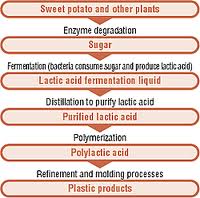









 OEcotextiles