Leather has become the sign of a luxurious – and durable – choice for practically any product you can think of. As the ads say, “the rich scent, luxurious texture and easygoing attitude” makes it a popular choice.
Leather has been around as long as people – ancient peoples used materials that were available, like bark and plant tannins, alum, earth minerals, fish oils, animal brains, lime and smoke to preserve animal skins. The process took a long time – from 1 to 12 months. But today’s leather is a far cry from early leathers because horribly toxic synthetic chemicals have replaced the older tanning chemicals (usually in the interest of time – chrome tanning takes only a fraction of the time as does “natural” tanning); modern leather tanneries are frighteningly toxic and the animal husbandry aspect is sad and sickening. There are a very few ethical tanneries, but so far I can count them on one hand. [1]
But leather – the skin of a dead animal – is meant to decompose. What do you think has to be done to that skin so it doesn’t decompose? We covered this topic in a former post ( click here to read that), but basically the tanning of leather is in the top 10 of the world’s worst pollution threats – at #5 – directly affecting more than 1.8 milllion people. [2] More than 90 percent of Bangladeshi tannery workers suffer from some kind of disease — from asthma to cancer — due to chemical exposure, according to a 2008 survey by SEHD, a local charity, with local residents being almost as badly affected. [3]
What chemicals are used to create such terrible pollution? In all, around 250 chemicals are used in tanning. Skins are transferred from vat to vat, soaked and treated and dyed. Chemicals include alcohol, coal tar , sodium sulfate, sulfuric acid, chlorinated phenols (e.g. 3,5-dichlorophenol), chromium (trivalent and hexavalent), azo dyes, cadmium, cobalt, copper, antimony, cyanide, barium, lead, selenium, mercury, zinc, polychlorinated biphenyels (PCBs), nickel, formaldehyde and pesticide residues.[4] At the same time, toxic gases like ammonia, hydrogen sulfide, and carcinogenic arylamines are emitted into the air. The smell of a tannery is the most horrifyingly putrid smell on earth.
But people really want leather – so what’s an industry to do?
Enter Pleather, made from oil in the form of plastic – either PVC or polyurethane. Pleather is simply a slang term for “plastic leather”, made by bonding the plastic to a fabric backing. It’s often used as an inexpensive substitute for leather, but the fashion industry has adopted it big time. It is lighter than leather, and it does not decompose as quickly as leather. It’s also supposed to be much more durable than leather.
The PVC version does not breathe and can be very hard to clean – it’s not often used for surfaces that come in contact with the skin. The polyurethane version is usually machine washable and can be dry cleaned. It’s also slightly breathable, softer, and more flexible.
Is this a good alternative? Given that every manufactured product has an unavoidable environmental cost, neither leather nor pleather is particularly green. The PVC version of pleather is made from polyvinyl chloride, which is loathed by Greenpeace, calling it the “most damaging plastic on the planet,” because its production releases dioxins and persistent organic pollutants. The polyurethane version doesn’t have quite the same toxicity problems as PVC, but plenty of CO2 is emitted during the production. According to the Association of Plastics Manufacturers in Europe, producing a pound of polyurethane emits 3.7 lbs. of CO2 – slightly less than burning a gallon of gas.[5]
YouTube’s version (shown below) shows the production of PVC pleather: Pleather is made by coating a paper backing (embossed to look like leather) with PVC (polyvinyl chloride). First, a petroleum based plasticizer; a UV stabalizer and a fire retardant are mixed in solution, then powdered vinyl is added. Dyes are put into a different tub, then they pour in the liquid vinyl. Next the large roll of paper with a leather like texture is coated with the liquid vinyl. It is baked in an oven to harden the vinyl, which takes on the paper’s texture. A second batch of vinyl is prepared which contains a thickening agent, and it is poured onto the first layer. Then the double layered vinyl goes through the oven again. Fabric (from cotton to polyester) is adhered to the back, and the paper is peeled off to reveal the leather pattern. Here is the visual production from YouTube:
Properly manufactured pleather should be calendered – which means passing the material between two rollers to make the surface shiny. If it is not calendered, it is considered “cheap” pleather and its durability is compromised.
But maybe if we wait just a bit there will be even better alternatives: Richard Wool, a professor of chemical and biomolecular engineering at the University of Delaware, has been working on a leather alternative which is entirely non-plastic, and bio-based: it’s made from flax or cotton fibers, which are laminated together in layers using palm, corn, soybean or other plant oils to create a leather-like material. And unlike pleather – it’s breathable. Wool plans to call his product Green Engineered Material or GEM. But he’s looking for muscle and money to get the product moving forward.[6]
From Jewel Renee Illustration; jewelrenee.blogspot.com/2011/06/starfish-7-legged-and-otherwise.html
From Alaska to Southern California, sea stars (or as I call them, starfish. But scientists like to point out they’re not fish, ergo: “sea stars”) are dying by the millions. Drew Harvell, a marine epidemiologist at Cornell University, calls it the largest documented marine epidemic in human history. The disease deflates sea stars, causing them to become weak, lose limbs and develop lesions that eat through their entire bodies – or simply disintegrate into bacterial goop within days.
Two affected species – sunflower and ochre stars – are “keystone species” in their respective habitats. That is, they are species that have disproportionately large impacts on their ecosystems, and they fill a vital niche. The term was coined 45 years ago by zoology professor Robert Paine, of the University of Washington, specifically to describe the importance of the ochre star in the Pacific Northwest. They are a top predator, eating mussels, barnacles and sea snails.
“This is the species that defined the term, which is a central concept in ecological theory,” explained Drew Harvell. “We do expect the impact to be dramatic. And to take away not just one, but both of these keystone species in adjoining ecosystems? It’s going to have a big effect.”[1]
Nobody knows why the sea stars are dying. Theories have run from waterborne pathogens or other disease agents, manmade chemicals, ocean acidification, wastewater discharge or warming oceans. There is even a contingent that thinks the Fukushima nuclear meltdown is the cause. The newest theory is that they’re being infected with a disease that can more easily grow in the Pacific Ocean thanks to warming waters, which provide a better place for the disease organisms to multiply. According to the scientists, the warmer waters also compromises the immune systems of the sea stars, allowing them to be more susceptible to the disease.
I’m sure you know where I’m going with this: like Colony Collapse Disorder (CCD) of honeybees, the sea star wasting syndrome is beyond the range of what we expect in a healthy ecosystem. Most scientists have concurred that the CCD was caused by a variety of environmental stresses (malnutrition, pathogens, mites, pesticides, radiation from cell phones and other man made devices, as well as genetically modified crops with pest control characteristics) which increased stress and reduced the immune systems of the honeybees.
And though bees and sea stars are both rather small and seem insignificant, they are both essential components of our ecosystem. Without bees, for example, there would be significantly less pollination, which would result in limited plant growth and lower food supplies. According to Dr. Albert Einstein, “If the bee disappears from the surface of the earth, man would have no more than four years to live. No more bees, no more pollination…no more men”.[2] It’s a bit early to assess the impact of the loss of sea stars, but according to Carol Blanchette, a research biologist at University of California Santa Barbara, “losing a predator like that is bound to have some pretty serious ecological consequences and we really don’t know exactly how the system is going to look but we’re quite certain that it’s going to have an impact.”[3]
I read a book many years ago about time travelers who went to the distant past. One of them stepped on an insect. When they returned to their own time, everything had changed. Ecologists tell us that everything is connected to everything else – ecosystems are complex and interconnected. “The system,” Barry Commoner writes, “is stabilized by its dynamic self-compensating properties; these same properties, if overstressed, can lead to a dramatic collapse.” Further, “the ecological system is an amplifier, so that a small perturbation in one place may have large, distant, long-delayed effects elsewhere.”[4]
So how does the textile industry figure into this equation? Answer: the textile industry pollutes our water. In fact, some sources put it as the leading industrial polluter of water on the planet. It takes about 505 gallons of water to produce one pair of Levi’s 501 jeans.[5] Imagine how much water is used every day by textile mills worldwide. The actual amount of water used is not really the point, in my opinion. What matters is that the water used by the textile industry is not “cleaned up” before they return it to our ecosystem. The textile industry’s chemically infused effluent – filled with PBDEs, phthalates, organochlorines, lead and a host of other chemicals that have been proven to cause a variety of human health issues – is routinely dumped into our waterways untreated. And we are all downstream.
Maude Barlow, in her book, Blue Covenant[6] argues that water is not a commercial good but rather a human right and a public trust. She shares these startling facts about water during her presentations:
Every 8 seconds a child dies from drinking dirty water.
50% of the world’s hospital beds are occupied by people who have contracted waterborne diseases.
The World Health Organization says contaminated water is the cause of 80% of all sickness and disease worldwide.
9 countries control 60% of the world’s available freshwater.[7]
In China, 80% of all major rivers are so polluted they don’t support aquatic life at all.
This year’s drought in the US pointed to a new water related issue, the generation of energy. Power plants are completely dependent on water for cooling and make up about half the water usage in the US. If water levels in the rivers that cool them drop too low, the power plant – already overworked from the heat – won’t be able to draw in enough water. In addition, if the cooling water discharged from a plant raises already-hot river temperatures above certain thresholds, environmental regulations require the plant to shut down.[8]
The textile mills which are polluting our groundwater are using their corporate power to control water they use – and who gives them that right? If we agree that they have the right to use the water, shouldn’t they also have an obligation to return the water in its unpolluted state? Ms. Barlow and others around the world are calling for a UN covenant to set the framework for water as a social and cultural asset, not an economic commodity, and the legal groundwork for a just system of distribution.
Please ask whether the fabric you buy has been produced in a mill which treats its wastewater. The Global Organic Textile Standard (GOTS) assures consumers that the mill which produced the fabric has treated its wastewater, but so far it is the only third party certification with that requirement as a standard. Oeko Tex 1000 has also included that in its requirements, however I have never seen an Oeko Tex 1000 certification – most fabrics are simply Oeko Tex certified. Also look into the Greenpeace Detox challenge, which is working to “expose the direct links between global clothing brands, their suppliers, and toxic water pollution around the world.” Click here for more information.
[1] Gashler, Krisy, “Sea star wasting devastates Pacific Coast species”, Cornell Chronicle, Feb 17, 2014
We received a comment on one of our blog posts recently in which the reader chastised us for exaggerating issues which they believe are disproportionate to the facts. In their words: For instance formaldehyde… is a volatile chemical…no doubt it is used in the textile industry a great deal…but looking for this chemical in end products is an example chasing a ghost…. It has to be put in perspective. I do not know of any citation that a human developed cancer because they wore durable press finished clothing.
Please follow along as I itemize the reasons that we don’t feel the issues are exaggerated.
Textiles are full of chemicals. The chemicals found in fabrics have been deemed to be, even by conservative organizations such as the Swedish government, simply doing us no good – and even harming us in ways ranging from subtle to profound. But fabrics are just one of the many stressors that people face during the day: these stressors (i.e., chemicals of concern) are in our food, our cosmetics, our electronics, our cleaning products, in dust in our houses and pollution from automobile exhaust in our air. This is not even close to an exhaustive list of the products containing the kinds of chemical stressors we face each day. And this is a new thing – it wasn’t until around the middle of the last century that these synthetic chemicals became so ubiquitous. Remember “better living through chemistry”? And if you don’t know the history of such events as Minamata, or about places like Dzershinsk, Russia or Hazaribagh, Bangladesh, then do some homework to get up to speed.
Add to that the fact that new research is being done which is profoundly changing our old belief systems. For example, we used to think that a little dose of a poison would do a little bit of harm, and a big dose would do a lot of harm (i.e., “the dose makes the poison”) – because water can kill you just as surely as arsenic, given sufficient quantity. The new paradigm shows that exposure to even tiny amounts of chemicals (in the parts-per-trillion range) can have significant impacts on our health – in fact some chemcials impact the body profoundly in the parts per trillion range, but do little harm at much greater dosages. The old belief system did not address how chemicals can change the subtle organization of the brain. Now, according to Dr. Laura Vandenberg of the Tufts University Center for Regenerative and Developmental Biology [1] “we found chemicals that are working at that really low level, which can take a brain that’s in a girl animal and make it look like a brain from a boy animal, so, really subtle changes that have really important effects.”
In making a risk assessment of any chemical, we now also know that timing and order of exposure is critical – exposures can happen all at once, or one after the other, and that can make a world of difference. And we also know another thing: mixtures of chemicals can make each other more toxic. For example: a dose of mercury that would kill 1 out of 100 rats, when combined with a dose of lead that would kill 1 out of 1000 rats – kills every rat exposed.
And finally, the new science called “epigenetics” is finding that pollutants and chemicals might be altering the 20,000-25,000 genes we’re born with—not by mutating or killing them, but by sending subtle signals that silence them or switch them on at the wrong times. This can set the stage for diseases which can be passed down for generations. So exposure to chemicals can alter genetic expression, not only in your children, but in your children’s children – and their children too. Researchers at Washington State University found that when pregnant rats were exposed to permethrin, DEET or any of a number of industrial chemicals, the mother rats’ great granddaughters had higher risk of early puberty and malfunctioning ovaries — even though those subsequent generations had not been exposed to the chemical. [2] Another recent study has shown that men who started smoking before puberty caused their sons to have significantly higher rates of obesity. And obesity is just the tip of the iceberg—many researchers believe that epigenetics holds the key to understanding cancer, Alzheimer’s, schizophrenia, autism, and diabetes. Other studies are being published which corroborate these findings.[3]
So that’s the thing: we’re exposed to chemicals all day, every day – heavy metals and carcinogenic particles in air pollution; industrial solvents, household detergents, Prozac (and a host of other pharmaceuticals) and radioactive wastes in drinking water; pesticides in flea collars; artificial growth hormones in beef, arsenic in chicken; synthetic hormones in bottles, teething rings and medical devices; formaldehyde in cribs and nail polish, and even rocket fuel in lettuce. Pacifiers are now manufactured with nanoparticles from silver, to be sold as ‘antibacterial.’ These exposures all add up – and the body can flush out some of these chemicals, while it cannot excrete others. Chlorinated pesticides, such as DDT, for example, can remain in the body for 50 years. Scientists call the chemicals in our body our “body burden”. Everyone alive carries within their body at least 700 contaminants.[4]
This cumulative exposure could mean that at some point your body reaches a tipping point and, like falling dominoes, the stage is set for something disastrous happening to your health.
I am especially concerned because these manufactured chemicals – not just the elements which have been with us forever but those synthetic combinations – have not been tested, so we don’t really have a clue what they’re doing to us.
But back to our main argument:
The generations born from 1970 on are the first to be raised in a truly toxified world. Probably one in three of the children you know suffers from a chronic illness – based on the finding of many studies on children’s health issues.[5] It could be cancer, or birth defects – perhaps asthma, or a problem that affects the child’s mind and behavior, such as a learning disorder, ADHD or autism or even a peanut allergy. We do know, for example:
Childhood cancer, once a medical rarity, is the second leading cause of death (following accidents) in children aged 5 to 14 years.[6]
According to the American Academy of Allergy Asthma & Immunology, for the period 2008-2010, asthma prevalence was higher among children than adults – and asthma rates for both continue to grow. [7]
Autism rates without a doubt have increased at least 200 percent.
Miscarriages and premature births are also on the rise,
while the ratio of male to female babies dwindles and
teenage girls face endometriosis.
Dr. Warren Porter delivered a talk at the 25th National Pesticide Forum in 2007, in which he explained that a lawn chemical used across the country, 2,4-D, mecoprop and dicambra was tested to see if it would change or alter the capacity of mice to keep fetuses in utero. The test found that the lowest dosage of this chemical had the greatest effect – a common endocrine response.[8]
Illness does not necessarily show up in childhood. Environmental exposures, from conception to early life, can set a person’s cellular code for life and can cause disease at any time, through old age. And the new science of epigenetics is showing us that these exposures can impact not only us, but our children, grandchildren and great-grandchildren.
Let’s look at the formaldehyde which our reader mentioned. Formaldehyde is one of many chemical stressors – and it is used in fabrics as finishes to prevent stains and wrinkles (for example, most cotton/poly sheet sets found in the US have a formaldehyde finish), but it’s also used as a binding agent in printing inks, for the hardening of casein fibers, as a wool protection , and for its anti-mold properties.
Formaldehyde is a listed human carcinogen. Besides being associated with watery eyes, burning sensations in the eyes and throat, nausea, difficulty in breathing, coughing, some pulmonary edema (fluid in the lungs), asthma attacks, chest tightness, headaches, and general fatigue, as well as well documented skin rashes, formaldehyde is associated with more severe health issues: For example, it could cause nervous system damage by its known ability to react with and form cross-linking with proteins, DNA and unsaturated fatty acids. These same mechanisms could cause damage to virtually any cell in the body, since all cells contain these substances. Formaldehyde can react with the nerve protein (neuroamines) and nerve transmitters (e.g., catecholamines), which could impair normal nervous system function and cause endocrine disruption.[9]
Formaldehyde in clothing is not regulated in the United States, but 13 countries do have laws that regulate the amount of formaldehyde allowed in clothing. Greenpeace tested a series of Disney clothing articles and found from 23ppm – 1,100 ppm of formaldehyde in 8 of the 16 products tested. In 2008, more than 600 people joined a class action suit against Victoria’s Secret, claiming horrific skin reactions (and permanent scarring for some) as a result of wearing Victoria Secret’s bras. Lawsuits were filed in Florida and New York – after the lawyers found formaldehyde in the bras. Then in January 2009, new blue uniforms issued to Transportation Security Administration officers, gave them skin rashes, bloody noses, lightheadedness, red eyes, and swollen and cracked lips, according to the American Federation of Government Employees, the union representing the officers – because of the formaldehyde in the uniforms.[10]
Studies have been done which link formaldehyde in indoor air as a risk factor for childhood asthma[11]. Rates of formaldehyde in indoor air have grown from 0.014 ppm in 1980 to 0.2 ppm in 2010 – and these rates are increasing.
Studies have also been found which link formaldehyde to a variety of ailments in textile workers, specifically: Besides being a well known irritant of the eyes, nose and upper and lower airways, as well as being a cause of occupational asthma[12], a number of studies have linked formaldehyde exposure with the development of lung and nasopharyngeal cancers[13] and with myeloid leukemia. [14] A cohort study by The National Institute for Occupational Safety and Health found a link in textile workers between length of exposure to formaldehyde and leukemia deaths.[15] By the way, OSHA has established a Federal standard what restricts the amount of formaldehyde that a worker can be exposed to over an 8 hour workday – currently that’s 0.75 ppm.
That means if you have 0.2 ppm of formaldehyde in your indoor air, and your baby is wearing the Disney Finding Nemo t-shirt which registered as 1,100 ppm – what do you think the formaldehyde is doing to your baby?
So our argument is not that any one piece of clothing can necessarily do irreparable harm to somebody – but if that piece of clothing contains a chemical (pick any one of a number of chemicals) that is part of what scientists call our “body burden”, then it just might be the thing that pushes you over the edge. And if you can find products that do not contain the chemicals of concern, why would you not use them, given the risk of not doing so?
[6] Ward, Elizabeth, et al; Childhood and adolescent cancer statistics, 2014, CA: Cancer Journal for Clinicians, Vol 64, issue 2, pp. 83-103, March/April 2014
[9] Horstmann, M and McLachlan, M; “Textiles as a source of polychlorinated dibenzo-p-dioxins and dibenzofurrans (PCDD/F) in human skin and sewage sludge”, Environmental Science and Pollution Research, Vol 1, Number 1, 15-20, DOI: 10.1007/BF02986918 SEE ALSO: Klasmeier, K, et al; “PCDD/F’s in textiles – part II: transfer from clothing to human skin”, Ecological Chemistry and Geochemistry, University of Bayreuth, CHEMOSPHERE, 1.1999 38(1):97-108 See Also: Hansen,E and Hansen, C; “Substance Flow Analysis for Dioxin 2002”, Danish Environmental Protection Agency, Environmental Project No.811 2003
[11] Rumchev, K.B., et al, “Domestic exposure to formaldehyde significantly increases the risk of asthma in young children”, Microsoft Academic Search 2002
[12] Thrasher JD etal., “Immune activation and autoantibodies in humans with long-term inhalation exposure to formaldehyde,” Archive Env. Health, 45: 217-223, 1990.
[13] Hauptmann M, Lubin JH, Stewart PA, Hayes RB, Blair A. Mortality from solid cancers among workers in formaldehyde industries. American Journal of Epidemiology 2004; 159(12):1117–1130
[15] Pinkerton, LE, Hein, MJ and Stayner, LT, “Mortality among a cohort of garment workers exposed to formaldehyde: an update”, Occupational Environmental Medicine, 2004 March, 61(3): 193-200.
I found a series on the colorful rivers in our world – but not the kind you’d want to raft or kayak on, because the colors are produced by toxins. The fish are dead. These ravaged rivers stand as red flags to the monumental mismanagement of our precious water resources. And though most people think these rivers exist only in China or Bangladesh, two American rivers are named in the list of most polluted rivers in the world: the mighty Mississippi River and the Cuyahoga River.
In addition to sewage, perhaps the worst pollutants in the Mississippi River are agricultural in nature. At the mouth of the Mississippi in the Gulf of Mexico lies a so-called Dead Zone of 6,000 to 8,000 square miles. This has been created by the Mississippi’s high amount of nitrogen-based fertilizer run-off, which upsets the food chain, creating very low oxygen levels in coastal waters.
The Cuyahoga River is famous – or infamous – for having caught fire numerous times since 1868, most recently in June 1969. Flowing through the Cleveland, Ohio area, the Cuyahoga River, because it runs through a congested urban environment, has been subjected to numerous forms of pollution, particularly industrial waste, which has made it flammable at times. Interestingly, the plight of the Cuyahoga River helped promote in the late 1960s the ecological movement across the U.S., whose motto was “Ecology Now.” This joint fervor led to passage of the Clean Water Act of 1972.
Not quite so polluted these days, since some species of aquatic life can actually survive in it, the Cuyahoga River nevertheless remains one of 43 Great Lakes Areas of Concern, as it empties into Lake Erie, once a very dirty body of water as well, though it supports fisheries of note.
Other rivers on the lists of “most polluted” include:
Australia (The King River)
Argentina (Riachuelo River)
Indonesia (Citarum River)
Italy (Sarno River)
India (Ganges River and Yamuna River)
China (Yellow River and Jianhe River)
Philippines (Marilao River)
Back to our colorful rivers. These pictures are hard to integrate with my mental image of cold, clear mountain streams – though I did grow up in the south, where silt filled rivers are numerous. But animals and fish living in or near the silt filled rivers have adapted. There are no adaptations that make these rivers livable. We have insisted that textile mills treat their wastewater, because textile mills are the #1 industrial polluter of fresh water in the world – agriculture holds pride of place as the #1 polluter overall, but I think “industrial” can now be applied to agriculture as well, can’t it?
White river:
This river is in China, and known as the “Milk River” because of the large amount of stone cutting dust dumped into the river.
Rivers have other ways of turning white, though the culprit is still pollution. Nature-lovers were rather “irked” in April of 2009 when a 150-ft stretch of the River Irk in northwest England was subsumed in bright white foam up to 10 feet thick. A detergent factory upstream denied responsibility for the situation, stating the cause “remains a mystery.”
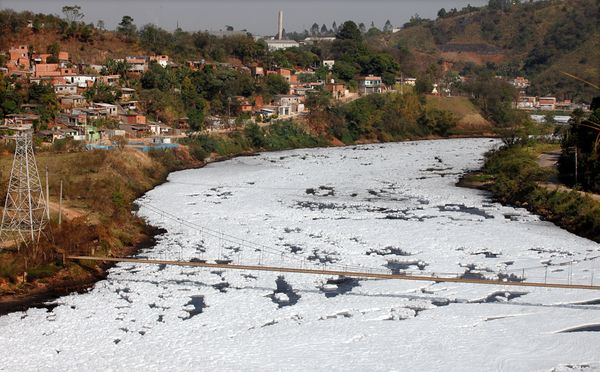
Another infamous white foamy river winds its way through southeastern Brazil. The Tiete River fills with foam which forms when water mixes with phosphate and phosphorus—ingredients found in products such as biodegradable detergents. This untreated household waste comes mostly from Sao Paulo, the biggest city in Brazil.
Photo: Paulo Whitaker, Reuters
Pink River:
Check the label on your pink blouse – you can be fairly sure that where it’s made, a pink river runs through it.
Red River:
This disturbing picture shows what looks like a river of blood. The Jian River, which runs through Luoyang City in China’s Henan Province and provides drinking water for its residents, turned red as the result of an illegal dye dump from a local chemical plant.
styleandthestartup.com
Orange River:
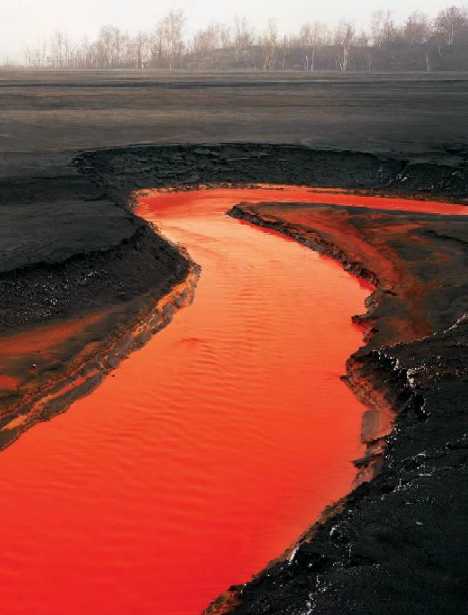
Then there’s the brilliant vermilion river, tainted by toxic tailings from a nearby nickel mine in Canada. The photograph, taken by Edward Burtynsky in 1996, depicts an eerie and forbidding landscape. Notice any trees, shrubs, a single blade of grass anywhere near its blackened shores? As Kenneth Baker wrote in his exploration of Burtynsky’s work, “enjoyment depends on our not thinking too hard about a bright orange river as a chemical and ecological reality: we know intuitively that in nature a river of this colour must spell trouble.” (Note, this image is the cover photograph on Burtynsky’s book, “Manufactured Landscapes”)
Blue River:
Taken of the Shijing River in China, which has high levels of pharmaceuticals (Diclofenac) and volatile organic sulfur compounds (VOSCs), including methanethiol, carbonyl sulfide, dimethyl sulfide, carbon disulfide, and dimethyl disulfide as well as endocrine disrupting chemicals.
Purple River:
Residents along Tullahan River have noted that multi-colored sudsy effluents have left violet-colored residue in the river water, rocks and banks. Several industries, such as paper, pen and dye factories, are located upstream from the site in this photo.
Greenpeace: Tullahan River in Caloocan, Manila
Yellow river:
China’s Yellow River was named for the pale silt it carries, though in today’s industrialized China it may be tinted yellow or any other color due to pollution and “accidental” waste water releases. The images below show poisonous yellow bubbles floating on the river due to an oil spill.
Brown River:
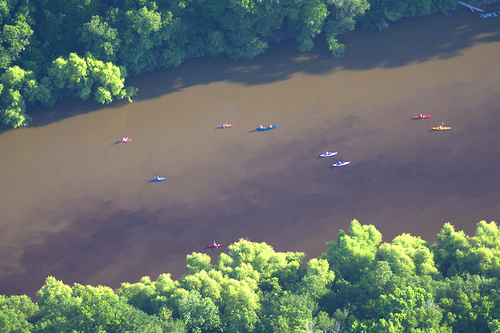
The image below, shows kayakers making their way through the Rayonier discharge on the Altamaha River near Doctortown in Wayne County, Georgia, USA. It was published on the front page of the Savannah Morning News, 23 June 2012. A dark, acrid-smelling discharge greeted them. “The stuff looked like oil, it looked gooey,” said kayaker Celeste Tibbets of Decatur, Georgia.
Sometimes I wonder if I’m making too much fuss about organic fabrics. I mean, we live surrounded by textiles, and nobody – well, o.k., most people – don’t have immediate reactions to the fabric. I can use towels and sheets and still wake up in the morning feeling just fine. Organic fabrics don’t look or feel any different from conventional fabrics. Just like organic food, the only difference seems to be in the price tag.
So it’s always with, I don’t know, relief perhaps, when I find support for the fact that textiles are filled with chemical substances that can gravely harm us. I just found a report by the Swedish Chemicals Agency which was asked by the Swedish government to develop proposals and principles for a piece of EU legislation on hazardous chemicals in textiles. (click here to read the entire report.). It was published in April 2013.
The Swedish Chemicals Agency found a non-exhaustive list of around 1900 chemical substances used in textile production – it’s non-exhaustive, because so many chemicals are used which cannot be disclosed because of confidentiality or trade secrets, so total chemicals used are much higher than 1900. Of the 1900 known substances, they found:
Carcinogenic substances: approximately 59
Mutagenic substances: approximately 9
Substances toxic to reproduction: approximately 39
Allergenic substances:
approximately 14 substances with respiratory sensitization properties
approximately 56 substances with skin sensitization properties
Substances with environmentally hazardous, long-term effects: approximately 57
Substances without the harmonized classifications but which can be found on the REACH Candidate List: 24
This report supports our contention that the production of textiles uses an extraordinary amount of chemicals and water, as well as other resources. And so I feel a bit better that the Swedish government, that august body, has diverted resources to study the problem which they feel threatens their citizens.
According to the report, the health impacts on workers range from acute poisoning to long term health effects (e.g. cancer). Environment impacts include polluted groundwaters, emissions to surface waters, and toxic sludge. From a consumer perspective the most apparent direct health impact may be allergic reactions caused by skin contact with chemicals in the fabrics – long term consequences are more dire. Consumers are exposed via skin contact or breathing in chemicals which evaporate, through indoor dust (breathing or skin exposure, which includes abraded particles of fibers), indirect oral exposure; children are especially vulnerable because they put things in their mouths. During the consumer phase, hazardous substances are released during washing. At the waste water treatment plants to which households are connected, these chemicals or their break-down products may end up in sludge and/or via effluent water into the water environment.
So this report can be added to the book published by the German Environmental Protection Agency on the chemicals used in textile processing[1], and the Greenpeace campaigns on the textile industry:
The Detox Campaign, which was launched to show the links between global clothing brands, their suppliers, and toxic water pollution around the world (click here for more information)
Toxic Threads: to expose how manufacturers are hiding their toxic trail and including inherently hazardous substances (such as NPEs, phthalates, or azo dyes) in their clothing. Read the report here.
I particularly like the “Little Monsters” information (click here ) because we should all be aware of the monsters in our fabrics.
The chemicals used in textile products are real, and they’re really changing us, even though we can’t see them. And even though we don’t seem to be reacting to these chemicals. As the Environmental Working Group says, we deserve to know what chemicals we’re eating, drinking and putting on our skins. I think we should add fabrics to that list, since they’re contributing a disproportionate share of hazardous challenges to our bodies given the amount of time we spend surrounded by fabrics.
[1] Lacasse and Baumann, Textile Chemicals: Environmental Data and Facts, Springer, New York, 2004, page 609.
The most recent issue of Ecotextile News had an article about “sustainable luxury”[1] and it got me thinking. The article asked the question whether “luxury” and “sustainability” were opposing concepts. One would think so.
Although luxury and sustainability both focus on rarity and beauty, both have durability at the heart of the concept. Just look at Louis Vuitton, which provides after sale service to any genuine product of theirs, wherever it was bought. A product seen as “luxurious” is one of lasting worth and timeless design, which is at the opposite end of the spectrum of the fashion and mass market industry where obsolescence is locked into a product at the design stage.
But I think the concept of luxury has an added dimension today – it is more about your state of mind than the size of your wallet. These days, people define luxury by such things as a long lunch with old friends, the good health to run a 5K, or waking up in the morning and doing exactly what you want all day long.
In the past luxury was often about things. Today, we think it’s not so much about having as it is about being knowledgeable about what you’re buying – knowing that you’re buying the best and that it’s also good for the world. It’s also about responsibility: it just doesn’t feel OK to buy unnecessary things when people are starving and the world is becoming overheated. It’s about products being defined by how they make you feel – “conscious consumption” – and giving you ways to find personal meaning and satisfaction.
Luxury today is more about the one perfectly plain organic lettuce salad from the farmers market near your home than a rich meal made of food from the other side of the globe. It’s about craftsmanship, art, intimacy, and service.
We want to eliminate the guilt of our throwaway culture. Things we buy should be produced in ways that, at the very least, do no harm, and that either biodegrade or are infinitely recyclable – or they should exhibit the timeless aesthetics and natural qualities that make them heirlooms to be passed down to future generations. This is exactly what we at O Ecotextiles have committed ourselves to providing.
Our designs are classic and therefore timeless, and our choice of natural fabrics respects a time-honored tradition.
By protecting our planet, and the flora and fauna it supports, we are assured of being able to live with linen sheets, silk velvet upholstery and pure hemp draperies – forever. The fibers are eternal; how we choose to weave and color them varies by designer and is part of the colorful history of design.
We want to make sure the fibers endure.
Once you start tinkering with the ecosystem it’s not possible to concentrate on one static facet, since we live in an interconnected and self-organizing universe of changing patterns and flowing energy. Everything has an intrinsic pattern which in turn is part of a greater pattern and all of it is in flux. To bring a sense of order out of this chaotic concept, let’s concentrate on water:
Water was not included in the 1947 UN Universal Declaration of Human Rights because at the time it wasn’t perceived as having a human rights dimension. Yet today, water is becoming controlled by corporate interests, and what is known as the global water justice movement is working hard to ensure the right to water as a basic human right.[2] Our global supply of fresh water is diminishing – 2/3 of the world’s population is projected to face water scarcity by 2025, according to the UN.
With no controls in place to speak of to date, there are now 405 dead zones in our oceans. Drinking water even in industrialized countries, with treatment in place, nevertheless yields a list of toxins when tested – many of them with no toxicological roadmap.
The textile industry is the #1 industrial polluter of fresh water on the planet. Now that virtual or “embedded” water tracking is becoming necessary in evaluating products, people are beginning to understand the concept when we say it takes 500 gallons of water to make the fabric to cover one sofa. We want people to become aware that when they buy anything, and fabric especially, they reinforce the manufacturing processes used to produce it.
This is a complex subject and trying to map and analyze it often produces inconsistent and unreliable data. The only sure thing we know is that we have to change – the faster the better.
We want our customers to depend on us to sell fabrics that do no harm… to them, their families or our world. Our company was founded on that bedrock – each and every fabric has met these standards.
Concurrently, we committed to showing our warts too – it’s complicated and difficult to follow these standards, so we would tell customers if and when we failed at any point and why. We want to empower consumers by providing as much information as they want to absorb.
Given a cursory glance, our fabrics may look like many others on the market. But like Antoine de Saint Exupery said in The Little Prince, “What is essential is often invisible to the eye”. One of our sales reps tells her clients to smell the fabrics! There is no synthetic smell – in fact some smell like new mown hay. So although you can find other fabrics that may look like ours, when you buy 25 yards of fabric from O Ecotextiles you’re also buying, at the very least, better health: your body will not have had to deal with the many chemicals used in processing (which remain in the fabric) – chemicals which have been proven to cause harm (remember Erin Brokovich?). If you choose a GOTS certified fabric, you also get:
Clean air and water: approximately 500 gallons of chemically-infused effluent was prevented from entering your ecosystem and the troublesome chemicals which evaporate into the air in your homes and offices is eliminated ;
A better environment: soils used to grow the fibers have been renewed rather than depleted, and in the growing of the fibers you’ve conserved water, mitigated climate change and ensured biodiversity.
And – most importantly – you’re using your purchasing power to put these changes into place!
[1] Ravasio, Dr. Pamela, “Sustainable luxury: impossible paradox, or inherent synergy?”, Ecotextile News, February/March 2014
[2] Barlow, Maude, Blue Covenant: The Global Water Crisis and the coming Battle for the Right to Water, October 2007
Americans live in one of the wealthiest nations in the world, yet American children are less likely to live to age 5 than children in comparable nations – and I was shocked to find that America has the highest infant mortality rate in the industrialized world.[1]
Our children are especially vulnerable to the presence of toxic chemicals in their lives, and unfortunately this means that our children are sicker than we were as kids.
That is due to many different things, but one component can be found in changes to our environment. Since the middle of the last century, we have allowed a slew of chemicals (numbering now over 80,000) to be used in products – chemicals which were untested, many of which we now know to be harmful. In 2009, tests conducted by five laboratories in the U.S., Canada and Europe found up to 232 toxic chemicals in 10 umbilical cord blood samples of newborns. Substances detected for the first time in U.S. newborns included a toxic flame retardant chemical called Tetrabromobisphenol A (TBBPA) that permeates computer circuit boards, synthetic fragrances (Galaxolide and Tonalide) used in common cosmetics and detergents, and Perfluorooctanoic Acid (PFBA, or C4), a member of the notorious Teflon chemical family used to make non-stick and grease-, stain- and water-resistant coatings for cookware, textiles, food packaging and other consumer products. Additionally, laboratory tests commissioned by Environmental Working Group (EWG) and Rachel’s Network have detected Bisphenol A (BPA) for the first time in the umbilical cord blood of U.S. newborns. The tests identified this plastics component in 9 of 10 cord blood samples from babies of African American, Asian and Hispanic descent. The findings provide hard evidence that U.S. infants are contaminated with BPA beginning in the womb.
Our immune systems can only take so much – when the toxic burden reaches capacity we end up with the epidemic rates in inflammatory conditions like allergies and asthma. Many experts feel that compromised immune systems have also contributed to the rise in autism, which needs no further dramatic numbers to define its horrific rise. According to the Centers for Disease Control – today, 1 in every 20 children will develop a food allergy and 1 in every 8 will have a skin allergy.[2] Allergies are a result of impacts on our body’s immune system. It is estimated that as much as 45% of children have type 2 diabetes.[3]
You would think that we’d rise up to protest these assults on our kids. But Greenpeace has a new report about the chemicals found in children’s clothing, entitled “A Little Story About Monsters in Your Closet”[4] . ( Click here to read the report.) Their latest investigation revealed the presence of hazardous chemicals in clothing made by 12 very well known brands; from the iconic kid’s label Disney, to sportswear brands like Adidas, and even top-end luxury labels like Burberry.
The shocking truth is that no matter what type of kid’s clothes we shop for, there’s no safe haven – all of the tested brands had at least one product containing hazardous toxic monsters – toxic chemicals which mess with the normal development of our children’s bodies.
Greenpeace bought 82 items from authorized retailers in 25 countries, made in at least 12 different regions and found traces, beyond the technical limits of detection, of a number of banned and dangerous chemicals, including:
Nonylphenol ethoxylates (NPEs), chemicals found in 61% of the products tested and in all brands, from 1 mg/kg (the limit of detection) up to 17,000 mg/kg. NPEs degrade to nonylphenols (NP) when released into the environment; they hormone disruptors, persistent and bioaccumulative.
Phtalates, plastics-softeners banned in children’s toys because of toxicity and hormonal effects, were found in 33 out of 35 samples tested. A Primark t-shirt sold in Germany contained 11% phthalates, and an American Apparel baby one-piece sold in the USA contained 0.6% phthalates.
Organotins, fungicides banned by the EU and found in three of five shoe samples and three clothing articles (of 21 tested). Organotins impact thePe immune and nervous systems of mammals.
Per- and polyfluorinated chemicals (PFCs) were found in each of 15 articles tested; one adidas swimsuit tested far higher than the limit set by Norway in 2014 and even by adidas in its Restricted Substances List.
Antimony was found in 100% of the articles tested; antimony is similar in toxicity to arsenic.
Greenpeace is calling on textile companies to recognize the urgency of the situation and to act as leaders in committing to zero discharge of hazardous chemicals and to our governments to support these commitments to zero discharge of all hazardous chemicals within one generation.
But it probably is most important that we, consumers with the all mighty dollar, demand that brands and governments make the changes that our children deserve. If you vote with your dollars, change will happen.
Click here to get the “Little Monsters: Field Guide to Hazardous Chemicals” from Greenpeace.
[1] World Health Organization (2013): World Health Statistics 2013.
A hot topic in the media right now is the toxicity of chemical flame retardants that are in our furniture and are migrating out into our environment. Tests have shown that Americans carry much higher levels of these chemicals in their bodies than anyone else in the world, with children in California containing some of the highest levels ever tested. According to Ronald Hites of Indiana University, these concentrations have been “exponentially increasing, with a doubling time of 4 to 5 years.”[1] These toxic chemicals are present in nearly every home – packed into couches, chairs and many baby products including (but not limited to) mattresses, nursing pillows, carriers and changing table pads (scary!). Recent studies have found that most couches in America have over 1 pound of the toxic chemical Chlorinated Tris inside them[2], even though it was banned in children’s pajamas over cancer concerns over a generation ago.[3]
Why the concern? Fire retardant chemicals, called PBDE’s (polybrominated diphenyl ethers) have been linked to cancer, reproductive problems and impaired fetal brain development, as well as decreased fertility. And even though they’ve been banned in the U.S. and European Union, they persist in the environment and accumulate in your body – and they’re still being used today.
So its probably no surprise that there is a mad scramble on to produce a fire retardant that does not impact our health or the environment. The current front runners, touted as being “exceptionally” effective yet safer and more environmentally friendly than the current fire retardants, use nanotechnology – specifically “nanocoatings” and “nanocomposites”[4] . These composites and coatings are based on what are called “multiwalled carbon nanotubes” or MWCNTs.
Based on a final report published by the U.S. EPA in September 2013 about the assessment of the risks of using these MWCNTs, the EPA found that there will be releases of these MWCNTs into the environment throughout the life cycle of textiles – to our air and water during production, in the form of abraded particles of the textiles falling into the dust in our homes, and in the disposal of furniture in municipal landfills or incineration facilities.[5]
While it is reasonable to propose that substituting nanomaterials for polybrominated diphenyl ether (PBDEs) or chlorinated triss and calling it “sustainable”, the fact is that no quantitative study has ever been done to support this assertion . [6]
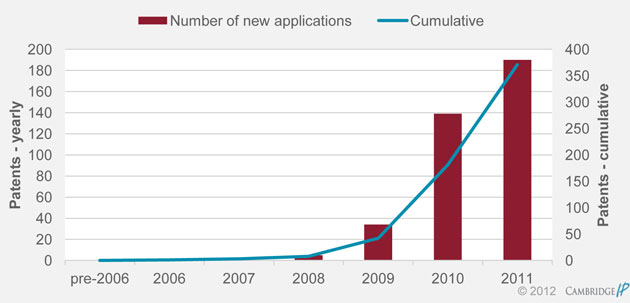
Please don’t misunderstand me – I am all for finding safer alternatives to the current crop of chemical fire retardants (assuming I buy into the argument that we actually need them). However, I don’t want us to jump from the frying pan into the fire by rushing to use a technology which is still controversial. But the race is on: the US patent office published some 4000 patents under “977 – nanotechnology” in 2012, a new record.
Here’s an interesting video which helps to explain how nano works – and why we will need extensive study to absorb the many implications of this emerging science.
Consider these science fiction type scenarios of how nano can be used to profoundly change our lives:
“nanomedicine” offers the promise of diagnosis and treatment of a disease – before you even have the symptoms. Or it promises to rebuild neurons for people with Alzheimers or Parkinson’s disease – and stem cells for whatever ails you! Bone regeneration. [7]
Surfaces can be modified to be scratchproof, unwettable, clean or sterile, depending on the application.[8]
Quantum computing.
Solar cells capturing the sun’s visible spectrum – as well as infrared photons – doubling the solar energy available to us. How about zero net carbon emissions.
Nanoscale bits of metals can detoxify hazardous wastes.
Clothing that recharges your cell phone as you stroll, or an implant that measures blood pressure powered by your own heartbeat.
And yet. The unknowns are great, and as Eric Drexler has said, the story involves a tangle of science and fiction linked with money, press coverage, Washington politics and sheer confusion. Scientists and governments agree that the application of nanotechnology to commerce poses important potential risks to human health and the environment, and those risks are unknown. Examples of high level respected reports that express this concern include:
as well as several industrial groups and various non-governmental organizations.
Nanotechnology is already transforming many products – water treatment, pesticides, food packaging and cosmetics to name a few – so the cat is already out of the bag. Consider this small example of the nano particle argument: When ingested the nanoparticles pass into the blood and lymph system, circulate throughout the body and reach potentially sensitive sites such as the spleen, brain, liver and heart.[15] The ability of nanoparticles to cross the blood brain barrier makes them extremely useful as a way to deliver drugs directly to the brain. On the other hand, these nanoparticles may be toxic to the brain. We simply don’t know enough about the size and surface charge of nanoparticles to draw conclusions.[16] In textiles, silver nano particles are used as antibacterial/antifungal agents to prevent odors.
But there are almost no publications on the effects of engineered nanoparticles on animals and plants in the environment.
So it’s still not clear what nanoscience will grow up to be – if it doesn’t kill us, it might just save us.
[2] Stapleton HM, et al. Detection of organophosphate flame retardants in furniture foam and U.S. house dust. Environ Sci Technol 43(19):7490–7495. (2009); http://dx.doi.org/10.1021/es9014019.
[5] Comprehensive Environmental Assessment Applied to Multiwalled Carbon Nanotube Flame-Retardant Coatings in Upholstery Textiles: A Case Study Presenting Priority Research Gaps for Future Risk Assessments (Final Report), Environmental Protection Agency, http://cfpub.epa.gov/ncea/nano/recordisplay.cfm?deid=253010
[6] Gilman, Jeffrey W., “Sustainable Flame Retardant Nanocomposites”; National Institute of Standards and Technology
[7] Hunziker, Patrick, “Nanomedicine: The Use of Nano-Scale Science for the Benefit of the Patient” European Foundation for Clinical Nanomedicine (CLINAM) Basel, Switzerland 2010.
[9] Swiss National Science Foundation, Opportunities and Risks of Nanomaterials Implementation Plan of the National Research Programme NRP 64 Berne, 6 October 2009; see also Swiss Precautionary Matrix, and documents explaining and justifying its use, available in English from the Federal Office of Public Health.
[10] Chairman: Sir John Lawton CBE, FRS Royal Commission on Environmental Pollution, Twenty-seventh report: Novel Materials in the Environment: The case of nanotechnology. Presented to Parliament by Command of Her Majesty November 2008.
[11] SRU, German Advisory Council on Environment, Special Report “Precautionary strategies for managing nanomaterials” Sept 2011. The German Advisory Council on the Environment (SRU) is empowered by the German government to make “recommendations for a responsible and precautionary development of this new technology”.
[12] See: Legal basis and justification: Niosh recommendations preventing risk from carbon nanotubes and nanofibers ”post-hearing comments Niosh current intelligence bulletin: occupational exposure to carbon nanotubes and nanofibers Docket NO. NIOSH-161 Revised 18 February 2011; Testimony on behalf of ISRA (International Safety Resources Association) Before NIOSH, USA. Comments prepared by Ilise L Feitshans JD and ScM, Geneva, Switzerland. Testimony presented by Jay Feitshans, Science Policy Analyst; ISRA Draft Document for Public Review and Comment NIOSH Current Intelligence Bulletin: Occupational Exposure to Carbon Nanotubes and Nanofibers, Docket Number NIOSH-161-A.
[13] The OECD Working Party for Manufactured Nanomaterials (WPMN) “OECD Emission Assessment for Identification of Sources of release of Airborne Manufactured Nanomaterials in the Workplace: Compilation of Existing Guidance”, ENV/JM/MONO (2009)16, http://www.oecd.org/dataoecd/15/60/43289645.pdf. “OECD Preliminary Analysis of Exposure Measurement and Exposure Mitigation in Occupational Settings: Manufactured Nanomaterials” OECD ENV/JM/MONO(2009)6, 2009. http://www.oecd.org/dataoecd/36/36/42594202.pdf.
“OECD Comparison of Guidance on selection of skin protective equipment and respirators for use in the workplace: manufactured nanomaterials”, OECD ENV/JM/MONO(2009) 17, 2009. www.oecd.org/dataoecd/15/56/43289781.pdf.
[14] WHO Guidelines on “Protecting Workers from Potential Risks of Manufactured Nanomaterials” (WHO/NANOH), (Background paper) 2011
I always thought I wouldn’t have to worry about some things – like, oh, incoming missiles, terrorist plots, and chemicals which could destroy me – because I thought my government would have something in place to protect me. But the recent chemical spill in West Virginia changed that: for those of you who don’t know, that was a spill of about 10,000 gallons of what is called a “coal cleaner” into the Elk River, contaminating the water supply of 300,000 people.
When I first began looking into the chemicals used in fabrics, and finding out that the soft, luscious fabrics we surround ourselves with every day are filled with chemicals that can cause me grievous harm, I was stopped in my tracks when someone suggested that the government wouldn’t let those chemicals in products sold in the USA – so how could fabrics contain those chemicals? I didn’t have an answer for that, because at the time I too thought that “of course the government must have laws in place to make sure we aren’t exposed to dangerous chemicals”!
The current regulation of chemicals in the US dates back to 1976 and the Toxic Substances Control Act (TSCA), which regulates the introduction of new or already existing chemicals.
But before talking about the TSCA, let’s first take a quick look at what’s changed since 1976, because our understanding of the extent and pathways of chemical exposures has fundamentally changed since then.
We now know that the old belief that “the dose makes the poison” (i.e., the higher the dose, the greater the effect) is simply wrong. Studies are finding that even tiny quantities of chemicals – in the parts-per-trillion range – can have significant impacts on our health. We’re also finding that mixtures of chemicals, each below their “no observed effect level”, may have greater environmental impacts than the chemicals alone. In other words, toxins can make each other more toxic: a dose of mercury that would kill 1 out of 100 rats, when combined with a dose of lead that would kill 1 out of 1000 rats – kills every rat exposed.
We also now know that timing and order of exposure is critical – exposures can happen one after the other, or all at once. The possible combinations of exposures is huge and knowledge is limited about the effects of mixed exposures. During gestation and through early childhood the body is rapidly growing under a carefully orchestrated process that is dependent on a series of events. When one of those events is interrupted, the next event is disrupted – and so on – until permanent and irreversible changes result. These results could be very subtle — like an alteration in how the brain develops which impacts, for example, learning ability. Or it could result in other impacts like modifying the development of an organ predisposing it to cancer later in life.
Add to that the concept of individual susceptibility. For instance a large part of the population is unable to effectively excrete heavy metals, so their body burden accumulates faster, and their illnesses are more obvious. They are the “canaries in the coal mine” in an environment that’s becoming increasingly more toxic.
We’re finding that chemicals migrate from products into the environment (and remember, we are part of the environment).
And this is where it gets really interesting:
Each of us starts life with a particular set of genes, 20,000 to 25,000 of them. Now scientists are amassing a growing body of evidence that pollutants and chemicals might be altering those genes—not by mutating or killing them, but by sending subtle signals that silence them or switch them on at the wrong times. This can set the stage for diseases which can be passed down for generations. This study of heritable changes in gene expression – the chemical reactions that switch parts of the genome off and on at strategic times and locations – is called “epigenetics”.
They’re finding that exposure to chemicals is capable of altering genetic expression, not only in your children, but in your children’s children – and their children too. Researchers at Washington State University found that when pregnant rats were exposed to permethrin, DEET or any of a number of industrial chemicals, the mother rats’ great grand-daughters had higher risk of early puberty and malfunctioning ovaries — even though those subsequent generations had not been exposed to the chemical.[1] Another recent study has shown that men who started smoking before puberty caused their sons to have significantly higher rates of obesity. And obesity is just the tip of the iceberg—many researchers believe that epigenetics holds the key to understanding cancer, Alzheimer’s, schizophrenia, autism, and diabetes. Other studies are being published which corroborate these findings.[2]
With the advent of biomonitoring, and a growing recognition of the importance of early life exposures, low dose effects and epigenetics, the science linking environmental exposures to biological effects (i.e., disease) is becoming overwhelming.
And here’s why the Toxic Substances Control Act of 1976 is not doing the job of protecting us:
We assume the TSCA is testing and regulating chemicals used in industry. It is not:
Of the more than 60,000 chemicals in use prior to 1976, most were “grandfathered in”; only 200 were tested for safety and only 5 were restricted. Today over 80,000 chemicals are routinely used in industry, and the number which have been tested for safety has not materially changed since 1976. So we cannot know the risks of exposing ourselves to certain chemicals. The default position is that no information about a chemical = no action.
For those of you who don’t know, the spill in West Virginia was of “crude MCHM”, or 4-methylcyclohexanemethanol, one of the chemicals that was grandfathered in to the Toxic Substances Control Act of 1976. That means that nobody knows for sure what that chemical can do to us.
Carcinogenic effects? No information available.
Mutagenic effects? No information available.
Developmental toxicity? No information available. Lack of information is the reason the local and federal authorities were so unsure of how to advise the local population about their drinking water supplies. (And by the way, in January, 2014, a federal lawsuit was filed in Charleston, WV, which claims that the manufacturer of MCHM hid “highly toxic and carcinogenic properties” of components of MCHM, hexane and methanol, both of which have been tested and found to cause diseases such as cancer.)
We assume that the TSCA requires manufacturers to demonstrate their chemicals are safe before they go into use. It does not:
The law says the government has to prove actual harm caused by the chemical in question before any controls can be put in place. The catch-22 is that chemical companies don’t have to develop toxicity data or submit it to the EPA for an existing product unless the agency find out that it will pose a risk to humans or the environment – which is difficult to do if there is no data in the first place. Lack of evidence of harm is taken as evidence of no harm.
We assume that manufacturers must list all ingredients in a product, so if we have an allergy or reaction to certain chemicals we can check to see if the product is free of those chemicals. It does not:
TSCA allows chemical manufacturers to keep ingredients in some products secret. Nearly 20% of the 80,000 chemicals in use today are considered “trade secrets”. This makes it impossible for consumers to find out what’s actually in a product. And there is no time limit on the period in which a chemical can be considered a trade secret.
These limitations all help to perpetuate the chemical industry’s failure to innovate toward safer chemical and product design. It’s one of the reasons the USA is one of the few nations in the world in which asbestos is not banned in many products.
In 2013, the Chemical Safety Improvement Act (CSIA) was introduced, however it does not deliver the critical fixes needed to fix the TSCA, although it is an improvement to the TSCA. The Natural Resources Defense Council suggests some steps that we must take to reform the TSCA, and these apply to the CSIA also:
Require new and existing chemicals be assessed for safety – with mandatory and enforceable deadlines. “Innocent until proven guilty” should not apply to chemicals.
Establish safety standards, especially with regard to children and other vulnerable groups.
Give the EPA the authority to protect the public from unsafe chemicals, including expedited action for those deemed the most toxic.
“Grandfathering in” spells trouble for the future.
Ensure the public’s right to know about the safety and use of chemicals.
Allow states to maintain laws which exceed federal protections to safeguard their citizens.
Polyester is the terminal product in a chain of very reactive and toxic precursors. Most are carcinogens; all are poisonous. And even if none of these chemicals remain entrapped in the final polyester structure (I don’t know enough chemistry to figure that one out – can anybody help?), the manufacturing process requires workers and our environment to be exposed to some or all of these toxic precursors. ( To see our blog post about polyester, click here ). So I’m just not a fan of synthetics – even polyester. Just so you know.
To make an intrinsically flame retardant polyester, the most common method is to add brominated flame retardants (BFR’s) to the polymer during the melt phase. This means the chemicals are “trapped” in the polymer. Included in this huge class of BFR’s is:
Polybrominated diphenyl ethers (PBDE’s): besides PBDE, the group includes DecaBDE, OctaBDE and PentaBDE (neither Octa nor Penta is manufactured anymore)
Polybrominated biphenyls (PBB) – also not manufactured anymore
Brominated cyclohydrocarbons
Brominated flame retardants are persistent, accumulate in the food chain, and toxic to both humans and the environment and are suspected of causing neurobehavioral effects, endocrine disruption, cancer and other degenerative diseases.
So now you have a polyester fabric which is made from toxic monomers, which in turn come from crude oil, a precious non-renewable resource. It becomes “intrinsically flame retarded” by having PBDE’s mixed into the polymer at the melt stage. Personally, I wouldn’t want to live with that mixture. Think about it: It’s generally assumed that PBDE’s in plastics (of all kinds) volatilize – but even if they didn’t, each time you sit on your sofa microscopic particles of the fabric are abraded and fall into the dust in your homes, where you can breathe them in.
Many manufacturers advertise the use of “intrinsically flame retardant” polyester fabrics on their sofas. But why would you need an intrinsically flame retarded fabric on a sofa in your home? There is no law that says the fabric in a residential setting must have flame retardants (unlike the laws that exist to cover public areas, like offices, airports, hotels, etc.) Can’t you use a fabric without flame retardants?









 OEcotextiles
